How Slough Country Concentrates Manitoba Game
It's easy to look at the vast, open expanses of Manitoba's agricultural or parkland regions and feel a bit overwhelmed trying to pinpoint where the game might be hiding. All that open space can make it feel like finding a needle in a haystack. But if you learn to "read" the landscape, you'll quickly discover that those unassuming sloughs, often dismissed as mere puddles or obstacles, are actually vibrant, teeming hotspots that concentrate game animals in a way nothing else quite does. This guide will help you understand why slough country is so vital for wildlife and how you can use this knowledge to become a more successful hunter in Manitoba.
What Defines "Slough Country" in Manitoba? More Than Just a Puddle
When we talk about "slough country" in Manitoba, we're really referring to the mosaic of shallow wetlands, often temporary or semi-permanent, that dot our prairies and parklands. These aren't deep lakes or flowing rivers; they're low-lying depressions that collect water from snowmelt and rainfall, creating distinct micro-habitats within the broader landscape. Don't let their often-muddy, sometimes-mosquito-ridden nature fool you—they are absolutely essential to the ecosystem here.
The Diverse Faces of Manitoba's Wetlands
Sloughs aren't all created equal, and understanding their subtle differences can be a game-changer for a hunter. You've got your ephemeral sloughs, which might only hold water for a few weeks in spring before drying up completely. Then there are the semi-permanent ones, holding water for most of the season, often ringed by vibrant green vegetation in summer, turning to golden stalks in the fall. And finally, some are more permanent, deeper, often choked with dense cattails or surrounded by thick willow and brush, holding water year-round. These variations dictate not only what kind of cover they provide but also the specific types of food sources available, which in turn influences the species they attract.
Think about the prairie pothole region, a vast expanse of southern Manitoba. It's renowned for its incredible density of these wetlands. But even within the Manitoba's Parkland Region or along the fringes of our more boreal forests, you'll find these invaluable water features. They often connect to each other through shallow draws and low areas, forming intricate networks that act as natural travel corridors for everything from a wily coyote to a mature whitetail buck. Mapping tools like those found on GoHunt can really help you visualize these connections and understand the lay of the land before you even step foot in the field.
Slough Systems as Ecological Junctions
It's not just the water itself that defines these areas; it's the entire biological community that springs up around them. The transition from dry land to water creates a unique edge habitat, often referred to as an "ecotone," which is inherently rich in biodiversity. You'll find different grasses, sedges, rushes, and shrubs growing in concentric rings based on their tolerance for moisture. These plants provide forage, nesting sites, and vital cover that simply isn't present in the surrounding cultivated fields or open grasslands.
For a hunter, this means that even a small slough can be a world unto itself, a natural fortress of food and safety for game animals. When you're driving through endless fields of canola or wheat, a patch of cattails and willows around a slough might seem insignificant, but to a deer trying to escape the elements or a flock of ducks looking for a resting spot, it's an oasis. This complexity is why focusing your scouting efforts around these areas can yield incredible results.
Why Sloughs Are Irresistible Hubs for Wildlife
So, what makes these watery depressions such magnets for wildlife? It's a combination of vital resources that are often scarce in the surrounding landscape. Think of a slough as a full-service rest stop for wildlife – everything they need for survival is conveniently located in one spot.
The Unwavering Call of Water
First and foremost, sloughs provide water. This might seem obvious, but its importance cannot be overstated, especially during dry spells or late in the season when other water sources freeze or disappear. All living things need water, and in many parts of Manitoba, these wetlands are the most consistent and accessible supply. Deer, elk, moose (if in range), and a myriad of smaller creatures will routinely visit sloughs to drink.
During a drought year, when many ephemeral and semi-permanent sloughs dry up, the remaining permanent sloughs become even more critical, concentrating game from a wider area. Animals will travel considerable distances to reach a reliable water source, making these spots absolute hotbeds of activity. Even in winter, a slough that remains unfrozen in pockets or offers access to moist vegetation under the snow can be a lifeline.
A Buffet of Food and Forage
Beyond water, sloughs are incredibly productive ecosystems, providing a diverse menu for various game species. The lush vegetation that grows along their edges—sedges, rushes, forbs, and even aquatic plants—offers highly nutritious forage. These plants often stay green longer into the fall than upland grasses, providing a crucial food source when other options start to dwindle.
If a slough is bordered by agricultural fields, it becomes an even more attractive dining destination. Dropped grains from harvested crops like wheat, barley, corn, or sunflowers, combined with the natural vegetation of the slough, create a calorie-rich smorgasbord. Ducks and geese feed voraciously on these grains, while deer browse the new shoots and tender branches of willows and dogwoods that thrive in the moist soil. Even predators are drawn to this bounty, knowing that where there's food, there's prey.
The Ultimate Sanctuary: Cover and Security
In landscapes that can often feel exposed, sloughs offer unparalleled cover and a sense of security. The dense stands of cattails, bulrushes, and willow thickets create impenetrable barriers for many animals, protecting them from predators and the harsh Manitoba weather. For a whitetail deer, a slough with thick cover is an ideal bedding area, offering thermal protection from biting winds and deep snow in winter, and a cool, shaded retreat from the summer sun. Where Manitoba Whitetails Bed in Deep Snow often directly correlates to these dense, sheltered slough systems.
This dense cover also provides crucial escape routes. A deer or a coyote can quickly disappear into the tangled vegetation, making it difficult for predators (including human hunters) to follow. This feeling of safety allows game animals to spend more time feeding and resting in the vicinity, further increasing the chances of encountering them. When you're Hunting a Slough Edge for Whitetails, remember that the deer use that cover to their absolute maximum advantage, often not moving until they feel truly pressed.
Natural Travel Corridors and Funnels
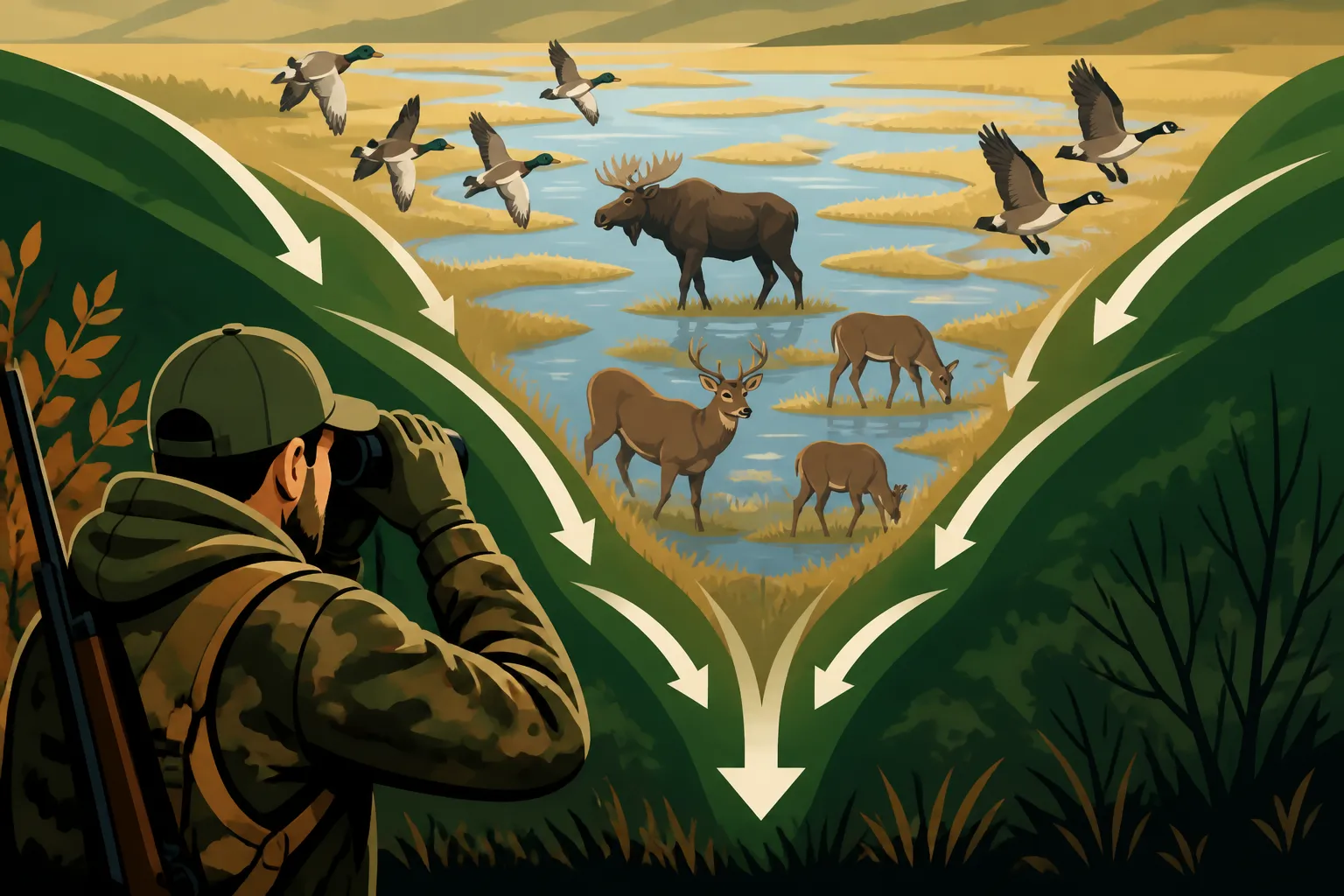
Finally, sloughs, especially when strung together, act as natural travel corridors and funnels in otherwise open or fragmented landscapes. Animals prefer to move under cover whenever possible, and the linear strips of brush and cattails along slough edges provide just that. These natural pathways dictate how game moves from bedding areas to feeding grounds, from one patch of cover to another.
Imagine a large agricultural field. A deer isn't likely to just trot across the middle of it in broad daylight. Instead, it will use the treelines, the ditches, and most certainly the edges of sloughs to navigate its territory. These edges become pinch points and funnels where deer movement is concentrated, making them prime locations for setting up a stand or planning a drive. A smart hunter, using tools like GoHunt's detailed satellite imagery, can identify these natural funnels and dramatically increase their odds.
Manitoba's Game Species Thriving in Slough Habitats
It's astounding just how many different game animals rely on Manitoba's slough country for survival and, consequently, how many opportunities these areas present to hunters. From the smallest upland birds to the majestic whitetail, the slough is a bedrock of Manitoba's hunting landscape.
White-tailed Deer: The Kings of the Cattails
If there's one animal that epitomizes slough country hunting in Manitoba, it's the white-tailed deer. These incredibly adaptable creatures thrive in the dense cover, abundant food, and reliable water sources that sloughs provide. Bucks, especially, learn to use the thick cattails and willows as sanctuaries, often growing old and wise by simply disappearing into these havens when pressure is on.
You'll find them bedding deep inside a slough's core during the day, emerging at dawn and dusk to browse on the lush vegetation around the edges or slip into adjacent agricultural fields. Their trails will be deeply worn into the mud and through the brush, particularly leading to and from prime feeding areas. For deer hunters, understanding how to approach and hunt these thick, watery strongholds is key to success. This is where you'll often find mature bucks that have evaded hunters for seasons.
Waterfowl: A Paradise of Potholes
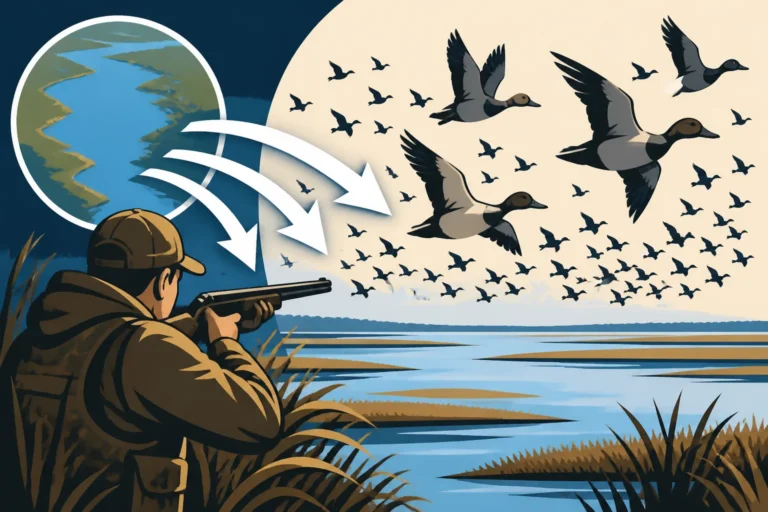
Of course, you can't talk about slough country without mentioning waterfowl. Manitoba sits squarely in the Central Flyway, and our myriad of potholes are absolutely critical nesting, staging, and feeding grounds for millions of ducks and geese every year. From dabbling ducks like mallards and pintails to diving ducks like canvasbacks and redheads, and even various species of geese and Manitoba's Sandhill Cranes and Their Migration, sloughs are their lifeblood.
Hunters often spend countless hours scouting these wetlands, identifying flight patterns, and setting up decoys for incredible hunts. Jump-Shooting a Manitoba Prairie Pothole can be an exciting way to hunt smaller, isolated sloughs, while larger, more permanent ones might be perfect for a stationary blind. The sheer volume of birds that utilize these areas makes them a waterfowl hunter's paradise. Marsh Hunting Ducks in the Interlake specifically highlights how central these wetland systems are for our feathered game.
Upland Birds: Edges of the Wetland World
While not always deep within the water, many upland bird species benefit greatly from the rich edge habitats provided by sloughs. Walking Up Sharp-Tailed Grouse in Manitoba often involves working the grassy fringes and light brush around slough complexes, as these areas provide excellent bugging grounds and dusting bowls for sharptails. Similarly, Hunting Huns Along a Manitoba Shelterbelt will often lead you to coveys holding tight in the willow and cattail pockets adjacent to sloughs.
These birds use the thicker cover for roosting and protection from raptors, while still having access to open areas for feeding. The mosaic of different habitat types that a slough system creates—water, dense cover, and open grassland or crop—is ideal for a variety of upland species, providing opportunities for a mixed bag hunt.
Predators: Following the Food Chain
Where there is prey, there will be predators. Coyotes, foxes, and even wolves (in more northern or wilder slough systems) are keenly aware of the abundance of game found around sloughs. They use the dense cover for stalking and ambush, and the natural funnels created by slough edges become perfect choke points for intercepting unwary deer, waterfowl, or smaller game.
Calling Coyotes at First Light or Hunting Coyotes Over a Winter Bait can be highly effective near slough country, as these animals will regularly patrol these areas looking for an easy meal. The thick vegetation can also provide denning sites, further cementing the slough's role as a complete ecosystem for a wide range of wildlife.
Effective Strategies for Hunting Manitoba's Slough Country
Hunting slough country successfully requires a bit of a different approach than hunting open fields or big timber. It demands patience, keen observation, and a solid understanding of how game uses these unique habitats.
Pre-Season Scouting: Your Secret Weapon
Before you ever carry a gun or bow into the field, spend significant time scouting. Use tools like satellite imagery, which GoHunt maps excel at providing, to identify slough patterns, access points, and potential funnels. Look for deeply worn game trails leading into and out of the dense cover. Scouting With Satellite Imagery in Manitoba is an absolute must when tackling slough country, as it allows you to spot those hidden islands of cover and access routes that are invisible from the road.
Walk the edges, carefully looking for tracks, droppings, rub lines, and bedding areas. Pay attention to prevailing wind patterns and how they might affect scent dispersal around the slough. Knowing where the game is likely to enter and exit, and what routes they prefer, is half the battle won.
Understanding the Approach: Silence and Wind
Approaching a slough must be done with extreme care. The dense vegetation, while offering cover, can also make it difficult to move silently. Always approach with the wind in your favor, especially when hunting deer or predators. Game animals are incredibly attuned to their environment, and a misplaced step or a whiff of human scent can send them bolting into the thickest part of the slough, never to be seen.
Consider using natural features, like a slight rise in the land or a deeper ditch, to conceal your approach. Early morning and late evening are prime times, as game is often moving between bedding and feeding areas. If you're hunting waterfowl, a stealthy approach to your blind before first light is paramount.
Strategic Stand and Blind Placement
For deer hunting, selecting the right stand or blind location is crucial. Look for natural funnels created by the slough's shape or adjacent terrain. Place your stand overlooking a well-used trail that leads from the slough's interior to a feeding area, or at a point where several trails converge. Hanging a Stand on a Manitoba Bush Edge principles apply here, even if the "bush" is a dense willow growth rather than tall timber. Ensure your setup offers good visibility without silhouetting you against the sky.
For waterfowl, pop-up blinds or natural blinds built into the cattails are effective. Ensure your blind offers good concealment from all angles, and that you have a clear shooting lane. Consider the sun's position throughout the hunt to avoid glare.
Decoding Daily Game Patterns
Game activity around sloughs often follows predictable daily patterns. Waterfowl will be most active at dawn and dusk, flying to and from feeding fields. Deer will typically move to feed in the early morning and late afternoon, bedding down in the slough's cover during the mid-day hours. Predators like coyotes might be on the move at any time but are often most active during low-light periods.
| Slough Type | Primary Game Attracted | Key Hunting Considerations | Best Time to Hunt |
|---|---|---|---|
| Temporary/Ephemeral | Waterfowl (early season), Deer, Coyotes | Dries up fast, good for early season movement, limited cover | Early morning/Late evening |
| Semi-Permanent | Deer, Waterfowl, Upland Birds, Predators | Consistent water/cover, high traffic areas, dense edges | All day, especially transition times |
| Permanent/Cattail | Whitetails (bedding), Waterfowl (nesting/staging), Predators | Deep cover, thermal protection, difficult to penetrate | Mid-day (deer), Dawn/Dusk (waterfowl) |
| Willow/Brush Choked | Whitetails (bedding/browsing), Upland Birds, Coyotes | Excellent browse, dense cover, tight quarters for hunting | Early morning/Late evening |
Adapting your hunt to these patterns will significantly increase your success. If you're deer hunting, a midday sit overlooking a slough's edge, knowing deer are bedded just yards away, can sometimes pay off if you're patient. For waterfowl, be in your blind well before legal shooting light and be prepared for flurries of activity.
Safety First: Navigating Wet Terrain
Slough country can be challenging terrain, and safety must always be a priority. Mud and water can hide uneven ground, holes, and fallen logs. Wading through knee-deep water can quickly turn into hip-deep, and getting stuck is a real possibility, especially when dragging out game. Be mindful of ice conditions in late fall and winter; never assume it's safe.
Low visibility in dense cattails means always knowing where your hunting partners are. Wear blaze orange if required or if hunting with others, and always identify your target clearly. Also, be aware of specific Manitoba's Game Hunting Areas rules for sloughs or wetlands, as some might have special regulations or prohibitions. Always carry appropriate gear, including a fully charged phone, extra layers, and perhaps even a whistle for emergencies. GoHunt can often provide landownership information, helping you distinguish between Crown land and private property, which is crucial for staying legal.
Slough country is a testament to the resilience and richness of Manitoba's wild places. Learning to appreciate and understand these often-overlooked habitats will not only make you a more effective hunter but will also deepen your connection to the incredible outdoors we're so fortunate to share.
Disclaimer
This article is for general informational purposes only and does not constitute professional advice. Laws, prices and regulations vary by location and change over time. Consult a qualified professional for guidance on your specific situation.