Where Manitoba Whitetails Bed in Deep Snow
Trying to locate whitetails after a heavy snowfall can feel like they've just vanished into thin air, leaving you staring at an endless blanket of white and wondering where on earth they've gone. It's a common frustration for many hunters, especially when you know big bucks are out there somewhere. This guide is dedicated to pulling back the curtain on the secret world of deep snow whitetail bedding, helping you understand their patterns and improve your chances in Manitoba's challenging winter conditions.
Understanding Why Whitetails Choose Specific Bedding in Winter
When the snow piles up and the temperatures plummet here in Manitoba, a whitetail's priorities shift dramatically. It's no longer just about finding food or feeling safe; it becomes a fierce battle against the elements. Deer are incredibly efficient creatures, and every decision they make in winter, especially where they choose to bed, is about survival. If you can wrap your head around why they pick certain spots, you’re already halfway to finding them.
The Critical Need for Thermal Cover
Deep snow isn't just a nuisance; it's a profound energy drain for whitetails. Every step they take through several feet of powder burns precious calories, calories they desperately need to stay warm and alive. This is why thermal cover becomes paramount. They're looking for anything that will break the wind, insulate them from the cold ground, and minimize heat loss from their bodies.
Imagine a deer trying to bed down in an open field after a Manitoba blizzard. The wind tears right through their fur, the snow beneath them is like a giant ice pack, and they have no protection from falling snow or freezing rain. Now, picture that same deer nestled deep within a thick stand of spruce. The dense canopy above catches the snow, creating a drier, shallower layer beneath, and the thick needles act as a fantastic windbreak. The ground might even hold a pockets of less snow, making it easier to lie down without having to push through a massive drift. It's a microclimate, often several degrees warmer and significantly less windy than the surrounding landscape, providing crucial refuge from the bone-chilling conditions.
This isn't just about comfort; it's about life or death. A whitetail's ability to conserve energy directly impacts its survival through our long, harsh winters. They'll actively seek out areas where the snow depth is manageable and where they can find relief from the biting winds and intense cold. Think about the densest, nastiest cover you can imagine – that's likely where they're looking to spend their days when the mercury drops and the snow piles up. When you're out there braving the cold yourself, consider how difficult it is for you to stay warm, and you'll get a better sense of what the deer are up against. If you're struggling to stay warm, imagine the deer in that same exposed spot. This is also why you'll want to review resources like Hunting Safely in Deep Winter Cold before heading out yourself.
Security Above All Else
While thermal cover is a huge draw, security remains a non-negotiable factor. In deep snow, a whitetail's mobility is severely hampered. They can't bound away as quickly, and their senses are often dulled by the need to stay vigilant in tough conditions. This makes them more vulnerable to predators, including us hunters. Consequently, their bedding choices will always incorporate a strong element of security.
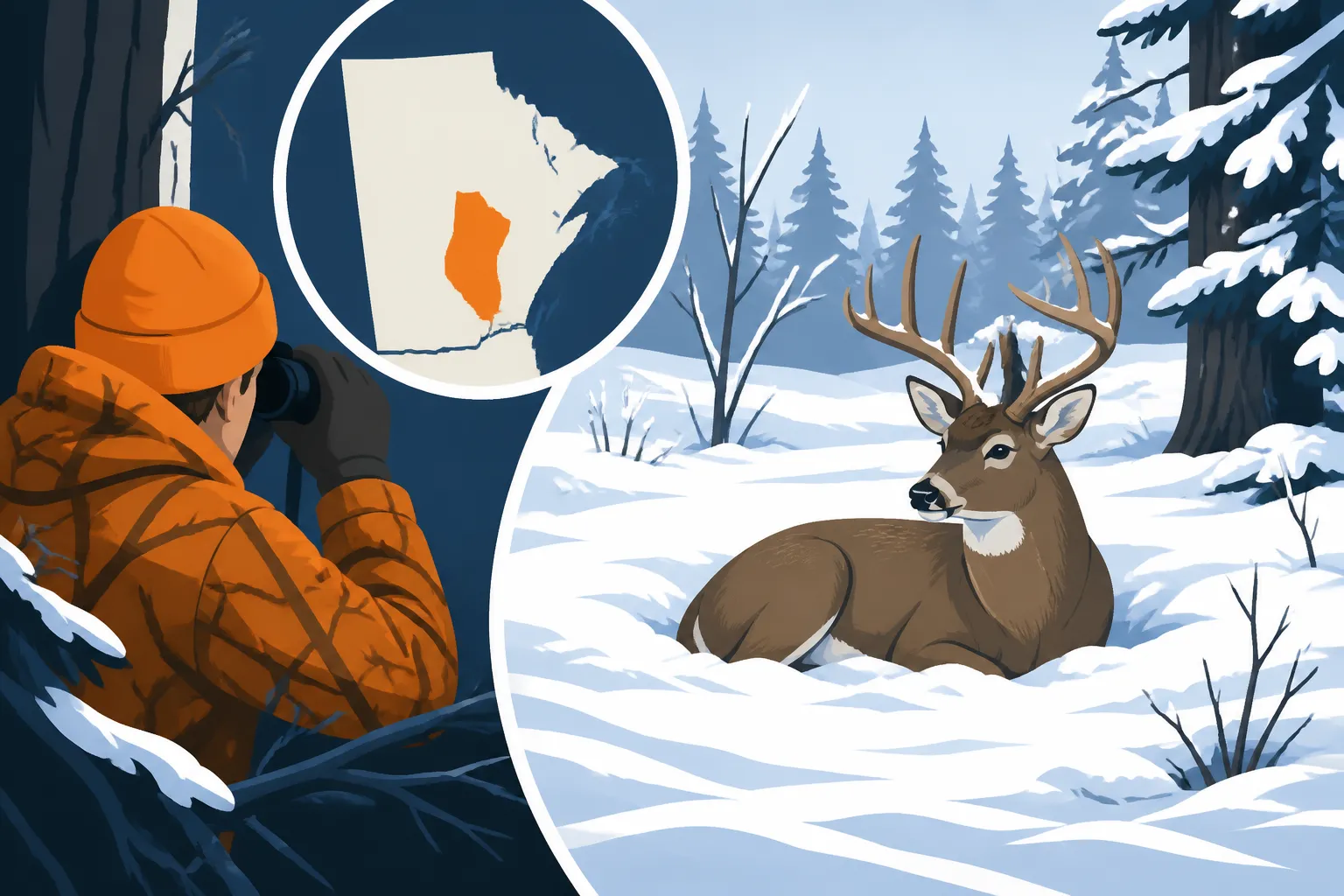
They often bed in spots that offer excellent visibility downwind, allowing them to detect threats approaching from that direction, while the thick cover upwind provides concealment. Topography also plays a massive role. A deer bedding on a ridge or bluff will have a commanding view of the terrain below, giving them a distinct advantage. They can also use natural escape routes that are less snow-filled or provide immediate heavy cover, allowing for a quick getaway even when burdened by deep snow.
It can be incredibly frustrating to scout an area you know holds deer, only for them to seemingly vanish once the snow really hits. This isn't magic; it's their innate survival instincts kicking in. They've moved to the most secure, most thermally advantageous spots they can find, which are often the thickest, most inaccessible patches of timber or brush. This is why understanding their preference for both warmth and security is key to deciphering their winter whereabouts. They become incredibly efficient, often only moving short distances between bedding and primary food sources, conserving every ounce of energy.
Prime Deep Snow Bedding Locations
When a truly significant amount of snow blankets the Manitoba landscape, whitetails condense their activity and seek out very specific types of cover. These aren't just random spots; they're strategic havens designed to maximize survival. Knowing what these prime locations look like can drastically narrow down your search and help you focus your efforts.
Conifer Stands and Bush Pockets
Without a doubt, dense stands of conifers are gold mines for deep snow bedding. Here in Manitoba, think of thick spruce, pine, or even substantial cedar swamps. These evergreen trees retain their needles year-round, creating an incredibly effective thermal blanket. The dense canopy intercepts falling snow, meaning the ground beneath often has considerably less snow accumulation than open areas. This makes it easier for deer to lie down without expending excessive energy to dig out a bed. The thick needles also provide an excellent windbreak, shielding deer from brutal winter gusts.
Deer will often "yard up" in these conifer stands, especially during severe winters. This means multiple deer, sometimes even small herds, will concentrate in relatively small areas, creating a network of trails and beds. These yards are critical for survival, as the collective presence of deer helps keep trails open and food sources accessible. You might find these dense pockets within larger areas like the Sandilands Provincial Forest or the eastern portions of the Duck Mountain Provincial Forest, where evergreen cover is more prevalent. When you're Hunting Whitetails in Manitoba's Bush Country, these conifer blocks are prime targets. Even smaller, isolated clumps of spruce or pine on private land can become major bedding hubs. The thicker and nastier the patch of green, the more attractive it is for a whitetail looking for a warm, safe spot.
River and Creek Bottoms
While conifers are king, river and creek bottoms offer another crucial deep snow bedding option. These riparian zones often feature unique microclimates and vegetation that appeal to whitetails. The banks and valleys themselves provide natural shelter from strong winds, much like a natural trench. Furthermore, the vegetation in these areas can differ from the surrounding uplands. You might find dense pockets of willow, dogwood, or even some evergreen species clinging to the riverbanks, all providing excellent cover.
South-facing slopes along these waterways are particularly attractive. These slopes catch more direct sunlight throughout the day, which can melt snow faster and create drier, warmer bedding areas. Deer will often bed high on these south-facing banks, allowing the sun to warm them while still providing a downhill escape route or views of the terrain below. These linear features also serve as natural travel corridors, linking bedding to food sources or other cover. During extreme cold, deer will often utilize these sheltered bottoms, moving from the open fields or less dense cover to the protected lowlands. It's a crucial pattern to understand, as often a buck will move from a wide-open farm field to a creek bottom that’s only 100 yards away, seeking that wind protection and slightly warmer air.
Thick Willow Runs and Aspen Bluffs
Even in areas dominated by deciduous trees, thick willow runs and dense aspen bluffs can offer surprisingly effective deep snow bedding. While they don't provide the same thermal protection as conifers, their sheer density offers incredible concealment and a significant windbreak, especially when mature and intertwined. In Manitoba's Parkland region, these types of cover are abundant and frequently utilized by whitetails.
Willow runs, particularly those found around frozen sloughs or along field edges, can become impenetrable tangles once snow weighs down their branches. This creates a low, dense canopy that traps heat and blocks wind. Bucks, especially mature ones, love these thick, nasty spots because they can disappear entirely. Similarly, older aspen stands, especially those with significant regeneration and thick undergrowth, can provide similar protection. The density of the smaller trees and brush acts as a snow trap, often creating areas where the snow depth is less prohibitive. A south-facing aspen bluff can be particularly effective, combining solar gain with dense cover. This is where a buck might choose to bed, allowing it to see down into a drainage or across a field without being easily spotted. Knowing that deer often use these bluffs is key when you're Hunting a Poplar Bluff at First Light.
Scouting for Deep Snow Bedding Sign
Finding where whitetails bed in deep snow is less about guessing and more about diligent detective work. The snow itself, while a hindrance to deer, becomes an incredible canvas for hunters, revealing secrets that are often hidden in bare ground conditions. Learning to read these clues is paramount to successful winter hunting.
Reading Tracks and Trails
In deep snow, tracks are your best friend. Every deer leaves a clear imprint, making it much easier to identify their travel patterns and, crucially, pinpoint their bedding areas. Fresh tracks are paramount. A single set of tracks heading into a thicket, especially one where you suspect a bedding area, is a strong indicator. Look for tracks that lead from known food sources—like a standing cornfield or a cut hayfield—directly into heavy cover. These are likely the travel corridors deer use to get to their daytime beds.
Don't just look for isolated tracks. You're trying to identify major trails that several deer are using, especially if they are "yarding up." These trails will be more packed down, making travel easier for the deer and providing a clear path for you to follow, albeit carefully. Also, keep an eye out for "craters" in the snow. These are circular depressions where deer have been digging their noses into the snow to access browse like woody stems, acorns, or leftover crop residue. These craters often indicate nearby bedding or a transitional feeding zone between bedding and primary food sources, hinting at What Whitetails Eat Through a Hard Winter. For efficient scouting, consider utilizing tools like GoHunt, which allows you to examine satellite imagery of an area and identify dense cover or potential travel corridors before you even step foot in the snow. This can save you countless hours and help you pinpoint likely bedding locations from the comfort of your home.
Key Visual Indicators
Beyond tracks, there are several other visual cues that scream "deer bed here!" The most obvious, of course, are the actual beds themselves: matted-down snow in an oval or circular shape, often slightly melted from the deer's body heat. In severe cold, you might even see a faint impression of their body, or ice crystals melted around the edge. Fresh beds will often have steam rising off them on a very cold morning, or at the very least, not be covered with a fresh layer of snow or ice.
Look for other signs of deer activity within the suspected bedding area. Rubs on small trees or saplings, even in winter, can indicate a buck has spent time there. Droppings are another clear sign; concentrated droppings usually mean deer are spending a significant amount of time in that spot. Also, pay attention to browse lines – areas where deer have been chewing on twigs and branches, often higher up than you'd expect due to snow depth. Sometimes you'll even see where they've rubbed velvet off their antlers in early fall, indicating a favorite hideout that they return to. These subtle signs, combined with the visible tracks and knowledge of preferred cover, paint a clear picture of where deer are spending their deep-snow days, confirming what you've learned by Reading Sign After a Fresh Snow.
Adapting Your Hunting Strategy for Deep Snow
Hunting whitetails in deep snow isn't just about finding them; it's about altering your entire approach to match their survival instincts and the challenging conditions. The game changes dramatically when the landscape is buried, and your tactics need to change with it.
The Patience Game
When whitetails are concentrated in deep snow bedding, their senses are heightened, and their tolerance for intrusion is extremely low. Moving too quickly or making too much noise will almost certainly bust them out of their beds before you even get close. This is why patience is your most valuable asset. Still-hunting, or moving incredibly slowly through suspected bedding areas, becomes an art form. You're not just walking; you're observing, taking one step at a time, pausing for extended periods to scan the cover for any flicker of movement or unusual shape.
Tracking a deer in deep snow can be incredibly effective, but it demands immense patience. It's a commitment to a single animal, following its path step by painstaking step, reading every subtle change in its gait or direction. This requires a level of focus and stealth that many hunters aren't accustomed to. Remember that sound travels differently in deep snow; your footsteps might be muffled, but any snapping twigs or rustling clothes will be amplified. Wind is also your constant companion in these conditions. Ensure you are always hunting into the wind or with a crosswind that favors you, as a deer's nose is its primary defense against intrusion. Scent control becomes even more critical when you're trying to get close to bedding areas. It's a long-term game; sometimes you might spend hours just to move a few hundred yards. This slow, deliberate approach is key to success when you're Hunting Whitetails at Thirty Below.
Stand Placement Near Bedding
While the temptation might be to go right into the thickest bedding cover, that's often a recipe for disaster. The goal is to hunt the edges of these deep snow bedding areas, catching deer as they transition to and from food sources, or as they shift beds during the day. This requires a delicate balance: getting close enough to be effective without spooking them out of their sanctuary entirely.
Focus your stand placement on travel corridors that lead directly from known bedding to feeding areas. These might be subtle trails through the snow, pinch points in the terrain, or natural funnels that deer are forced to use. Look for saddles, creek crossings, or breaks in dense cover. Consider where the deer will likely exit their bedding in the late afternoon to feed, or where they might return in the early morning. Setting up along these transition routes, often within 100-200 yards of the densest cover, can be incredibly productive. Remember that deer are often going to take the path of least resistance in deep snow, so they will use routes that minimize energy expenditure. GoHunt's satellite imagery can also be invaluable for identifying these subtle funnels and pinch points near heavy cover. Think about a sheltered willow run or a bush edge that offers both cover and a clear path towards a food source. Understanding these subtle movements is vital for hunting success, especially because Why Bush Country Bucks Live Longer is often directly related to their ability to utilize dense cover for survival.
Here's a quick comparison of popular bedding covers and their deep snow characteristics:
| Cover Type | Advantages in Deep Snow | Disadvantages | Best Time to Hunt Nearby |
|---|---|---|---|
| Dense Conifer Stands | Excellent thermal cover, intercepts snow, windbreak | Very thick, difficult to navigate quietly | Mid-day (for shifting beds), late afternoon (feeding) |
| Thick Willow Runs/Aspen Bluffs | Good windbreak, dense visual cover, snow accumulation varies | Less thermal than conifers, can be very noisy to enter | Early morning (returning to bed), late afternoon (feeding) |
| River/Creek Bottoms (south-facing slopes) | Wind protection, solar gain, diverse vegetation, travel corridors | Can funnel human activity, limited visibility uphill | Mid-day (sun exposure), early morning/late afternoon (travel) |
| Blowdowns/Heavy Brush Piles | Excellent thermal and visual security, minimal snow | Small, typically only holds single deer, hard to approach | Still-hunting during quiet conditions |
Remember, your goal is to intercept the deer without pressuring them directly in their beds. Use the wind, move slowly, and be patient. The cold and snow are your allies in concentrating the deer; it's up to you to leverage that to your advantage.
Disclaimer
Hunting is an inherently dangerous activity. Always prioritize safety, adhere to all local hunting regulations and laws, and ensure you have the necessary licenses and permits. The information provided in this article is for educational purposes only and should not replace proper hunter education or professional guidance. Be aware of weather conditions, practice ethical hunting, and respect private property.