Hanging a Stand on a Manitoba Bush Edge
There’s nothing quite like the rush of hunting whitetails in Manitoba, but often, the most frustrating part is when those big bucks seem to vanish into thin air right at the edge of a field or dense cover. You see them, they’re feeding, then poof—they’re gone, swallowed by the thick bush. This guide is all about mastering that crucial transition zone: the bush edge. We'll dive deep into how to scout, choose, and precisely place your stand on these vital travel corridors, turning those disappearing acts into prime hunting opportunities.
Understanding the Manitoba Bush Edge Dynamic
The bush edge in Manitoba isn't just a line where trees meet open ground; it's a dynamic ecosystem, a natural highway, and a critical security blanket for whitetails. Understanding why deer use these areas is the first step to successfully hanging a stand.
Why the Bush Edge is a Whitetail Highway
Think of the bush edge as the deer equivalent of a service road next to a busy highway. While they might occasionally cross the open field (the highway) to get from point A to point B, they'd much rather stick to the less exposed, more secure path that offers cover and quick escape routes. This transition zone, where the dense timber or thick willows meet a more open environment like a field, slough, or even lighter timber, provides several benefits for deer.
First, it offers immediate security. A buck moving along a bush edge can quickly melt back into the shadows if he senses danger, keeping him hidden from predators, including hunters. Second, these edges often present a smorgasbord of food sources. Deer will browse on the shrubs, young trees, and forbs that thrive in these sun-drenched margins, while also being able to nip out into adjacent agricultural fields for a quick meal of soybeans, corn, or alfalfa. This dual benefit of food and cover makes the bush edge an irresistible draw. Throughout the day, especially during the rut, bucks will cruise these edges, scent-checking for does that might be feeding or traveling. If you're looking to capitalize on this natural behaviour, you need to understand the nuances of Hunting Whitetails in Manitoba's Bush Country.
Reading the Landscape for Key Edges
Not all bush edges are created equal. Some are bustling intersections, while others are quiet cul-de-sacs. Your job as a hunter is to identify the high-traffic areas, the ones that funnel deer naturally. Start by looking for pinch points where two pieces of cover narrow, forcing deer into a smaller corridor. A point of timber that juts out into a field, or a narrow strip of bush connecting two larger blocks of cover, are classic examples. These are often prime spots.
Also, pay close attention to elevation changes. A bench on a hillside, even a subtle one, often serves as a natural travel route, offering deer a slight advantage in visibility. Creek bottoms, drainage ditches, and old fence lines that parallel a bush edge can also act as hidden pathways, providing additional cover for deer to move undetected. During your scouting, consider using tools like GoHunt to analyze satellite imagery. This can give you an aerial perspective, helping you spot these natural funnels and travel corridors before you even step foot on the property. Look for irregular shapes, fingers of timber extending into fields, or natural barriers that would guide deer movement. For example, if you're Hunting a Standing Canola Field Edge, the deer will almost always stick to the cover if possible.
Key Considerations for Stand Placement
Once you've identified a promising bush edge, it's time to zero in on the exact stand location. This isn't just about picking a tree; it's about a strategic decision that factors in the wind, your approach, and the specific tree's suitability.
Wind Direction is Your #1 Priority
I cannot stress this enough: wind direction is paramount. A perfectly placed stand means nothing if your scent is blowing directly into the deer's nose. Whitetails, especially mature bucks, rely heavily on their sense of smell for survival. Always approach and hunt a stand with the wind in your favour. This means having multiple stand locations for different wind directions, or at the very least, a primary stand with a clear understanding of its limitations.
Before you even think about hanging a stand, spend time observing the prevailing winds in your hunting area, especially during the times you plan to hunt. Morning thermals often pull scent downhill, while evening thermals push it upwards. Use a wind checker constantly when scouting and hunting. Position your stand so that your scent cone blows away from where you expect deer to approach or travel. This might mean placing your stand slightly off the main trail, allowing your scent to drift behind them as they pass. Sometimes, a thermal hub, where different wind currents meet and swirl, can be a great place to set up, but it requires diligent observation and perhaps some real-time data from weather apps.
Access and Egress Without Spooking Game
Getting to and from your stand without alerting every deer in the county is often the trickiest part of stand hunting. Your entry and exit routes should be as quiet and concealed as possible. This often means using natural terrain features, thick ditches, creek beds, or even a different patch of timber than the one you're hunting. Avoid walking directly across open fields or through areas where deer are likely to be bedding or feeding at the time of your approach.
Time your movements carefully. If you're heading to an evening hunt, get in early enough to settle down before deer activity starts, but not so early that you're baking in the sun for hours. For morning hunts, plan to be in your stand well before legal shooting light. Use the cover of darkness to your advantage, moving slowly and quietly. Think about sound-dampening clothing and boots. Even small things, like ensuring your zippers aren't jingling or your backpack isn't scraping branches, can make a huge difference. If deer are using a particular Hunting a Willow Run for Whitetails, your approach needs to respect that natural movement.
The Importance of the Right Tree
Choosing the right tree for your stand isn't just about finding one tall enough. You need a stable, healthy tree that provides adequate cover for concealment, both from the ground and potentially from other deer looking up. Look for trees with multiple branches or dense foliage to break up your silhouette. An evergreen like a spruce or pine can offer year-round cover, which is a significant advantage in Manitoba's often open deciduous forests once the leaves drop.
Consider the angle of your shots. The tree should allow for clear shooting lanes in the directions you anticipate deer to appear, without requiring excessive trimming that might alert deer to your presence. Also, consider the height. While higher stands generally offer a better vantage point and help with scent dispersion, too high can make shooting awkward and increase the risk of a fall. A good rule of thumb is 15-25 feet, depending on the surrounding terrain and cover. Always check the tree for soundness, avoiding dead or rotting trees, and make sure it can handle the weight of you and your gear. The best stand in the world won't do you any good if the tree it's on is falling apart.
Practical Steps for Hanging Your Stand
Now that you've got the strategy down, let's talk about the actual execution of getting that stand into the tree. This is where patience, precision, and safety come into play.
Scouting Before You Hang
Before you carry that stand into the bush, you need to do your homework. This involves detailed pre-season scouting, which is often best done during late winter or early spring after the snow has melted but before heavy foliage obscures sign. Look for heavily used deer trails, rub lines, and scrapes. These are clear indicators of deer travel and activity. Pay attention to how deer enter and exit fields, where they cross fences or obstacles, and where they seem to pause before committing to open areas.
Trail cameras are invaluable tools for this. Set them up on potential pinch points or trails along the bush edge and let them run for a few weeks. This will give you concrete evidence of deer movement patterns, including the time of day and the types of deer (bucks, does, fawns) using the area. A high-quality mapping app, like one available through GoHunt, can help you mark these observations, track deer movement, and even map out potential stand locations and access routes. Understanding Reading Whitetail Sign in Manitoba Aspen is crucial for this pre-season legwork. You’ll want to know if you're looking at fresh sign or something from last season.
Installation Techniques for Safety and Stealth
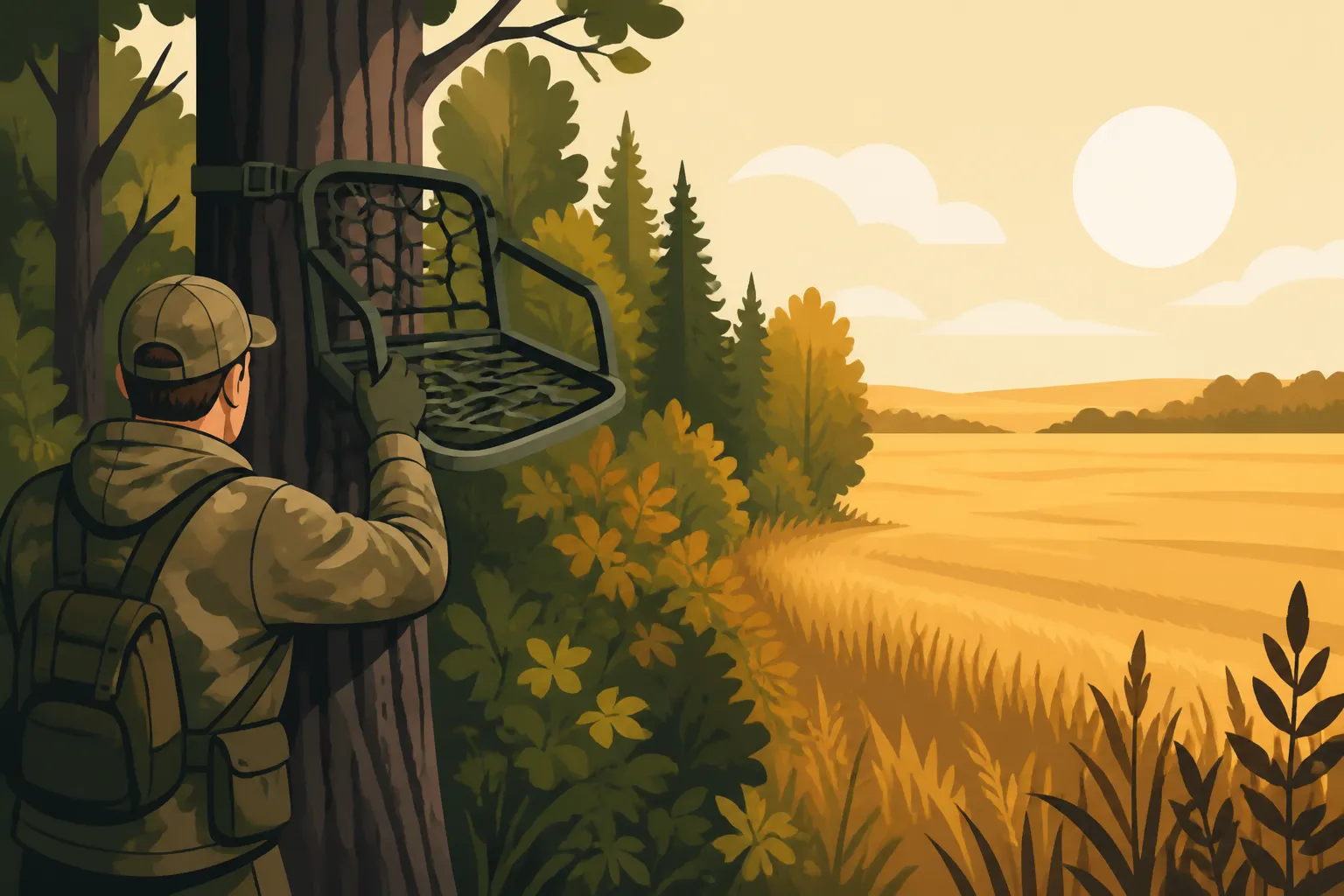
Hanging a stand needs to be done with absolute safety and stealth in mind. First and foremost, always wear a full-body safety harness from the moment your feet leave the ground until they touch down again. This is non-negotiable. Many ladder stands and hang-on stands will come with basic harnesses, but investing in a comfortable, high-quality one is money well spent.
When it comes to the actual installation, try to be as quiet as possible. Choose a day with some wind, which can help mask minor sounds. Avoid dropping tools or making excessive noise. Use a rope to pull your stand and other gear up after you've secured your climbing method (ladder sections, climbing sticks, or screw-in steps). Trim shooting lanes sparingly and only what is absolutely necessary. Over-trimming can create unnatural gaps that deer might notice, or worse, expose you too much. The goal is to open just enough space for a clear shot, not to clear-cut the area. Do this well in advance of the season if possible, to allow deer to get used to the slight changes. If you are getting ready for Bowhunting Manitoba's Early Season, this pre-season prep is even more critical.
Post-Installation Monitoring and Adjustments
Once your stand is hung, the work isn't entirely over. It's smart to place a trail camera near the stand, but far enough away that it won't spook deer as they pass by. This will allow you to monitor deer activity around your setup and confirm if your placement is effective. You might find deer are consistently passing just out of range, or approaching from an unexpected direction.
Based on this monitoring, be prepared to make minor adjustments. This could mean trimming a few more small branches, adding a small ground blind component at the base of your tree for added concealment, or even adjusting your approach route slightly. Sometimes, simply having a secondary stand 50-100 yards away that covers a different wind direction or approach angle can be more effective than trying to force one stand to do it all. Remember, deer patterns can change throughout the season due to crop harvest, pressure, or the onset of the rut. Flexibility is key to continued success.
Advanced Strategies for Bush Edge Stands
Beyond the basics, there are some more advanced tactics you can employ to make your bush edge stand even more productive, especially as the season progresses.
Decoy and Calling Tactics
Integrating decoys and calling into your bush edge strategy can significantly increase your odds, particularly during the peak of the rut. A buck decoy placed strategically in an adjacent field, visible from the bush edge, can be an irresistible challenge for a cruising buck. Position it so that the buck has to pass your stand to confront the decoy, ideally quartering away for a good shot opportunity. Doe decoys can also work, especially if paired with subtle doe bleats.
Calling, when done correctly, can draw deer right into your shooting lanes. Soft grunts and doe bleats can pique a buck's curiosity as he works the edge. During the rut, more aggressive tactics like rattling and snort-wheezes can challenge a dominant buck and bring him storming in to investigate. Always consider the wind when calling; you want the sound to carry to the deer, but you never want the deer to get downwind of your stand while investigating. Practice your calls beforehand to ensure they sound natural. Knowing Rattling and Calling Parkland Whitetails effectively can be a game-changer when targeting these prime locations.
Playing the Weather and Time of Day
Manitoba weather is notoriously unpredictable, but understanding its influence on deer movement can give you a significant edge. Cold, crisp mornings after a front, especially during the rut, often see increased deer activity along bush edges as bucks are up and moving to find does. Overcast days with light rain or drizzle can also be excellent, as the conditions mask sound and scent. High winds, however, can make deer hold tight in cover, reducing movement, but sometimes they will still cruise a protected downwind edge.
Similarly, deer movement patterns shift throughout the day. Early mornings and late evenings are typically prime times, as deer move between bedding areas in the bush and feeding areas in the fields. However, during the peak of Hunting the Rut in Early to Mid November, bucks can be active at any time of day, cruising those bush edges relentlessly. Sitting all day in your stand, especially on a cold November day, can pay off with a cruising monarch. Prepare for these long sits with proper clothing and supplies; Hunting Safely in Deep Winter Cold is no joke in Manitoba.
Types of Stands for Bush Edge Hunting
Choosing the right type of stand is crucial for comfort, safety, and effectiveness. Each has its pros and cons, depending on your hunting style and the specific edge you're targeting.
| Stand Type | Pros | Cons | Best Use Cases |
|---|---|---|---|
| Hang-On Stand | Lightweight, portable, versatile for different tree types, good for stealth | Requires climbing sticks/steps, can be less comfortable for long sits | Mobile hunting, targeting specific short-term deer patterns, adapting to changing conditions along bush edges |
| Ladder Stand | Very stable, comfortable for long sits, easy to access | Less portable, visible, limits tree choice, can be noisy during setup | Permanent or semi-permanent setups, high-traffic edges, youth hunters, hunters preferring stability |
| Climbing Stand | Highly mobile, no external climbing aids needed, quick setup/takedown | Limited to straight, limbless trees; can be noisy to ascend/descend | Agile hunters covering large areas, targeting specific trees found on the bush edge, hunting public land |
| Ground Blind | Highly portable, excellent concealment, safe, good for adverse weather | Limited visibility, scent can be trapped, may spook deer if not brushed in | Areas with sparse trees, open field edges, hunting with kids, adverse weather conditions, easy setup |
For many bush edge scenarios, a hang-on stand with climbing sticks offers the best combination of mobility and stealth, allowing you to adapt to new intel. However, if you've got a proven, high-traffic spot that you'll hunt repeatedly, a comfortable ladder stand might be a better long-term solution. When considering any stand, research brands like GoHunt who often feature reviews and options from various manufacturers, helping you find gear that suits your needs.
Disclaimer
The information provided in this guide is for general educational and informational purposes only. Hunting regulations, seasons, and access rules in Manitoba can change. Always consult the most current Manitoba Hunting Guide, local regulations, and obtain all necessary licences and permissions before hunting. Safety should always be your top priority. Ensure you have proper Manitoba Hunter Education Requirements and understand all safety protocols for stand use.