Ptarmigan Colour Change Through the Season
One of the most fascinating challenges for any hunter venturing into Manitoba's far north is trying to spot ptarmigan. These incredible birds are masters of camouflage, evolving to literally change their wardrobe with the seasons. If you've ever found yourself staring at what looks like an empty landscape only to have a flurry of white burst from underfoot, you know the frustration – and the marvel – of their disappearing act. This guide will walk you through the ptarmigan's remarkable seasonal colour transformations, helping you understand how they manage to stay hidden year-round and what that means for spotting them in the wild.
The Seasonal Wardrobe of Manitoba Ptarmigan
Ptarmigan aren't just one colour; they're a living, breathing fashion show, perfectly adapted to their environment. Their plumage changes dramatically throughout the year, a genetic marvel that allows them to blend seamlessly with the ever-shifting backdrop of Manitoba's northern landscapes, from snowy tundra to rocky lichen fields. It’s not just a subtle shift; it’s a complete overhaul, designed for survival against a host of keen-eyed predators.
Winter's Ghost: Pure White Camouflage
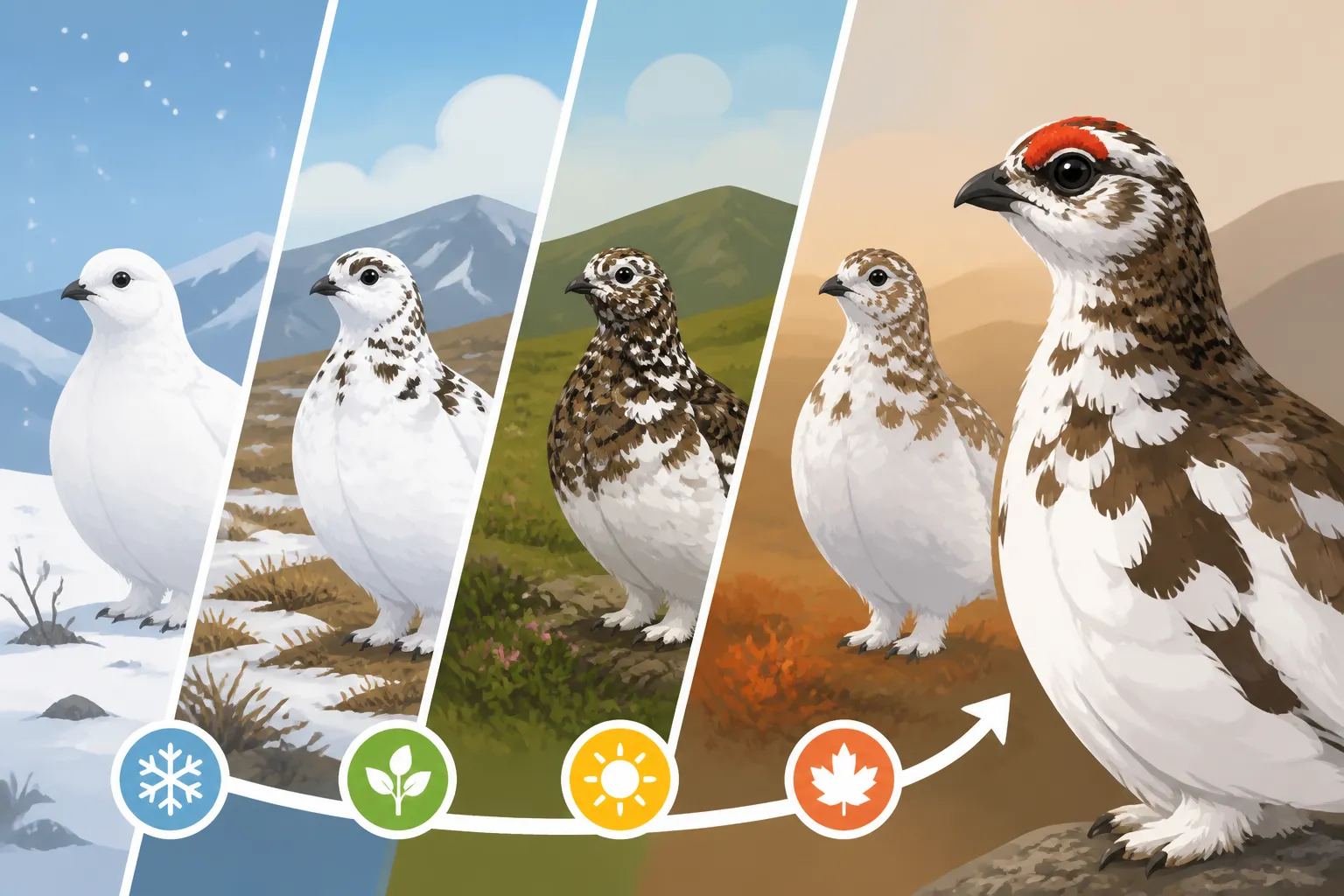
When the snow blankets the northern reaches of Manitoba, usually from late October or early November right through to April, the ptarmigan transforms into a ghost of the tundra. Their entire body, from head to tail, becomes a pristine, pure white. This isn't just a clever trick; it's essential for their survival. Imagine a snowshoe hare in winter – same idea. This dense, white plumage provides exceptional insulation against the brutal cold of the north, trapping air close to their bodies and keeping them warm when temperatures plunge far below freezing.
But beyond warmth, the primary function of this snowy coat is invisibility. Against a backdrop of endless white, a pure white bird with no contrasting markings virtually disappears. Predators like arctic foxes, wolves, and even gyrfalcons have an incredibly tough time picking them out against the snow. For hunters who venture north for Ptarmigan Hunting in the Far North, spotting them in their winter whites requires an eagle eye and often, a bit of luck. They become little more than bumps in the snow, only giving themselves away when they flush. This makes them incredibly challenging quarry, blending perfectly into the drifts and frozen landscape.
Spring's Subtle Shift: Transition to Tundra Tones
As the long, harsh grip of winter begins to loosen and the first patches of bare ground, dark rock, and emerging vegetation start to show through the melting snow in April and May, the ptarmigan's wardrobe begins its next transition. This isn't an overnight change; it's a gradual molt where their pristine white feathers are slowly replaced by a mosaic of brown, grey, and black plumage. You'll often see them in a wonderfully patchy state during this time, a living embodiment of the spring melt itself.
This transitional period is crucial. A pure white bird would stand out like a beacon against the increasingly exposed tundra, making them easy targets. The emerging browns and greys help them blend with the rocky outcrops, sparse grasses, and patches of lichen that are quickly becoming visible. The mottling effect of the old white and new dark feathers makes their outline less distinct, aiding in concealment. While the speed of this molt can depend on how quickly spring arrives and progresses, it's a precisely timed biological process designed to keep them camouflaged as their world thaws.
Summer's Earthy Embrace: Brown and Barred for the Bush
By the time summer truly settles in across northern Manitoba, generally from June through August, the ptarmigan has shed almost all remnants of its winter white. Its summer coat is a masterpiece of earthy tones, allowing it to merge with the vibrant, yet often stark, colours of the subarctic landscape.
Blending with Boreal Blooms: Darker Plumage
In summer, the ptarmigan's plumage shifts to a much darker, more varied palette. Predominant colours are rich browns, warm greys, and even some black, often interspersed with subtle hints of rufous or buff. This isn't a uniform colour, but rather a complex pattern that perfectly mimics the rocks, low-lying shrubs, heath, mosses, and lichens that dominate their breeding grounds. Whether it's the Willow Ptarmigan (Lagopus lagopus) or the Rock Ptarmigan (Lagopus muta) found in Ptarmigan in Manitoba's Far North, their summer attire is a testament to natural selection.
This darker, more variegated plumage allows them to disappear among the low-growing plants and rocky terrain. When they are still, they become virtually invisible, indistinguishable from the ground itself. This is particularly important during nesting season when hens spend long hours on their nests, relying entirely on their camouflage to protect their eggs and young from predators. Even when the boreal flowers are blooming and the tundra is alive with colour, the ptarmigan still manages to find its perfect hiding spot.
The Importance of Pattern: Barring and Mottling
It's not just the colour that provides camouflage; it's the intricate patterns. The summer plumage often features fine barring and mottling – irregular streaks and spots of different shades. This "disruptive coloration" works by breaking up the bird's outline, making it incredibly difficult for a predator to distinguish the shape of a bird from the background. Imagine trying to find a jigsaw piece on a matching puzzle board.
This barring helps them vanish among the shadows and highlights created by vegetation and rocks. A solid brown bird might still be noticeable, but one with complex patterns tricks the eye, making it seem like just another part of the ground. This highly effective camouflage is what allows ptarmigan to thrive in an environment where they are a primary food source for many raptors and terrestrial carnivores. Understanding this patterning helps hunters identify suitable ptarmigan habitat and where they might be Reading Sign After a Fresh Snow from other species.
Autumn's Mosaic: Preparing for the Snows
As summer wanes and the crisp air of autumn descends upon the northern territories, typically from September into October, the ptarmigan begins its third major transformation. This autumn molt is a race against time, as they must regain their white winter coat before the first significant snowfall.
The Return to White: Gradual Fall Molt
Just as in spring, the autumn molt is a gradual process. The dark, earthy feathers of summer are slowly replaced by the incoming white plumage. You'll observe ptarmigan during this time sporting a beautiful, often striking, mix of browns, greys, and patches of pure white. This patchwork look is again perfect for the autumn tundra, which itself becomes a tapestry of colours – reds, golds, and browns from decaying vegetation, interspersed with the first dustings of snow. The bird becomes a living reflection of the changing season, a mosaic perfectly matched to the landscape.
The white feathers usually start to appear on the belly and wings first, gradually spreading across the body. This methodical change ensures that at no point is the bird completely exposed with a mismatched coat. By the time the heavy snows arrive, they are usually fully re-cloaked in their winter whites, ready to become invisible once more. This timing is critical; an early heavy snowfall caught in summer plumage would be a death sentence for a ptarmigan.
Strategic Advantage of Seasonal Timing
This genetically programmed, multi-stage seasonal timing is a supreme evolutionary advantage. It means that the ptarmigan is almost always perfectly camouflaged, regardless of the time of year or the specific conditions of its habitat. This minimizes its vulnerability to predators, giving it a fighting chance in an often-brutal environment. It's a natural calendar etched into their very being, a cycle of survival passed down through generations.
For hunters, understanding this cycle is paramount. A ptarmigan hunt in early fall might involve trying to spot camouflaged birds against a backdrop of tundra berries and low-lying shrubs, requiring a very different approach than searching for them against fresh snow. Knowing when they transition helps you adjust your expectations and spotting techniques. If you're planning a trip, be sure to check Manitoba Upland Bird Seasons to align your visit with their natural cycles.
Hunting Considerations and Spotting Techniques
Understanding the ptarmigan's remarkable colour changes isn't just an academic exercise; it's a vital piece of knowledge for anyone hoping to spot or hunt these birds. Their camouflage is so effective that it can be incredibly frustrating to walk through prime habitat and see nothing, only to have a covey explode from underfoot when you least expect it.
Adjusting Your Approach to Ptarmigan Camouflage
Your approach needs to be dictated by the season. In summer and early fall, when the ptarmigan are in their brown and mottled plumage, you'll need to focus on scanning the ground slowly and deliberately. Look for subtle movements, a misplaced shadow, or an eye that doesn't quite match the surrounding rocks and vegetation. Walk slowly, pause frequently, and use binoculars to sweep promising areas, paying close attention to areas with dense low-lying cover or rocky outcroppings where they might be roosting or feeding. Think about how hunters approach Walking Up Sharp-Tailed Grouse in Manitoba—it's about slow, methodical movement and keen observation.
Once the snow starts to fly and their white phase kicks in, the challenge shifts dramatically. Now, you’re looking for irregularities in the snow itself. A slightly raised bump, a shadow that seems a little too solid, or even just the shape of a bird's head or tail against the white. Sometimes, the only way to find them is to walk through their known habitat and hope they flush, revealing their presence. Hunting with a good bird dog, especially one experienced with upland birds, can make a monumental difference, as their nose will often find birds your eyes simply can't discern.
Leveraging Technology for Habitat and Timing
While no app can magically show you a camouflaged ptarmigan, modern hunting technology can significantly enhance your chances by helping you understand their habitat and presence. Tools like GoHunt can be incredibly useful for scouting. By overlaying habitat maps, topographic data, and satellite imagery, you can identify prime ptarmigan country before you even step foot in the field. This helps narrow down your search area, focusing your efforts on the high-probability zones. You can mark areas where you've flushed birds previously, noting the date and the specific terrain, helping you build a personal database of ptarmigan hotspots.
Furthermore, knowing the general timing of their molts and matching it with local weather conditions can give you an edge. If you know a big snowfall is coming, you can anticipate their full winter transformation. Conversely, a warm spring might mean they start their transition out of white earlier. Keeping an eye on weather patterns and using scouting tools can make your trips to Manitoba's Far Northern GHAs more efficient and rewarding. These technological aids don't replace field craft, but they certainly complement it, helping you put the pieces together from the comfort of your home before heading out on a hunt for Manitoba's Upland Birds and Where They Live.
Here's a quick overview of the ptarmigan's seasonal colour changes:
| Season | Primary Plumage Colours | Camouflage Purpose | Key Characteristics |
|---|---|---|---|
| Winter | Pure white, with black tail feathers (often covered). | Blends perfectly with snow-covered landscapes, providing ultimate invisibility. | Dense, insulating feathers; almost entirely white body, challenging to spot. |
| Spring | Patchy mix of white, brown, grey, and black. | Blends with melting snow, exposed rocks, and emerging vegetation. | Mottled appearance, with old white feathers slowly replaced by darker ones. |
| Summer | Rich browns, greys, blacks, often with intricate barring. | Mimics the earth tones of rocks, shrubs, mosses, and tundra vegetation. | Disruptive coloration breaks up outline; vital for nesting hens and chicks. |
| Autumn | Patchy mix of brown, grey, black, and emerging white. | Blends with changing fall foliage (reds, golds) and early dustings of snow. | Gradual replacement of dark feathers with white, preparing for winter's arrival. |
Disclaimer
This article is for general informational purposes only and does not constitute professional advice. Laws, prices and regulations vary by location and change over time. Consult a qualified professional for guidance on your specific situation.