Reading Sign After a Fresh Snow
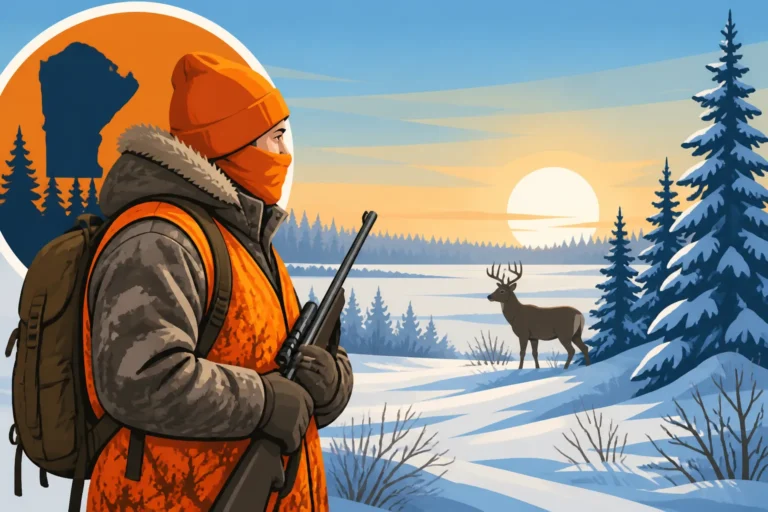
There’s nothing quite like waking up to a fresh blanket of snow, especially when you’re a hunter in Manitoba. That pristine white canvas, while beautiful, can feel a bit intimidating, right? It covers all the familiar landmarks and makes the bush look completely different. But don't let that initial disorientation fool you; a fresh snowfall is actually one of the greatest gifts Mother Nature can give us hunters, turning the landscape into a living storybook of recent animal activity, if you know how to read the pages.
The Magic of a Fresh Snowfall for Hunters
That first dusting, or even a heavy dump, transforms the hunting landscape in incredible ways. It’s like hitting a reset button, wiping away all the old, confusing sign and laying down a clean slate. Suddenly, the subtle whispers of the woods become bold declarations, if you know what to look for. The challenge isn't just seeing the tracks; it's understanding the narrative they tell about the animal's movement, intentions, and even its mood.
Visibility of Tracks
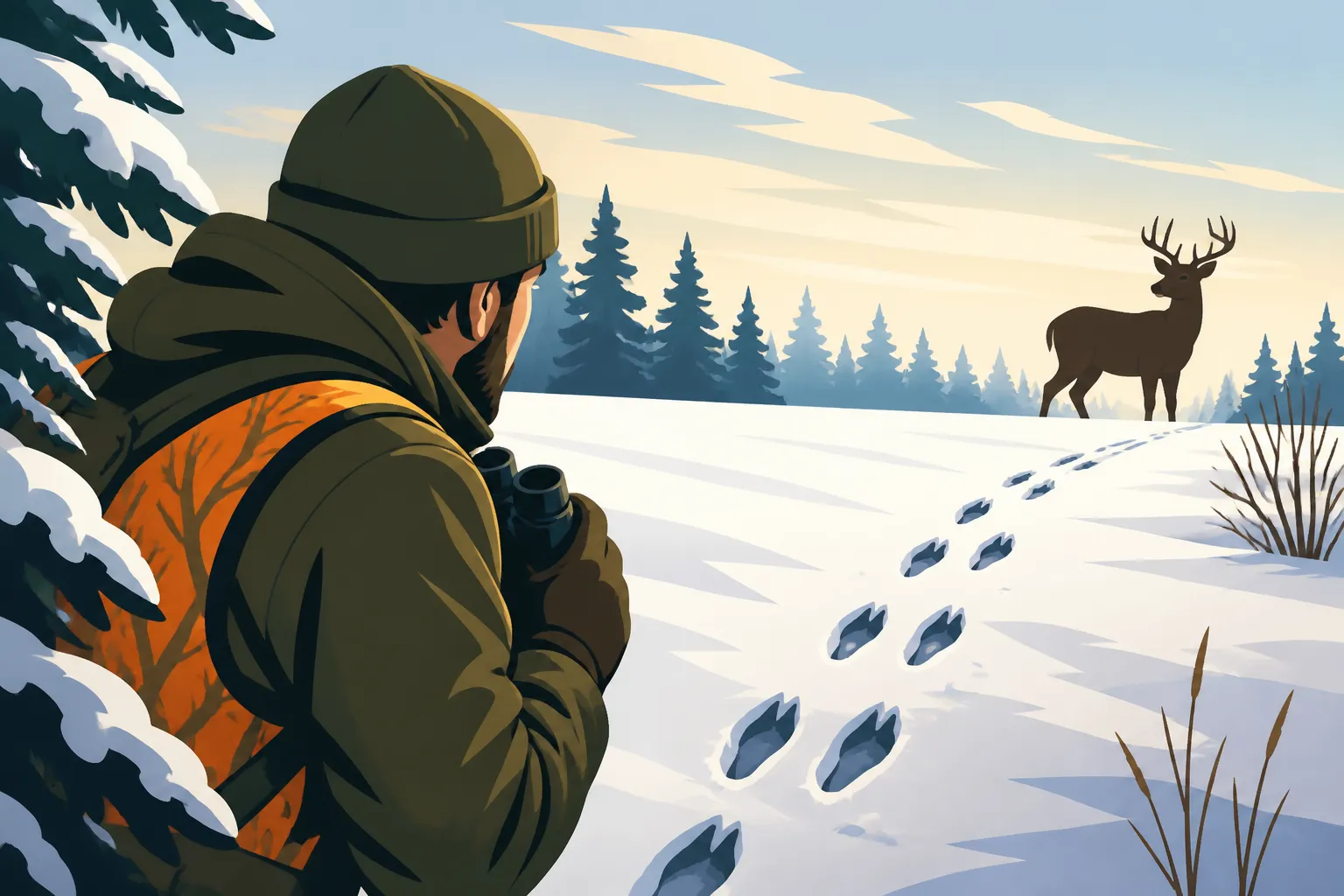
The most obvious, and perhaps most exciting, benefit of fresh snow is the unparalleled visibility it offers for tracks. Gone are the days of squinting at faint depressions in dry leaves or mud, wondering if that scuff was a deer or just a branch. With snow, every step an animal takes leaves a clear, undeniable imprint. This isn't just about knowing an animal was there; it's about seeing precisely where it walked, how fast it was moving, and in what direction. Imagine seeing a perfectly preserved whitetail track, deep and crisp, heading straight from a bedding area towards a feeding field – that’s information you can act on.
This clarity extends beyond just individual tracks. You can see entire travel corridors emerge, revealing patterns that might be invisible otherwise. These might be trails leading to water sources, hidden benches animals use to navigate hills, or even subtle changes in elevation they prefer. When you’re trying to understand how deer move through a particular Game Hunting Area (GHA) in Manitoba, especially in the thick aspen parkland or boreal forest, this kind of insight is invaluable. It essentially gives you an X-ray view into their recent activity.
Timing is Everything
While any snow is good, the freshness of the snow is absolutely critical. A track laid down an hour ago is vastly different from one that’s been exposed to a full day of sun or a night of freezing temperatures. Learning to discern the age of a track is a skill that comes with practice, but it's paramount to successful hunting. You want to be on the trail of a deer that's only moments ahead, not one that passed through yesterday.
Look for sharp edges, distinct dew claw marks, and snow that hasn't begun to melt or crust over in the track itself. If the sun has been out, even for a short while, or if the temperature has fluctuated, the edges of the track will soften and lose definition. A really fresh track might even have a faint "powder" still clinging to the edges, indicating very recent displacement. Conversely, an old track will often have a crust of ice or be partially filled with wind-blown snow, making the details much less clear. This understanding of freshness helps you prioritize which tracks to follow and which to simply note as historical data, allowing you to focus your precious hunting time effectively. Many hunters use apps like GoHunt to check real-time weather and snow accumulation, which can greatly inform their understanding of track age.
Decoding Deer Sign in the White Landscape
Manitoba is renowned for its whitetail deer, and fresh snow makes them incredibly readable. Every scrape of a hoof, every branch browsed, every bed left behind tells a story. Learning to interpret these specific signs will significantly increase your odds of success, especially in the diverse terrain we have here, from open prairie to dense bush.
Distinguishing Whitetail Tracks
Identifying whitetail tracks accurately is the first step in reading their story. Their tracks are generally heart-shaped, with two pointed hooves, and they typically walk with a relatively narrow stride. In fresh snow, you can often see the impressions of their dew claws, especially if the deer was moving quickly or in deeper snow. The presence of dew claw marks usually indicates a running or bounding deer, or one navigating deep drifts. The size of the track, of course, gives you an indication of the animal's size. A large, mature buck will leave a much broader, deeper track than a doe or a fawn, often with a more splayed appearance due to its heavier body.
Pay attention to the walking pattern. A buck, especially a mature one, often has a slightly "toeing-out" gait, with tracks that appear a bit wider and more deliberate. Does and fawns tend to have a more delicate, straight-ahead stride. In deep snow, deer will often "punch" through, leaving deep, post-holing tracks, but the underlying shape remains consistent. When you're trying to determine the sex of a deer from its track, look for the overall size, the depth of the print (indicating weight), and the width of the stride. Following a fresh, large track with splayed dew claws and a heavy stride could lead you to a significant buck, especially when you're Reading Whitetail Sign in Manitoba Aspen.
Rub Lines and Scrapes Under Snow
Many hunters assume that rubs and scrapes become invisible under snow, but this isn't entirely true. While a light dusting might obscure them, a significant snowfall often highlights them in a new way. A fresh rub, where a buck has polished its antlers on a sapling, might be completely covered, but the tree itself might stand out more against the white background. More importantly, bucks will often revisit these signposts even after a snowfall.
For scrapes, look for subtle depressions in the snow, often at the base of low-hanging branches. Bucks will often paw away fresh snow to re-expose the bare earth, urinate in the scrape, and then work the licking branch above. Finding a freshly worked scrape in the snow is like finding gold. The snow will be kicked up around the edges, and if you’re lucky, you might even see a darker, damp spot from fresh urine. These areas are magnetic for deer, especially during the rut, and can be excellent spots to set up for a hunt, especially in GHAs known for active deer.
Bedding Areas and Feeding Patterns
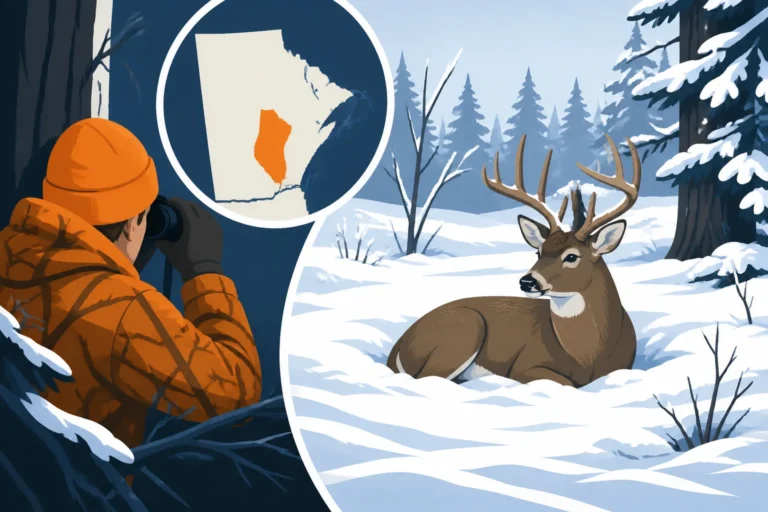
Fresh snow makes identifying bedding areas incredibly easy. Deer, especially when it's cold, will seek out areas that offer shelter from the wind and sun. These could be thick stands of spruce, the south side of a bluff, or even dense willow thickets. A fresh bed will be a clearly defined oval impression in the snow, often with melted-out edges where the deer's body heat has warmed the snow. If it’s very fresh, you might even see steam rising from it in truly cold conditions, or feel warmth if you put your hand in it. Finding multiple fresh beds in a secluded area confirms a preferred bedding spot. Understanding Where Manitoba Whitetails Bed in Deep Snow is key to finding them.
As for feeding patterns, snow reveals exactly what deer are eating and where. You'll see disturbed snow around browse lines, with twigs nipped off, bark scraped, or even paw marks where deer have dug through shallow snow to reach preferred forbs or grasses. Look for patterns in these feeding areas: do they prefer certain types of vegetation, or are they concentrating on specific fields? In agricultural areas, deer often move into standing corn or swathed grain fields, and snow will show precisely where they are entering and exiting, and where they are actively feeding within these areas. This helps you narrow down potential ambush points significantly.
Reading Moose and Elk Tracks and Trails
While whitetails are a primary focus for many Manitoba hunters, our province is also home to magnificent moose and elk. Their sign in fresh snow, while different from deer, is equally telling and can lead to incredible hunting opportunities.
Interpreting Moose Sign
Moose tracks are unmistakable – they are huge, much larger and more rounded than a whitetail’s, often measuring 5-7 inches long. In fresh snow, these massive prints are incredibly distinctive, often appearing deep and clear, especially their dew claws which almost always register due to their weight. Their stride is long, often appearing like they are wading rather than walking, reflecting their size and leg length. What you're looking for with moose isn't just a single track, but a clear, purposeful trail. Moose tend to travel in straighter lines than deer, often preferring the path of least resistance through thick timber or along cutlines.
Beyond tracks, look for browse lines. Moose are browsers, meaning they prefer to eat twigs, leaves, and bark from trees and shrubs. In areas with fresh snow, their feeding activity will be plainly visible: broken branches, debarked saplings (especially aspen and willow), and often very distinct "moose pellets" – large, rounded droppings. If you find a fresh moose trail with extensive browsing nearby, it indicates a feeding area. Understanding the Manitoba's Moose Population Trend in specific GHAs can help you determine if you're in prime moose country where these signs are more likely to lead to success.
Elk Trails and Herd Movements
Elk sign in fresh snow is also distinctive, though often confused with moose by inexperienced hunters due to their size. Elk tracks are smaller than moose tracks, more elongated and pointed than a whitetail's, and generally measure 3-5 inches long. They often leave clearer dew claw impressions than deer, especially when moving at speed or in deep snow. What truly sets elk apart is their tendency to travel in herds. Instead of a single track, you’ll often find a wide, disturbed path through the snow, with many overlapping tracks. This "herd signature" is a dead giveaway for elk.
Elk trails often lead to open grazing areas, such as clearings, pastures, or agricultural fields, where they feed on grasses and forbs. In the Duck Mountain or Riding Mountain areas, where elk populations are strong, you'll see these broad trails leading from dense timber to more open feeding grounds. Fresh elk droppings (smaller and more pointed than moose, but larger than deer) and "beds" (large, oval depressions, similar to deer but much bigger, often in groups) are also crucial indicators. Listening for bugles, even in winter, can also confirm their presence, though actual bugling is rare outside the rut. Finding a well-used elk trail in fresh snow means you've likely found a major travel corridor for a herd, offering excellent opportunities to intercept them, especially when Hunting Elk in the Duck Mountain Country.
Beyond Hoof Prints: Other Crucial Clues
While tracks are undoubtedly the star of the show after a snowfall, the attentive hunter knows that animals leave behind a multitude of other signs. These secondary clues often provide just as much, if not more, information about the recent activities and presence of game.
Droppings and Urination Marks
Fresh droppings are an incredibly valuable indicator of an animal's presence and, more importantly, its recent diet and health. In fresh snow, droppings stand out clearly. For deer, small pellet groups that are soft and dark, or even still steaming in very cold conditions, indicate a very recent presence. The shape and consistency of deer droppings can also tell you about their diet: hard, individual pellets often mean they're feeding on woody browse, while softer, clumped droppings suggest a diet of lush vegetation or agricultural crops.
Urination marks are also highly visible. A fresh urine spot will be a distinct yellow stain in the white snow, possibly still warm if very recent. For bucks, especially during the rut, you might find urine in a scrape, indicating a buck actively working that signpost. Similarly, finding fresh predator urine marks can tell you what kind of predators are in the area and when they last passed through, which can influence how deer are moving.
Predator Activity
Fresh snow is a fantastic medium for tracking predators. Coyote tracks are dog-like but usually narrower, with a straighter stride, indicating a more efficient traveler than a domestic dog. You'll often see them following deer trails, or crisscrossing open fields in search of rodents. Calling Coyotes in Manitoba Farm Country can be very effective if you know they're active in the area. Wolf tracks are much larger than coyote tracks, often the size of a human hand, and again, are characterized by a direct, purposeful stride. Finding wolf tracks near fresh deer sign can indicate a very nervous deer population, often pushing deer into thicker cover or causing them to move primarily at night.
Beyond tracks, look for signs of a struggle or a kill site. Disturbed snow, blood, scattered fur, or even bird activity (like ravens or jays circling overhead) can indicate that a predator has made a kill recently. If you find such a site, it’s a clear sign that predators are actively hunting in the area, which can greatly influence how deer, moose, and elk behave and where they choose to bed or feed. Knowing that Hunting Wolves in Manitoba's North is an option, you can learn to distinguish their massive tracks from smaller canids.
Scavenger Clues
Don't underestimate the small, often overlooked, clues left by scavengers. Crows, ravens, and jays are highly attuned to carcasses or recent kills. If you see a cluster of these birds congregating in a specific area, flying low, or making unusual amounts of noise, it's always worth investigating. They might be feeding on a gut pile left by another hunter, or more importantly, on the remains of a predator kill or an animal that succumbed to the harsh winter conditions.
Even smaller animals like squirrels and rabbits leave easily readable tracks in fresh snow. While not game animals themselves, their activity can give you a sense of the overall health and "life" of a particular section of bush. A busy area with lots of small animal tracks often means a good food source, which in turn could attract larger game. In deep winter conditions, even rabbit tracks can show the direction and density of small game that predators might be keying in on, which then dictates where larger deer might be avoiding.
Strategic Hunting After a Snowfall
Armed with the knowledge of how to read the fresh snow, the next step is to translate that information into a successful hunting strategy. This isn't just about finding an animal; it's about understanding its behavior and predicting its next move.
Following a Fresh Track
This is where the excitement truly builds. Finding a fresh, large track, especially from a mature buck or bull, is the dream scenario. The decision then becomes: when to commit and when to back off? If the track is truly fresh, with crisp edges and minimal disturbance, and the animal is walking, not running, then the chances of catching up are good. Often, deer will walk for a bit, then stop to browse, then walk again. This is your opportunity to carefully stalk. Move slowly, quietly, and use the wind to your advantage.
However, if the track shows signs of a running animal – long bounds, splayed dew claws, or if you notice disturbed snow over a wide area – it might be better to back off and try to circle ahead, anticipating where the animal might be heading. Animals that are spooked will often run until they feel safe, sometimes covering significant distances. Committing to a full-on chase in deep snow can be exhausting and often fruitless. Instead, use your GoHunt mapping app to look for natural funnels, thick cover, or bedding areas in the direction the animal is heading, and try to get ahead of it, or wait for it to settle down.
Hunting Pressure and Animal Movement
Fresh snow also clearly reveals hunting pressure. You’ll see other hunter’s boot prints, quad tracks, or even truck tracks. Knowing where other hunters have been operating can help you predict where deer aren't going to be. Deer quickly learn to avoid areas with heavy human activity, especially after a fresh snow makes them more vulnerable. Often, the best strategy is to find areas that show no human sign, even if it means walking further or accessing more remote sections of Crown Land.
Conversely, fresh snow can also make animals move more deliberately. In deep snow, movement is harder, so deer tend to stick to established trails or areas of shallower snow. They may also bed down more frequently to conserve energy. This can make them more predictable but also more difficult to approach unseen. Understanding how deer move when the snow is deep, and how they conserve energy by yarding up or sticking to certain types of cover, is vital. This knowledge can also help you understand Why Northern Bucks Carry More Body Mass – the harsh conditions require greater energy reserves.
Leveraging Topography
Topography becomes even more critical after a snowfall. Hillsides that face south will melt snow faster, exposing browse or grass, making them attractive feeding areas. Ravines, coulees, and thick creek bottoms offer natural shelter from the wind and heavy snow, often serving as crucial travel corridors or bedding locations. A fresh snow blanket will clearly highlight these features, making them more obvious on the landscape. Use an app like GoHunt to examine contour lines and identify these natural funnels and sheltered spots.
When scouting, look for where trails cross frozen sloughs or climb over a low ridge. These pinch points, emphasized by clear tracks in the snow, are excellent places to set up a stand or blind. When you’re Hunting a Frozen Slough Crossing, for instance, the tracks will show you exactly where deer prefer to cross, allowing you to position yourself perfectly. Don't forget that winter brings extreme cold, so ensure you're dressed appropriately when Hunting Safely in Deep Winter Cold.
Here's a quick guide to some common signs you might encounter in Manitoba's winter wonderland:
| Sign Type | Appearance in Fresh Snow | What it Tells You | Best Action |
|---|---|---|---|
| Whitetail Tracks | Heart-shaped, pointed, dew claws if running/deep snow, 2-4" length | Presence, size/sex (larger=buck), direction, speed (running vs. walking) | Follow fresh, walking tracks; identify travel corridors. |
| Moose Tracks | Large (5-7"), rounded, prominent dew claws, often deep | Presence of large animal, direct travel path, often through thick cover | Look for browse, anticipate bedding in dense timber. |
| Elk Tracks | Elongated (3-5"), pointed, often in wide herd trails | Presence of a herd, likely moving between cover and open feeding areas | Scout for large trails leading to pastures or clearings. |
| Fresh Droppings | Dark, soft pellets (deer), larger rounded pellets (moose), pointed pellets (elk) | Very recent presence, diet (woody browse vs. greens) | Indicates current feeding or bedding area; set up downwind. |
| Urine Stains | Yellow spot in snow, possibly warm if very fresh | Very recent presence, can indicate buck scrape activity during rut | Confirm recent activity in a specific spot. |
| Rubs/Scrapes | Covered, but tree itself stands out (rubs); depressions with kicked-up snow (scrapes) | Active buck presence, especially during rut; potential scrape revisit points | Set up near freshly worked scrapes or rub lines. |
| Bedding Areas | Oval impressions in snow, melted edges if fresh, often in sheltered spots | Recent resting spot, can indicate preferred bedding cover | Approach from downwind, check nearby escape routes. |
| Browse Lines | Nipped twigs, debarked saplings, disturbed snow around vegetation | Active feeding area, indicates preferred food sources | Identify prime feeding areas and intercept routes to bedding. |
| Predator Tracks | Dog-like (coyote), very large (wolf), direct purposeful stride | Predator presence influences game movement; can indicate a kill nearby | Be aware of nervous game; investigate bird activity for potential kill sites. |
| Bird Activity | Crows/ravens congregating, flying low, making noise | Indicates a carcass, gut pile, or recent kill site | Investigate cautiously; may indicate a recent kill by a predator or another hunter. |
Learning to read the sign after a fresh snow is truly one of the most rewarding aspects of hunting in Manitoba. It turns every outing into a detective mission, connecting you more deeply with the natural world and the rhythms of the wild. So next time the flakes start to fall, grab your gear, because a whole new story is waiting to be uncovered. And remember to always have your Winter Truck Kit for a Manitoba Hunt ready for those unpredictable winter conditions.
Disclaimer
The information provided in this guide is for general informational purposes only and does not constitute professional advice. Hunting regulations and conditions can change rapidly. Always consult the most current Manitoba Hunting Guide, local regulations, and relevant authorities before planning any hunting activity. Safety should always be your top priority in the field.