Hunting Ruffed Grouse on a Manitoba Bush Road
There’s nothing quite like the heart-thumping explosion of a ruffed grouse taking flight from seemingly nowhere, sending a jolt of pure adrenaline through your system. Many hunters feel overwhelmed trying to find these elusive birds in Manitoba's vast wilderness, often driving past prime habitat without realizing it. This guide is dedicated to unlocking the secret of successful ruffed grouse hunting right off the beaten path – specifically, on Manitoba's bush roads. We'll dive deep into their habits, proven hunting methods, and crucial safety considerations to help you fill your vest and make lasting memories.
Why Bush Roads Are Ruffed Grouse Magnets in Manitoba
It might seem counterintuitive to hunt near a road, but for ruffed grouse, these corridors are often vital arteries in their world. Understanding why they gravitate to these areas is the first step in successful hunting.
Understanding Ruffed Grouse Habitat Preferences
Ruffed grouse aren't just any bird; they're specialists when it comes to habitat. They thrive in young, regenerating forests, particularly those dominated by aspen, birch, and alder. These areas provide the dense cover needed to escape predators like coyotes and hawks, as well as a rich buffet of food sources. Think thickets of dogwood, hazelnut, and willow, often interspersed with mature aspen stands. These trees are crucial for their diet, offering buds, catkins, and seeds, especially as fall transitions into winter.
Manitoba's landscape, particularly in the central and eastern regions, is crisscrossed with logging roads, utility access trails, and old trapline cutlines that cut right through this prime mixed-wood forest. These disturbances create a mosaic of different age classes of trees – exactly what grouse are looking for. They'll often feed on berries and greens along the sun-dappled edges, then duck into the impenetrable tangles just a few feet away when disturbed. If you're looking for more general information on chasing these birds, consider checking out our guide on Upland Bird Hunting in Manitoba.
The "Edge Effect" and Why it Matters for Grouse
The concept of the "edge effect" is absolutely critical for understanding why bush roads are so productive. It's not just the road itself, but the meeting point of two distinct habitats – the open, disturbed road surface and the dense forest canopy. This edge provides an incredible advantage for grouse. Along the road, sunlight penetrates, encouraging the growth of grasses, clover, and low-growing berry bushes like saskatoon and highbush cranberry, which are all key food items. The gravel or sand of the road provides essential grit for their gizzards, which they need to digest their coarse diet.
But it's the immediate proximity of thick cover that makes the edge irresistible. A grouse can quickly move from openly feeding or dusting on the road into the safety of a dense aspen clone or a spruce thicket in a heartbeat. They utilize these transition zones as their highway system, moving between feeding grounds and bedding areas without expending too much energy. This is a common theme when considering various species; even for Hunting Whitetails on Manitoba Farmland, edges play a crucial role.
Seasonal Movements and Roadside Foraging
Ruffed grouse don't use bush roads identically all year round, but come hunting season in the fall, these roads become increasingly important. In the late summer and early fall, when temperatures are still mild, you might find them dusting themselves in the dry dirt of the roadbed, a crucial activity for feather maintenance. As the season progresses and food sources dwindle in the forest interior, grouse become more reliant on the forage available along these open edges.
They'll consume wild berries, fallen seeds, and the tender green shoots that thrive in the sunlight of the road shoulder. When winter truly bites, they transition to a diet primarily composed of tree buds, particularly those of aspen and birch. The trees adjacent to bush roads often have more accessible buds due to increased sunlight and slightly different growth patterns. This seasonal shift means that a road that was quiet in August might be teeming with birds come October or November. These distinct patterns are similar to those you'd observe when Hunting Ruffed Grouse on a Manitoba Bush Road as the seasons change.
Essential Techniques for Hunting Ruffed Grouse on Manitoba Bush Roads
While hunting grouse on bush roads sounds straightforward, there’s an art to it. It’s about being observant, patient, and knowing when to make your move.
The "Road Hunt" Method: Walking vs. Driving
The classic "road hunt" for grouse can be approached in a couple of ways, and each has its merits depending on the terrain and your hunting style.
One popular method, especially for covering a lot of ground in areas with extensive road networks, is to slowly drive along these bush roads. We're talking crawling speed here, like 10-15 km/h, with windows down, intently scanning the road shoulders and the brush lines for movement. The idea is to spot a grouse walking or feeding on the gravel before it flushes, giving you time to stop, exit the vehicle safely, and take a shot. This method is incredibly effective for scouting out new areas or covering many miles in a day. You might even find it helpful to use a modern hunting app like GoHunt to mark promising stretches of road or pin locations where you've seen birds previously. This allows you to build a database of productive spots over time.
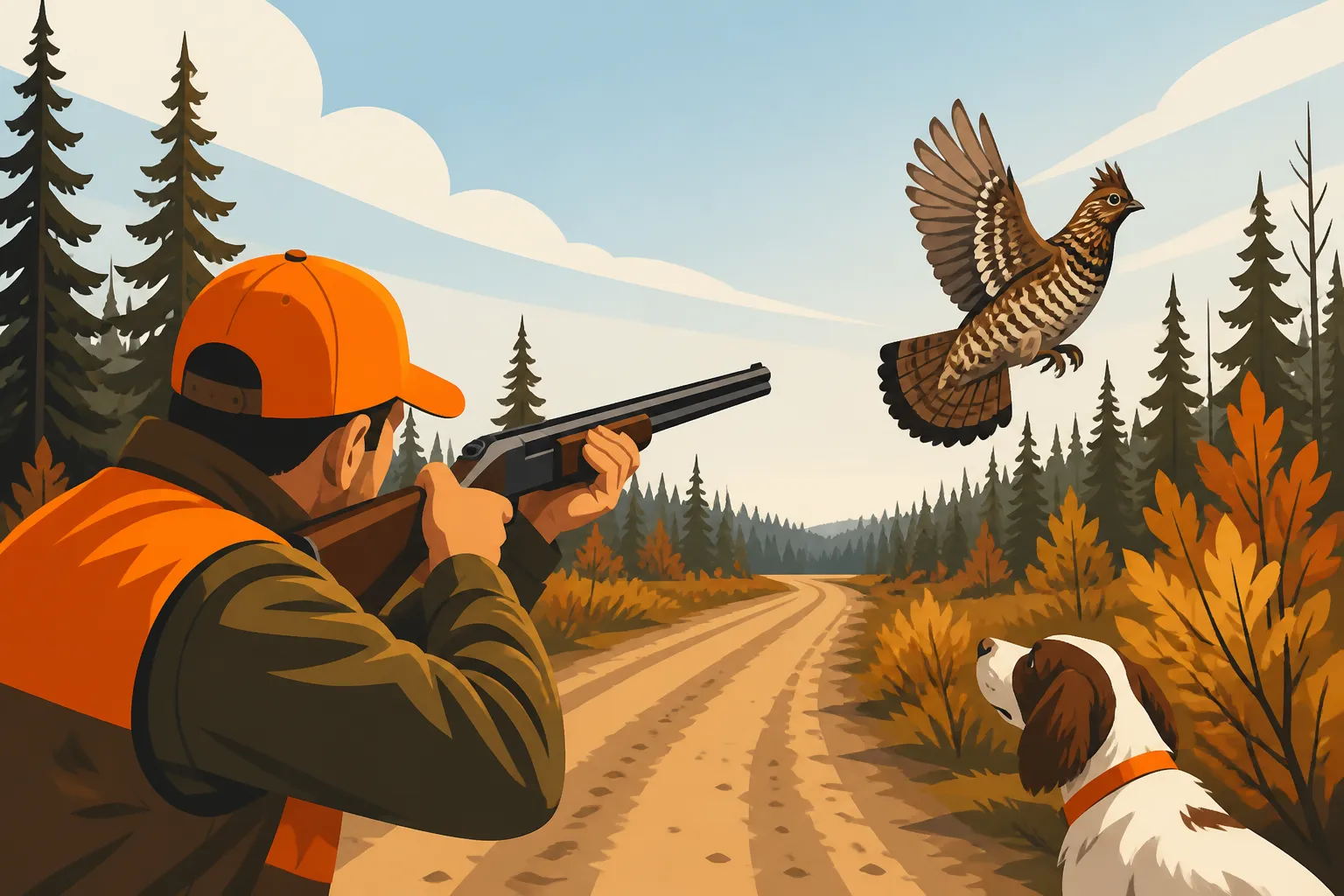
However, many seasoned grouse hunters prefer to walk. Walking offers a much quieter approach, allowing you to hear the subtle rustle of a bird in the leaves or the distinct wing beats of a flush much more readily. It also means you're moving at a pace that allows for a thorough scan of the cover, letting your eyes truly pick apart the shadows and dense vegetation. If you’re hunting with a dog, walking is almost always the superior method. A good bird dog, whether it's a flusher or a pointer, can locate birds that you would undoubtedly walk past or drive by without ever knowing they were there. For more on canine companions, explore Using a Flushing Dog in Thick Cover or Using a Pointing Dog on Manitoba Prairie. When walking, always be aware of your surroundings, especially if you're not on designated hunting land, and ensure you're visible with proper blaze orange.
Reading the Sign and Interpreting Flushes
Successful grouse hunting isn't just about spotting a bird; it's about interpreting what the birds are telling you, even when they're not visible. Along bush roads, keep an eye out for tell-tale signs: fresh droppings on the gravel, small depressions in soft earth that indicate a dusting bowl, or even shed feathers caught in low branches. These are all clues that grouse are actively using that particular stretch of road. A good hunting app like GoHunt can again come in handy here, allowing you to quickly mark these signs on your map for future reference.
When a grouse flushes, pay close attention. Did it flush silently or with a burst of wings? Did it fly straight into thick cover, or did it glide away into a more open stand of trees? Often, a grouse will fly a short distance and then drop quickly into dense cover, providing a challenging but possible follow-up shot if you react fast. If you miss your initial shot, try to mark where the bird went down, mentally picking out a tree or landmark. Then, move quickly but cautiously to that spot. Grouse are famous for "treeing" after an initial flush, often perching silently on a branch, thinking they're invisible. A slow, methodical approach to the area of the flush might reveal the bird trying to hide. Sometimes, two hunters working opposite sides of the road can increase the odds, as one might push a bird into the shooting lane of the other.
Equipment and Shot Selection
For ruffed grouse, a lightweight shotgun that swings easily is your best friend. Most hunters opt for a 12 or 20 gauge, often with an open choke like improved cylinder or modified, which provides a wider pattern for those fast-flushing, close-range shots. The quickness of the shot is often more critical than tight patterns.
When it comes to ammunition, anything from 7 ½ to 6 shot is generally effective. Many hunters prefer a load of 7 ½ or 6 for the first shot for a denser pattern, followed by a heavier shot if a second shot is needed at a greater distance. Remember, you're not shooting at huge birds, so excessive shot size isn't necessary and can actually hinder your success by creating a sparser pattern.
Beyond the firearm and ammo, comfortable, durable clothing that can withstand snags and thorns is essential. A good pair of waterproof boots will save your feet on dewy mornings or after a rain. And don’t forget that blaze orange! It’s not just a recommendation; it’s a legal requirement in Manitoba during many hunting seasons and crucial for your safety, especially when hunting close to roads or with other people. For general regulations, refer to Blaze Orange Rules and Exceptions. A game vest or bag is indispensable for carrying your birds, extra shells, water, and perhaps a small first-aid kit.
Navigating Access and Safety on Manitoba's Bush Roads
Hunting along bush roads involves unique considerations beyond just finding the birds. Knowing the rules and prioritizing safety is paramount.
Understanding Public vs. Private Road Access
Manitoba offers a significant amount of Crown Land, which is generally open to public hunting. Many of these bush roads traverse these public lands. However, it's crucial to understand that not all bush roads are on public land, and even public roads can sometimes border private property. Misinterpreting land ownership can quickly turn a great day into a frustrating or even legally problematic one.
Before you head out, spend some time scouting your intended hunting area. Detailed maps are your best friend here. The Manitoba government provides Crown Land maps, and there are excellent digital mapping tools available, like the GoHunt app or other GPS-enabled mapping platforms, that clearly delineate Crown Land from private parcels. You can overlay these maps with satellite imagery to identify roads, trails, and potential grouse habitat. It's a bit like Reading a Manitoba GHA Map Before You Go, but with an even more granular focus on property lines.
If a bush road skirts or crosses private land, you must obtain explicit permission from the landowner before hunting or even trespassing. Manitoba Landowner Permission Law is clear on this: unpermitted entry is trespass. Always look for "No Hunting" or "No Trespassing" signs. If in doubt, err on the side of caution and find another spot, or better yet, seek permission. Respecting private property is not just a legal obligation; it's a crucial part of maintaining positive hunter-landowner relations for everyone.
Road Etiquette and Hunter Safety
Bush roads aren't just for hunters. You might encounter loggers, trappers, hikers, ATV riders, or other recreational users. Common courtesy and safety are vital. Drive slowly and be prepared to yield to other vehicles, especially logging trucks that can appear quickly and are much larger. If you're walking, wear bright colors, particularly blaze orange, to ensure you're visible to any approaching vehicle or another hunter.
Safety while shooting is non-negotiable. Always be aware of your surroundings, identifying a safe shooting lane and a solid backstop behind your target. Never, under any circumstances, shoot down a road or across a road. Not only is it incredibly dangerous, but it's also illegal in Manitoba. Familiarize yourself with the provincial regulations, specifically the Rules on Shooting Across a Road, which apply to all hunters. Always assume there might be someone else just beyond your sight. When hunting with a partner, maintain clear communication and always know where the other person is. Hunter education courses, which are mandatory for new hunters, cover these critical safety aspects in detail. If you haven't taken one in a while, it’s always good to refresh your knowledge on Manitoba Hunter Education Requirements.
What to Do If You Get Stuck or Lose Your Bearings
Manitoba's bush roads, especially after a heavy rain or early snow, can quickly become impassable. Getting stuck is a real possibility, and in remote areas, it can turn into a serious situation. Always tell someone where you're going and when you expect to return. Carry a reliable communication device – a fully charged cell phone (though service can be spotty), a satellite messenger, or a two-way radio if hunting in a group.
A basic survival kit in your vehicle is a must: extra food and water, blankets, a first-aid kit, a flashlight, matches or a lighter, and a shovel. Even in the fall, temperatures can drop rapidly, so pack extra layers of clothing. A good vehicle recovery kit, including a tow strap and traction aids, can save you a lot of grief. For a more comprehensive list, our guide on a Winter Truck Kit for a Manitoba Hunt offers excellent advice, much of which applies to any season in remote areas.
Losing your bearings in dense bush can happen quickly, even close to a road. Rely on your GPS device or hunting app like GoHunt to mark your parking spot and your current location frequently. If you find yourself disoriented, stay calm. Refer to your map and compass, or your GPS, to reorient yourself. If all else fails, stay put and signal for help. Bush roads are fantastic for access, but they also lead into wild country where preparedness is your best defense.
| Aspect of Hunting Ruffed Grouse on Bush Roads | Best Practices & Considerations |
|---|---|
| Habitat Focus | Young aspen/birch stands, dense alder/willow thickets. |
| Road Type | Logging roads, utility access trails, old cutlines. |
| Foraging Locations | Road shoulders (berries, greens), gravel (grit), adjacent trees (buds). |
| Hunting Method | Slow driving (10-15 km/h), windows down; walking with or without a dog. |
| Key Signs | Droppings, dusting bowls, feathers, fresh tracks. |
| Equipment | Lightweight 12/20 gauge shotgun, open choke, 7.5 or 6 shot. |
| Safety Gear | Blaze orange, sturdy boots, communication device, survival kit. |
| Access | Verify Crown Land with maps (e.g., GoHunt); obtain private land permission. |
| Road Etiquette | Yield to loggers/other vehicles; never shoot down or across the road. |
Disclaimer
The information provided in this guide is for general informational purposes only and is not intended as legal advice. Hunting regulations, seasons, and access rules in Manitoba can change. It is the responsibility of every hunter to consult the most current Manitoba Hunting Guide and relevant provincial legislation before heading afield. Always prioritize safety, respect wildlife, and adhere to all local laws and regulations.