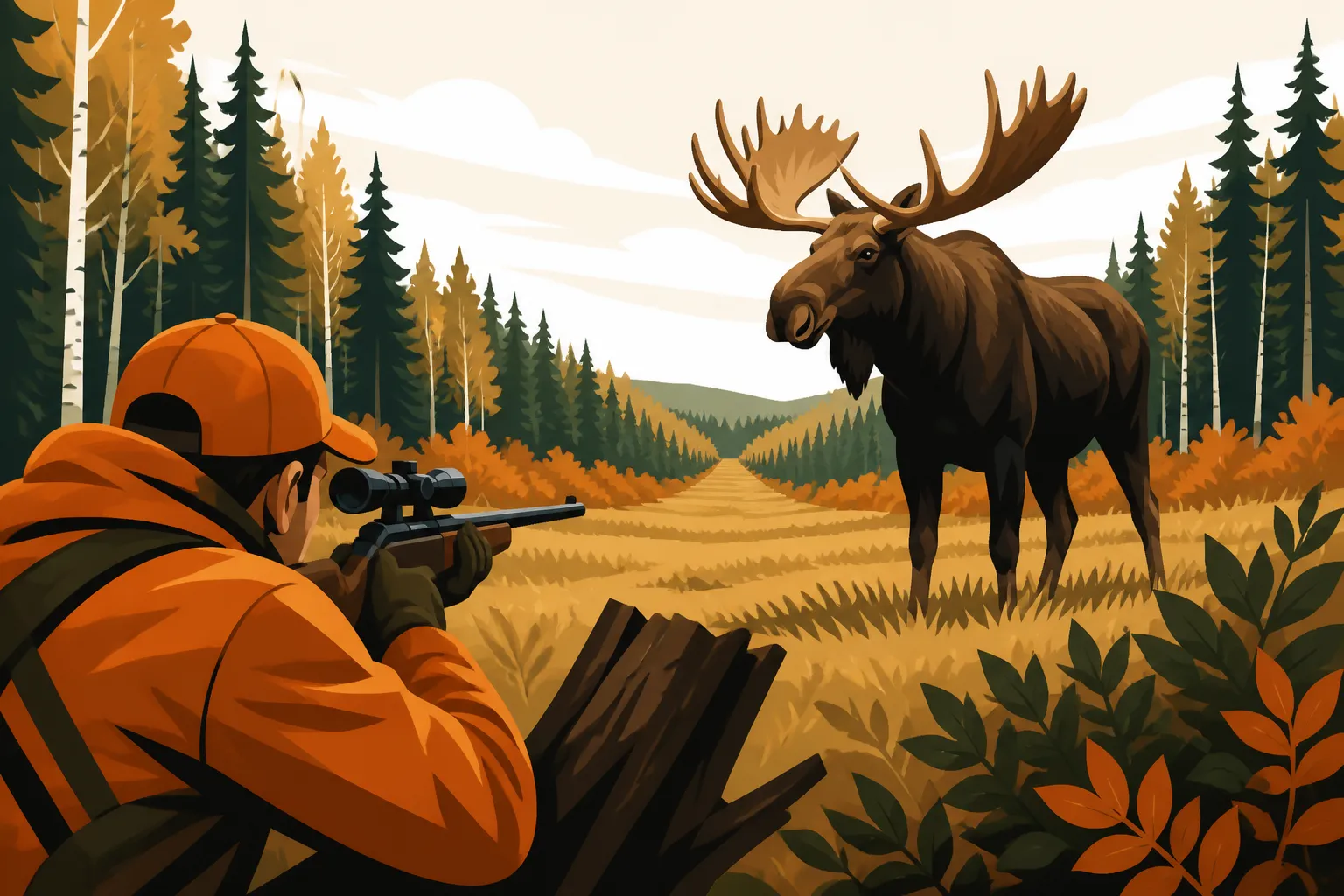
Hunting Moose on a Manitoba Cutline
Finding moose in Manitoba's vast, dense boreal forest can feel like an impossible task, a true needle-in-a-haystack scenario that leaves many hunters feeling frustrated and overwhelmed by the sheer scale of the landscape. This comprehensive guide will pull back the curtain on a hugely effective, yet often overlooked, strategy: targeting moose along Manitoba's extensive network of cutlines. We'll delve into why these linear clearings are absolute magnets for moose and how you can use them to dramatically increase your chances of a successful hunt.
Why Cutlines Are Moose Magnets in Manitoba's Bush
If you’ve spent any time looking at satellite imagery of Manitoba's northern and even central regions, you'll immediately notice the intricate spiderweb of straight lines crisscrossing the landscape. These aren't natural features; they're cutlines, created for everything from seismic exploration for oil and gas, to hydro transmission lines, and old logging access. For us hunters, these human-made scars on the land are like highways and grocery stores for moose, offering advantages the undisturbed bush simply can't provide. Understanding why moose gravitate to these areas is the first step to successfully Moose Across Manitoba's Boreal Forest.
Moose, despite their imposing size, are surprisingly efficient animals. They're constantly looking for the path of least resistance when they travel, and they're always seeking out the best food sources while remaining vigilant for predators. Cutlines often provide all of these elements in one convenient package. The open nature of these linear clearings, especially older ones that have started to regenerate, creates unique habitat features that are irresistible to these massive herbivores.
Travel Corridors and Edge Habitat
Imagine trying to navigate through dense Manitoba bush: tangled alders, thick stands of black spruce, and unforgiving muskeg. It’s tough going for a human, let alone a multi-hundred-pound moose. Cutlines, even those with significant regrowth, offer a comparatively clear path. Moose use these pathways like we use roads, making travel from one bedding area to a feeding ground, or from one part of their range to another, far less energy-intensive. This is especially true in areas where the surrounding forest is exceptionally thick.
But it’s not just the easy travel. The real magic of cutlines often lies in the "edge effect" they create. When a forest is cut, it opens up the canopy, allowing sunlight to reach the forest floor. This explosion of light stimulates the growth of pioneering plant species that moose absolutely adore. Think about those succulent young aspen, willow shoots, hazel, and dogwood that thrive in disturbed areas. These are all prime moose browse, and the regenerating growth along cutline edges provides a consistent, high-quality food source that might be sparse deeper within the mature forest. An old logging cutline that has been regenerating for 5-15 years is an absolute goldmine for moose browse, creating a buffet line right next to a convenient travel route.
Visibility and Thermal Regulation
Moose are big animals, and while they can move silently, they are still vulnerable to predators, especially wolves. A cutline offers them an unparalleled advantage: visibility. From the edge of a cutline, a moose can often see a long way down the cleared path, allowing them to detect threats long before they become a problem. They can feed along the edge, periodically raising their heads to scan for danger, something much harder to do in the confines of a thick forest.
Beyond safety, cutlines also play a crucial role in a moose's thermal regulation. During the warmer parts of the fall, especially in early season, moose can overheat easily due to their thick coats. A cutline provides an open, sunny spot where they can bask and dry out after a rain or a dip in a slough. Conversely, on scorching days, the shaded edges of a well-vegetated cutline offer a cooler retreat, allowing them to escape direct sun while still having easy access to browse. In deep winter, when the sun's warmth is a precious commodity, a sun-exposed cutline can be an important spot for them to soak up some rays and conserve energy.
Scouting and Identifying Active Cutlines
You can't just stumble onto any old cutline and expect to find a moose. Like any successful hunt, it requires diligent scouting and an understanding of what makes a particular cutline active. This is where modern tools meet old-school woodsman skills. You need to combine aerial reconnaissance with boots-on-the-ground investigation to pinpoint those high-potential areas. Ignoring this critical phase is a common mistake that leads to fruitless hours spent staring at empty bush.
Reading the Map and Satellite Imagery
Before you even think about lacing up your boots, start with a good map and satellite imagery. Tools like GoHunt are invaluable for this. You can overlay different map layers and zoom in to identify potential cutlines that might be holding moose. When you're Reading a Manitoba GHA Map Before You Go, look for large tracts of boreal forest, especially near water sources like lakes, rivers, or extensive wetlands. Moose love these areas.
Once you’ve got a promising GHA in mind, use the satellite view to specifically look for cutlines. Pay attention to:
- Age of the Cutline: Very fresh cutlines (within a year or two) might offer some browse, but they often lack the thicker cover moose prefer for bedding close by. Very old, completely overgrown cutlines might be too dense to offer visibility or easy travel. The sweet spot is usually a cutline that’s 5-20 years old, with good regenerating deciduous growth on the edges. These often show up as slightly lighter green lines on satellite imagery compared to the mature forest.
- Intersection Points: Where two or more cutlines cross, or where a cutline intersects a natural travel corridor like a creek bottom or a ridge, these are absolute hotspots. Moose don't just walk in straight lines; they'll use these intersections as strategic crossroads.
- Proximity to Water/Swamps: Moose are never far from water. Cutlines that run alongside or through boggy areas, beaver ponds, or near small lakes are always worth investigating. These provide water, cooling, and often additional browse.
- Cover: While they use cutlines for travel and feeding, moose also need secure cover to bed down. Look for cutlines that run adjacent to or lead into dense stands of spruce or pine that provide excellent bedding cover.
By spending time initially scouting with tools like GoHunt, you can narrow down vast areas to just a handful of high-potential cutlines, saving you countless hours of unproductive walking.
Fresh Sign: Tracks, Rubs, and Droppings
Once you've identified a few promising cutlines on the map, it's time for boots on the ground. This is where you become a detective, looking for undeniable proof that moose are actively using the area. Fresh sign tells you not just that moose are there, but when they’re there, what they're eating, and even their size and sex.
-
Tracks: Look for large, cloven tracks in soft ground, mud, or snow. A mature bull moose track can be massive, easily larger than a deer's. Look for freshness:
- Crisp Edges: If the edges of the track are sharp and well-defined, it's fresh, likely from the last day or so.
- Leaf Litter: If leaves have fallen into the track, it's older. If not, it's very recent.
- Mud/Water: If there's mud or water in the track, check if it's still unsettled or clear.
- Scat: Look for fresh droppings nearby. Moose scat consists of distinct, usually oblong pellets. In the summer, when they're eating lush green vegetation, it might be looser and clumped. In the fall and winter, it's firmer and more pelleted. Fresh scat will be moist and dark, becoming drier and lighter with age.
-
Rubs and Scrapes: Especially during the rut, bulls will rub their antlers on small trees and bushes, tearing up the bark. These rubs are an unmistakable sign of a bull in the area. The higher the rub on the tree, and the larger the diameter of the tree, the bigger the bull that likely made it. Scrapes (areas where they paw the ground) are less common than with deer but can indicate a bull marking his territory. Look for these along the edges of the cutline or where it enters thicker cover.
-
Browsing Evidence: Moose are voracious eaters. They browse on twigs, leaves, and bark. Look for broken branches, stripped bark, or clipped twigs, especially on preferred species like willow, aspen, red osier dogwood, and balsam fir. Pay attention to the height of the browse line. A high browse line (often 5-10 feet off the ground) indicates a mature moose. Fresh browsing will show clean, recent breaks on the twigs.
-
Bedding Areas: Moose often bed down just off a cutline, especially where the edge provides both cover and sun exposure. Look for flattened areas in the vegetation, often surrounded by droppings. A fresh bed will still show signs of impression.
By meticulously examining these signs, you can determine if a cutline is an active moose corridor and feeding ground, rather than just an old path. Remember, moose are creatures of habit, and if you find fresh sign, they're likely to be back.
Strategies for Hunting Cutlines
Once you’ve identified an active cutline, the next step is applying the right hunting strategy. The open nature of a cutline, coupled with the surrounding dense bush, demands a thoughtful approach. You can't just blunder down the middle hoping for the best. Success often comes down to patience, wind awareness, and understanding how moose use the cutline at different times of the day.
Still-Hunting the Edges
Still-hunting is perhaps the most effective way to hunt cutlines, especially if you're alone or with a small group. This involves moving incredibly slowly and deliberately, pausing frequently to observe, listen, and scan the surroundings. The key is to hunt into the wind or with a crosswind, so your scent doesn't carry ahead to alert any moose.
- Patience is Paramount: Take one step, pause for several minutes, scan the cutline ahead, and more importantly, scan the dense bush on either side. Moose will often feed just inside the cover, periodically stepping out onto the cutline. They might also be bedded down very close to the edge, watching the cutline.
- Use Binoculars: Even if the cutline appears clear, use your binoculars to pick apart the dense vegetation. That dark shadow might be a tree, or it might be the flank of a bull. That patch of brown could be dead leaves, or a moose hide. GoHunt can also help you mark potential hiding spots based on topography and vegetation.
- Shadow and Light: Moose are masters of camouflage. Use the changing light to your advantage. Early morning or late evening often provides softer light and longer shadows, which can both conceal you and help you spot game. When moving through patchy light, scan both the sunlit and shaded areas carefully.
- Listen: Stop and listen for the rustle of leaves, the snap of a twig, or even the subtle sounds of a moose feeding – a soft crunching, or the squish of hooves in wet ground. In the quiet of the bush, these sounds carry surprisingly far.
When Hunting a Moose on a Manitoba Cutline, move parallel to the main cutline, perhaps 10-20 yards in from the edge within the thicker timber. This allows you to observe the cutline and its opposing edge, while still being somewhat concealed. If you spot a moose, assess the situation, confirm your target, and plan your approach carefully.
Stand Hunting Ambush Points
For hunters who prefer a more static approach, setting up a stand or ground blind at a strategic ambush point can be highly effective. This works best when you've identified a cutline that sees consistent activity, perhaps near a bedding area, a water source, or where it funnels moose movement.
- Strategic Intersections: Look for places where two cutlines cross, where a cutline bends sharply, or where it passes through a choke point between dense cover and open terrain. These are natural funnel points where moose are likely to pass.
- Wind Direction: Always set up your stand or blind with the prevailing wind in mind. You want your scent to blow away from where you expect the moose to approach. This might mean setting up on one side of the cutline in the morning and moving to the other side in the afternoon, if winds shift.
- Concealment: Whether it’s a tree stand or a ground blind, ensure you have excellent concealment. Moose have good eyesight, and any unnatural outline will stand out. Utilize natural brush, camouflage netting, or the natural contours of the land.
- Patience and Persistence: Stand hunting is a game of patience. Be prepared to sit for extended periods, especially during prime feeding times at dawn and dusk. Early season Manitoba Big Game Season Dates provide more daylight for sitting.
A strategically placed trail camera can be invaluable here. Before you commit to a stand, deploy a camera for a few days or a week to confirm moose activity, identify their travel patterns, and even get an idea of the caliber of animals using the cutline.
Calling Along a Cutline
Calling is a potent strategy for moose, particularly during the rut, and a cutline can be an ideal place to employ it. The open nature of the cutline allows your calls to carry further into the dense bush, and it provides a clear shooting lane if a moose responds and walks out.
- Cow Calls: A soft, plaintive cow call can pique the curiosity of both bulls and cows. Bulls might investigate hoping to find a receptive female, while cows might respond if they think it's another moose. During the rut, around Calling a Bull Moose in the Rut in early to mid-September, aggressive bull grunts can also be very effective.
- Bull Grunts and Raking: Mimicking the guttural grunts of a bull or raking a small tree with an antler (or a stick) can challenge a dominant bull or attract a younger bull looking for action. Combine these with some subtle hoof sounds or crashing through brush to create a realistic scenario.
- Set Up for the Shot: When calling, always set up in a position where you have good cover but also a clear shooting lane down the cutline. Moose, especially bulls, will often approach cautiously, trying to circle downwind of the sound. Anticipate this and position yourself accordingly. Have your rifle ready and rest it on a tripod or bipod.
- Silence is Golden: After calling, remain absolutely silent for at least 15-20 minutes. Moose often take their time to respond and might approach very quietly. Many hunters make the mistake of calling too frequently or giving up too soon. Let the woods settle and listen intently.
The effectiveness of calling will vary depending on the time of year and the individual moose. Some days, they'll respond aggressively; other days, they'll ignore you completely. But on an active cutline, it's a tool that can dramatically increase your odds, especially if you know What a Big Bull Moose Weighs Here and are specifically targeting a mature animal.
Gear and Safety Considerations for Cutline Hunting
Hunting moose on a Manitoba cutline, while potentially rewarding, often means venturing into remote and rugged country. Proper gear and a keen awareness of safety are not just recommendations; they are non-negotiable necessities. The boreal forest can be unforgiving, and being unprepared can turn an exciting hunt into a dangerous situation.
Essential Gear for the Bush
Beyond your primary hunting weapon, a few key pieces of gear will make your cutline hunt safer and more comfortable:
- Navigation Tools: A reliable GPS unit (like a Garmin or a smartphone with a hunting app like GoHunt with downloaded offline maps) is absolutely crucial. Combine this with a physical compass and a paper map as a backup. You are often far from any recognizable landmarks, and it's shockingly easy to get disoriented in the dense bush. Mark your truck, your stand, and any significant landmarks.
- Warm, Layered Clothing: Even in early fall, Manitoba weather can change rapidly. Layers are key. Start with a moisture-wicking base layer, add insulating layers (fleece, down), and top it off with a waterproof and windproof outer shell. Consider bringing an extra warm jacket in your pack, especially if you're stand hunting. If you're hunting in deep cold, consider a Winter Truck Kit for a Manitoba Hunt.
- Quality Optics: A good pair of binoculars (10×42 or 10×50 are great all-around choices) is essential for picking apart distant brush and confirming game. A spotting scope might be overkill unless you're covering extremely long cutlines.
- First-Aid Kit: A comprehensive kit with bandages, antiseptic wipes, pain relievers, and any personal medications. Also, include an emergency blanket and fire-starting materials.
- Communication Device: A satellite messenger (like a Garmin InReach or Spot device) is highly recommended. Cell service is virtually non-existent in much of Manitoba's moose country. These devices allow you to send SOS messages, check in with loved ones, and provide your location if you get into trouble.
- Headlamp/Flashlight: Even if you plan to be out before dark, things happen. A reliable headlamp with extra batteries is critical for navigating in low light or an unexpected overnight stay.
- Knife and Game Bags: If you're successful, you'll need a sharp, sturdy knife for field dressing. Game bags are essential for protecting the meat from dirt and insects, especially if you're going to be Quartering a Moose Alone in the Bush.
- Water and Food: Carry more water than you think you'll need, along with high-energy snacks. Dehydration and hunger can quickly impair judgment.
Navigating and Staying Safe
Hunting remote cutlines brings inherent risks. Mitigating these risks starts with awareness and preparation.
- Tell Someone Your Plan: Always inform a trusted person back home about your exact hunting location, your intended route, and your expected return time. If you don't check in, they know to initiate a search.
- Bear Awareness: You are in bear country, primarily black bears, but grizzlies are rare. Carry bear spray and know how to use it. Make noise while walking, especially in dense areas, to avoid surprising a bear. Store food securely.
- Hypothermia and Frostbite: Hunting Safely in Deep Winter Cold is a serious consideration. Wet clothes in cold weather are a recipe for hypothermia. Dress in layers, stay dry, and know the signs of cold-weather injuries.
- Getting Lost: This is perhaps the biggest danger. Always keep track of your surroundings. Turn around frequently to see what the return route looks like. Use your GPS diligently. If you do get lost, stay calm, stay put, and use your satellite messenger. Don't wander aimlessly.
- Quad and Vehicle Use: Many cutlines are accessible by ATV or UTV, which can be invaluable for accessing remote areas and, more importantly, for getting a moose out of the bush. Be aware of provincial rules regarding Quad and Side-by-Side Rules on Crown Land. Always operate safely, wear a helmet, and be prepared for breakdowns.
- Weather Monitoring: Keep a close eye on the weather forecast. Heavy rain can turn trails into impassable bogs, and early snow can make travel difficult. Be prepared to adapt your plans.
By being meticulously prepared and prioritizing safety, you can focus on the hunt itself, knowing you've taken the necessary steps to minimize risks in Manitoba's wild moose country.
| Cutline Type | Primary Purpose | Moose Use | Hunter Strategy | Considerations |
|---|---|---|---|---|
| Seismic | Oil/Gas Exploration | Travel, browse | Still-hunting, calling | Often narrow, can be very long. May regenerate quickly. |
| Hydro | Power Lines | Travel, browse, visibility | Still-hunting, ambush | Wider, maintained periodically. Less dense regrowth. |
| Logging | Timber Harvest | Browse (regen), travel | Still-hunting, ambush, stands | Varying widths and ages. Excellent browse if 5-20 yrs old. |
| Pipeline | Oil/Gas Transport | Travel, browse | Still-hunting, calling | Maintained, often wide. Can be very open, requiring long shots. |
Maximizing Your Chances on Manitoba Cutlines
Successfully hunting moose on a Manitoba cutline isn't just about showing up; it's about understanding the nuances of these unique environments and tailoring your approach to the specific conditions. From early season archery hunts to the depths of rifle season, how you approach a cutline will change.
Moose activity on cutlines can fluctuate dramatically with the season. In the early archery season, when temperatures might still be warm, moose might utilize cutlines more for thermal regulation and easy travel between thick bedding areas and secluded feeding spots in low-lying, wet areas. As the rut approaches in late September and October, bulls become much more active, using cutlines as patrol routes and places to challenge rivals. This is prime time for calling. Later in the rifle season, especially with snow on the ground, cutlines become even more critical travel corridors as deep snow can make movement through the dense forest extremely difficult. This is when a tactic like Hunting Whitetails at Thirty Below might be adapted for moose, involving more deliberate still-hunting or sitting in a heated blind near a productive intersection.
Consider the time of day as well. Moose are typically most active at dawn and dusk, moving from bedding to feeding and vice versa. These are your prime times to be on the cutline. During the middle of the day, they might be bedded just off the cutline in thick cover, but don't rule out a patient still-hunt or calling session, especially during the rut when bulls are more inclined to move throughout the day.
Remember that getting a big animal like a moose out of the bush, especially if you're deep on a cutline, requires a plan. Think about how you'll retrieve the animal, whether it's by quad, game cart, or a combination of hard work and good friends. Learning how to effectively Getting a Moose Out With a Quad is a skill worth developing if you plan to hunt these remote areas.
Hunting cutlines requires a blend of patience, observational skills, and strategic thinking. But with their proven track record as moose magnets in the vast Manitoba wilderness, they offer some of the best opportunities for hunters willing to put in the effort.
Disclaimer
The information provided in this guide is for general informational purposes only and does not constitute legal advice. Hunting regulations and laws in Manitoba are subject to change. It is the responsibility of every hunter to consult the most current Manitoba Hunting Guide and relevant provincial legislation before engaging in any hunting activities. Always prioritize safety, respect wildlife, and adhere to all ethical hunting practices.