Rules on Shooting Across a Road
It’s a scenario many of us have faced out in the field: you’re tracking game, the perfect opportunity presents itself, but there’s a road – maybe a gravel access road, maybe a busy highway – right in your line of sight. The confusion and frustration are real. You want to make a safe, ethical shot, but you absolutely must stay within the legal bounds. This guide will walk you through Manitoba's specific rules on shooting across or near roads, so you can hunt confidently and legally.
Understanding What Constitutes a "Road" in Manitoba Regulations
Before we dive into the specifics of shooting, it’s really important to understand what the province means when it talks about a "road." It’s not always as straightforward as "paved" or "gravel." In the eyes of Manitoba’s hunting regulations, different types of roads can carry different restrictions, and mistaking one for another can land you in serious trouble.
Distinguishing Between Highways, Public Roads, and Trails
Manitoba’s Wildlife Act and associated regulations make some clear distinctions. A "highway" typically refers to the major provincial thoroughfares – think Trans-Canada Highway 1, or Provincial Trunk Highways like 16 or 5. These are generally well-maintained, high-traffic routes with specific right-of-way boundaries. Then you have "public roads," which can include municipal roads, gravel roads maintained by local governments, and even some designated access roads within Crown Land. These might not see the same volume of traffic as a highway, but they are still public access points, and the rules around them are strict.
Finally, you have less formal routes, like old logging trails, trapline cuts, or ATV paths through the bush. These are generally not considered public roads or highways in the same regulatory sense, but that doesn't mean you have carte blanche. While the specific "shooting across a road" distances might not apply, general safety principles, considerations for other users, and local bylaws always do. For instance, if you're exploring potential hunting spots, using a tool like GoHunt or checking detailed maps for a specific GHA can help clarify the status of routes you encounter. Understanding these classifications is your first step to staying legal and safe, especially when you're out Scouting a Manitoba Game Hunting Area.
The Legal Definition of a Road Allowance
Beyond the travelled portion, there’s the concept of a "road allowance." This is the strip of land on either side of the actual pavement or gravel, owned by the Crown or municipality, designated for the road. Even if it's overgrown with brush or looks like part of the adjacent field, it's still legally part of the road system. Hunters often mistake these allowances for adjacent private or Crown land, especially when they're not clearly marked or fenced.
The "road allowance" is a critical factor because hunting regulations often prohibit discharging a firearm from or onto a road allowance, not just the paved surface. This means you can't just stand on the shoulder of a gravel road and shoot into a field. You need to be completely off the road allowance, on legitimate private or Crown land, with permission if necessary. Always consult detailed maps or a land ownership app on your phone, like those often integrated into hunting platforms like GoHunt, to ensure you know precisely where the road allowance ends and private property or huntable Crown land begins. It's an often-overlooked detail that can save you a lot of headache.
Specific Rules and Distances for Shooting Near Roads
Manitoba’s hunting regulations are quite clear on distances when it comes to roads and other structures. These rules are primarily about public safety, protecting infrastructure, and minimizing conflicts with other land users. Ignoring them isn't just a minor infraction; it can be a serious offense.
Prohibited Distances from Highways and Dwellings
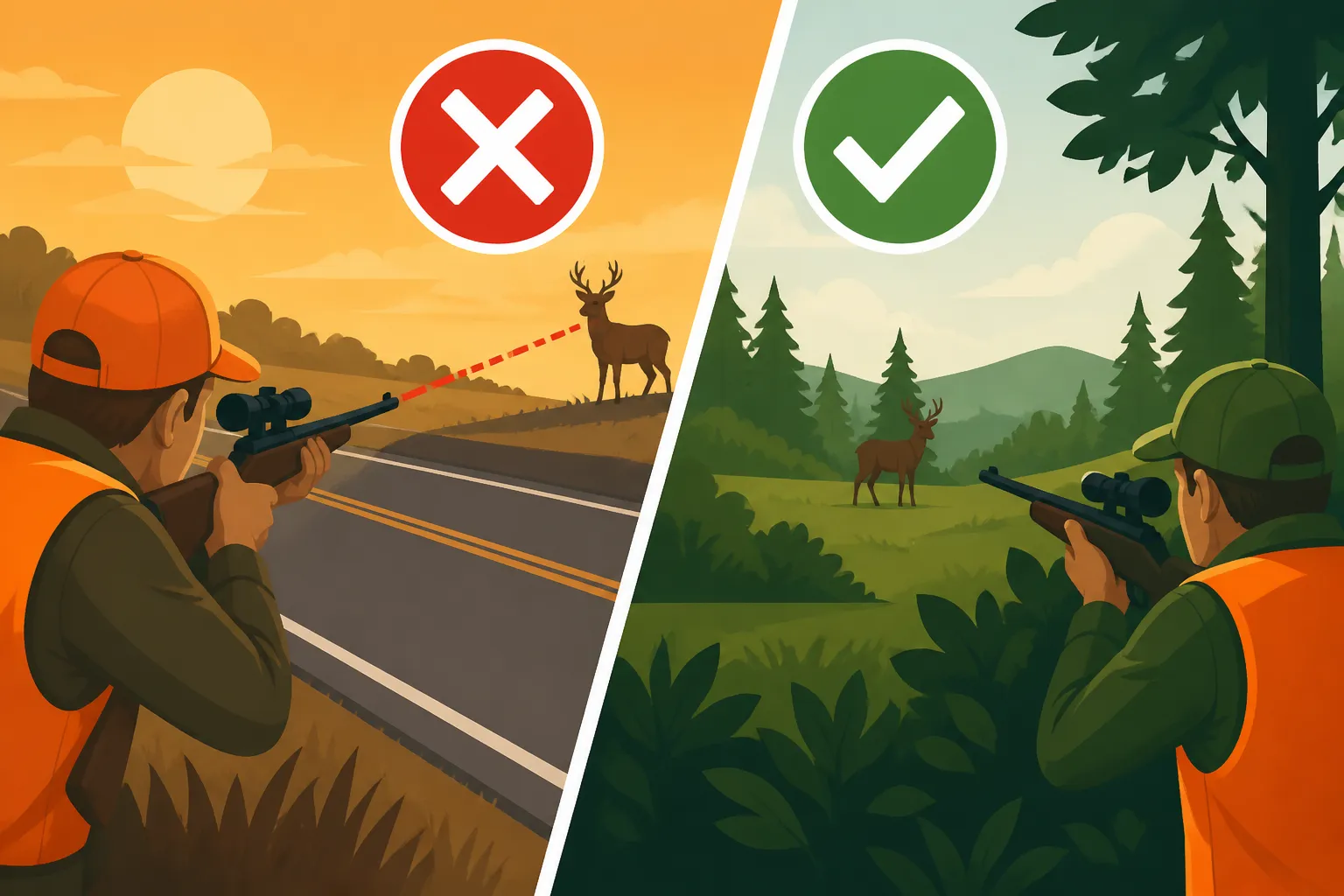
Here’s where the rubber meets the road, so to speak. In Manitoba, it is generally illegal to discharge a firearm or bow within 300 metres (approximately 328 yards) of a provincial highway. This 300-meter rule is also critical for occupied dwellings and livestock. Think about that for a second: 300 meters is a significant distance. It’s not just a quick step off the pavement. It requires you to be well and truly away from the road, not just for the shot itself but for the trajectory and potential impact zone.
This rule isn't about where you aim, but where you are standing when you pull the trigger or release an arrow. Even if you're aiming away from the highway, being within that 300-meter buffer is a no-go. This is a critical safety measure, ensuring that stray bullets, arrows, or even just the act of hunting, doesn't endanger motorists or other non-hunters using the area. It also applies to shooting across a provincial highway. You cannot shoot an animal that is on the other side of a provincial highway if your shooting position is within 300 metres of that highway. Always err on the side of caution. If there’s any doubt, find a different position or pass on the shot.
Regulations for Other Public Roads and Right-of-Ways
While provincial highways have the strictest 300-meter rule, other public roads and their right-of-ways also have specific regulations, though they might be slightly less restrictive in some cases. Generally, you cannot discharge a firearm from or across any public road. This means standing on the road itself, or its allowance, and shooting is prohibited.
For many gravel or municipal roads, while the 300-meter rule for dwellings and provincial highways still applies if they are nearby, the specific distance from these roads for shooting across them might be less defined than for provincial highways, but the act of shooting across them is still usually prohibited. The intent is always safety. You must have a clear line of sight, a safe backstop, and no chance of endangering anyone or anything beyond your target. This is especially true when you consider you might be hunting near areas where people regularly drive by or might be walking. When hunting near these types of roads, remember that you’ll also need to consider What Manitoba Trespass Law Requires if adjacent lands are private. Always use your best judgment and prioritize safety above all else. When reviewing a GHA map or using a mapping tool like GoHunt, pay close attention to the distinctions between highway, road, and trail.
| Road Type | General Rule | Prohibited Shooting Distance (Firearm/Bow) | Key Consideration |
|---|---|---|---|
| Provincial Highway | Cannot discharge from or across. Cannot shoot within this distance. | 300 meters (approx. 328 yards) from the highway. | Highest traffic, most stringent safety requirements. |
| Public Road (e.g., Municipal, Gravel) | Cannot discharge from or across the travelled portion or road allowance. | Varies, but generally not within 100 meters of the edge of the travelled portion in many areas, and always 300m from dwellings or livestock. Often, a safe backstop is explicitly required. | Less traffic, but still public access. Always requires a safe backstop and clear line of sight. |
| Private Farm/Access Road | Requires landowner permission to hunt on adjacent land. Cannot shoot from the road without permission. | Same as public roads if publicly accessible, otherwise depends on landowner rules + safe backstop. | Treat as private property. Permission is paramount. |
| Old Logging/Trapline Trails | Generally not considered "roads" under these specific distance rules, but general safety still applies. | No specific distance from trail, but always require safe backstop. | Use extreme caution; other users may be present. |
Why These Rules Are in Place and How to Stay Compliant
These regulations aren't just arbitrary lines on a map; they're foundational to ensuring hunting remains a safe and respected outdoor activity. Ignoring them doesn't just put you at risk; it jeopardizes the future of hunting for everyone in Manitoba.
Safety, Public Perception, and Respect for Landowners
The primary reason for these rules is, unequivocally, safety. Bullets can travel for miles, and arrows can deviate significantly with wind or deflection. Shooting across a public thoroughfare, even if you believe it’s clear, introduces an unacceptable risk to motorists, cyclists, pedestrians, and anyone else using the area. A moment of impatience could have tragic, irreversible consequences.
Beyond direct safety, there's the critical issue of public perception. When non-hunters see someone discharging a firearm near a road, it often raises concerns and creates a negative image of hunting. This can lead to increased calls for tighter restrictions and less access for hunters. We all have a responsibility to be good ambassadors for our sport. By adhering strictly to road hunting rules, we demonstrate respect for the land, for other citizens, and for the privilege of hunting itself. This also extends to Manitoba Landowner Permission Law, as many roads border private property, and good relations are key to access.
Practical Steps to Ensure You Are Legal and Safe
So, what can you do to make sure you're always compliant? First, know your regulations. Before every season, grab a copy of the Manitoba Hunter’s Guide and read it cover to cover. Pay special attention to the sections on safe firearm handling, prohibited areas, and distances. Ignorance of the law is never an excuse.
Second, use reliable mapping tools. Platforms like GoHunt, or even government-issued GHA maps, are invaluable. They often clearly delineate road allowances, Crown Land boundaries, and sometimes even highlight prohibited hunting areas. Use these tools to plan your hunt, identify safe shooting lanes, and mark out zones where you know you need to be extra cautious around roads. Familiarize yourself with how to use them, especially for identifying Manitoba's Game Hunting Areas and their specific boundaries.
Third, exercise extreme caution and common sense. If there’s any doubt about your distance from a road, the safety of your backstop, or the potential for other people to be present, do not take the shot. It’s always better to let an animal walk than to risk an accident or a legal infraction. Always have a clear understanding of what’s beyond your target. When hunting in unfamiliar territory, take extra time to scout and observe before you hunt. It's also wise to review Manitoba Hunter Education Requirements periodically, as refreshers never hurt.
Finally, consider the consequences. Violating these rules can lead to hefty fines, confiscation of your hunting equipment, loss of your hunting license, and even imprisonment. The legal ramifications are severe, and rightly so, given the potential for harm. Staying safe and legal ensures you can keep enjoying the incredible hunting opportunities Manitoba offers.
Considerations Beyond the Legal Minimums
While the law sets minimum standards, experienced hunters understand that sometimes "legal" isn't the same as "ethical" or "smart." There are additional considerations you should always keep in mind when hunting near roads, especially as a seasoned outdoors enthusiast.
Ethical Hunting Practices Near Populated Areas
Hunting ethically means more than just following the letter of the law; it means making responsible choices that reflect well on the entire hunting community. When you're hunting in areas close to rural residences, farms, or public access points, your actions are often more visible. Even if you're well beyond the 300-meter legal limit from a dwelling or highway, discharging a high-powered rifle near a community can cause alarm. It’s about being a good neighbour.
Think about shot angles, potential noise, and the overall impact of your presence. Would you want someone hunting in that particular spot if your family lived nearby? This is especially pertinent in the productive Hunting Manitoba's Parkland Region, where private lands and rural homes are often interspersed with huntable bush and fields. Choosing a spot that offers natural buffers, takes advantage of terrain features to muffle sound, and ensures your presence doesn't disrupt others is a sign of respect and good judgment. Tools like GoHunt can help you identify areas with more solitude, reducing the chance of unwanted encounters or disturbing locals.
Planning Your Hunt to Avoid Road-Related Conflicts
The best way to avoid conflicts and stay legal is to proactively plan your hunt. Before you even head out, spend time with your maps – whether paper maps or digital ones on GoHunt. Identify known roads, trails, and public access points. Look for natural barriers or terrain features that provide clear, safe shooting lanes away from roads.
When you're out scouting, identify specific areas where you can move away from roads and into deeper cover. Often, game will naturally move further from well-used roads, so by planning to hunt deeper, you inherently reduce your risk of road-related infractions. If you're Hunting Whitetails on Manitoba Crown Land, for instance, actively seek out areas that require a bit more legwork to reach. This not only makes your hunt safer but often more productive, as less-pressured animals are more likely to be found. Always have a backup plan for egress, and remember that Vehicle Rules on Manitoba Crown Land also dictate where you can and cannot drive, which can affect how close you get to your hunting spot with a vehicle.
Disclaimer
The information provided in this article is for general guidance only and is not a substitute for the official Manitoba hunting regulations. It is the responsibility of every hunter to read and understand the current Manitoba Wildlife Act and all applicable regulations before heading into the field. Laws can change, so always ensure you have the most up-to-date information directly from the provincial authorities.