Using a Pointing Dog on Manitoba Prairie
The vastness of Manitoba’s prairie landscape, with its endless stretches of tall native grasses, dense willows in slough bottoms, and scattered shelterbelts, can be both exhilarating and utterly daunting for an upland bird hunter. Without a dedicated companion, you can spend hours walking, kicking up birds you never saw, or worse, losing downed game in the thick cover. It's a frustrating reality for many, where the sheer scale of the environment often feels like it’s working against you. This guide aims to transform that experience by detailing how a well-trained pointing dog becomes an indispensable asset, turning a potentially disheartening hunt into a productive and truly memorable adventure across the Manitoba prairie.
The Undeniable Advantage of a Pointing Dog on the Prairie
Hunting upland birds across Manitoba's sprawling prairie country without a pointing dog is like trying to find a needle in a haystack blindfolded. The birds, whether it's the wily Sharp-tailed Grouse or the tenacious Hungarian Partridge, are masters of concealment. They'll hold incredibly tight in cover that looks sparse, often flushing only when you've practically stepped on them, or, frustratingly, running just ahead, leaving you guessing their direction. This leads to a lot of wasted energy, missed opportunities, and the heartbreaking chance of losing a bird you've shot in the dense undergrowth.
Why Prairie Upland Hunting Demands a Pointer
Imagine walking through head-high slough grass, your boots sinking into marshy ground, knowing there are birds somewhere but having no idea where. The frustration is palpable as you blindly push through cover, flushing a bird 30 yards behind you that you never saw. This is the reality for many solo hunters on the prairie. Sharp-tailed Grouse, in particular, are notorious for their camouflage and their tendency to hold until the very last second, making them incredibly difficult to locate by sight alone. Hungarian Partridge, while often found in more open agricultural areas and shelterbelts, can still melt into the stubble or thick roadside cover, becoming invisible to the human eye.
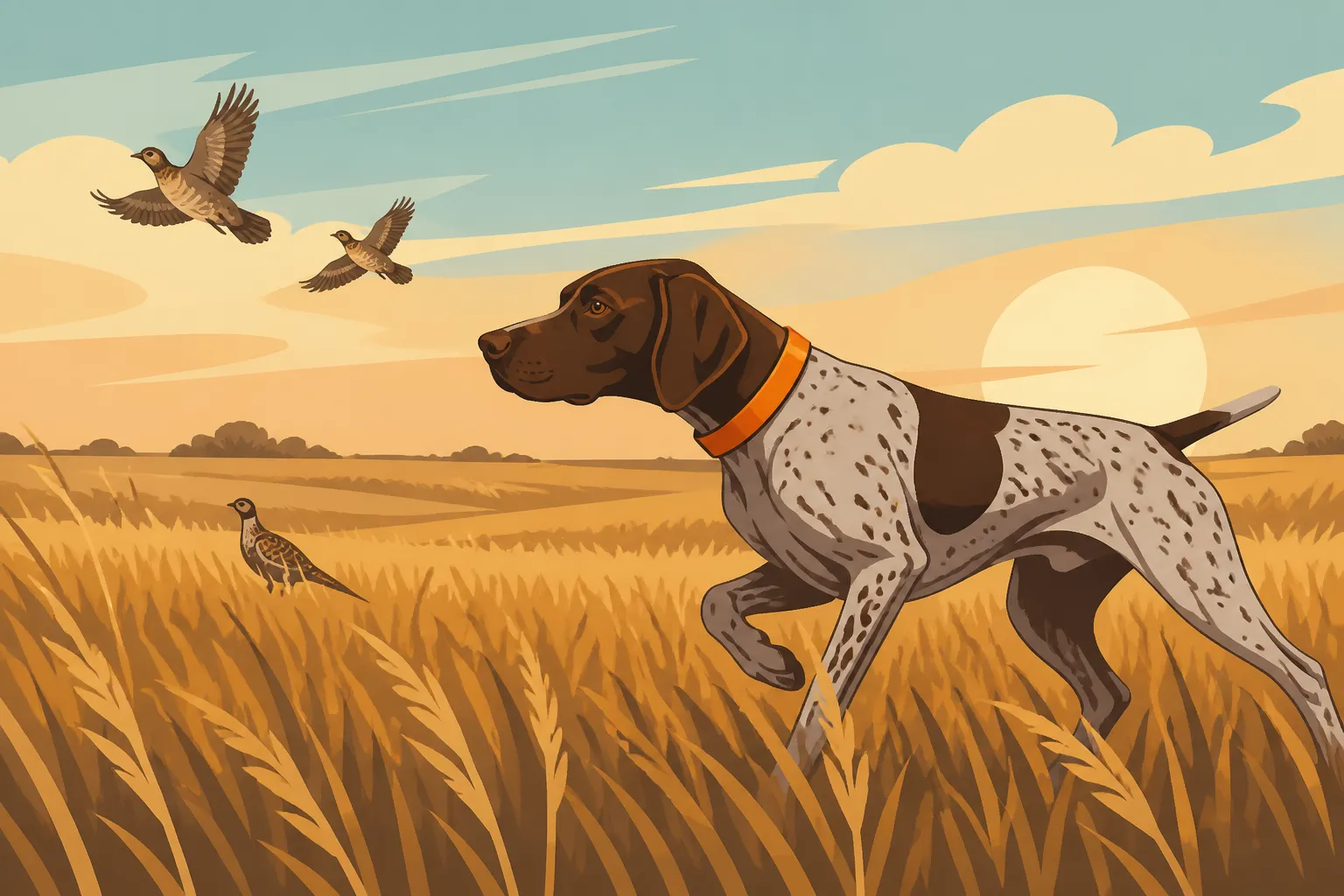
A pointing dog, however, completely changes this dynamic. Their incredible sense of smell, hundreds of times more powerful than a human's, allows them to scent birds from a distance. Instead of walking aimlessly, you’re following a finely tuned instrument, watching it systematically work the wind, covering ground with purpose. When that scent cone narrows, the dog locks up, translating the invisible presence of a bird into a tangible, thrilling moment of stillness. This allows you, the hunter, to move into position, prepare for the flush, and make a clean shot. It transforms the random into the precise, drastically increasing your chances of finding and bagging birds.
The Joy and Efficiency a Pointer Brings
Beyond the practical advantages, there's an undeniable joy that comes from watching a pointing dog work. The rhythmic swing of their head as they quarter into the wind, the sudden, statuesque pause, tail rigid, nose pointed directly at the hidden quarry – it’s a ballet of instinct and training that captivates every bird hunter. This partnership elevates the hunt from a solitary pursuit to a shared adventure, deepening the bond between you and your canine companion. It's not just about harvesting birds; it's about experiencing the wild through your dog's eyes and nose.
Moreover, a pointing dog vastly improves your efficiency and, critically, your ethical responsibility as a hunter. With a dog on point, you know exactly where the bird is. After the shot, a well-trained retriever ensures that virtually every downed bird is recovered. Losing a bird to thick cover is one of the most disheartening experiences in hunting, and it’s something responsible hunters strive to avoid at all costs. A pointer, especially one that is steady to flush and shot, and completes a reliable retrieve, significantly reduces the likelihood of lost game. This not only maximizes your harvest but, more importantly, honors the life of the animal you've pursued by ensuring no meat goes to waste.
Essential Breeds and Their Traits for Manitoba Prairie
Choosing the right pointing dog for Manitoba's vast prairie can feel like a big decision, and it truly is an investment in time, training, and companionship. The demands of covering wide-open spaces, pushing through dense cover, and enduring varying weather conditions mean not every pointing breed is ideally suited for this specific environment. You need a dog with the right blend of stamina, scenting prowess, and a coat that can handle the elements.
Popular Pointing Breeds Suited for Wide-Open Spaces
When considering a pointing dog for the wide-open expanse of the Manitoba prairie, certain breeds consistently rise to the top due to their innate abilities and physical characteristics. German Shorthaired Pointers (GSPs) are arguably one of the most popular choices, and for good reason. They are incredibly versatile, possessing boundless energy, strong prey drive, and an excellent nose. Their short, dense coat is surprisingly resilient, offering good protection against burrs and cold, yet drying relatively quickly. GSPs are known for their strong work ethic and biddability, making them fantastic partners for hunters willing to put in the training time.
Another classic choice is the English Pointer. These dogs are true bird-finding machines, bred for their wide-ranging abilities and unparalleled stamina. If you're looking to cover vast tracts of prairie and let a dog really stretch out and hunt big, an English Pointer is hard to beat. They cover ground with an elegant, ground-eating stride and often have an intense, stylish point. While their short coat might seem less protective, it helps prevent them from overheating during strenuous work. For hunters who prefer a slightly closer-working dog, or one with a bit more "cuddle factor" off-hunt, Brittanys and Vizslas are excellent medium-sized options. Brittanys are renowned for their eagerness to please and dense, protective coats, while Vizslas offer a sleek, athletic build and a genuinely affectionate disposition. Both possess excellent noses and can handle the prairie with grace and grit.
Matching a Dog's Temperament to Your Hunting Style
Beyond breed characteristics, a dog's individual temperament is paramount. You need to honestly assess your own hunting style and commitment to training. Are you someone who enjoys long, strenuous hikes across sections of land, or do you prefer to hunt smaller, more concentrated pockets of cover? A wide-ranging English Pointer might be frustrating if you hunt small quarter sections and prefer your dog to stay within 50 yards. Conversely, a closer-working Brittany might not cover enough ground if you're trying to hunt multiple sections of wide-open native prairie for scattered Sharp-tailed Grouse.
Consider the dog's drive and biddability. Some breeds, and even individual dogs within a breed, are more independent, requiring a firmer, more consistent hand in training. Others are inherently eager to please, making the training process smoother for a novice handler. It’s important to remember that a pointing dog isn't just a hunting tool; it's a family member. Their temperament off-hunt – whether they are calm indoors, good with children, or require constant stimulation – needs to align with your lifestyle. Consulting reputable breeders and discussing these aspects thoroughly is crucial. Websites like GoHunt can be a great resource for finding information on breed-specific traits and connecting with seasoned hunters who can share their experiences with different breeds in similar hunting conditions. A solid genetic background from proven hunting lines often correlates with predictable temperament and strong natural abilities in the field, setting you and your future hunting partner up for success.
Training Your Pointing Partner for Manitoba Conditions
Bringing home a pointing dog puppy is just the beginning of a truly rewarding journey. While these dogs are born with incredible instincts, transforming them into a reliable, efficient hunting partner for the varied challenges of the Manitoba prairie requires dedication, consistency, and a deep understanding of positive reinforcement. Rushing the process or skipping foundational steps will inevitably lead to frustrations in the field.
Foundation Training and Building the Bond
The very bedrock of a successful hunting dog lies in solid obedience and a strong bond with its handler. Start young, as soon as your puppy is old enough to begin basic obedience commands like "sit," "stay," "come," and "heel." These aren't just parlor tricks; they are critical safety commands that will govern your dog's behavior in high-stakes hunting situations. Consistent, positive reinforcement training during this phase builds trust and establishes you as the leader. Socialization is equally important, exposing your puppy to various environments, sounds, people, and other dogs to ensure they are well-adjusted and confident in any situation, from busy game bird release sites to remote prairie fields.
Once basic obedience is solid, move onto specialized gun dog skills. "Force fetch," while sounding intense, is a humane and essential training method that teaches a dog to retrieve on command, regardless of distractions or preferences. This ensures reliable retrieves of downed birds, preventing lost game and upholding ethical hunting practices. Yard work, including retrieving drills, steadying to a verbal "whoa" command, and quartering patterns on a check cord, is where you solidify these skills before ever introducing a live bird. These exercises, performed daily in a controlled environment, build the muscle memory and understanding necessary for flawless execution when the pressure is on in the field. Neglecting this groundwork will result in a dog that is enthusiastic but perhaps chaotic, making for a less effective and more stressful hunt.
Field Training Specifics: Scent, Point, and Retrieve
Once your dog has a strong foundation, it's time to introduce them to birds and the actual pointing process. Start with captive birds like pigeons or chukars in a controlled field setting. Use a "bird launcher" or simply place a bird in cover, then work your dog into the wind towards it on a long check cord. The goal is to let their natural instinct to scent and point take over. When they lock up on point, reinforce it with a calm "whoa." This is where the magic happens – watching your dog's instinct kick in. Over time, you'll teach them to remain steady on point, even as the bird flushes, waiting for your command.
Next comes teaching "steady to flush" and "steady to shot." This is crucial for safety and for allowing you to get into position for a shot. Using an electronic collar, appropriately and gently, can be an invaluable tool to reinforce commands from a distance, but it must be introduced properly and never used as a punishment tool. Gradually introduce the sound of a blank pistol, ensuring your dog associates it with the exciting act of birds flushing and retrieving, not something to fear. Work them in varying cover types that mimic the Manitoba prairie – dense grass, light brush, and open stubble – so they learn to adjust their range and pace. Many hunters find that resources like those found on GoHunt can offer valuable training tips, gear recommendations for e-collars, and even downloadable training logs to track progress. Consistent exposure to birds, simulated hunting scenarios, and careful refinement of their point and retrieve will mold your enthusiastic pup into a highly effective and reliable hunting partner.
Navigating Manitoba's Prairie Landscape with Your Dog
Manitoba's prairie offers a diverse range of habitats for upland birds, from vast native grasslands to agricultural fields crisscrossed with shelterbelts and slough edges. Understanding these landscapes and how to work your pointing dog within them is key to a successful hunt. It’s about leveraging your dog’s natural abilities in concert with your own knowledge of bird behavior and terrain.
Key Upland Species and Their Habitats
The primary upland species you’ll be targeting on the Manitoba prairie are Sharp-tailed Grouse and Hungarian Partridge. Sharp-tailed Grouse are truly a bird of the open country, preferring large tracts of native grassland, particularly those with scattered pockets of small shrubs or brushy edges. They are masters of blending into their surroundings and will often hold tight, making them difficult to spot without a dog. They'll also often utilize the transition zones between grassland and aspen bluffs, which provide them with both cover and food sources. To effectively hunt them, you need a dog that can cover a lot of ground systematically and isn't afraid to push through thicker cover where the birds might be loafing. If you're looking for guidance on finding these birds, check out our piece on Walking Up Sharptails on Manitoba Grassland.
Hungarian Partridge, often affectionately called "Huns," typically inhabit agricultural areas. You'll find them in stubble fields, particularly after harvest, along fence lines, in uncultivated field edges, and perhaps most reliably, in the shelterbelts and tree rows that farmers plant as windbreaks. These birds tend to run more than grouse before flushing, making a steady pointing dog invaluable to pin them down. A dog working a shelterbelt needs to be methodical, pushing through the cover while you walk the edge, ready for a flush. Our guide on Hunting Huns Along a Manitoba Shelterbelt offers more insights into finding these clever birds. Understanding these distinct habitat preferences allows you to choose your hunting areas wisely and direct your dog effectively, maximizing your chances of a successful encounter.
Reading the Wind and Terrain with Your Canine Companion
The wind is arguably your most important hunting partner after your dog. Scent travels on the wind, and a pointing dog's nose is designed to process those airborne particles. Always strive to work your dog into the wind. This allows the scent cone from a bird to flow directly towards your dog, giving them the best chance to pick up the bird's presence from a distance and lock into a solid point. If you hunt downwind, your dog will often overshoot the birds, or the scent will be so dispersed they struggle to pinpoint the exact location. Pay attention to how the wind swirls around terrain features – it's rarely a straight line.
Terrain features also dictate how birds hold and how your dog should work. Slough edges, with their dense cattails and willow rings, are prime hiding spots, especially in colder weather. Working the edge of a frozen slough can be incredibly productive, as birds often use these as travel corridors or thermal cover. Our article on Hunting a Slough Edge for Whitetails (while focused on deer, the principles of terrain movement apply) highlights the importance of such features. Similarly, prairie coulees and draws, which offer protection from wind and pockets of denser vegetation, are excellent places to find Huns and Sharptails. A dog that is trained to systematically work these features, quartering back and forth, will be far more successful than one that just runs wild. Exploring how to hunt Hunting a Prairie Coulee Bottom or even Hunting a Willow Ring Around a Pothole can give you ideas on how to navigate these micro-habitats, using tools like GoHunt mapping to identify these features before you even step foot in the field.
Dealing with Environmental Challenges
Manitoba's prairie environment, while beautiful, presents its own set of challenges for hunting dogs. Burrs and foxtails are a constant menace, especially in late summer and fall. Regular grooming and carrying a burr comb are essential. Some hunters opt for protective vests or leg wraps for their dogs to minimize burr accumulation and protect against cuts and scrapes from sharp stubble or brush. Always check your dog thoroughly after each hunt, paying close attention to ears, paws, and armpits where burrs can embed and cause irritation or infection.
Weather is another critical factor. Early season hunts can be surprisingly hot, demanding constant vigilance for hydration. Carry plenty of water for both yourself and your dog, and offer frequent breaks. In contrast, late fall hunts can be brutally cold. While breeds like GSPs and Brittanys have decent coats, prolonged exposure in frigid temperatures, especially when sitting still on point, can be a concern. Consider dog coats or vests for warmth, and ensure your dog has a warm place to rest during breaks. Be mindful of ice in water sources and potential dangers like thin ice on sloughs. Always be aware of other wildlife; porcupines, skunks, and even coyotes are present on the prairie, and encounters can lead to painful or dangerous situations for your dog. A well-trained dog with a strong recall can help avoid these unwanted interactions.
Legalities, Ethics, and Ensuring a Safe Hunt
Hunting with a dog on the Manitoba prairie is a privilege, and it comes with the responsibility of understanding and adhering to local regulations, practicing ethical conduct, and prioritizing safety for everyone involved. A successful hunt isn't just about bagging birds; it's about conducting yourself respectfully and legally in the field.
Understanding Manitoba's Regulations for Hunting with Dogs
While Manitoba generally permits the use of dogs for hunting migratory game birds and upland game birds, it's crucial to be aware of the specific rules and nuances that might apply. Always consult the current Manitoba Hunting Guide provided by the provincial government; regulations can change annually. General hunting regulations will always apply, such as legal shooting hours, bag limits, and proper tag validation. Remember that carrying your valid Carrying Your Licence in the Field at all times is not just a good idea, it's a legal requirement.
Although specific "leash laws" for upland bird hunting with pointing dogs are less common in the field compared to urban areas, maintaining control of your dog is paramount. You are responsible for your dog's actions. While there might not be explicit rules about dogs for upland bird hunting, understanding broader regulations, like those discussed in our article about Manitoba Rules on Baiting Big Game (though specific to big game, it emphasizes how rules are enforced) underscores the importance of being informed about all facets of hunting law. Furthermore, every hunter, whether accompanied by a dog or not, must meet the Manitoba Hunter Education Requirements. This ensures you understand safe firearm handling, game identification, and ethical hunting practices. When in doubt, always err on the side of caution and consult a conservation officer or the provincial hunting guide.
Responsible Dog Handling and Field Etiquette
Ethical hunting and responsible dog handling go hand-in-hand. First and foremost, always obtain permission before hunting on private land. This isn't just a courtesy; it's a legal requirement in Manitoba, as highlighted in What Manitoba Trespass Law Requires and detailed in our article on Asking a Manitoba Landowner for Permission. Showing respect to landowners by asking for permission, driving responsibly on their property, and picking up after your dog helps foster positive hunter-landowner relationships, ensuring future access for all. Never assume access, even on unposted land.
Safety in the field is non-negotiable. Both you and your dog should wear blaze orange. While hunters are legally required to wear a certain amount of blaze orange (you can learn more from How Much Blaze Orange Manitoba Requires), outfitting your dog with a blaze orange vest significantly increases their visibility to you and any other hunters in the area, particularly when they are ranging wide or working through thick cover. Always know where your dog is relative to your shooting lane and other hunters. A well-trained dog under control prevents accidental flushes outside of shooting range or, worse, running into the line of fire. Be mindful of other hunters in the area; if you encounter another hunting party, call your dog in, leash them if necessary, and offer a polite greeting. Shared resources like GoHunt's community forums often discuss these important aspects of field etiquette, helping hunters navigate shared spaces respectfully. Your dog reflects on you as a hunter, and proper etiquette ensures a positive experience for everyone enjoying Manitoba's outdoors.
| Breed | Key Traits for Prairie Hunting | Coat Type | Common Game | Handler Experience |
|---|---|---|---|---|
| German Shorthaired Pointer | High stamina, versatile, strong nose, biddable, energetic | Short, dense | Grouse, Partridge, Waterfowl | Moderate |
| English Pointer | Exceptional stamina, wide-ranging, intense point, bird-finding machine | Short | Grouse, Partridge | Experienced |
| Brittany | Excellent nose, eager to please, good stamina, moderate range | Medium, dense | Grouse, Partridge | Beginner/Moderate |
| Vizsla | Athletic, affectionate, good nose, moderate stamina, sensitive | Short, sleek | Grouse, Partridge | Moderate |
| English Setter | Graceful, methodical, good stamina, stylish point, friendly | Long, silky | Grouse, Partridge | Moderate |
Disclaimer
The information provided in this guide is for general informational purposes only and is not a substitute for official regulations. Hunting regulations in Manitoba are subject to change, and it is the hunter's responsibility to review and comply with all current provincial and federal hunting laws. Always consult the latest Manitoba Hunting Guide and other official government resources before engaging in any hunting activities.