Using a Flushing Dog in Thick Cover
There’s nothing quite like the frustration of knowing birds are holding tight in a dense thicket, but you just can’t get them to move. You push, you stomp, you circle, and still, that perfect flush eludes you, leaving you wondering if you just walked right past a whole covey. For anyone who’s spent a crisp Manitoba fall morning battling impenetrable willow runs, tangled hawthorn patches, or thick stands of young spruce while upland bird hunting, you know the struggle is real. This guide is all about how bringing a well-trained flushing dog into that equation can completely transform your success, turning those frustrating bush hunts into productive, memorable days.
The Unique Advantages of a Flushing Dog in Manitoba's Thick Cover
Manitoba offers some incredible upland bird hunting, but it's rarely a walk in the park. From the aspen bluffs of the Parkland to the dense coniferous forests of the Shield, thick cover is the name of the game. This challenging habitat makes a flushing dog not just a helpful companion, but often an essential partner.
Why Traditional Methods Fall Short in Dense Bush
Trying to hunt thick cover without a dog can feel like searching for a needle in a haystack, blindfolded. The sheer density of the vegetation—whether it's an old growth spruce forest or a regenerating clearcut—makes visibility almost zero. You might hear the rustle of a grouse, but pinpointing its location or getting a clean shot before it disappears is incredibly difficult. Birds like ruffed grouse and spruce grouse are masters of using this cover to their advantage, often holding until you're practically on top of them, then exploding out at an unexpected angle, giving you mere fractions of a second to react.
Even for birds that tend to run, like sharp-tailed grouse on the edge of brushy habitat, the thick stuff provides an escape route that's nearly impossible for a human to navigate quietly or quickly enough. You're constantly snagging on branches, tripping over fallen logs, and making so much noise that any self-respecting bird is long gone before you get within range. Scenting conditions can also be tricky; while human noses are useless, a dog relies heavily on scent, but even they can struggle in swirling winds within dense cover, or if the ground is too wet or dry. All these factors contribute to missed opportunities, spent energy, and often, the heartbreaking loss of a wounded bird that plunges into an unreachable tangle.
How Flushing Dogs Overcome These Obstacles
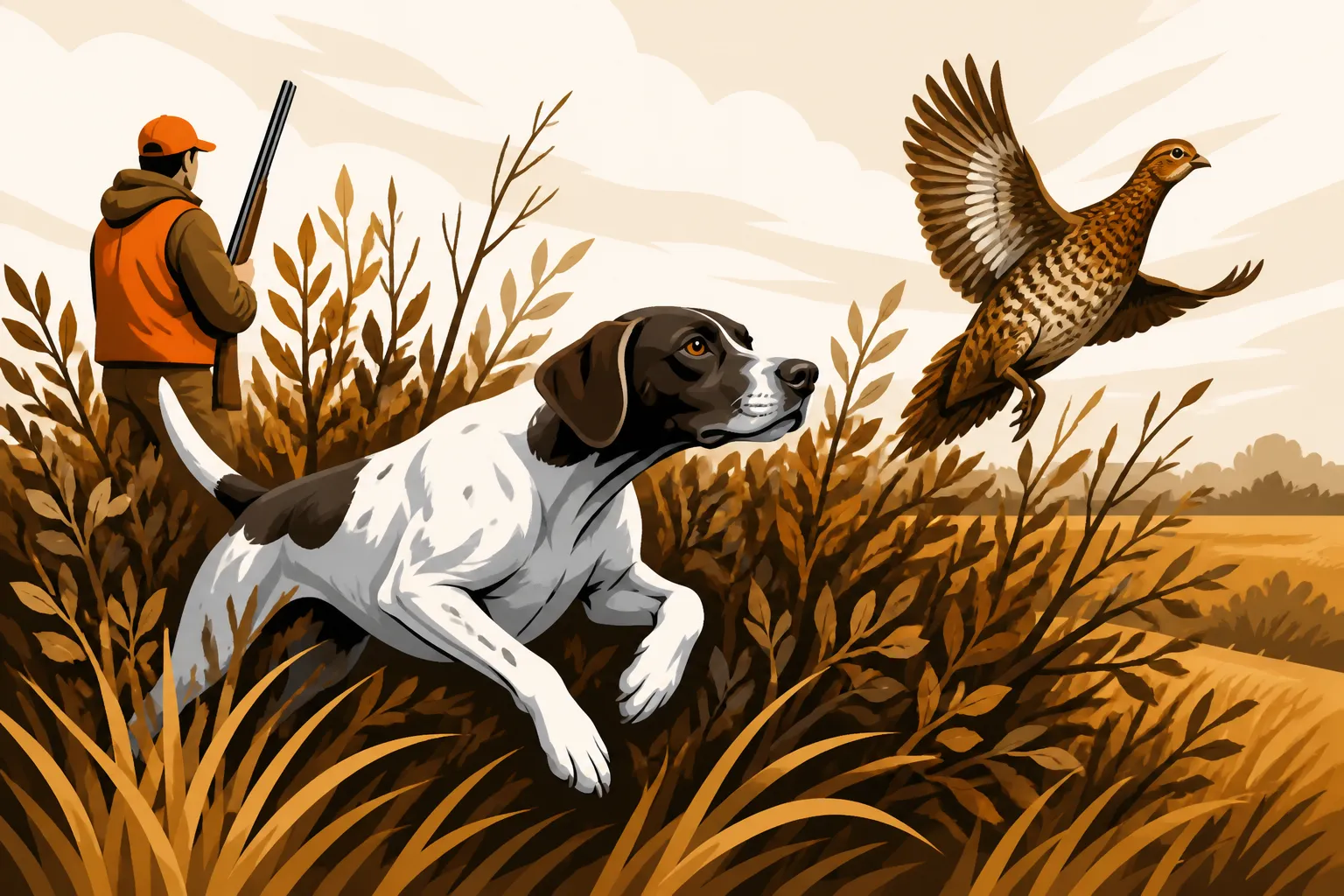
This is precisely where a flushing dog shines. Unlike pointing dogs, which are bred to locate game and freeze, flushing dogs are designed to push birds out of cover aggressively. Their natural instincts, combined with proper training, allow them to dive into the thickest patches, using their superior noses to locate birds that you would undoubtedly walk right past. They work with an excited, often noisy, energy that forces birds to take flight, giving you, the hunter, the opportunity for a shot.
A flushing dog's ability to penetrate dense undergrowth and work systematically through a patch of cover is unparalleled. They don't just wander; they methodically quarter the ground, driving through every potential hiding spot. This is especially valuable when hunting species like ruffed grouse, which are notorious for sitting tight. The dog’s persistent presence forces the flush, making birds fly when they might otherwise remain hidden. Beyond just finding and flushing, their retrieve drive is invaluable. A dog will track and retrieve downed game, even in the densest tangles, significantly reducing the chances of losing a hard-earned bird. This means more birds in the bag and fewer left to waste, which is a huge win for ethical hunting.
Training Your Flushing Dog for Manitoba's Challenging Terrain
Training a flushing dog for Manitoba's diverse and often challenging terrain requires patience, consistency, and a clear understanding of what you want your dog to achieve in the field. It’s not just about getting them to run around; it’s about controlled enthusiasm and purposeful action.
Essential Commands and Socialization for Flushing Work
Before you even think about putting your dog into a real hunting scenario, they need a solid foundation of obedience. Essential commands like "heel" (walking calmly beside you), "whoa" (stopping in place, invaluable if a bird flushes unexpectedly or you need to control their range), and a reliable "come" (returning to you immediately) are non-negotiable. These aren't just for show; they're critical for safety and effective hunting. Imagine your dog chasing a bird toward a busy road or into private land; a strong recall could save their life or prevent a tense encounter.
Early socialization is equally vital. Your pup needs to be comfortable with a variety of sights, sounds, and smells. This includes being around other people, other dogs, and different environments, from open fields to dense bush. Crucially, they must be desensitized to gunshots. Start with very low-calibre noises from a distance, like a .22 rifle, gradually increasing the volume and proximity. Never rush this process, as a gun-shy dog is a huge setback. Expose them to the types of cover you'll be hunting—let them explore willow thickets, tall grass, and even wade through shallow water. The more exposure they have, the more confident and effective they’ll be when the hunting season arrives.
Simulating Real-World Hunting Scenarios
Once your dog has a grasp of basic obedience, you can start simulating hunting scenarios to build their flushing skills. One effective drill involves teaching your dog to "quarter" the ground in front of you. This means working back and forth in a zigzag pattern, always keeping within gun range, thoroughly covering the area. You can start this with an invisible boundary, or use natural lines in the terrain, guiding them with a whistle or hand signals. The goal is a systematic search, not a wild, uncontrolled sprint.
Introduce live birds as soon as appropriate. Pigeons or pen-raised pheasants are excellent for this. Start by hiding a bird in light cover and letting your dog find and flush it. Gradually move to denser cover, encouraging their drive to push through it. Remote launchers can be a fantastic tool here, allowing you to control the timing and direction of the flush, helping your dog understand that the sound of the shot means a bird has gone airborne, and they need to mark where it falls. During these drills, always be consistent with your commands and praise. Repetition, positive reinforcement, and a gradual increase in difficulty will build a confident, effective flushing dog. You can even use a platform like GoHunt to mark your training areas and track your dog's progress over time, seeing how their quartering patterns improve with practice.
Gear and Safety Considerations for Hunting with a Flushing Dog
Hunting in Manitoba's thick cover with a flushing dog means facing some unique challenges. Having the right gear and prioritizing safety are paramount for both you and your canine partner.
Essential Gear for Dog and Hunter in Thick Cover
For your dog, a protective vest is a non-negotiable item, especially when pushing through thorny bushes, dense undergrowth, or navigating frozen slush. Look for vests made of durable, puncture-resistant material like Cordura or ripstop nylon. Many come in bright blaze orange or yellow, which is excellent for visibility, especially if your dog ranges a bit further into thick stuff. Some vests even offer buoyancy, which can be a lifesaver if you're hunting near open water or crossing a frozen slough. Another critical piece of gear is a GPS collar. In dense cover, even the most obedient dog can disappear from sight. A reliable GPS collar, especially one that integrates with hunting apps like GoHunt, allows you to track their location in real-time, preventing them from getting lost and ensuring you can quickly locate them if they get into trouble or are on a retrieve.
For yourself, beyond your usual hunting attire, a good whistle is essential for communicating with your dog over distances or through thick foliage. An e-collar (electronic collar) can be a valuable training tool for reinforcing commands, particularly "come" or "whoa," but should always be used responsibly and after proper training. Remember, it's not a punishment tool, but a communication aid. Don't forget a dog first-aid kit, packed with essentials like wound cleaning solution, bandages, tweezers for thorns, and paw balm. When you're out there, far from the truck, being able to address minor injuries immediately can prevent them from becoming major problems.
Navigating Hazards and Ensuring Your Dog's Well-being
Manitoba's bush, while beautiful, is full of potential dangers for a free-running dog. Thorns from hawthorn bushes, sharp sticks, and barbed wire fences are common hazards that can cause cuts and punctures. During late season hunts, ice and deep snow can also be treacherous, causing cuts, frostbite, or exhaustion. Always check your dog's paws regularly for cuts, cracks, or ice buildup. You might consider protective booties for their paws in harsh conditions.
Beyond physical terrain, wildlife poses another threat. Coyotes are prevalent across Manitoba's farmland and aspen parkland, and in the boreal forest, wolves and even black bears can be a concern. While a flushing dog's enthusiastic work ethic might deter some predators, it's important to be aware of your surroundings and understand that a dog working out of sight could become vulnerable. You should always be within a reasonable distance to respond. For those hunting in deep winter cold, remember to keep an eye on your dog for signs of hypothermia or exhaustion. They're working hard, often in conditions more challenging than you face. Ensure they have access to fresh water and offer high-energy treats throughout the day. It's often harder to keep a dog hydrated in winter than in summer.
Field Strategies for Maximizing Success with Your Flushing Dog
Having a well-trained flushing dog is only half the battle; knowing how to work them effectively in the field is what truly brings success. It's a dance between handler and dog, each anticipating the other's moves to maximize opportunities.
Working the Cover Effectively
The key to success with a flushing dog is understanding the cover you're hunting and how birds will use it. Dense willow runs along a creek, thick stands of young poplar, or a jumble of downed trees after a logging operation are all prime spots for ruffed grouse. When entering such cover, don't just send your dog in blindly. Read the wind; birds often flush into or across the wind. Work your dog into the wind when possible, allowing them to scent birds more effectively. Direct your dog to work thoroughly through promising pockets of cover. You want them to be energetic and cover ground, but not so wild that they're out of control or pushing birds too far ahead.
Maintain a steady pace, allowing your dog time to work but not dwelling too long in unproductive areas. Encourage them to stay within a reasonable range, typically 20-40 yards, so that when a bird flushes, it’s within your shooting zone. If you're hunting a long patch of cover, like a hydro line right-of-way, work one side, then the other, ensuring you cover every bit of potential bird habitat. Pay close attention to edges, like a bush edge or the transition between different types of vegetation, as birds often hold or run along these boundaries. The better you understand how birds use the habitat, the more effectively you can direct your dog. If you're looking for specific areas with good thick cover, scouting a Manitoba Game Hunting Area beforehand with a good map is always a smart move.
Teamwork Between Handler and Dog
The dynamic between you and your flushing dog is crucial. It’s a constant conversation, even without words. Pay attention to your dog's body language: a sudden change in tail action, a lowered head, or an intense sniffing pattern can indicate they’re on scent. When you see these signs, be ready. Adjust your pace, prepare to shoulder your gun, and anticipate the flush. Your positioning is also key; you want to be where you can get a clear shot when the bird comes out, generally slightly behind and to the side of where your dog is working.
Once a bird flushes, your dog should ideally "steady to flush," meaning they pause for a moment, allowing you to shoot. After the shot, if the bird is downed, they should quickly mark the fall and retrieve the bird directly to hand. This is where a strong "fetch" command and retrieve training come into play. A good retrieve ensures you don't lose wounded birds in the thick stuff, which is vital for ethical hunting. Remember to praise your dog generously for good work—a happy dog is a hard-working dog! Platforms like GoHunt can be immensely helpful here, not just for tracking your dog, but for marking flush locations and retrieve points, helping you analyze and improve your strategies over time. Whether you're hunting Ruffed Grouse Hunting Manitoba's Bush Trails or just Walking Up Sharp-Tailed Grouse in Manitoba, the partnership with your flushing dog is what truly elevates the experience.
| Feature | Flushing Dog |
|---|---|
| Primary Goal | Locate game and push it into flight. |
| Working Style | Energetic, covers ground aggressively, often noisy. |
| Typical Range | Stays within gun range (20-40 yards), works in front. |
| Best for Cover | Excellent for thick, dense cover where birds hold tight. |
| Retrieval | Strong natural retrieving instinct, retrieves to hand. |
| Ideal Species | Ruffed grouse, woodcock, pheasant, sharp-tailed grouse. |
| Challenges | Can push birds too far if not well-controlled, requires consistent obedience. |
Disclaimer
Hunting is an activity that carries inherent risks. Always prioritize safety, adhere to all local hunting regulations and licensing requirements, and respect private property. The information provided in this guide is for educational purposes only and should not replace professional training or expert advice. Ensure your dog is properly trained, in good health, and suited for the demanding conditions of hunting in Manitoba.