Hunting Spruce Grouse in Black Spruce
Hunting spruce grouse in Manitoba can feel like you're searching for a ghost in a sea of green. These elusive birds, often called "fool hens" for their seemingly tame nature, blend seamlessly into their dense black spruce habitat, making them a challenge to locate and even more so to approach effectively. This guide is dedicated to sharing practical tips and in-depth strategies to help you successfully navigate the deep woods and bring home some of these unique upland birds.
Understanding the Elusive Spruce Grouse
Before you even step foot into the woods, knowing your quarry is half the battle. Spruce grouse aren't like their ruffed grouse cousins; they have their own quirks and preferences that dictate how and where you'll find them. They are masters of camouflage, and their behavior often makes them seem more like a part of the forest furniture than a living, breathing bird.
Identifying Spruce Grouse in the Field
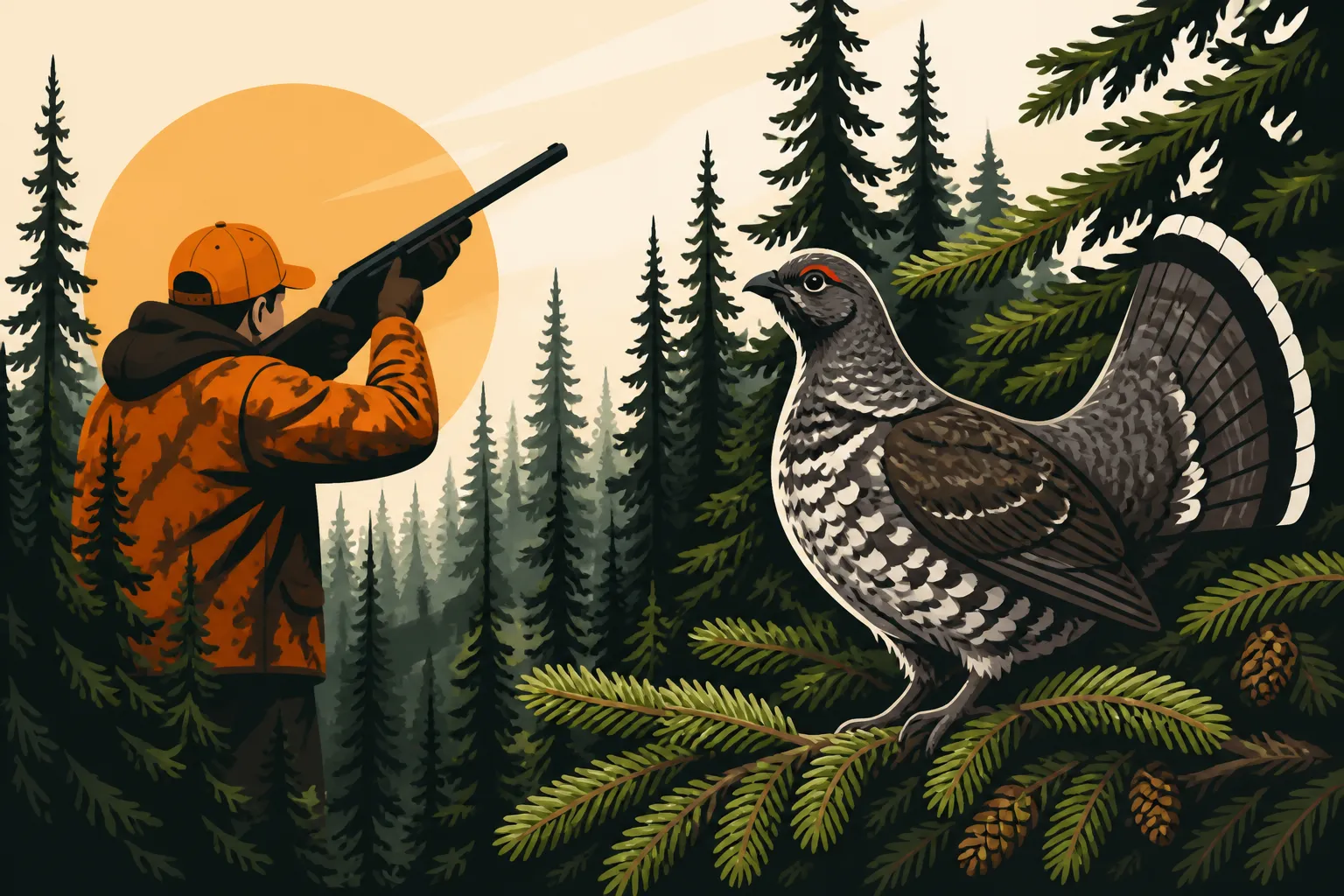
Spruce grouse, or Canachites canadensis, are distinct. They tend to be darker and more robust than ruffed grouse, perfectly camouflaged for the shadows and needles of a black spruce forest. Males, especially, are striking with their black breast, white barring on their flanks, and a prominent red comb above their eye during breeding season. Their tail fan is also quite different, typically black with a rust-coloured band at the tip, though this can vary slightly by subspecies. Females are mottled brown and black, offering even more effective camouflage against the forest floor.
Their behaviour is what truly sets them apart. They are famously unconcerned by human presence, often allowing hunters to approach within feet before flushing, if they flush at all. This "fool hen" reputation isn't just a quaint nickname; it's a critical aspect of how you'll hunt them. While a ruffed grouse might explode from cover with a heart-stopping flutter, a spruce grouse is more likely to walk away quietly or simply stand still, relying on its camouflage until you're practically on top of it. This stillness makes them incredibly difficult to spot until you're right there, often after you've already walked past them.
Preferred Habitat: Black Spruce Stands
The name says it all: spruce grouse are inextricably linked to spruce forests, particularly dense stands of black spruce. These dark, often boggy environments provide everything a spruce grouse needs. The thick canopy offers year-round cover from predators, while the needles, buds, and cones of the black spruce, as well as tamarack and jack pine, form the cornerstone of their diet. You'll often find them foraging on the ground among moss and lichens, especially during the warmer months, but their winter survival relies heavily on evergreen foliage.
Beyond just black spruce, look for a mosaic of coniferous forest types. Sometimes, you'll find them in mixed stands with a strong component of pine or balsam fir, especially where these transition into bogs or muskegs. These areas provide diverse food sources and varying levels of cover. The forest floor in these habitats is typically damp, often covered in sphagnum moss, Labrador tea, and low-bush cranberries – all elements that contribute to the spruce grouse's diet and environment. When you're Hunting a Boreal Muskeg Edge, you're often right in prime spruce grouse territory, as these transitional zones offer the best of both worlds: dense cover and edge habitat.
The microhabitats within these black spruce forests are also crucial. Look for areas with a higher density of younger, shorter spruce trees mixed with mature stands. These younger trees provide better ground cover for nesting and hiding, while the older trees offer higher perches and more abundant needle resources. Old logging roads, forgotten cutlines, or even natural clearings within these dense woods can also be productive, as they offer breaks in the canopy where sunlight penetrates, encouraging growth of understory plants and creating edge habitat that grouse favour for dusting or foraging.
Essential Gear and Tactics for Black Spruce Hunts
Hunting spruce grouse isn't about covering vast distances at high speed. It's about being prepared for the unique challenges of their habitat and adopting a slow, deliberate approach. Your gear needs to stand up to dense brush and damp conditions, and your tactics must account for the bird's stealthy nature.
Footwear, Clothing, and Navigation
The black spruce forest floor in Manitoba can be a soggy, tangled mess. Waterproof boots are non-negotiable. Look for boots with good ankle support to navigate uneven terrain, fallen logs, and hidden depressions. Hip waders aren't usually necessary, but knee-high rubber boots or waterproof hiking boots with gaiters will save you from wet feet. As for clothing, think layers. The air can be surprisingly cool even on a sunny day under the dense canopy, and you'll heat up quickly when pushing through thick brush. Durable, quiet fabrics that resist snagging are a must. Anything that rustles loudly will give away your presence to every creature in the woods, even the seemingly tame spruce grouse.
Navigation is paramount. These forests are often monotonous, with similar trees stretching in every direction, making it incredibly easy to get disoriented. A reliable GPS unit or a mapping app on your phone, like GoHunt, is essential. Before you head out, download offline maps of your chosen hunting area. These tools allow you to mark your vehicle, track your path, and find your way back even without cell service. Don't forget a physical compass and a paper map as a backup, just in case technology fails. Understanding how to Reading a Manitoba GHA Map Before You Go can be a lifesaver, helping you understand the lay of the land, identify potential access points, and locate distinct features like swamps or ridge lines that can serve as natural navigational aids.
Shotguns and Ammunition Choices
When it comes to firearms for spruce grouse, less is often more. Since these birds typically allow close approaches, heavy loads and large gauges are overkill and can damage the meat excessively. A lightweight 20-gauge or even a .410 shotgun is often ideal, offering quick swings in tight cover and sufficient patterning for grouse at close range. The key is to carry something comfortable to lug through the brush all day.
For ammunition, stick with smaller shot sizes. Number 7.5 or 8 lead shot is perfect for grouse. These smaller pellets provide a dense pattern that's effective at typical grouse distances without turning your bird into a mess. Some hunters even prefer target loads, which are lighter recoiling and still perfectly adequate for taking these relatively small birds. The goal is a clean, ethical harvest, and a dense pattern of small shot will do that far better than a sparse pattern of large pellets, especially when you're shooting at a bird that might be perched just a few yards away.
Table: Essential Spruce Grouse Gear Considerations
| Item | Recommendation | Why It's Important |
|---|---|---|
| Footwear | Waterproof, high-ankle boots with good traction | Navigating wet, uneven, and often boggy black spruce terrain. |
| Clothing | Layered, quiet, durable fabrics (e.g., tough canvas) | Adjusting to temperature changes, resisting snags, and preventing noise that spooks birds. |
| Navigation | GPS/GoHunt app with offline maps, compass, paper map | Preventing disorientation in dense, featureless forest. GoHunt is excellent for this. |
| Shotgun | Lightweight 20-gauge or .410 | Easy handling in thick brush, minimal meat damage on close shots. |
| Ammunition | 7.5 or 8 lead shot (target loads) | Dense pattern for ethical kills without excessive meat damage. |
| Hunter Orange | Vest and Hat | Essential for safety, especially if hunting with partners. |
| Game Vest | Comfortable, holds birds and shells | Easy transport of harvested birds and quick access to extra shells. |
Hunting Strategies in Dense Cover
The primary strategy for hunting spruce grouse is slow, deliberate movement. Forget covering ground quickly like you might when Walking Up Sharp-Tailed Grouse in Manitoba on the open prairie. In black spruce, you need to "still hunt." Take a few steps, then pause for a minute or two, scanning the trees and ground for any unusual shape, movement, or colour. Spruce grouse are champions of standing still and blending in, so your eyes need to adjust to seeing patterns in the chaos of branches and needles. Look for horizontal lines (a bird on a branch) or a distinct shape against the vertical lines of the trees.
Focus on hunting edges and transition zones. While they love dense black spruce, they will often be found near the edges of these stands, where they meet a bog, a cutline, or an area of younger growth. Old logging trails or seismic lines that cut through these forests are also excellent travel corridors and foraging spots. These linear features provide easier walking and clearer sight lines. When hunting these areas, consider working with a partner. One hunter can walk the trail, while the other slowly parallels them 20-30 yards into the bush, effectively flushing birds that might otherwise escape detection.
Using a dog can be incredibly effective, but it requires a very specific type of dog and training. A dog that ranges too far or works too fast will likely bump birds out of range before you even see them. A close-working pointer or flusher, especially one that understands the slow pace and dense cover, can be invaluable for locating birds you'd otherwise walk past. Their keen sense of smell can pick up on a grouse that's standing perfectly still, alerting you to its presence. Just make sure your dog is accustomed to the thick undergrowth and has bells or a GPS collar so you can keep track of them in the dense cover.
Finding Productive Spruce Grouse Areas in Manitoba
Manitoba is a vast province, and while black spruce forests are abundant, not all of them hold significant spruce grouse populations. Knowing where to focus your efforts is key to a successful hunt.
Key Regions and Forest Types
Spruce grouse can be found across much of Manitoba's boreal forest, but certain areas consistently offer better opportunities. The Sandilands Provincial Forest, located southeast of Winnipeg, is a prime example. Here, you'll find extensive stands of black spruce and jack pine, often interspersed with bogs and wetlands – classic spruce grouse habitat. Further north, areas within the Nopiming Provincial Park and the Whiteshell Provincial Park, especially away from the heavily trafficked tourist zones, contain similar coniferous forests. These regions often have a network of old logging roads or lesser-used trails that provide access deep into the bush.
Other productive areas include the expansive forests around The Pas and northern regions of the province. Here, the boreal forest truly dominates, offering seemingly endless stretches of black spruce. However, accessing these areas can be more challenging, often requiring ATVs or more remote travel. When you're considering Upland Bird Hunting in Manitoba in these northern reaches, remember that spruce grouse hunting is often a secondary pursuit to moose or bear, but the opportunities are certainly there. Always check the current Manitoba Upland Bird Seasons and regulations for the specific Game Hunting Area (GHA) you plan to visit, as they can vary.
Scouting and Reading the Landscape
Pre-season scouting is always beneficial, even for stationary birds like spruce grouse. Look for tell-tale signs: droppings (small, firm, dark pellets, often resembling miniature pine cones or resin beads), and evidence of feeding. Spruce grouse often nip off the tips of spruce or pine needles, leaving small, chewed stubs. Finding these signs confirms grouse presence and can help you pinpoint specific pockets of habitat they favour.
Satellite imagery, easily accessible through tools like GoHunt, is your best friend for scouting from home. Look for large, unbroken blocks of dark green indicating dense coniferous forest. Zoom in to identify lighter green areas, which might be younger growth, recent cuts, or even bogs that could create beneficial edges. Pay particular attention to areas where different forest types converge, or where old logging roads and cutlines dissect dense stands. These features often create ideal travel corridors and foraging opportunities for grouse. GoHunt's mapping capabilities allow you to drop pins, measure distances, and plan your routes long before you lace up your boots. For a deeper dive into optimizing this, check out our guide on Scouting With Satellite Imagery in Manitoba.
Don't underestimate the value of historical logging roads and fire breaks. These areas, while sometimes overgrown, often provide the easiest access into otherwise impenetrable terrain. They also create a natural opening in the canopy, allowing sunlight to reach the forest floor, which can lead to a more diverse understory that grouse might utilize for insects, berries, or grit. Even if the road itself isn't holding birds, hunting slowly along its edges, pushing into the dense cover, is often a very productive strategy. The ability to travel along these lines of least resistance can make a huge difference in your hunting success and overall enjoyment.
Ethical Considerations and Conservation
Hunting spruce grouse comes with a unique set of ethical responsibilities, particularly given their docile nature. It's crucial to approach these hunts with respect for the animal and a commitment to sustainable practices.
Respecting the "Fool Hen" Nature
The term "fool hen" is earned because spruce grouse are notoriously unconcerned by human presence. This characteristic makes them incredibly easy to hunt, almost too easy at times. You can often walk right up to them, sometimes within just a few yards, before they even consider moving. This ease of harvest presents an ethical dilemma for some hunters, and it’s important to reflect on it. The goal is not to see how many birds you can take, but to enjoy the challenge of finding them, appreciating the unique habitat, and harvesting ethically.
This tameness means a hunter can, if they choose, easily overharvest a local population. Therefore, exercising restraint is paramount. It's about selective harvesting – taking only what you need and leaving plenty for the future. Consider taking fewer birds, perhaps limiting yourself to just one or two per outing, even if the daily limit allows for more. This mindful approach ensures that these fascinating birds continue to thrive in their black spruce domain for generations to come. Remember, the true value of the hunt isn't measured by the number of birds in your vest, but by the experience gained and the connection forged with nature.
Contributing to Conservation Efforts
As hunters, we are stewards of the land and its wildlife. Understanding and adhering to provincial regulations is the bare minimum. Beyond that, actively contributing to conservation efforts helps maintain healthy populations of spruce grouse and their habitat. This includes being aware of and respecting all Manitoba Hunter Education Requirements, which instill a strong sense of ethical hunting and wildlife management.
Keep a mental note, or even better, a physical log, of your observations. Noticing trends in grouse numbers, habitat changes, or any unusual behaviour can be valuable information. While there aren't formal reporting mechanisms for every observation, staying informed about local wildlife initiatives and participating in hunter surveys, when available, helps conservation managers make informed decisions. Also, be diligent in removing all your trash from the woods, respecting private land boundaries, and ensuring you have proper permission when Knocking on Doors in Manitoba Farm Country (though less common for spruce grouse, it's a good general practice). These small actions collectively contribute to a positive public image of hunting and directly support the long-term health of Manitoba's wild places.
Disclaimer
Please note that hunting regulations, seasons, and access rules in Manitoba are subject to change. Always consult the most current Manitoba Hunting Guide and relevant provincial government websites before planning any hunting trip. This article is intended for informational purposes only and does not constitute legal advice or a comprehensive guide to all hunting regulations.