How Far to Walk From a Township Road
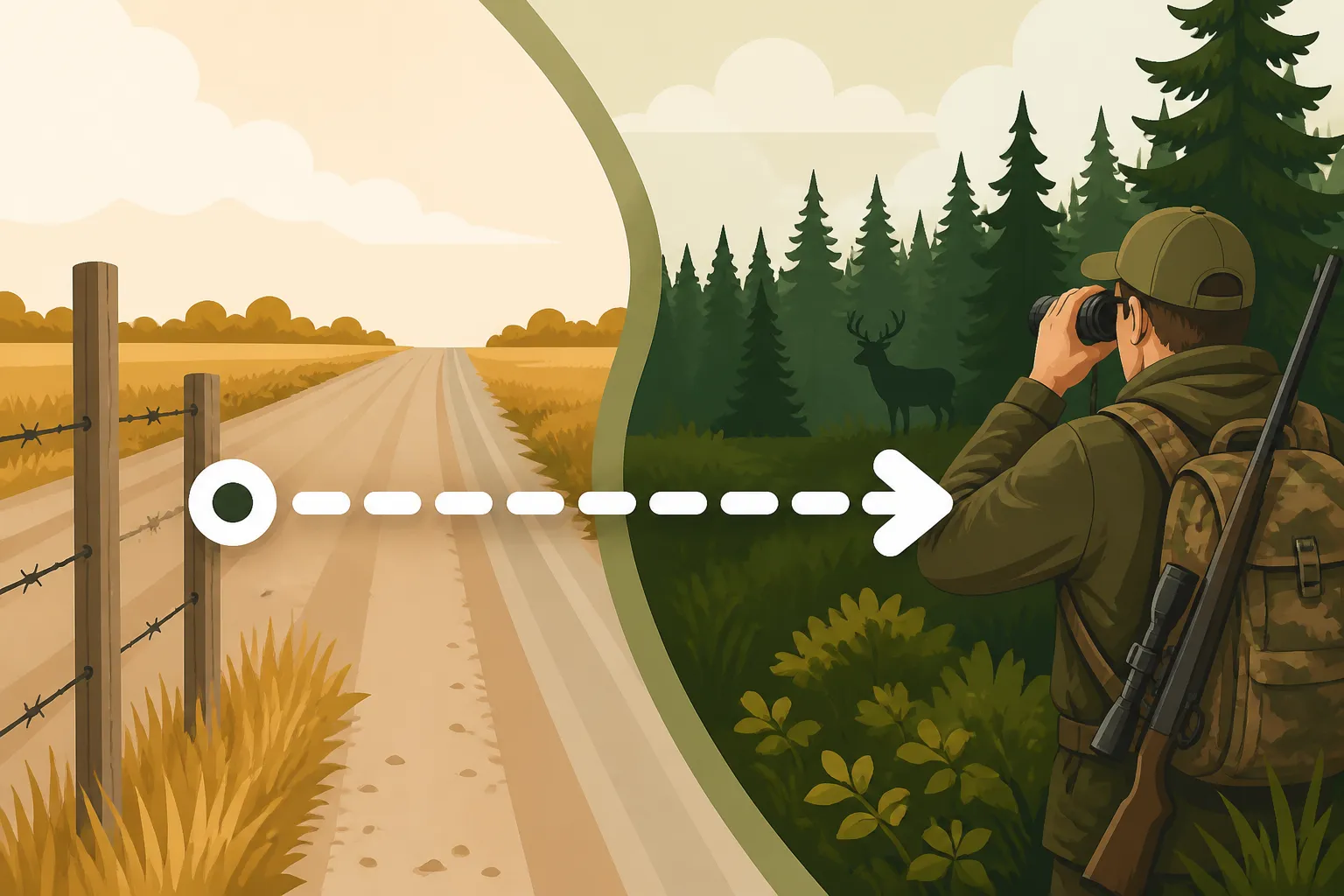
It's a common frustration for Manitoba hunters, isn't it? You scout promising areas, pour over maps, and then arrive on opening morning only to find trucks parked shoulder-to-shoulder along the grid road. The truth is, the easiest access often means the highest hunter pressure, pushing game deeper into less accessible cover. This guide is all about understanding why walking further from the township road can unlock incredible opportunities and how to practically apply that strategy to your hunts here in Manitoba.
The Undeniable Advantage of Walking Deeper
Let's face it, most hunters prefer convenience. We all do. The allure of parking right next to a prime hunting spot is strong, and sometimes, those easily accessed areas can pay off, especially on private land where pressure is controlled. But on public lands, or even on large tracts of private land that border busy roads, that easy access becomes a magnet for other hunters. Deer, moose, and elk quickly learn to avoid these high-traffic zones, seeking refuge where human intrusion is minimal.
This isn't just about avoiding other people; it's about finding animals that haven't been pushed, spooked, or patterned by constant human presence. A deer that hears a truck door slam every 100 yards down a road will instinctively move away, often into the thickest, most remote cover it can find. The further you can get from that road, the more likely you are to encounter game that is acting naturally, less wary, and often, less educated. It's about getting into their sanctuary.
The psychological aspect for the hunter is also huge. There's a certain satisfaction that comes from earning your hunt, of putting in the effort to reach a place few others bother with. It builds confidence in your strategy and often leads to a more rewarding experience, even if you don't tag out every time. You’re not just hunting an animal; you’re exploring and truly immersing yourself in the wild spaces that Manitoba has to offer.
How Far is "Far Enough"? Factors Influencing Your Walk
The million-dollar question: how far is far enough? Unfortunately, there's no magic number. "Far enough" is a dynamic concept, constantly shifting based on a variety of factors unique to each hunting situation. What works for a quick evening sit on a field edge might be entirely different from a deep push into boreal forest for a big bull moose.
Consider the species you're pursuing. A whitetail buck in relatively open aspen parkland might only need a few hundred yards of dense cover to feel secure from road traffic. A moose, on the other hand, accustomed to vast wilderness, will typically require a much deeper push into the woods to feel truly unmolested. Similarly, waterfowl might only require a short walk into a field from a hidden approach, while a coyote hunt might necessitate miles of hiking to find an unpressured calling stand.
The type of terrain plays a massive role too. Is it thick, unbroken bush? Open farmland with small bluffs? Rolling hills with scattered timber? Each presents different challenges and opportunities for both game and hunters. Think about hunter density, too. On opening weekend, you'll need to walk much further to escape the crowd than you might during a quiet weekday late in the season. Hunting Safely in Deep Winter Cold can also influence how far you're willing or able to walk.
Understanding Hunter Pressure and Terrain Types
Hunter pressure is arguably the most significant factor. If you're in a popular Game Hunting Area (GHA) known for big bucks and easy access, expect every readily accessible pocket of cover within a quarter to half-mile of a road to be thoroughly scouted and likely hunted. In these scenarios, you might need to stretch that walking distance to a mile or even two, especially if you're looking for mature animals that have survived previous hunting seasons. These animals are smart; they know where the pressure is.
Conversely, in lesser-known GHAs or areas with genuinely difficult access – think deep bush, extensive marshes, or areas with limited road infrastructure – even a half-mile walk can put you into relatively undisturbed territory. This is where researching your GHA, checking past harvest reports if available, and talking to local conservation officers can provide invaluable insights into typical pressure levels. Some hunters find excellent opportunities by simply looking for ground other hunters deem too difficult to bother with.
The terrain itself dictates how far a typical hunter is willing to go. A flat, easy walk through open timber is one thing. Bushwhacking through dense willows, crossing frozen sloughs, or navigating deep snow drifts is another. When the terrain itself creates a barrier, even a relatively short physical distance from the road can feel like miles to those unwilling to put in the work. This is where your fitness and commitment truly pay off.
Species-Specific Considerations
Different game animals have different thresholds for human disturbance and varying preferences for cover. Whitetail deer, while adaptable, will quickly learn to use any available thicket, willow clump, or standing crop field as sanctuary when roads are busy. Often, a mature whitetail buck will simply skirt the edges of pressure, using dense river bottom or a small un-hunted bluff a few hundred yards from a gravel road. Hunting a Poplar Bluff at First Light or Hunting a Slough Ring in Open Country often involve a walk, but not necessarily a marathon.
For larger game like moose or elk, especially in Manitoba's more remote boreal regions or large provincial forests, the minimum walking distance increases dramatically. These animals thrive on solitude. If you're looking for a bull moose that hasn't seen a human in weeks, you might be looking at hiking several miles, often off-trail, into areas that see little to no human traffic. This might mean pushing deep into a burn, a series of beaver ponds, or traversing vast expanses of spruce and tamarack. Hunting Moose Around Manitoba Beaver Ponds is a perfect example of a scenario where distance from a road is key.
Waterfowl hunters often think in terms of short walks to the "X" in a field. While this is true for many scenarios, getting truly off the beaten path for ducks or geese might mean hauling decoys a significant distance into a lesser-known marsh or a remote stubble field that isn't visible from any road. This means more effort, but often, better shooting.
Tools for Planning Your "Deep Walk"
Gone are the days of relying solely on paper maps and compasses (though those are still essential backups!). Modern technology has revolutionized how we scout and plan our hunting trips, allowing us to virtually "walk" the terrain from the comfort of our homes. This pre-hunt planning is absolutely critical to deciding how far you'll need to walk and where those deeper, unpressured zones might be.
Satellite imagery, topographical maps, and land ownership layers are your best friends. Using these tools, you can identify remote pockets of cover, potential travel corridors away from roads, and determine the easiest (or most difficult) routes of access. You can measure distances accurately, mark potential ambush points, and identify natural barriers that might deter other hunters.
Don't underestimate the power of simply zooming in and studying the landscape. Look for subtle changes in elevation, different timber types, wetlands, and open areas. These details, often overlooked from a vehicle, can reveal the hidden gems that hold game. Scouting With Satellite Imagery in Manitoba is a fantastic way to identify these spots before you ever set foot on the ground.
Utilizing Mapping Apps: onX Hunt and GoHunt
For many hunters, myself included, mapping applications like onX Hunt have become indispensable tools. They provide detailed satellite imagery, topo maps, and crucially, property boundaries that show public land, private land, and even specific landowners. This is paramount when determining where you can legally hunt and how far you need to walk to get into unpressured zones.
With onX Hunt, you can drop pins, measure distances, and even identify different types of land like Crown Land, Wildlife Management Areas (WMAs), or Provincial Forests. This allows you to identify remote pockets of public land that might be surrounded by private property, requiring a strategic approach to access. You can plot out your walking routes, note potential obstacles like thick swamps or steep hills, and estimate the time it will take to reach your desired hunting spot. This helps you figure out exactly How Far to Walk From a Township Road in specific locations.
While GoHunt is often more geared towards Western draws and general hunting information, it also offers mapping features that can be useful for identifying large tracts of public land or understanding broader habitat patterns. Both platforms allow you to carry these detailed maps in your pocket, even without cell service, which is a game-changer when you're miles from the nearest road. Always download your maps for offline use before heading out into Manitoba's more remote areas, where cell coverage can be spotty at best. Where Manitoba Cell Coverage Ends can be surprising.
Interpreting Topography and Cover on Maps
Beyond simply seeing the land, learning to read the land through topographical maps is key. Contour lines will show you elevation changes, indicating hills, valleys, and draws that might funnel game or provide hidden travel routes. Denser contour lines mean steeper terrain, which can be harder to traverse but often deters other hunters.
Look for areas where different cover types meet – a bush edge adjacent to a field, a mature forest bordering a younger regrowth area, or a high ridge overlooking a marsh. These transition zones are often prime habitat. Identifying these on a map allows you to predict where animals might be bedding, feeding, or traveling, and then plan your approach to intercept them after you've made your deep walk.
When you see a large block of unbroken timber on a map, especially if it's a considerable distance from any road, that's often a good sign. The deeper you can push into such an area, the greater your chances of finding undisturbed game. Look for "fingers" of cover that extend towards open areas, or isolated bluffs of timber that are difficult to access from any road – these are often overlooked sanctuaries. Hunting a bush edge between two fields might be a good starting point for a shorter walk, but the real prizes often lie further in.
Practical Tips for the Deep Walk Hunter
Deciding to walk further is one thing; actually doing it safely and effectively is another. It requires preparation, the right gear, and a solid understanding of the terrain and conditions you'll face. Rushing into a deep bush hunt without adequate planning can quickly turn a promising outing into a dangerous situation, especially in Manitoba's often unforgiving weather.
Physical fitness is paramount. A long walk with a pack full of gear in deep snow or challenging terrain is a workout. Start training well before the season, focusing on endurance and strength. Your ability to comfortably cover ground will directly impact your success and safety.
Always let someone know your hunting plan, including your route, expected return time, and where you'll be parked. Carry a reliable communication device, even if it's just a fully charged cell phone (with downloaded maps!). Consider a satellite messenger for truly remote areas where cell service is non-existent. What to Do If You Get Stuck in the Bush isn't something you want to figure out on the fly.
Essential Gear for Covering Ground
Your gear choices become even more critical when planning a deep walk. Comfort and functionality are key. Starting with footwear, investing in high-quality, broken-in hunting boots is non-negotiable. They need to be waterproof, offer good ankle support, and be suitable for the terrain. Whether you choose insulated boots for cold November days or lighter, breathable options for early fall, your feet will make or break your ability to cover significant distances. Boots for Sitting Still in Deep Cold are vital for those colder hunts.
Layered clothing is your best friend. As you hike, you'll generate heat, and if you're not careful, you'll sweat. Sweating in cold Manitoba weather is a recipe for hypothermia. Start with a moisture-wicking base layer, add insulating layers, and top it with a waterproof, windproof outer shell. As you walk, shed layers to avoid overheating, and put them back on when you stop. This strategy applies whether you're deer hunting or even for Calling Coyotes at First Light in the snow.
A good backpack is also crucial. It needs to be comfortable, fit well, and have enough capacity for essentials like water, snacks, extra layers, a first-aid kit, a headlamp, and game processing tools. Don't overload it, but ensure you have everything you might need for an extended stay or an unexpected emergency. Remember, you're not just walking in; you're potentially walking out with an animal.
Strategies for the Deep Push
When you commit to a deep walk, your strategy has to adapt. It's not about quick scouting and a short sit. It's about slower, more deliberate movement, focused on finding undisturbed game. Often, the best approach is to move slowly into the wind or a crosswind, using the terrain and cover to your advantage. Stop frequently to glass, listen, and scan for sign.
Consider the time of day. Pushing deep into an area just before first light means you might encounter animals still moving in low light, before they've settled into their bedding areas. An evening hunt could involve walking in during the afternoon, setting up, and then hunting your way out after dusk. This means having a good headlamp and knowing your route back in the dark.
One effective strategy is to "still hunt" your way in. This involves moving incredibly slowly, taking a few steps, then pausing to observe for several minutes. This allows you to cover ground while actively hunting, rather than just hiking. It takes patience, but it's often how you surprise an unpressured animal. Remember, the goal isn't just to cover distance, but to hunt effectively once you're there.
Different Environments, Different Distances
Manitoba offers a hugely diverse landscape for hunting, and what constitutes a "deep walk" in one region might be a stroll in another. From the vast agricultural fields of the southwest to the dense boreal forests of the north, each environment presents unique challenges and rewards for the hunter willing to go the extra mile.
Understanding the specific characteristics of your chosen hunting ground is essential for determining how far you need to walk to escape pressure and find quality game. A kilometer walk in flat, open stubble field for geese is a vastly different proposition than a kilometer through tangled blowdowns and muskeg for a bull moose.
Always consider the season and weather conditions. A walk that's manageable in early October might be nearly impossible after a foot of fresh snow and -30°C temperatures in late November. Adaptability is key to success and safety when committing to the deep walk in Manitoba.
Farmland and Parkland Edges
In the agricultural belt of Manitoba, where many hunters pursue whitetails, Hunting Whitetails on Manitoba Farmland often means dealing with a patchwork of private and Crown land, intersected by grid roads. Here, "far enough" might only be a half-mile to a mile. The key is finding pockets of cover that are difficult to access or out of sight from the road, such as a large willow run, a treed bluff in the middle of a field, or a river bottom that winds its way through farmland.
These areas, even if seemingly small, can act as magnets for deer looking to escape road noise and immediate hunter presence. The walk might be over open fields, through heavy brush, or along fence lines. Using onX Hunt to identify these isolated cover spots on public land, or approaching landowners for permission to access them, can pay huge dividends. Hunting a Bluff Between Two Fields is a classic example of this type of deep walk on farmland.
Table: Estimated Walking Distance to Escape Pressure
| Terrain Type | Common Species | Typical Roadside Pressure | Suggested Minimum Walk (from road) | Notes |
|---|---|---|---|---|
| Farmland (small bluffs) | Whitetail, Coyotes | High | 0.5 – 1.5 miles | Focus on isolated cover, river bottoms. |
| Aspen Parkland (mixed) | Whitetail, Elk | Moderate to High | 0.75 – 2 miles | Deeper into bush, away from trails, into draws. |
| Boreal Forest (thick) | Moose, Bear, Whitetail | Low to Moderate | 1 – 3+ miles | Navigate swamps, blowdowns, burns. Often requires off-trail travel. |
| Wetlands/Marsh | Waterfowl, Moose | Moderate | 0.5 – 1.5 miles | Look for hidden sloughs, deeper marsh sections. |
| Northern Tundra (Caribou) | Caribou, Wolves | Very Low | 2 – 5+ miles (from drop-off) | Often fly-in, so "road" is typically landing strip or river. |
Boreal Forest and Remote Bush
When we talk about hunting moose, bear, or even a truly reclusive whitetail in Manitoba's boreal forest, the concept of a "deep walk" takes on a whole new meaning. Here, access roads are fewer, and the bush can be incredibly dense and challenging. Hunting Manitoba's Northern Boreal means preparing for a serious trek.
In these environments, a mile might be the bare minimum to start feeling like you're away from others. Often, hunters will push 2, 3, or even 5+ miles from the nearest logging road or cutline to find untouched territory. This kind of walking involves navigating thick spruce, tamarack swamps, dense alder thickets, and often extensive areas of blowdown from past storms. You might be following old trapper lines, seismic cutlines, or simply bushwhacking through trackless wilderness. Hunting a Hydro Line Right-of-Way can be a great starting point for a deep walk.
These are the hunts where proper navigation, survival skills, and a strong sense of self-reliance are absolutely essential. The reward, however, can be truly spectacular: encounters with animals that have rarely, if ever, seen a human, providing an authentic wilderness experience that's hard to find closer to civilization. What a Big Bull Moose Weighs Here is a testament to the potential in these remote areas.
Wetlands and River Valleys
Manitoba's abundant wetlands and winding river valleys also offer prime opportunities for the deep walker. For waterfowl, walking into a remote slough that's not easily visible from a road, or hauling a full spread of decoys into a field a mile or more away, can put you under birds that are undisturbed by calls and constant shooting closer to access points. Marsh Hunting Ducks in the Interlake often rewards those willing to go further.
For big game, river valleys often serve as natural travel corridors and provide dense, overlooked cover. The banks, coulees, and bluffs along rivers like the Assiniboine can hold significant numbers of deer and even elk, particularly if the land is difficult to traverse. Walking a mile or two along a river bottom, well away from any bridges or visible access points, can lead you to pockets of game others simply drive past. Hunting a Manitoba River Valley demands a commitment to walking, but the rewards can be substantial.
These areas can be deceptively challenging, with changing water levels, muddy conditions, and thick riparian vegetation. Always be aware of your surroundings, especially near open water or unstable banks.
Disclaimer
This article is for general informational purposes only and does not constitute professional advice. Laws, prices and regulations vary by location and change over time. Consult a qualified professional for guidance on your specific situation.