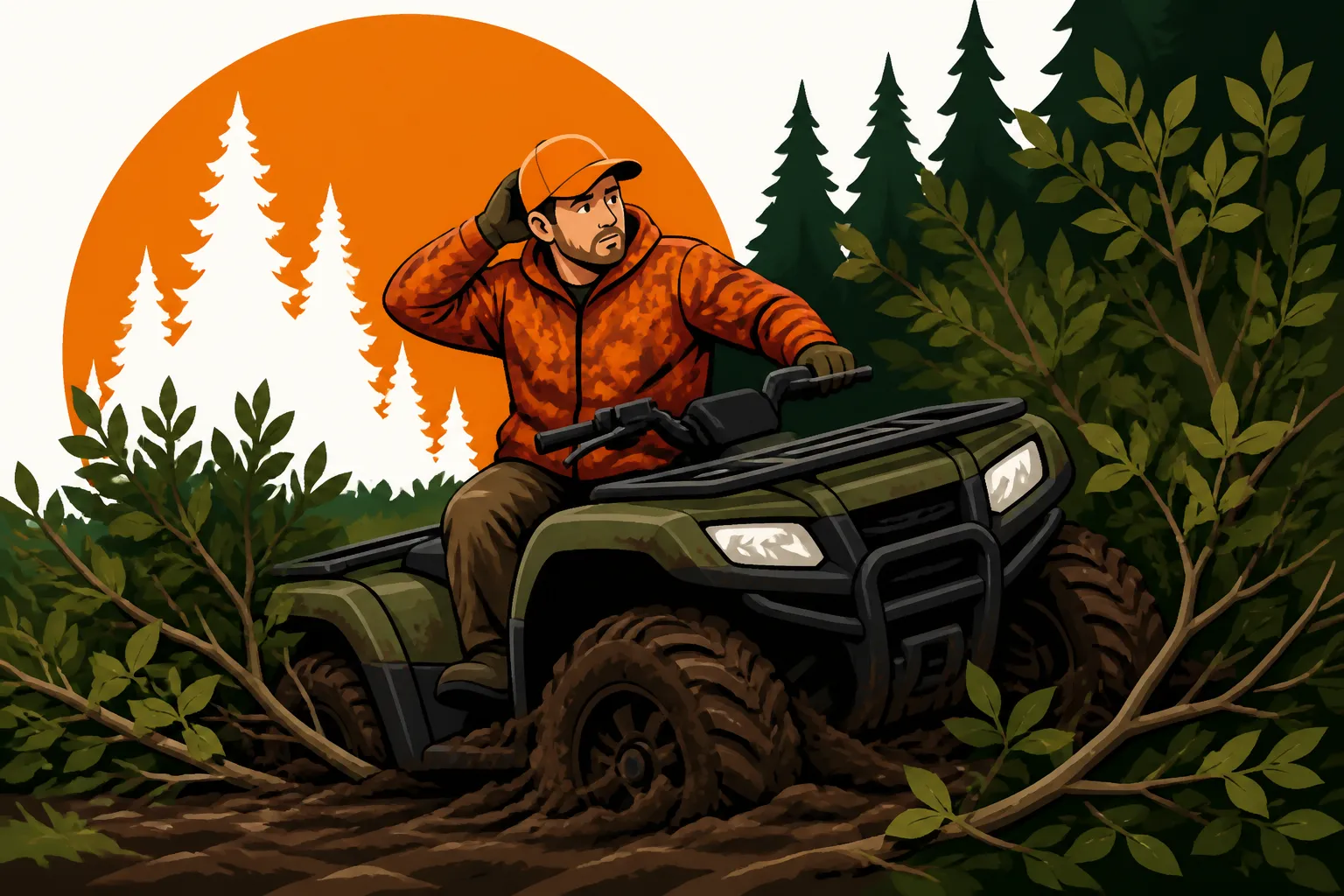
What to Do If You Get Stuck in the Bush
There’s almost nothing worse than the pit-in-your-stomach feeling of realizing your vehicle isn’t moving anymore, deep in Manitoba's backcountry, miles from help. Whether it's a winter rut, a muddy track after a spring rain, or soft ground in a remote cutline, getting stuck can quickly turn a peaceful outing into a stressful, potentially dangerous situation. This guide is here to walk you through the essential preparations, immediate actions, and long-term survival strategies to handle those inevitable moments when you find yourself stuck in the bush.
Preparing for the Unexpected Before You Leave Home
The best way to deal with getting stuck is to prevent it in the first place, or at least be thoroughly prepared when it happens. Manitoba’s diverse terrain, from the marshy Interlake to the rugged boreal forest, demands respect and a proactive approach to safety. Never assume a well-maintained trail will stay that way.
Essential Gear for Vehicle Recovery
When you're heading out into remote areas, whether for a big game hunt or just a quiet drive, your vehicle needs to be equipped for self-sufficiency. Thinking about what you'll need before you're buried to the axles is crucial. It’s not about if you’ll get stuck, but when.
First and foremost, a good quality shovel is non-negotiable. Not some flimsy garden spade, but a sturdy, full-sized shovel that can move a lot of mud, snow, or sand. You'd be amazed how much digging you might need to do, and a cheap shovel will break on the first frozen clod of earth. Pair that with a set of robust recovery tracks, like those from Maxtrax or similar brands. These aren't just for desert sands; they're incredibly effective in Manitoba's sticky clay and deep snow, offering traction when your tires have nothing left to grip. Place them under your drive wheels, and they often provide enough purchase to slowly crawl out.
Next, consider your winching and towing capabilities. A properly rated tow strap or kinetic recovery rope is vital. Make sure it's rated for your vehicle's weight, plus a significant margin. Never use chains for recovery; they can snap and become deadly projectiles. If you have a winch, ensure it’s well-maintained and you know how to use it safely, always using tree savers and dampeners. If not, a high-lift jack can sometimes be used creatively to lift a wheel out of a rut, but they can be incredibly dangerous if not used correctly on unstable ground. Always wear gloves and keep clear of moving parts. Having a basic tool kit with wrenches, a hammer, and even a small hatchet or saw can also come in handy for clearing brush or minor repairs.
Communication and Navigation Tools
In many parts of Manitoba, especially in the northern boreal forest or even some remote corners of the Interlake, cell service is a myth. Relying solely on your phone is a gamble you can't afford. This is why redundant communication and navigation methods are absolutely critical. Don't wait until you're stranded to discover your phone has no signal or has run out of battery.
A satellite communication device, such as a Garmin inReach or a Zoleo, is your lifeline. These devices allow you to send SOS messages, track your location, and even send and receive text messages from anywhere with a clear view of the sky, even if your phone has no bars. You can use an app like GoHunt, which leverages offline maps, but your ability to communicate is still limited by cell service. It's a small investment for peace of mind and potentially life-saving communication. Additionally, always carry a fully charged portable power bank for your phone and other devices, and perhaps even a small solar charger for extended trips.
For navigation, a good old-fashioned paper map of the area you're hunting or travelling in, along with a compass, should always be in your pack. Knowing how to use them is paramount. Even with GPS on your phone or a dedicated GPS unit, batteries die, screens break, and signals can be lost. Use a reliable mapping app like GoHunt for your primary navigation, but view the paper map as your unpowered, indestructible backup. Before you head out, share your travel plans, route, and expected return time with someone reliable. This simple step can drastically reduce the search time if you don't check in when expected. Remember to scout your Manitoba Game Hunting Area carefully, noting potential hazards and alternative routes.
Immediate Actions When You Get Stuck
Okay, the moment has arrived. You're stuck. Your wheels are spinning, and the truck isn't going anywhere. Panic is a natural first reaction, but it’s also your biggest enemy. Take a deep breath.
Assessing the Situation and Staying Calm
The very first thing you need to do is stop. Stop spinning your tires, stop revving the engine, and just turn off the vehicle. That moment of silence, broken only by the chirping of a few birds or the distant rustling of leaves, is crucial. Take a few deep breaths. Seriously. Panic drains energy, impairs judgment, and can lead to making bad decisions that only make the situation worse. Getting stuck is frustrating, embarrassing even, but it's a common occurrence for anyone who ventures off the beaten path in Manitoba.
Once calm, it's time to assess the situation thoroughly. What kind of terrain are you stuck in? Is it mud, sand, snow, or a combination? What's the consistency? Are your wheels buried up to the axles, or is it just a slight loss of traction? Look for obstacles like rocks, stumps, or hidden culverts that might have caused the issue or could complicate recovery. Are you on a slope? Is there a risk of the vehicle sliding further? Check under the vehicle for any damage to the drivetrain, exhaust, or fuel lines. Take note of the time of day, current weather conditions, and the forecast. Is it getting dark? Is a storm rolling in? These factors will dictate your next steps. For those brave enough to be Hunting Safely in Deep Winter Cold, getting stuck means an immediate and severe cold exposure risk.
Attempting Self-Recovery Safely
With your assessment complete, it's time to consider self-recovery. This is where your preparedness pays off. Never rush this process; a hasty recovery attempt can often cause more damage or dig you in deeper. First, clear any material around your tires. Digging out mud, snow, or sand from in front and behind your tires, especially the drive wheels, is often the first step. You might be surprised how much difference just a few inches of cleared path can make. If you can, try to create a flatter, firmer surface for your tires to gain traction on.
If digging isn’t enough, deploy your recovery tracks. Place them firmly under the drive wheels, ensuring they are pointed in the direction you want to go. Slowly, gently apply power. Often, a slow, steady momentum is better than a sudden burst of power, which can just spin the tires and fling the tracks. If your vehicle has 4×4 options like diff locks or low range, engage them. Sometimes, simply shifting the weight in the vehicle – having passengers get out, or moving heavy gear – can provide just enough extra traction. However, always ensure passengers are clear of the vehicle during any recovery attempt. Remember, safety first. If you’re struggling with getting a vehicle out on a frozen trail, the same principles apply, but with the added challenge of ice.
If you have a winch, now’s the time to use it. Find a solid anchor point like a large tree (using a tree saver strap!) or another vehicle. Always lay a dampener (like a heavy blanket or jacket) over the middle of the winch cable to absorb energy if it snaps. Keep everyone well clear of the cable and winch line. Slowly and steadily winch yourself out. If you don't have a winch, and recovery tracks aren't working, this might be the point where you acknowledge that you need outside help. Don't waste precious time, fuel, or battery power if your initial attempts are clearly futile.
| Recovery Gear | Primary Use | Best Practice | Important Safety Note |
|---|---|---|---|
| Heavy-Duty Shovel | Clearing mud, snow, sand from around tires | Dig both front and back of tires | Watch for buried obstacles |
| Recovery Tracks (e.g., Maxtrax) | Providing traction on unstable surfaces | Wedge firmly under drive wheels, flat side up | Keep body parts clear during initial movement |
| Kinetic Recovery Rope | Dynamic towing for stuck vehicles | Ensure proper rating for vehicle, stretch and recoil | NEVER use chains; stand clear of tension |
| Winch (Electric/Hydraulic) | Self-extraction or pulling others | Use tree saver, dampener; know your winch's limits | Always keep clear of cable under tension; wear gloves |
| Hi-Lift Jack | Lifting wheels out of ruts, changing tires | Use on solid, stable ground; secure vehicle | Extremely dangerous if not used correctly; keep head and body clear |
| Basic Tool Kit | Minor repairs, clearing obstructions | Carry common sizes for your vehicle | Always use appropriate personal protective equipment |
Signalling for Help and Survival Strategies
When self-recovery isn't an option, or the conditions are too dangerous to attempt it, your focus shifts to signalling for help and ensuring your immediate survival. This is where having a well-thought-out plan and proper gear becomes absolutely critical.
Making Yourself Visible and Audible
Once you've decided to hunker down and wait for help, your priority is to make it as easy as possible for rescuers to find you. First, stay with your vehicle. It's a much larger, more visible object than a lone person, and it offers shelter. If you leave your vehicle, you significantly reduce your chances of being found quickly, especially in dense Manitoba bush. Unless you can clearly see a road or settlement within a very short distance, don't walk away. This isn't the movies; getting lost is terrifyingly easy.
Signal for help. If it's daylight, hang bright pieces of cloth – blaze orange is ideal – from your antenna, mirrors, or high in a nearby tree. Create an SOS or other clear signal in an open area if possible, using rocks, logs, or cleared snow. If you have flares, use them cautiously and only when you know there might be someone to see them, or when you hear aircraft. At night, your vehicle's headlights can be a powerful signal. Flash them in a pattern, perhaps three short, three long, three short (SOS). If you have a satellite messenger, send your SOS message with your exact coordinates. Many hunters rely on apps like GoHunt for their detailed maps, and these can be invaluable for pinpointing your location if you have a way to share it, such as through a satellite device. Consider the direction of wind for smoke signals, if you have the means and it's safe to start a fire. Making sure you have an emergency plan in Manitoba's bush is really about layers of redundancy for communication and signaling.
Prioritizing Shelter, Water, and Warmth
While waiting, your immediate survival priorities are shelter, water, and warmth (or cooling, depending on the season). Your vehicle is your primary shelter. Make it as comfortable and insulated as possible. If it's cold, block off unused windows with blankets or spare clothes to reduce heat loss. Keep the engine off as much as possible to conserve fuel, only running it intermittently for heat, ensuring the exhaust pipe is clear of snow or mud to prevent carbon monoxide poisoning. For those hunting Whitetail Hunting in Manitoba in the late season, temperatures can drop dangerously low, making staying warm paramount.
Even in winter, dehydration can be a serious issue. You might have snow or ice, but you need a way to melt it without expending too much energy or fuel. A metal cup and a small heat source (like a camp stove or even a candle if safe) can be crucial. In warmer weather, locate a clean water source, but always purify it if possible using tablets, a filter, or by boiling. Remember that finding clean water can be harder than you think, especially in agricultural areas or dense bush.
Dress in layers. This is a mantra for Manitoba hunters for a reason. You can always add or remove layers to regulate your body temperature. If you find yourself in a situation where you might be Sitting All Day in a Manitoba Blind in deep cold, you’ll know how quickly core temperature can drop. Ensure you have extra hats, gloves, and dry socks. A good sleeping bag, even if you’re not planning to camp, can be a lifesaver for staying warm overnight. Keep an emergency blanket in your kit – the Mylar type is compact and surprisingly effective at retaining body heat.
Long-Term Survival and Mindset
If help doesn't arrive as quickly as you hoped, shifting into a long-term survival mindset is essential. This means conserving resources, maintaining morale, and being mentally prepared for an extended stay.
Conserving Resources and Maintaining Morale
Resource conservation is paramount. Fuel is for warmth and signalling, sparingly. Food should be rationed, but don't starve yourself. Small, regular intakes of food will keep your energy up and your mind sharp. A well-packed Winter Truck Kit for a Manitoba Hunt should include non-perishable, high-energy snacks like nuts, dried fruit, and energy bars. If you have extra clothes, use them for insulation, not as fuel for a fire unless absolutely necessary for survival. Water is vital; stretch it as far as possible.
Maintaining morale is just as critical as physical survival. Boredom, fear, and loneliness can quickly erode your will to persevere. Keep your mind active. Read a book, play cards, listen to an audiobook, or even try to identify local wildlife sounds. If you're with others, talk, share stories, and support each other. Avoid negativity. Think positively and focus on the eventual rescue. Remind yourself that people are looking for you, especially if you followed the advice to share your travel plans. Use the detailed maps provided by GoHunt to mentally trace routes, identify landmarks, and keep your mind engaged.
If you happen to be in an area with some form of sparse cell service, like the edge of the Parkland fringe, even a brief signal could allow you to send a message or update your family on your status. However, never rely on intermittent service; it’s a bonus, not a plan. Remember to conserve your phone battery for essential communication. Consider the best practices for meat care in Manitoba's cold snaps if you happen to have game meat with you; keeping it cool might become a secondary but important task.
Planning for Extended Wait Times
Sometimes, rescue can take days, especially in remote areas or during adverse weather. Being prepared for this reality is crucial. This means having enough supplies to last longer than you anticipate. A good rule of thumb is to pack enough for at least 72 hours, even for a day trip. This includes extra food, water, a first-aid kit, and medications.
Review your situation regularly. Are the weather conditions improving or worsening? Is there any new sign of human activity, like distant vehicle sounds or aircraft? Continue your signalling efforts periodically. If you have a two-way satellite device, send regular "I'm okay" messages to your emergency contacts, along with your updated location, to let them know you’re still safe and waiting. Understand that Manitoba’s vastness means that search and rescue operations can take time to mobilize and reach you.
Mentally rehearse scenarios. What would you do if a blizzard hit? What if you ran out of a crucial resource? Having a mental contingency plan helps reduce anxiety and keeps you proactive. If you have a fire, keep it managed and safe, and remember that an old logging road in the North or a beaver dam crossing might offer a more sheltered spot than deep timber. Ultimately, staying put, staying calm, and staying prepared are your best tools when you get stuck in the Manitoba bush.
Disclaimer
The information provided in this article is for general guidance only and should not be considered a substitute for professional training in wilderness survival or vehicle recovery. Always exercise caution and judgment when venturing into remote areas. Regulations and conditions can change, so always check with local authorities and ensure you have the necessary permits and knowledge for your specific activity.