Hunting Manitoba’s Northern Lake Country
Hunting the vast and untamed Northern Lake Country of Manitoba presents a unique set of challenges and incredible rewards, far removed from the familiar farmlands and parklands. This guide will walk you through the distinct characteristics of this remote landscape, the game species you can pursue, and the critical preparations you'll need to make to ensure a safe and successful adventure into Manitoba's wild heartland.
Understanding the Northern Lake Country Landscape
When we talk about Manitoba's Northern Lake Country, we're really talking about a significant portion of the province's geography that stretches beyond the agricultural belt and into the true boreal wilderness. This isn't your typical backyard hunting ground; it's a place where the hand of man is far less apparent, and nature truly reigns supreme.
Geography and Terrain
The landscape here is utterly breathtaking but equally demanding. Imagine an almost endless tapestry of shimmering freshwater lakes, winding rivers, and countless smaller ponds, all intricately woven through rugged Canadian Shield rock formations. This ancient rock creates a dramatic, undulating terrain, often rising in granite ridges and falling into low-lying areas. Between these rocky outcrops, you'll find vast expanses of dense boreal forest, a thick blanket of spruce, pine, poplar, and birch.
Beneath the canopy, the ground is often a mosaic of muskeg – a spongy, waterlogged peatland – and various swamps, especially along lake edges and river systems. This can make travel on foot incredibly difficult and slow-going, particularly during warmer months or after significant rainfall. Hunters often find themselves navigating a labyrinth of thick timber, rocky slopes, and unavoidable wet ground. This isn't a place for casual strolls; every mile covered is earned. The sheer remoteness means that help, if needed, is often hours, if not days, away, making self-sufficiency paramount.
Dominant Flora and Fauna
The boreal forest is the defining characteristic of this region's flora. Black spruce and jack pine dominate the drier, rockier uplands, while balsam fir, white spruce, and trembling aspen thrive in more fertile pockets. Along waterways and in lower elevations, you'll see stands of birch and willow, particularly important browse for large ungulates. The undergrowth can be incredibly thick, comprised of alder, various berry bushes, and dense conifer regeneration, which offers fantastic cover for wildlife but can be a nightmare to push through.
The fauna here is equally robust, dominated by species adapted to this northern wilderness. Moose are undoubtedly the kings of this country, thriving in the mix of wetlands and regenerating forest. You'll also find a healthy population of Black Bear, especially drawn to berry patches in late summer and the rich aquatic vegetation around lakes. While a rare sight, and generally off-limits to hunting, Woodland Caribou do inhabit pockets of this vast area, highlighting the wild nature of the region. Predators like Wolves are present, constantly on the prowl for weakened prey. For bird hunters, the numerous lakes and marshes are prime habitat for various Waterfowl, while the dense bush holds abundant Ruffed Grouse and Spruce Grouse. Snowshoe Hare populations also fluctuate in a noticeable cycle, providing a crucial food source for many predators.
Key Species and Their Habitat in the North
Hunting in Manitoba's Northern Lake Country is largely about specific big game opportunities and the unique challenges they present. The sheer scale of the landscape means understanding species-specific habitats is crucial for success.
Moose Hunting in the Boreal Forest
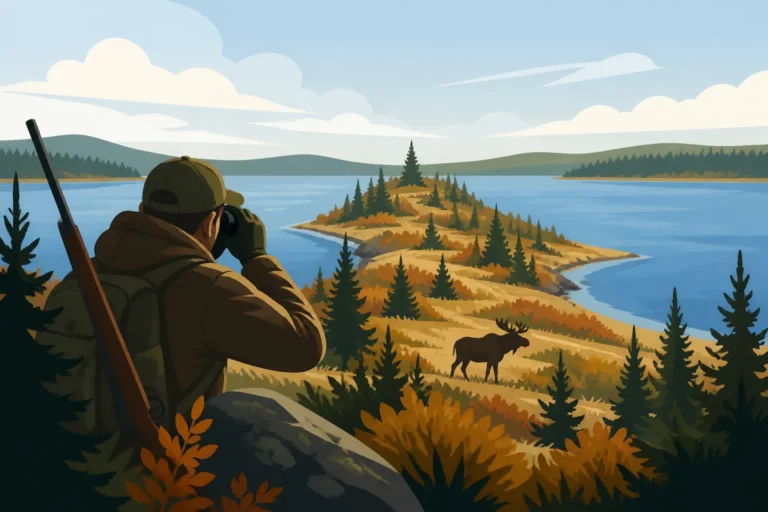
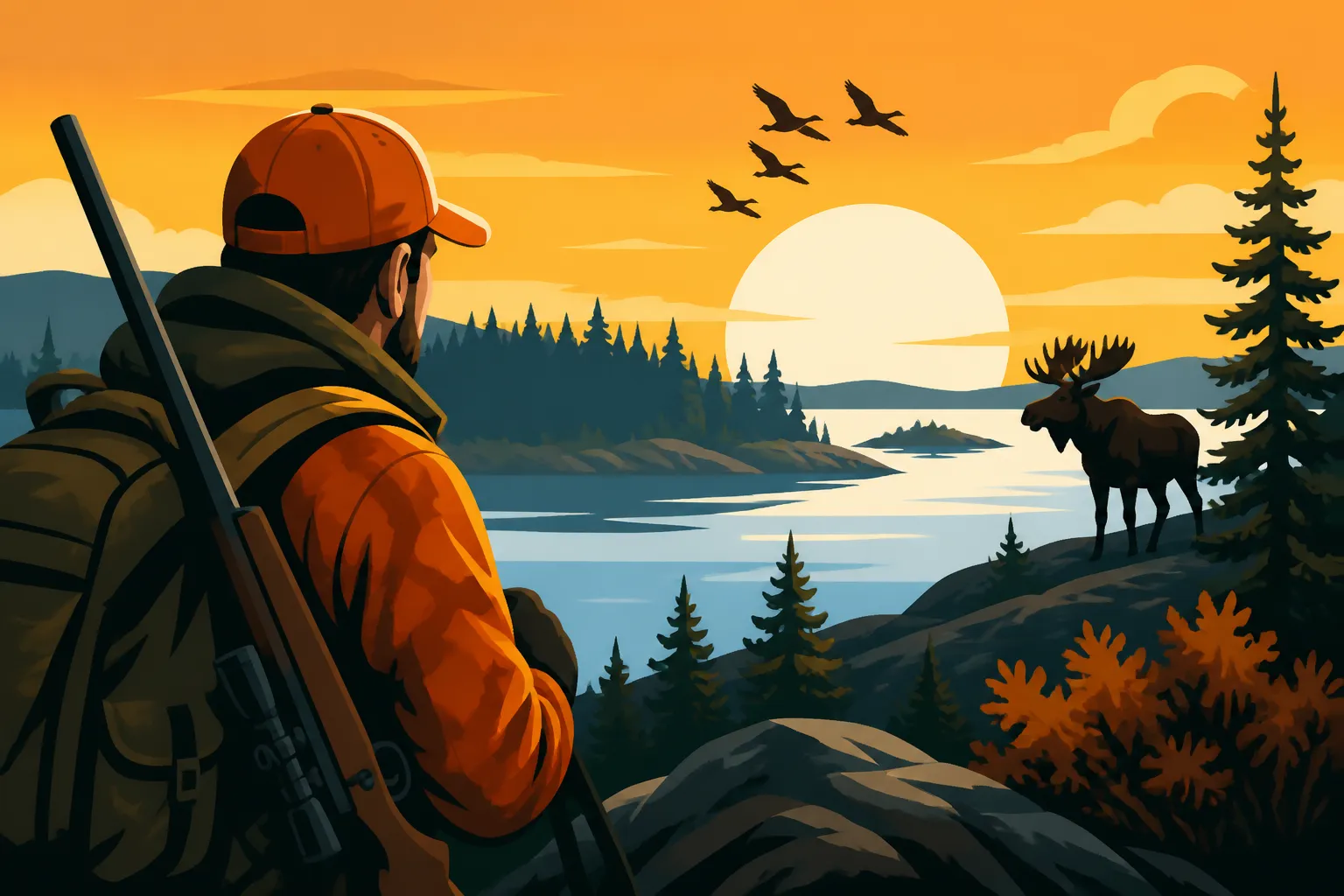
Moose are often the primary draw for hunters venturing into this northern expanse. These majestic animals thrive in the unique conditions of the boreal forest, particularly where dense timber meets abundant water and diverse browse. You'll find them concentrating in willow-choked creek bottoms, where tender new growth provides essential nutrition, especially during the fall rut. Recently regenerating burn areas, often a result of past wildfires, also create fantastic moose habitat, as the vigorous regrowth of small deciduous trees and shrubs offers both food and cover. Lake edges, with their aquatic vegetation and easy access to water, are another hotspot for moose activity.
Calling moose in this country can be incredibly effective, especially during the rut. The vastness of the landscape often means a bull is eager to investigate the sound of a cow or challenging bull. However, success hinges on finding the right locations for your calls – areas with good visibility and easy access for a bull to approach. Scouting for fresh sign, like large tracks, rub lines on saplings, and disturbed areas where bulls have thrashed the brush, is critical. The challenges are immense: the vastness of the territory, the incredibly thick cover that limits visibility and shot opportunities, and the monumental task of getting a quartered moose out of remote locations. This is where planning and a robust extraction strategy become as important as the hunt itself. For more on this, check out Moose Across Manitoba's Boreal Forest and Calling a Bull Moose in the Rut.
Black Bear Opportunities
Manitoba's Northern Lake Country boasts a robust Black Bear population, making it a fantastic destination for bear hunting, whether in the spring or fall. The immense tracts of contiguous boreal forest provide ideal habitat, with ample cover and a diverse diet. Bears here are often drawn to natural food sources such as saskatoon berries, blueberries, and cranberries, which ripen in late summer and early fall. They also forage extensively on young, succulent plant growth in spring and will readily seek out fish along river systems and lake edges.
For many hunters, both spring and fall bear seasons revolve around baiting. Setting up a well-maintained bait site in a strategic location – often near dense cover, water sources, and known travel corridors – can be incredibly effective. The trick is to ensure your bait is consistently active and that you're patient enough to wait for the right bear to show up. Without bait, hunters can still find success by spot-and-stalk around berry patches or recent clear-cuts, or by still-hunting through prime habitat. Keep in mind that bears in this remote country can be quite large, so come prepared with adequate firepower and a plan for handling a big animal. You can learn more about Black Bear Hunting in Manitoba and the specifics of Setting a Bear Bait Site in Manitoba.
Waterfowl and Upland Bird Potential
While the Northern Lake Country might not be immediately associated with large-scale grain field waterfowl hunting, it offers exceptional opportunities for ducks and geese in a wild, natural setting. The countless marshes, sloughs, and lake fringes provide ideal staging and nesting grounds for a variety of duck species, including mallards, pintails, canvasbacks, and various divers. Canada Geese and even some Greater White-fronted Geese utilize the larger lakes and associated wetlands. Hunting here often involves marsh hunting from layout blinds or boats, focusing on natural flyways and feeding areas. It's a completely different experience than field hunting, often requiring more specialized equipment like canoes or airboats to access the best spots. Read more about Marsh Hunting Ducks in the Interlake for strategies that can be adapted to these northern wetlands.
Beyond the waterfowl, the dense boreal forest offers fantastic upland bird hunting. Ruffed Grouse are plentiful, particularly along old logging trails, forest edges, and areas with mixed deciduous and coniferous growth. They are often found drumming in spring and dusting in sandy spots during the fall. Spruce Grouse, a more solitary and confiding bird, prefers the denser coniferous stands, especially black spruce bogs. Both species provide excellent opportunities for hunters willing to walk the bush. Often, a mixed bag hunt is possible, combining grouse with a chance at a snowshoe hare. If you're keen on chasing the king of the forest, consider tactics described in Ruffed Grouse Hunting Manitoba's Bush Trails.
Access and Navigation Challenges
Venturing into Manitoba's Northern Lake Country means embracing remoteness, and that starts with understanding how to actually get in and, more importantly, how to get around once you're there. This isn't a place where every corner has a paved road.
Road, Water, and Air Access
Access to many of the prime hunting areas in Manitoba's Northern Lake Country is inherently limited. While some regions bordering the more settled south might have gravel or even paved roads, as you push further north, these quickly diminish, giving way to rougher trails, if anything at all. Many of the truly wild and productive areas are only accessible by float plane or by boat on the vast interconnected lake and river systems. Float planes are a game-changer for reaching remote lakes and outpost camps, allowing hunters to access areas that see very little pressure. However, this comes with its own logistics and costs.
For areas reachable by road, be prepared for challenging conditions. Gravel roads can quickly become impassable with rain, and winter hunting often means contending with deep snow and ice, requiring a robust 4×4 vehicle, often with a winch. Once off the main roads, ATVs or side-by-sides are invaluable for navigating old logging cuts, trapper trails, or bush lines to reach interior hunting grounds. But even then, you're often looking at significant hikes to get away from other potential hunters. The importance of reliable transportation cannot be overstated. Always have contingency plans for breakdowns, fuel shortages, or unexpected weather. The consequences of being stranded in this country are severe. Consider articles like Manitoba's Northern Fly-In Access and Winter Road Access in Northern Manitoba for more insights on northern travel.
Mapping and Technology
In a landscape as vast and untamed as Manitoba's Northern Lake Country, traditional paper maps are a good start, but modern technology is absolutely crucial for safe and effective navigation. A reliable GPS unit, either handheld or integrated into your smartphone, is non-negotiable. More importantly, you need mapping applications that allow for offline use, as cell service is virtually non-existent in much of this region.
This is where tools like onX Hunt and GoHunt truly shine. These apps allow you to download detailed satellite imagery and topographic maps for your specific hunting area before you leave any semblance of cell service. You can use them to identify Crown Land boundaries (which is critical in Manitoba), mark waypoints for your camp, bait sites, game sightings, or extraction routes, and track your movements in real-time. Without these offline capabilities, you'd quickly find yourself disoriented in the trackless bush.
Furthermore, a satellite communication device, such as an InReach or a Spot device, is an essential piece of safety equipment. These devices allow you to send and receive text messages, share your location, and, most importantly, trigger an SOS call to emergency services even when no cell service is available. This isn't a luxury; it's a necessity when you're days from the nearest human settlement. Relying solely on a smartphone's GPS without offline maps or a satellite communicator is a recipe for disaster in this country. Learning how to effectively utilize tools like these, especially for Scouting With Satellite Imagery in Manitoba and understanding Reading Manitoba Crown Land Layers on onX, can be the difference between a successful, safe hunt and a dangerous situation.
Planning Your Northern Hunt
Success in Manitoba's Northern Lake Country isn't just about what happens in the field; it begins long before you even set foot in the bush. Meticulous planning is the bedrock of any safe and productive remote hunting trip.
Permits, Licences, and Season Dates
Navigating the bureaucratic side of hunting is paramount, and it can be particularly nuanced in the north. First and foremost, you'll need a valid Manitoba Hunter Education card (or an equivalent from your home jurisdiction if you're a non-resident), an Outdoor Card, and the correct provincial hunting licence. Then comes the species-specific tags. For big game like moose and sometimes elk (though less common in the deep north), many areas operate under a draw system, meaning you'll need to apply well in advance and hope your name is selected. It's crucial to check the specific Game Hunting Area (GHA) regulations for your chosen region, as season dates, bag limits, and legal methods can vary dramatically even within adjacent GHAs.
Pay close attention to the specific dates for archery, rifle, and muzzleloader seasons. Some GHAs may have extended seasons, while others might be entirely closed for certain species due to conservation efforts. Always double-check the current hunting guide published by Manitoba Sustainable Development for the most up-to-date information. Don't assume anything – rules change, and ignorance is no excuse. Ensure you understand all validation and tagging requirements as well. This information, often detailed in sections like Manitoba Hunting Licences and What They Cost and Manitoba Big Game Season Dates, is your foundation.
Essential Gear and Supplies
The remote nature of northern hunting demands a high level of self-sufficiency. Your gear list for a Northern Lake Country hunt will be extensive, built around redundancy and robustness. Think beyond the essentials for a day hunt. You'll need reliable, durable camping equipment capable of withstanding unexpected weather, from rain to early snow. A bombproof tent, a sleeping bag rated for colder-than-expected temperatures, and a comfortable sleeping pad are critical. Layered cold weather clothing is a must, even for early fall hunts, as temperatures can drop quickly. Moisture-wicking base layers, insulating mid-layers, and a waterproof/windproof outer shell are your best friends.
Beyond shelter and clothing, your pack should include a comprehensive first-aid kit, a water filter or purification tablets, ample food for extra days in case of delays, and a reliable headlamp with spare batteries. Game processing tools, including sharp knives, a bone saw, game bags, and perhaps a small gambrel, are essential for handling a large animal in the field. Don't forget an emergency fire starter and navigation tools beyond your GPS, like a compass and paper map. Every item you bring should serve a purpose and be able to withstand the rigors of the northern bush. Running out of a crucial item when you're days from the nearest store or town is a situation you absolutely want to avoid. Proper preparation, including tips from articles like Hunting Safely in Deep Winter Cold and Meat Care in Manitoba's Cold Snaps, will safeguard your adventure.
Safety and Conservation in the Remote North
Hunting in Manitoba's Northern Lake Country is an immersion in true wilderness, and with that comes a heightened responsibility for both personal safety and the preservation of the environment and its wildlife. These aren't just good practices; they are critical elements of a responsible and successful hunt.
Wilderness Safety Protocols
When you're far from paved roads and cell towers, your personal safety plan becomes your most important piece of gear. Bear safety is paramount in this country. Always carry bear spray (and know how to use it), store food properly to avoid attracting animals to your camp, and make noise when walking through thick brush. Hypothermia is a constant threat, even in shoulder seasons. Dress in layers, stay dry, and recognize the early signs of cold exposure in yourself and your hunting partners. Fire safety is another major concern, especially during dry periods. Always have a means to extinguish your campfire completely, and be aware of any fire bans in effect.
Beyond animal encounters and environmental hazards, emergency communication is non-negotiable. As mentioned earlier, a satellite messenger or phone is essential. Before you leave, always file a detailed trip plan with a responsible person who knows your exact route, expected return date, and emergency contacts. This person should know when to trigger an alarm if they don't hear from you. Understand basic first aid and carry a well-stocked kit. What if you or a hunting partner get injured far from help? Knowing what to do if you get stuck, which is a real possibility on rough northern trails, is also vital. This includes carrying recovery gear like a winch, chains, and a shovel. For more detailed advice, read What to Do If You Get Stuck in the Bush and Wildlife Safety in Manitoba Bear Country.
Respecting the Ecosystem and Regulations
As stewards of the land, hunters have a profound responsibility to protect the wilderness we cherish. The "pack it in, pack it out" principle is more than just a polite suggestion; it's a moral imperative in the remote north. Leave no trace of your presence – pack out all garbage, including food scraps, spent casings, and anything else you brought with you. This ensures the pristine environment remains untouched for future generations and minimizes negative impacts on wildlife.
Adhering strictly to harvest limits and species identification is fundamental. Know your target animal unequivocally before you take a shot. Misidentification or exceeding bag limits not only leads to legal penalties but undermines conservation efforts. Understanding specific regulations, such as those regarding Treaty Hunting Rights and Shared Management in certain areas, is also crucial for respecting all users of the land.
Finally, responsible use of ATVs, side-by-sides, and boats on Crown Land is vital. Stick to designated trails or existing tracks to minimize habitat disturbance. Avoid creating new trails, especially in sensitive wetlands or fragile ecosystems. Be mindful of noise and speed, particularly when operating near known wildlife areas or other camps. Respecting the land and its rules is not just about compliance; it's about preserving the privilege of hunting in this incredible wild country. Learn more about specific rules in Quad and Side-by-Side Rules on Crown Land.
| Access Method | Pros | Cons | Best Suited For |
|---|---|---|---|
| Paved/Gravel Road | Easiest, cheapest, vehicle access. | Limited reach, higher pressure, less remote. | Day trips, edge hunting, easily accessible GHAs. |
| ATV/Side-by-Side | Access rough trails, extend reach from road. | Limited to trails, environmental impact, breakdowns. | Deeper bush, reaching bait sites, game retrieval. |
| Boat/Canoe | Access islands, lake shores, river systems. | Weather dependent, portaging difficulty, limited cargo. | Waterfowl, moose in aquatic habitats, remote fishing. |
| Float Plane | Ultimate remote access, vast unpressured areas. | Most expensive, strict weight limits, weather dependent. | Multi-day fly-in camps, deep wilderness big game. |
Disclaimer
This article is for general informational purposes only and does not constitute professional advice. Laws, prices and regulations vary by location and change over time. Consult a qualified professional for guidance on your specific situation.