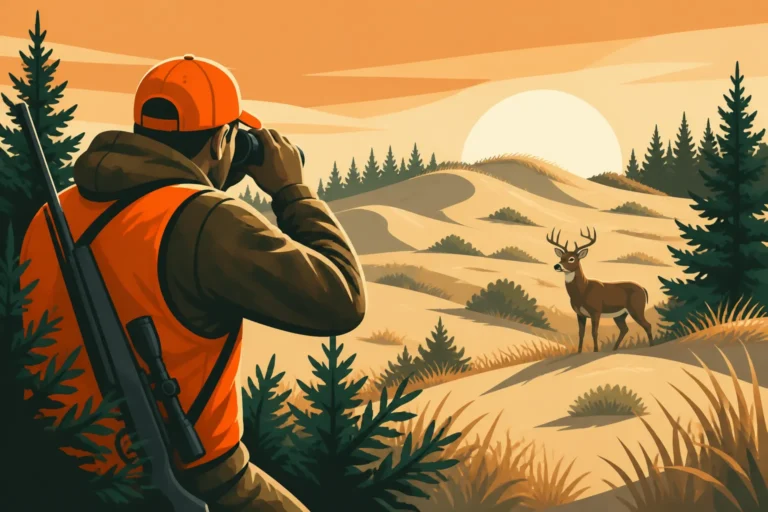
Hunting a Field Approach at Dusk
Few things are as frustrating as watching a magnificent whitetail buck step out into a field just as the light fades, leaving you with little time or a poor angle. If you've spent countless hours in a stand or blind only to see the magic happen right at last light, often just out of reach, you know that field edges at dusk are pure deer magnet territory. This guide is all about mastering the art of hunting those critical field approaches during the evening hours here in Manitoba, giving you the knowledge to be in the right spot when that big buck finally decides to make his move.
Why Field Approaches at Dusk are Prime Time in Manitoba
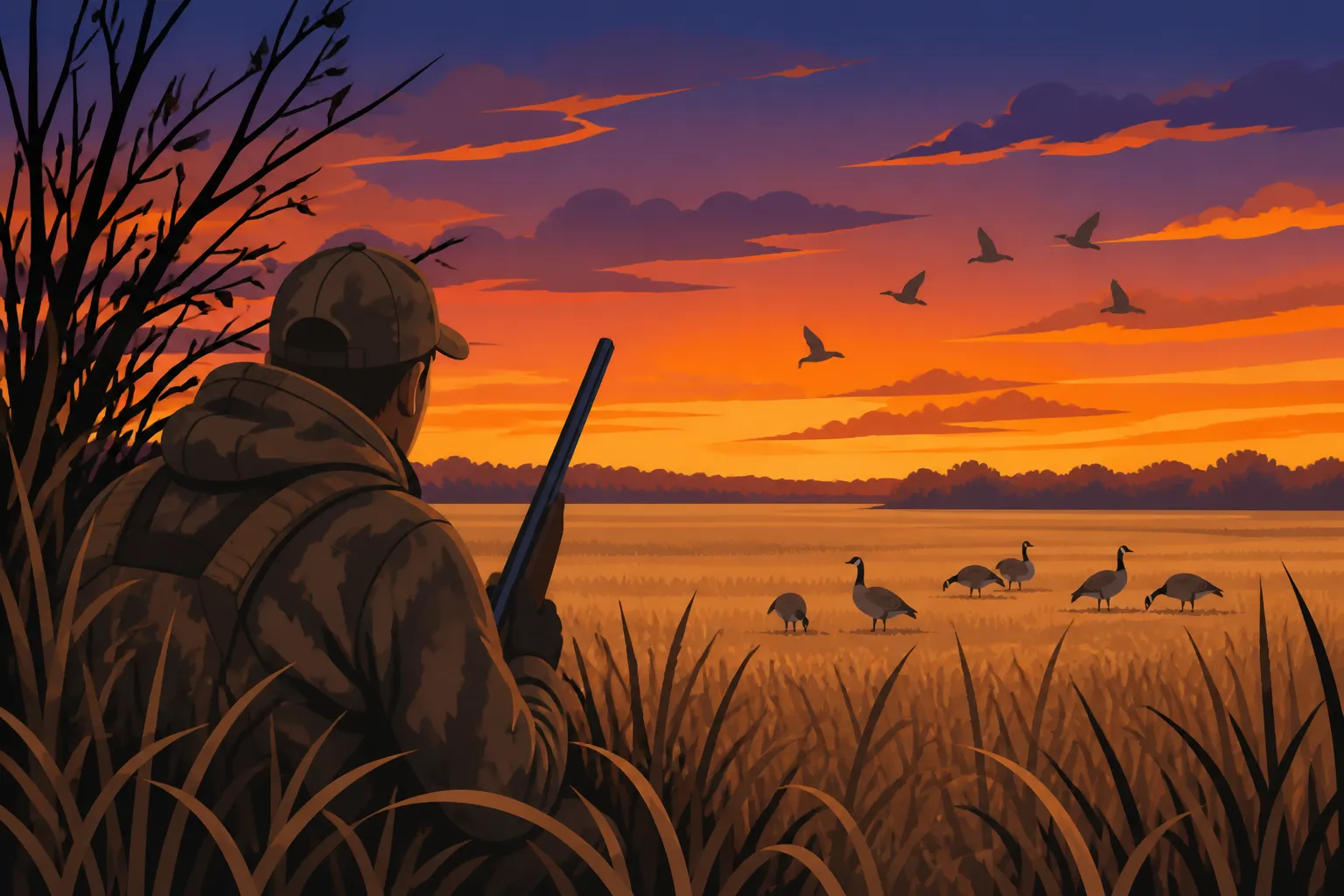
There's just something about that golden hour, isn't there? As the sun dips low, painting the Manitoba sky with hues of orange and purple, the woods often come alive. For deer hunters, especially those of us chasing whitetails, this isn't just a pretty show; it's a prime window of opportunity. The whitetail's natural rhythm drives them to move during these low-light periods, especially from the security of thick cover to the inviting bounty of a freshly harvested field or a lush green plot.
The Evening Rush Hour for Whitetails
Think of it like our own rush hour, but for deer. Throughout the day, especially in heavily pressured areas, whitetails spend their daylight hours bedded down in dense cover – whether it's a thick aspen bluff, a willow run, or a deep slough bottom. They feel safe there, out of sight from predators (including us hunters). As the sun begins to set, that innate sense of caution starts to loosen its grip, and their stomachs start rumbling. This is when they transition from their bedding areas to their feeding grounds, and those field approaches become their highways.
Deer are creatures of habit, and their paths to and from feeding areas are often well-defined, especially at dusk. They'll follow the paths of least resistance, utilizing natural funnels, cover edges, and topography that allows them to remain concealed for as long as possible. Observing these travel corridors and understanding why deer choose them is the first step to intercepting them on their evening stroll. Their drive to feed before the full darkness of night sets in is incredibly strong, making this period one of the most productive times to be in a stand. It's often when you'll see those bigger, more cautious bucks venturing out, once they feel the cover of diminishing light.
Reading the Field: Identifying High-Traffic Approaches
Not all field edges are created equal, and not every approach point is a hotspot. The trick is learning to read the landscape and identify the specific points where deer are most likely to enter or exit a field. This isn't just guesswork; it's about connecting the dots between bedding areas, food sources, and travel routes. A good field approach usually involves some form of natural cover leading right up to the field edge, offering deer a sense of security until the last possible moment.
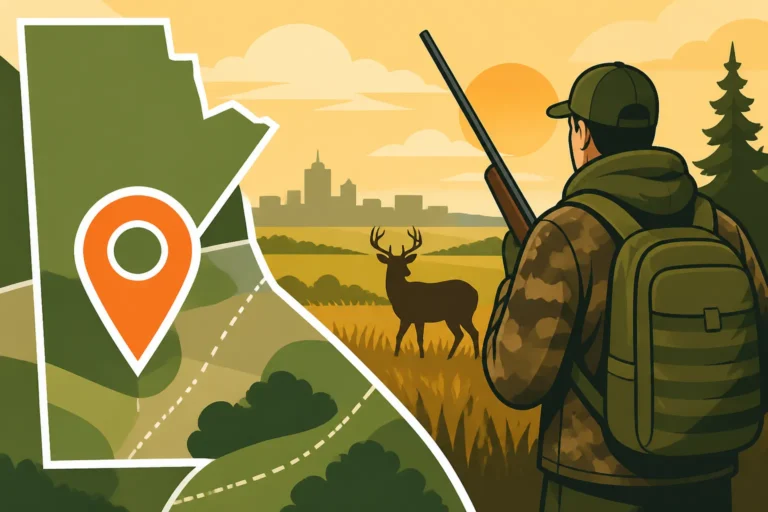
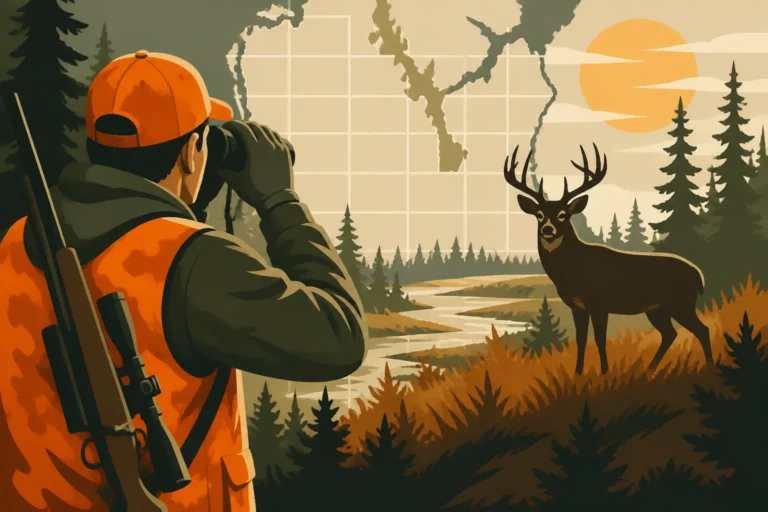
Look for bottlenecks where thick brush or treelines narrow down, forcing deer into a predictable path. River breaks, coulees, bluffs, and even old fence lines can create these natural funnels. The specific crop in the field also plays a huge role. Deer will gravitate towards preferred food sources like standing corn, swathed grain, or lush alfalfa. A field of Hunting a Standing Canola Field Edge might not be as appealing as a freshly cut barley field in some instances, but a field of corn that provides cover and food simultaneously is often irresistible. Using tools like onX Hunt can be a game-changer here, allowing you to study satellite imagery, identify potential travel corridors from bedding areas (which often aren't far from the field), and mark key approach points without ever stepping foot on the property and disturbing the area. When you're Scouting With Satellite Imagery in Manitoba, you can save yourself a lot of legwork and pinpoint these precise locations before you even head out with your boots.
Understanding the "Approach" Concept
When we talk about a "field approach," we're not just talking about any random spot along a field edge. We're specifically referring to the funnel points, the gateways, the trails where deer consistently transition from the security of dense cover into the open expanse of a field. These are the arteries of deer movement at dusk. Imagine a thick bush edge bordering a vast stubble field. Deer aren't going to pop out just anywhere; they're going to use established trails that offer the quickest, safest route.
These approaches are typically where the thickest cover meets the field, providing a natural buffer zone for deer to observe before committing to the open. It could be a point where a dense treeline fingers out into the field, or where a deep ditch or slough provides a hidden travel lane right to the edge. Sometimes it's a subtle dip in the terrain or a cluster of tall weeds that offers just enough visual obstruction. The critical thing to remember is that deer want to feel safe, even when they're hungry. They'll use these approaches to scent check, look around, and ensure the coast is clear before exposing themselves. Identifying these exact transition zones is paramount to setting up an effective ambush. Understanding where Hunting a Manitoba Bush Edge transitions into open farmland is a perfect example of identifying these approach concepts.
Scouting and Setting Up for Success
Success in hunting a field approach at dusk isn't about luck; it's about meticulous preparation and understanding deer behaviour. From the moment you start scouting, every decision you make, from where you place your stand to how you approach it, impacts your chances.
Pre-Season Scouting with Tools and Boots on the Ground
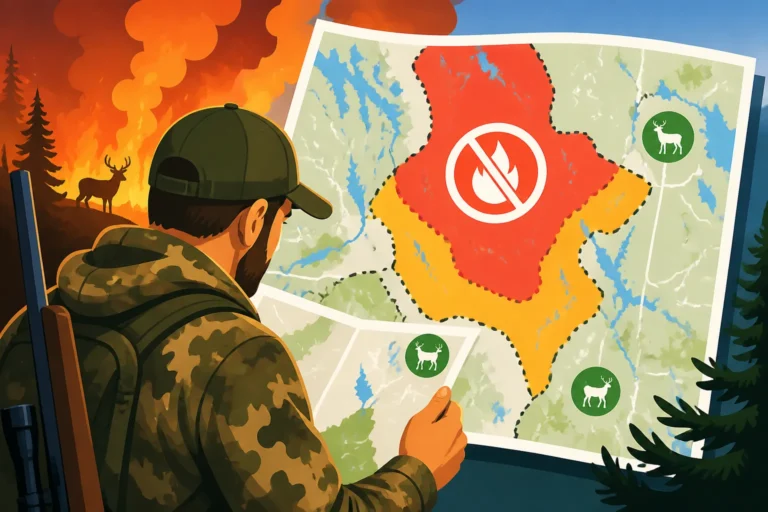
This is where the real work begins, long before hunting season even opens. Pre-season scouting is about gathering intelligence without disturbing the deer. Start with your digital tools. I cannot stress enough how much a good mapping app like onX Hunt or even studying the public land layers on GoHunt can help. You can zoom in on potential hunting areas, identify thick blocks of cover that could serve as bedding, pinpoint drainages or shelterbelts that act as travel corridors, and mark potential entry and exit points to fields. Look for topographical features that create natural funnels or pinch points. You can even identify specific fields, such as Hunting a Swathed Grain Field at Dusk, and plan your access points.
Once you have a few promising spots marked on your map, it’s time for boots on the ground. Walk those field edges, but do so carefully and with minimal disturbance. Look for fresh deer sign: tracks, droppings, rubs, and scrapes. Pay close attention to where tracks enter and exit the fields. Are there multiple trails converging at one point? Is there a well-worn path leading into a dense aspen bluffs or a willow clump? These are your high-traffic approaches. Don't just look at the field itself; walk back into the adjacent cover a bit. Where are the deer likely bedding? The closer you can get to their primary bedding area without busting them, the better, as it gives you more shooting light. Keep an eye out for potential stand locations and natural cover you can use for concealment.
The Importance of Wind and Thermals
Ask any seasoned Manitoba hunter, and they'll tell you: if you get busted, nine times out of ten, it was your scent or movement. And wind is the primary carrier of your scent. Hunting a field approach at dusk means deer are moving from cover into the open, often against a setting sun, which can make them quite alert. Your wind direction is absolutely critical. You want the wind blowing away from where the deer are likely to approach and away from their bedding area. Never hunt a spot where your scent is blowing directly into the anticipated approach route.
Thermals also play a significant role, especially at dusk. As the ground cools after a warm day, the warm air rises and cool air sinks. This means that if you're set up on a hillside or in a valley, the thermals will often cause your scent to drop downwards and flow into lower areas. Conversely, in the morning, as the sun warms the ground, thermals rise. At dusk, be mindful of that downward draft. If you're Hunting a River Valley or a coulee, your scent could be carried down into the deer's approach path far more effectively than on flat ground. Always check the wind and thermals before heading out, and have alternative stand locations ready for different wind conditions. This is not a suggestion; it's a rule for success.
Choosing Your Stand or Blind Location
Once you've identified the prime approach points and understood the wind, it's time to choose your setup. Your goal is concealment and an unobstructed shot. For field approaches, treestands are often excellent because they get your scent and silhouette up off the ground, giving you a better view over potential obstacles. When Hanging a Stand on a Manitoba Bush Edge, ensure it's positioned to give you shooting lanes into the field and, crucially, along the approach trail itself. You want to intercept the deer before they fully commit to the open field, where they might feel more exposed and move quickly.
If trees are scarce, or you prefer hunting from the ground, a ground blind can be highly effective. The key is to get it brushed in early – weeks, if not months, before you plan to hunt it. Let the deer get used to its presence. Place your blind where you have good cover behind you, breaking up your outline, and make sure it's situated so the wind is in your favour for the evening hunt. Consider what the sun will do as it sets; you don't want to be silhouetted against the horizon or have the sun glaring directly into your blind. Ensure you have clear shooting lanes and that you can comfortably draw your bow or shoulder your rifle without making excessive movement.
Strategies for Hunting the Dusk Approach
You've done your scouting, chosen your spot, and the wind is perfect. Now comes the actual hunt. While patience is paramount, there are other strategies you can employ to increase your odds during that critical twilight window.
Playing the Waiting Game: Patience is Key
I know, I know. It's easier said than done. But when hunting field approaches at dusk, patience truly is your greatest ally. Deer often won't step out into the open until the very last sliver of legal shooting light. They're cautious, especially the older, bigger bucks. Many hunters give up too early, missing that magical 15-30 minutes just before dark when the biggest deer often make their appearance. Commit to staying until the very end. This might mean sitting still for hours, resisting the urge to check your phone, eat a snack, or shift around too much.
Minimizing movement and controlling your scent are continuations of your preparation. Wear appropriate camouflage, sit still, and move slowly and deliberately if you must move. Always assume deer are watching, even if you don't see them. Your entry and exit routes are just as important as your stand location. Plan a route that keeps you concealed, avoids disturbing the area you're hunting, and keeps you downwind of where deer might already be in the field or approaching it. If you spook deer coming in or going out, you've likely compromised that spot for future hunts. Learning to sit for extended periods, especially during Hunting Safely in Deep Winter Cold, requires practice and proper gear.
Calling and Decoying at Last Light
While field approaches are often about intercepting deer naturally moving to feed, you can sometimes influence their movement, especially during the rut. As dusk settles, a soft grunt or bleat call can pique a buck's curiosity, pulling him off his planned route and into your shooting lane. During the peak of the rut, aggressive rattling sequences can sometimes draw in a dominant buck looking for a fight, though this is more effective in open Rattling Volume in Open Parkland or bush edges than directly in a field. Always err on the side of caution with calls; less is often more, and soft, subtle calls at last light can be incredibly effective without being over-aggressive. Remember, deer are on edge, and unnatural sounds will send them scurrying.
Decoys can also be effective, especially a buck decoy if you're during the rut, or a doe decoy placed strategically to draw attention. The key with decoys is placement: position it so an approaching deer will present a good shot opportunity when it comes to investigate, and always keep the wind in mind so your scent isn't carried towards the decoy and the approaching deer. Make sure your decoy is visible but not glaringly obvious from a distance, and ensure it's stable enough to withstand any Manitoba breezes without looking unnatural. If you are hunting a Hunting the Rut in Early to Mid November, these tactics can be especially potent.
The Exit Strategy: Getting Out Undetected
This is a frequently overlooked but crucial part of hunting field approaches at dusk. You've sat for hours, maybe you've had a successful hunt, or maybe not. Either way, you need to get out of there without blowing up your spot. If deer are already in the field or feeding nearby, crashing out of your stand and marching across the field is a surefire way to educate them.
Your exit strategy should be planned with the same care as your entry. Wait until it's completely dark, or as close to it as possible, especially if you've seen deer in the field. Use natural cover to sneak out. Walk along a treeline, through a ditch, or use the terrain to your advantage. If you can, exit from the opposite direction of where deer are likely to bed or come from. Sometimes, it's better to make a wide loop or take a longer route to remain undetected than to take the most direct path and spook deer that are still feeding or just moving into the field. Silence is key. Pack up your gear quietly and move with purpose, but softly. Preserve that prime location for future hunts.
Common Mistakes and How to Avoid Them
Even with the best intentions and meticulous planning, hunters can make mistakes. Recognizing these common pitfalls and actively working to avoid them will drastically improve your success rates on those critical evening hunts.
Ignoring Wind Direction and Scent Control
This mistake is so common and so easily avoidable, yet it's probably responsible for more blown hunts than any other factor. As mentioned earlier, deer rely heavily on their sense of smell. A single whiff of human scent can send them bolting, and once they associate that specific location with danger, it can take weeks, even months, for them to return with any regularity.
Never, ever hunt a field approach if the wind is wrong. If it's blowing towards where the deer are likely to come from or towards their bedding area, pack up and find another spot, or simply don't hunt that day. Invest in good scent control products: scent-eliminating sprays, carbon clothing, and washing your hunting clothes in scent-free detergent. Store your hunting clothes separately from your regular clothes. Shower with scent-free soap before heading out. While no method is 100% foolproof, minimizing your scent signature is paramount. Think of it this way: deer are designed to detect even the slightest anomaly in their environment, and human odor is a glaring red flag. Your success hinges on becoming as invisible as possible.
Getting Busted on Entry or Exit
This is another classic hunter's mistake, and it often negates all the effort put into scouting and stand placement. You've found the perfect spot, but if you crash through the woods, making noise, stomping on dry leaves, or walking right through a known travel corridor on your way in or out, you're alerting every deer in the vicinity to your presence. Remember the rush hour analogy? If there's an accident on the highway, everyone avoids it.
Plan your entry and exit routes meticulously. Use terrain, deep ditches, treelines, or waterways to your advantage. Try to approach your stand from a direction that keeps the wind in your favour for your entry, and ideally, for your exit too. Walk slowly and quietly. Use the darkest part of the morning to enter and the deepest dark of night to exit. If you’re hunting a specific approach, say, a Hunting a Poplar Bluff at First Light, consider the sun's position and how it might expose you. Avoid walking directly across open fields, especially at dusk, as deer might already be staging in the bush, watching. If you need to retrieve game, wait until a planned, quiet time, or bring extra help to minimize multiple trips and disturbance.
Impatience and Lack of Preparation
We all get antsy in the stand, especially when it’s cold or nothing is moving. But impatience is a hunter's worst enemy. Often, the biggest bucks wait until the very last minutes of legal light to emerge, testing the patience of even the most dedicated hunter. Giving up too early means missing those prime opportunities. Similarly, a lack of thorough preparation can lead to a multitude of issues, from improper wind judgment to not having clear shooting lanes.
Preparation isn't just about scouting; it's about being mentally ready. Bring enough warm clothing, especially if you're Hunting Whitetails at Thirty Below. Pack snacks and water. Make sure your gear is in working order, from your bow or rifle to your rangefinder and binoculars. Spend time practicing your shot from different positions, so you’re confident when the moment of truth arrives. Ensure your stand is comfortable for long sits, allowing you to remain still and focused. The more prepared and patient you are, the higher your chances of success during those brief, magical moments when deer decide to step out onto a field approach at dusk.
Here's a quick comparison of common field approach types and their characteristics:
| Approach Type | Key Characteristics | Ideal Setup/Strategy | Best Time to Hunt |
|---|---|---|---|
| Treeline Finger | Thicker bush extends into the field, creating a natural funnel. | Treestand at the base of the finger, or slightly into the bush. | Mid-to-late evening |
| River/Coulee Break | Deep cut in the land providing hidden travel. | Stand on the downwind bank, overlooking the travel path. | Mid-to-late evening, mindful of thermals |
| Slough/Wetland Edge | Dense willows, reeds bordering a field. | Ground blind brushed into the thickest part of the edge. | Late evening, especially in dry conditions |
| Shelterbelt Gap | Opening in a tree row between fields. | Stand offering a shot on either side of the gap. | Late evening, as deer cross between food sources |
| Woodlot Corner | Where two distinct woodlots meet a field. | Treestand covering the corner and adjacent field edges. | Mid-to-late evening |
Disclaimer
This article is for general informational purposes only and does not constitute professional advice. Laws, prices and regulations vary by location and change over time. Consult a qualified professional for guidance on your specific situation.