Ruffed Grouse Hunting Manitoba’s Bush Trails
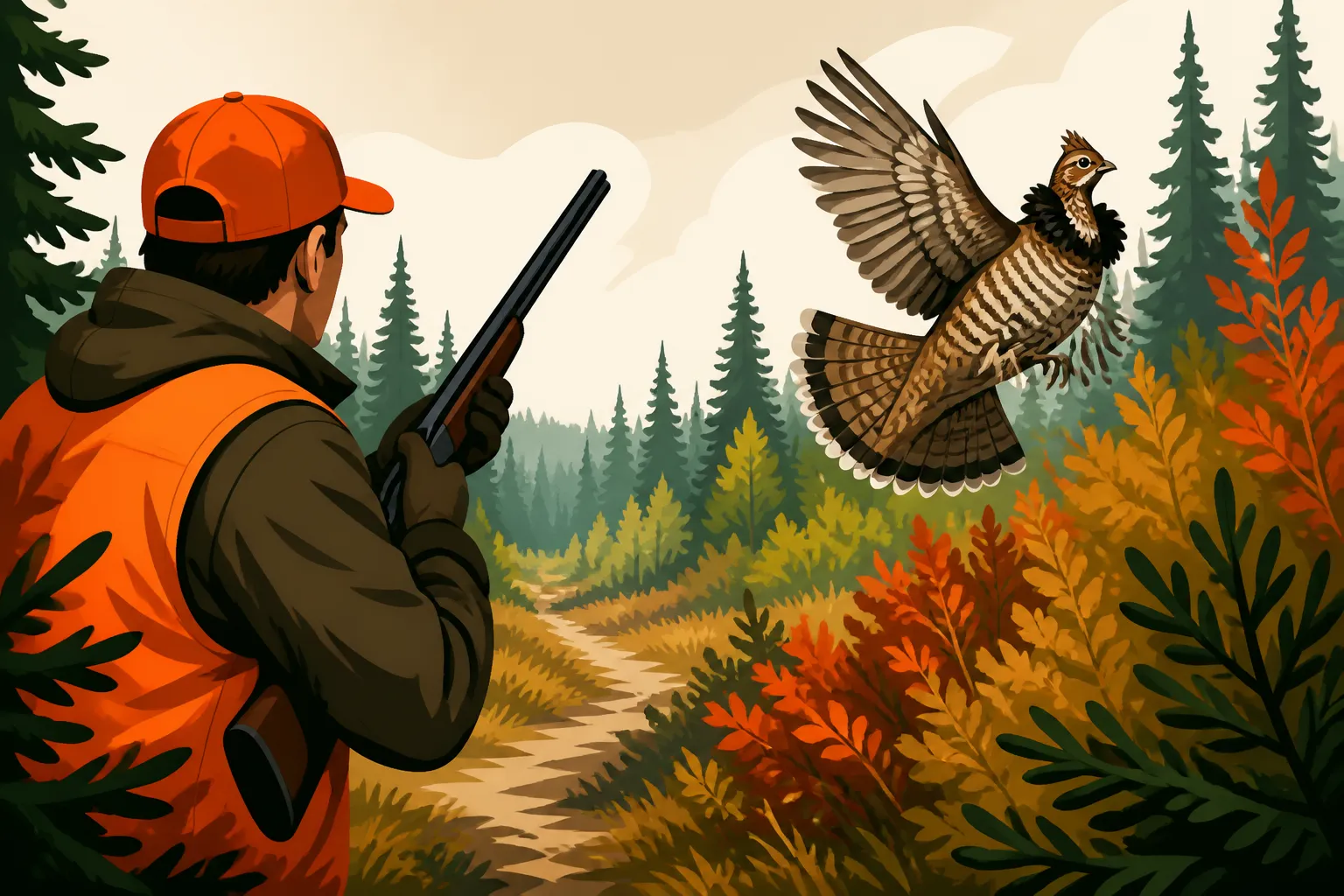
There’s nothing quite like the sudden, explosive flush of a ruffed grouse from dense cover, sending your heart into your throat and demanding an instant reaction. It's a moment every upland hunter lives for, but finding those elusive birds, especially when you're navigating Manitoba's thick bush, can feel like a game of hide-and-seek where the grouse always seems to win. This guide is all about equipping you with the knowledge and tactics to consistently find and connect with ruffed grouse right here on Manitoba's myriad bush trails.
Understanding Ruffed Grouse Habitat and Behavior on Trails
Ruffed grouse are absolute masters of camouflage and cover, thriving in the mixed deciduous and coniferous forests that crisscross much of Manitoba. While they can be found anywhere in suitable habitat, bush trails often act as natural highways for these birds, making them prime locations for hunters.
The Allure of Bush Trails for Ruffed Grouse
Think about a ruffed grouse's daily life: they need food, water, grit for digestion, and most importantly, escape cover. Bush trails, whether they're old logging roads, ATV tracks, or even just well-worn game trails, often provide easy access to all these necessities. The edges of these trails frequently boast a rich variety of berry bushes, clover, aspen buds, and other forage that grouse feast on. The open pathway itself can be a source of grit (small stones they ingest to aid digestion), and the dense brush along the sides offers immediate sanctuary from predators, including soaring hawks and ground-prowling coyotes.
During different parts of the day, you'll find grouse using trails for various reasons. Early mornings and late evenings might see them dusting themselves in dry soil on the trail or feeding right along the edges. Mid-day, especially if it’s sunny, they might bask in a sunbeam, or simply move from one feeding area to another using the path of least resistance. The key is that these trails are often bottlenecks and transition zones, concentrating bird activity in predictable ways.
Reading the Sign: What Ruffs Leave Behind
Unlike deer, grouse don't leave massive tracks, but with a keen eye, you can definitely spot their presence. Droppings, or "cairns," are one of the most reliable indicators. These small, dark, often cylindrical droppings can be found on logs, stumps, or simply scattered on the trail or forest floor. If they look fresh and moist, you know birds are currently using the area. Another sign, especially after a fresh snow, are distinct three-toed tracks, often leading from the trail into thick cover.
Beyond droppings and tracks, keep an eye out for dust baths – shallow depressions in dry soil where grouse ruffle their feathers to clean themselves. You might also notice peck marks on aspen buds in late fall and winter, or areas where they've scratched through leaf litter looking for seeds and insects. Sometimes, the most telling sign is the sudden "thump" of a grouse taking flight, often heard before it's seen. Pay attention to these auditory cues; they're your primary indicator that you're in the right place.
Seasonal Movements Along Trail Systems
Ruffed grouse don't stay put year-round, and their movements influence where you'll find them along trails. In the early fall, during Manitoba's September archery opener, young birds are dispersing, and you'll find them widely distributed. They often stick close to their brood's original range, which means you might encounter larger groups. As the weather cools and leaves begin to fall, their focus shifts to food sources like aspen buds and remaining berries. They'll use trails to access these resources, often moving between denser stands of poplar or birch.
Later in the season, particularly as snow starts to accumulate, grouse will seek out evergreens for roosting cover and more sheltered areas. Trails that run alongside thick spruce or cedar stands become hotbeds of activity. They also need grit more consistently in winter, so exposed trail sections free of deep snow can be critical. When the snow gets really deep, ruffed grouse have an incredible ability to burrow into soft snow to roost, making them incredibly hard to spot. Knowing these seasonal shifts is crucial for success, allowing you to adjust your approach and focus your efforts on the most likely spots.
Essential Gear for Bush Trail Grouse Hunting
Hunting ruffed grouse on bush trails in Manitoba isn't like big game hunting; you don't need a heavy pack, but having the right, practical gear makes all the difference for comfort, safety, and success.
Shotguns and Ammunition Choices
For ruffed grouse, quick shots in dense cover are the norm. This makes a fast-handling shotgun absolutely key. Many grouse hunters prefer a lightweight 20-gauge or even a 28-gauge for its quick swing and reduced recoil, allowing for faster follow-up shots. A 12-gauge works perfectly fine too, especially with lighter loads. The most common action types are semi-automatics and over/under shotguns, offering reliable follow-up shots crucial when birds flush unexpectedly. Choke selection is equally important; improved cylinder or skeet chokes are often favored for their wide pattern at close ranges, which is exactly what you’ll experience in the thick bush.
When it comes to ammunition, lead shot is generally permitted for upland birds in Manitoba. Sizes like 7.5 or 8 shot are perfect for ruffed grouse, providing a dense pattern with enough pellet energy for a clean kill without over-damaging the meat. Carrying a few different loads isn't a bad idea, perhaps a slightly heavier load if you anticipate longer shots or if you're also hunting larger upland birds. Always check the regulations for Ruffed Grouse Season Dates and Limits to ensure you're using legal shot and within bag limits.
Apparel and Footwear for Dense Cover
Manitoba's bush trails can be wet, thorny, and overgrown, so your clothing needs to be tough and functional. Waterproof boots are non-negotiable, preferably with good ankle support to navigate uneven terrain. Brands like Irish Setter or even a good pair of Muck Boots can save your feet from early morning dew or unexpected puddles. For pants, consider durable brush pants or chaps that resist thorns and provide some water resistance. Carhartt offers robust options that stand up well to the abuse of the bush.
Layering is always a good strategy. A moisture-wicking base layer, a warm fleece or wool mid-layer, and a quiet, waterproof/windproof outer shell will keep you comfortable in varying conditions. Blaze orange is mandatory in Manitoba during big game rifle seasons, and even when not strictly required, wearing a blaze orange vest or hat is always a smart choice for safety, especially if you're hunting in areas where other hunters might be present. Don't forget durable gloves to protect your hands from thorns and cold, and a comfortable vest with plenty of pockets for shells, water, and harvested birds.
Navigation and Safety Tools
Getting turned around in the bush is easier than you think, even on established trails. A reliable GPS device or a smartphone with a robust mapping app is absolutely critical. Tools like OnX Hunt or even Google Maps with downloaded offline maps can be lifesavers. They allow you to track your path, mark potential grouse hotspots, and confidently navigate back to your vehicle. Many hunters use the GoHunt app for comprehensive hunting zone data and mapping, which can be invaluable when you're trying to cover new ground.
Beyond navigation, a few other safety items are non-negotiable. Always carry a whistle (three short blasts is a universal distress signal), a small first-aid kit for minor cuts and scrapes, a knife, a fire starter, and enough water to stay hydrated. If you're hunting alone, carrying a personal locator beacon (PLB) or satellite messenger device is a wise precaution, especially in areas with spotty cell service. And, of course, ensure you've completed your Manitoba Hunter Education Requirements to understand all safety protocols.
Effective Hunting Techniques for Ruffed Grouse on Trails
Grouse hunting on trails is an active pursuit that often rewards patience and a keen awareness of your surroundings. It's less about sitting and waiting, and more about methodical movement.
The Art of the Slow Walk and Pause
The most effective technique for hunting ruffed grouse on bush trails is often referred to as the "stop and go" or "slow walk and pause." Ruffed grouse are nervous birds, and constant, rhythmic noise can make them hold tight, thinking you're just another creature passing by. By stopping frequently and quietly, you mimic the irregular movement of a predator or another animal, often startling the birds into flushing.
Walk slowly, scanning the trail ahead and especially the dense cover on either side. Pay attention to fallen logs, thickets of young aspen, and brush piles – these are prime spots for a grouse to hold. After a minute or two of walking, stop completely, listen intently, and scan the surroundings for movement. Sometimes, the sudden silence is enough to make a nervous grouse bolt, giving you a shot. This method also allows you to conserve energy, important when you're covering several miles of uneven terrain. When you're Hunting a Manitoba Bush Edge, this slow-and-steady approach is particularly effective as birds will often be feeding on the transition zones.
Working with a Dog vs. Solo Hunting
Hunting ruffed grouse with a well-trained dog is an absolute joy and can significantly increase your success rate. A good pointing or flushing dog, like a Springer Spaniel or a German Shorthaired Pointer, will cover much more ground than you can, sniffing out birds that you would walk right past. When the dog goes on point, it freezes, indicating a bird is nearby, allowing you to move into position for a shot. For flushing dogs, their job is to push birds out of cover, often giving you a better understanding of where they are and a faster shot opportunity.
However, hunting grouse solo is entirely feasible and incredibly rewarding. Without a dog, you rely more on your eyes, ears, and understanding of grouse behavior. Focus on systematically working prime cover, employing the "stop and go" technique. You'll need to be quicker on the shot, as the flush will often be entirely unexpected. Carrying a compact, lightweight shotgun is a real advantage for solo hunters who are constantly carrying their firearm. If you're considering Using a Flushing Dog in Thick Cover, ensure your dog is well-trained to avoid chasing deer or other non-target species.
Flushing Strategies and Shot Placement
When a grouse flushes, it's usually explosive and disorienting. They often fly directly away from you, sometimes weaving through trees, making for a challenging shot. The key is to react quickly, mount your gun smoothly, and lead the bird slightly, anticipating its flight path. Don't rush; take a split second to acquire a sight picture before pulling the trigger. Many shots are missed because hunters lift their head or shoot too quickly. Practice your quick mount and swing at home so it becomes second nature in the field.
If a bird flushes into thick cover, don't just stand there. Mark the area where you last saw it and slowly move towards that spot. Grouse often don't fly far, sometimes just 50-100 yards, before diving back into cover. You might get a second flush opportunity if you approach cautiously. For ethical hunting, always aim for a clean kill. A body shot with appropriate shot size will typically bring down a grouse quickly. Avoid "sky-busting" at long ranges, as it often results in wounded birds that are difficult to recover.
Optimal Times and Weather Conditions
Just like any other wild game, ruffed grouse activity is heavily influenced by the clock and the weather. Understanding these patterns can significantly improve your odds.
Best Times of Day for Trail Hunting
Ruffed grouse are most active during the early morning and late afternoon hours, coinciding with prime feeding times. As dawn breaks, birds move from their roosting spots to feed along trail edges, in berry patches, and on aspen buds. This period, roughly from first light until mid-morning, is often your best bet for encountering birds that are actively moving and less wary.
Similarly, the late afternoon, from a couple of hours before sunset until dusk, sees a resurgence in activity. Birds will feed again before heading to their roosts for the night. Mid-day hunting can still be productive, but grouse tend to be less active, often holding tighter in thick cover, especially on warm, sunny days. During these mid-day lulls, focus your efforts on shaded areas, dense thermal cover, or near water sources. Remember, grouse are creatures of habit, and their feeding and roosting cycles are fairly consistent.
Impact of Weather on Grouse Activity
Weather plays a huge role in how and where ruffed grouse move. Overcast, cool, and calm days are often ideal. The birds are more apt to be out and about, feeding and moving without the discomfort of strong winds or intense sun. Strong winds, on the other hand, can make grouse more cautious, forcing them into thicker, more sheltered cover where they are harder to find and flush. Windy conditions also make it harder for you to hear them flush, and harder for dogs to pick up scent.
Extreme heat can send grouse deeper into shaded, cooler areas, making them less active. Conversely, very cold temperatures, especially early in the season before deep snow, can also make them hold tight to conserve energy. However, once deep snow arrives, very cold, calm days can be excellent as grouse might be out foraging before burrowing into the snow for warmth. Pay attention to daily forecasts; if you're Hunting a Manitoba GHA in a Dry Fall, for instance, grouse might be concentrated near remaining water sources or more active in the cooler parts of the day.
Hunting After a Fresh Rainfall
One of the absolute best times to hunt ruffed grouse is shortly after a fresh rainfall, especially if it’s followed by clearing skies and a bit of sun. There are a few reasons for this. First, the rain washes dust off vegetation, making it easier for birds to feed. Second, and perhaps more importantly, the damp ground makes it incredibly quiet for hunters to walk through the bush. You can move much more stealthily without crunching dry leaves, giving you an advantage in getting close to birds before they flush.
The damp conditions also seem to encourage grouse to be more active, shaking off the rain and often heading to sun-dappled edges to dry out and forage. Keep an eye on the forecast; if you see a rain shower moving through, consider heading out an hour or two after it passes. This tactic often leads to more flushes and better shooting opportunities.
Finding the Best Bush Trails in Manitoba
Manitoba is a vast province, and finding the best ruffed grouse hunting spots requires a bit of research and boots-on-the-ground scouting.
Utilizing Maps and Digital Tools
Before you even step foot in the woods, modern mapping tools are your best friend. Government-issued GHA maps are crucial for understanding hunting zones and boundaries, but digital resources offer an even deeper dive. Apps like OnX Hunt, as well as the GoHunt platform, provide incredible detail, layering satellite imagery with public land boundaries, provincial forests, and even topographical information. You can zoom in and identify old logging roads, ATV trails, and natural clearings that are perfect grouse habitat.
Start by looking for areas designated as provincial forests or Crown land that have a good mix of young deciduous growth (aspen, birch) and conifers (spruce, pine). Look for areas that have had some recent logging activity (5-15 years ago), as this creates the ideal mosaic of dense young growth and scattered mature trees that grouse love. Digital tools allow you to virtually scout vast areas, saving you time and fuel. Don't forget to review Reading a Manitoba GHA Map Before You Go to familiarize yourself with the nuances of specific hunting areas.
Crown Land and Provincial Forests
Manitoba has a significant amount of Crown land and numerous Provincial Forests that are open to public hunting, offering fantastic opportunities for ruffed grouse. Areas like the Duck Mountain Provincial Forest, the Porcupine Provincial Forest, and the Sandilands Provincial Forest are renowned for their ruffed grouse populations. These areas often have extensive networks of old logging roads, hiking trails, and ATV paths that provide excellent access into prime habitat.
When hunting these areas, be mindful of multi-use trails and other recreational users. Always prioritize safety and respect the space of others. While these areas are publicly accessible, it's always a good idea to research specific regulations for each provincial forest or wildlife management area you plan to visit, as rules can vary regarding vehicle use, camping, and other activities. Scouting a Manitoba Game Hunting Area is crucial to understand local nuances and identify promising spots.
Scouting for Prime Ruffed Grouse Areas
There's no substitute for getting out into the field and scouting. Even with the best maps, ground-truthing is essential. Early in the season, before the leaves fall, scouting can be challenging, but it allows you to identify key food sources. Once the leaves drop, it becomes much easier to see through the cover and spot potential grouse hideouts. Drive or walk old logging roads, paying attention to the edges, small clearings, and areas where different types of forest meet.
Look for the "four-to-one" habitat: areas where four different ages of forest growth meet within a small area, along with a water source. This provides everything a grouse needs to survive. Focus on regenerating clearcuts, thick creek bottoms, and areas with dense stands of young poplar or willow. Don't be afraid to walk a little further than the average hunter; often the best spots are a half-mile or more off the main access points. Even if you don't find birds during a scouting trip, you're learning the terrain and marking potential hotspots for your actual hunt. You can often find great ruffed grouse spots while doing other scouting, perhaps when you are Hunting a Manitoba Bush Edge for deer.
Post-Hunt Care and Regulations
After the excitement of a successful hunt, proper game care and adherence to regulations are paramount.
Field Dressing and Meat Care
Once you've harvested a ruffed grouse, prompt field dressing is essential to ensure the meat remains high quality. Many hunters simply "breast out" grouse in the field, taking only the breast meat which is the largest portion. To do this, lay the bird on its back, part the feathers on its chest, and make a cut through the skin from the breastbone to the vent. Then, grasp the skin and pull it back on both sides. Next, make an incision down the center of the breastbone, and using your thumbs, push outwards and down on either side of the breast. The entire breast fillet will usually peel away from the bone structure.
If you prefer to take the whole bird, you'll need to gut it immediately. Make a small cut near the vent, being careful not to puncture the intestines, and remove all internal organs. This quickly cools the bird, especially important on warmer days. Carry your birds in a game vest with a breathable game bag to allow air circulation. Back at camp or home, pluck or skin the birds, rinse them thoroughly, and either cook them fresh or prepare them for freezing. For more general advice on game preservation in cooler temperatures, read up on Meat Care in Manitoba's Cold Snaps.
Understanding Bag Limits and Seasons
Manitoba has specific regulations for ruffed grouse hunting, and it's every hunter's responsibility to know and follow them. These regulations cover season dates, daily bag limits, and possession limits. Daily bag limits specify how many birds you can harvest in one day, while possession limits dictate the maximum number of birds you can have in your possession at any given time (this often includes birds at your home or freezer).
Typically, ruffed grouse seasons open in early fall and run well into winter, offering ample opportunity. However, always double-check the current year's Manitoba Hunting Guide for the most up-to-date information on Ruffed Grouse Season Dates and Limits. Over-harvesting not only puts you at risk of fines and penalties but also negatively impacts local bird populations. Hunt ethically, harvest responsibly, and always respect the resource.
| Feature | Ruffed Grouse (Primary Target) | Sharp-tailed Grouse (Often Found in Similar Areas) |
|---|---|---|
| Typical Habitat | Dense young mixed forest, bush trails, aspen groves | Open prairie, brushy edges, cropland interfaces |
| Flight Pattern | Explosive, darting, often through trees | Strong, direct flight, often soaring |
| Sound | Distinctive "drumming" display by males | Cooing and cackling sounds, particularly on leks |
| Preferred Cover | Thick undergrowth, regenerating clearcuts | Tall grass, willow bluffs, shelterbelts |
| Shot Size | 7.5 or 8 | 6 or 7.5 |
| Choke Preference | Improved Cylinder, Skeet | Improved Cylinder, Modified |
| Hunting Method | Walk and pause, dog work, flushing | Walking up, dog work, pass shooting |
Hunter Ethics and Trail Courtesy
Good hunter ethics extend beyond simply following the law; they embody respect for the land, the wildlife, and other outdoor enthusiasts. When hunting on bush trails, remember that these paths are often used by hikers, ATV riders, mountain bikers, and other nature lovers. Be mindful of their presence, and always be courteous. If you encounter non-hunters, unload your firearm, make eye contact, and offer a friendly greeting. Keep your dog under control if you're hunting with one.
Always practice safe firearm handling, keeping your muzzle pointed in a safe direction and your finger off the trigger until you're ready to shoot. Pack out everything you pack in, leaving no trace behind. Respect private property boundaries, even if you’re on public land nearby. By demonstrating responsible and respectful behavior, you help ensure a positive public image for hunters and preserve access to these beautiful outdoor spaces for everyone.
Disclaimer
Please note: Hunting regulations and seasons can change. Always consult the most current Manitoba Hunting Guide and relevant government resources before planning any hunting trip. This article is for informational purposes only and does not supersede official regulations or professional advice.