Calling a Bull Moose in the Rut
Trying to call in a bull moose during the rut in Manitoba can feel like trying to have a conversation with a ghost—you know they're out there, you've heard the stories, but getting them to actually respond and commit can be incredibly frustrating. It’s a pursuit that tests your patience, your knowledge of moose behavior, and your ability to mimic their intricate language. This guide will walk you through the nuances of calling a bull moose in the rut, offering practical strategies to turn those elusive whispers into a thundering charge.
Understanding the Moose Rut in Manitoba
Before you even think about putting a call to your lips, you need to understand the rhythm of the moose rut in Manitoba. It's not a universal switch that flips on a specific date; it's a dynamic period influenced by a myriad of factors. Knowing when and why moose behave the way they do is your first and most crucial step towards success.
When the Rut Peaks
The moose rut in Manitoba generally kicks off in late September, intensifying through the first few weeks of October, and can linger into early November. However, pinpointing the exact "peak" is less about a calendar date and more about a combination of environmental cues and individual moose cycles. Early cold snaps can sometimes kick things into high gear sooner, while prolonged warm spells might delay the most aggressive calling behavior. Hunters often report seeing the most intense activity—bulls aggressively seeking cows, sparring, and responding readily to calls—during the first two weeks of October, especially in areas like the boreal forest where moose populations are robust. This is when you'll find bulls at their most vulnerable to a well-executed call, driven by the intense urge to find receptive cows. Understanding when Manitoba's Moose Rut Peaks is essential for timing your hunt.
There are regional variations, too. In the more northern reaches of the province, the rut might start a touch earlier or feel more compressed due to the rapid onset of colder weather. Conversely, in the southern fringe of moose habitat, it might stretch out a bit longer. Paying attention to local conditions, the progression of leaf fall, and early frost patterns can offer valuable clues. Think about how the moon phases might also play a role, with some hunters swearing by certain moon cycles for increased activity, though scientific evidence varies. The key is to be out there during that general window and observe what the moose are telling you through their tracks, rubs, and vocalizations.
Bull Behavior During the Rut
During the rut, bull moose transform from solitary, somewhat reclusive animals into single-minded seeking machines. Their entire existence revolves around finding and breeding with receptive cows. This intense drive is what makes them susceptible to calling. They become more aggressive, more vocal, and less cautious than at any other time of the year. You'll notice fresh rubs on saplings, indicating their presence and territorial marking, and often see scrapes on the ground where they've pawed at the earth, urinated, and left scent. These are clear signs of a bull actively asserting his dominance and advertising his presence to cows and rival bulls.
A bull's behavior during this period is largely dictated by two things: the presence of cows and the challenge of other bulls. A dominant bull might be tending a cow, guarding her from other suitors, which can make him incredibly responsive to a challenge. Younger, satellite bulls, on the other hand, might be actively cruising, looking for their opportunity, and often respond to cow calls with a mix of eagerness and caution. It's a high-stakes game for them, and their drive is primal. This is when you want to be out there, looking for fresh sign and setting up your calling sequences strategically. They'll travel surprising distances, sometimes for several days, on the trail of a scent or the sound of a potential mate or rival.
Cow Behavior and Estrous Cycles
While the bulls are the ones we're trying to call in, understanding cow behavior is equally, if not more, important. Cows only come into estrus for a short window, typically 24-48 hours, and they're usually receptive multiple times during the rut if they haven't been bred. When a cow is in estrus, she’ll be more vocal, often emitting a distinct, drawn-out bawl that carries long distances. This is the sound that truly grabs a bull’s attention and can pull him from significant distances.
Cows in estrus will actively seek out bulls, sometimes leading them on a chase, but they can also be subtle. They might simply stand their ground, waiting for a bull to find them, or they might emit softer, more inviting calls. A bull will often "tend" a cow, staying close, grunting softly, and constantly checking her scent to determine her receptiveness. If you can accurately mimic the sounds of a cow in estrus, or a cow that sounds like she's about to be, you’re hitting the bull right in his most primal instinct. This is why mastering the nuances of the cow call is often considered the most effective strategy.
Essential Calling Techniques for Moose
So, you've got a grasp on the rut's timeline and moose psychology. Now comes the exciting part: making the sounds that bring these giants in. Calling a bull moose is an art form, a blend of vocalization, rhythm, and confidence. It's not just about making noise; it's about telling a story that the moose can't ignore.
Cow Calls: The Foundation
The cow call is arguably the most effective tool in your moose calling arsenal. It speaks directly to a bull's strongest instinct during the rut: to find a mate. There are several variations of the cow call, each with a slightly different implication. The most common and widely used is the estrus bawl – a long, drawn-out, nasal "ooooh-ahh" sound that tapers off. This call mimics a cow actively seeking a bull, and it's the sound that will make a dominant bull drop everything and head your way. Practice this one until it sounds natural and carries well through the dense Manitoba bush.
Beyond the primary estrus bawl, consider a "lost cow" call, which is a bit more plaintive, shorter, and less intense. This can be effective for drawing in younger, less dominant bulls who might be hesitant to challenge a full-on estrus sound but are curious about an unattached cow. Another subtle but effective call is the "feeding chuckle" – short, guttural sounds made by a cow while feeding. This suggests a relaxed cow, potentially with a bull nearby, and can pique a bull's curiosity without directly challenging him. Varying these calls, from soft and inquisitive to loud and insistent, can keep a bull interested and draw him closer, especially if he's hesitant or hung up.
Bull Grunts: Challenging the Dominant
While cow calls attract, bull grunts provoke. Using bull grunts requires a bit more finesse and confidence, as a poorly timed or executed grunt can sometimes intimidate a bull, making him shy away, especially if he's smaller or less dominant. The primary bull grunt is a deep, guttural "unnnh-uh" sound, often drawn out. This can be used as a challenge to another bull, signaling your presence and intent. A dominant bull, hearing this, might perceive it as a rival encroaching on his territory or trying to steal a cow, and he may come in looking for a fight.
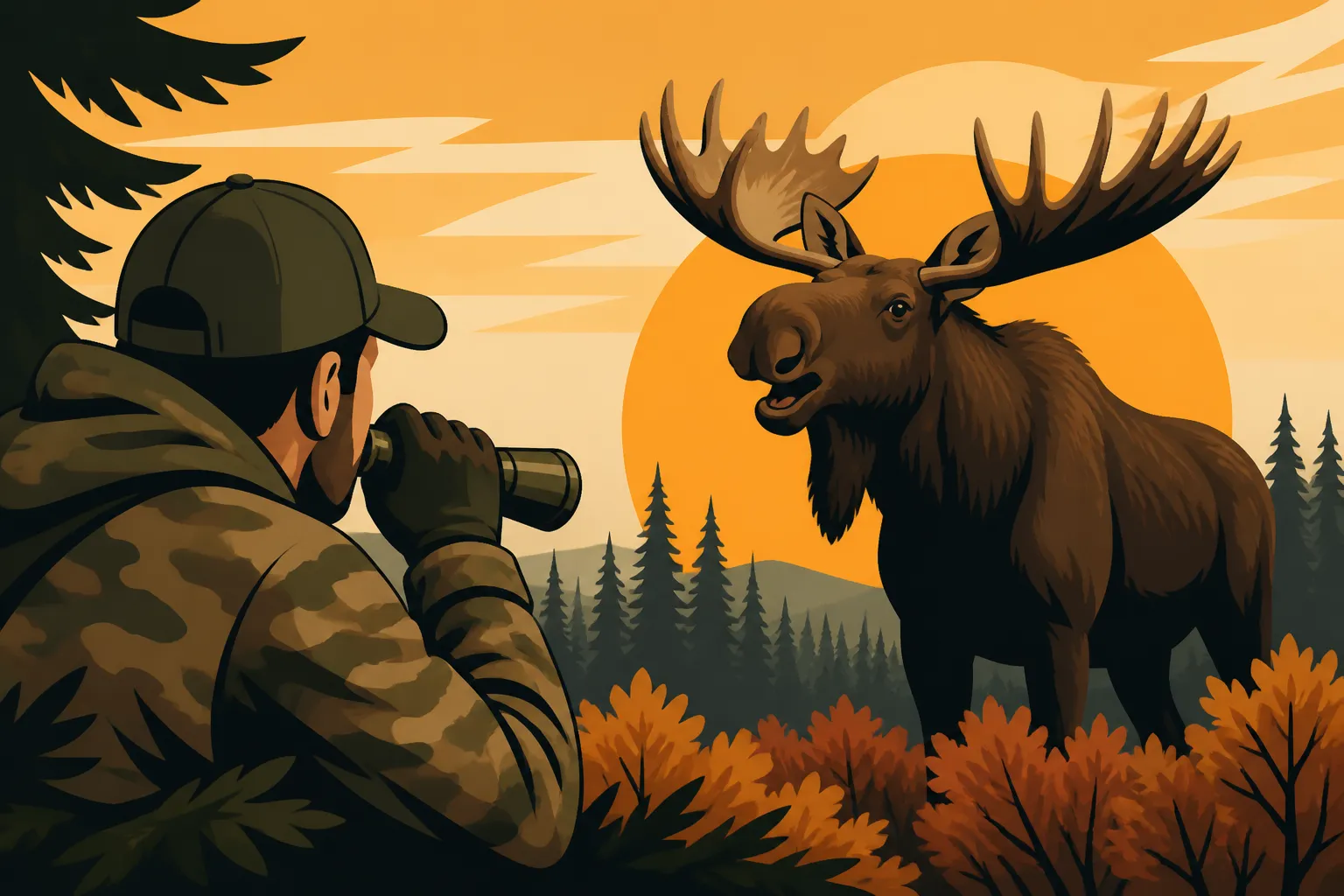
Another effective bull vocalization is the "tending grunt," a series of softer, more rhythmic grunts a bull makes when he's with a cow. This suggests a bull has found a mate, which can be an irresistible challenge for another bull. Combining these grunts with cow calls can create a convincing scenario: a cow calling for a bull, and a bull responding, which can really ignite a bull's competitive spirit. Remember, it's not just about the sound, but also the volume and the cadence. Aggressive grunts should be loud and authoritative, while softer grunts can indicate a bull working his way through the cover. When you're Calling a Bull Moose in the Rut, these grunts are vital for drawing a response.
Raking and Visual Aids
Moose are highly visual and possess an incredible sense of hearing, but they also use other senses, particularly smell. Incorporating visual and auditory cues like raking can make your calling sequence much more believable. Raking involves using a moose scapula, an old antler, or even a sturdy stick to scrape, thrash, and break branches and small trees, mimicking a bull working a rub. This sound carries well and signals that a bull is actively in the area. The more realistic you can make it – breaking branches, raking the bark off saplings – the better.
Pair raking with splashing water if you're near a pond or marsh. Moose love water, and the sound of splashing can mimic a bull or cow moving through a bog or even a bull urinating, leaving a scent marker. Visual aids, though harder to execute while hunting, can be effective. If you're hunting with a partner, having one person rake and call while the other makes a subtle visual display, like slowly waving a dark piece of cloth (mimicking an antler tip), can complete the illusion. However, be extremely cautious with any visual component, ensuring safety is always paramount, and never confuse yourself for a moose to other hunters. For more general insights into getting a moose out with a quad or by quartering a moose alone in the bush, check out our other resources.
Setting Up Your Calling Stand
Successfully calling a moose isn't just about the sounds you make; it's heavily reliant on where you make them. Your calling stand needs to be chosen with strategic precision, taking into account the moose's habits, the wind, and your ability to remain concealed and get a shot.
Reading the Landscape for Moose Hotspots
Moose are creatures of habit, especially during the rut. They gravitate towards areas that offer food, water, and cover, often moving between these features. Prime calling locations in Manitoba often include the edges of dense boreal forest, especially near recent burns where new growth provides browse, or along old logging cutlines that offer easy travel routes. Beaver ponds are perennial hotspots; moose love to feed on aquatic vegetation and use these areas for travel and wallowing. When scouting, look for fresh tracks, broken saplings (rubs), and heavily used trails. Tools like GoHunt can be invaluable here, helping you pinpoint these features on satellite imagery and overlay them with property lines.
Consider areas where there's a good mix of heavy cover and more open corridors. Bulls often prefer to travel through dense cover but will venture into slightly more open areas to feed or respond to calls. A good calling stand might be situated on a slight rise overlooking a bog, or tucked into a spruce stand at the edge of a poplar bluff. Think about areas with natural pinch points or funnels that moose are likely to use, concentrating their movement and increasing your chances of an encounter. For deep dives into specific terrain, consider exploring articles like Hunting Moose Around Manitoba Beaver Ponds or Hunting Moose on a Manitoba Cutline.
Wind Direction and Scent Control
This cannot be stressed enough: wind direction is absolutely critical when calling moose. A moose’s nose is perhaps its most formidable defense. They can smell human scent from incredible distances, and if a bull catches your scent, your hunt is over before it truly begins. Always set up with the wind in your favor, blowing away from where you expect the moose to approach. This usually means setting up downwind of likely travel corridors or bedding areas.
Pay attention to thermals, especially in the mornings and evenings. As the air warms, thermals rise; as it cools, they fall. This means wind direction can shift throughout the day, so constantly monitor it with a wind checker. Implementing strict scent control measures is also non-negotiable. Wear scent-eliminating clothing, shower with scent-free soap, and store your hunting clothes in scent-free bags. Even then, an unpredictable gust can ruin your day, so always prioritize the wind direction above all else. A bull will often circle downwind to scent-check a call, so anticipate this move and position yourself accordingly.
Approach and Concealment
Your approach to a calling stand needs to be as quiet and stealthy as possible. Moose have excellent hearing, and snapping twigs or loud footsteps will alert them to your presence long before you've settled in. Move slowly, deliberately, and take advantage of natural sounds like rustling leaves or running water to mask your approach. Once you reach your chosen spot, concealment is key. You need enough cover to break up your silhouette but also clear shooting lanes for when a bull responds.
Look for a stand of thick spruce, a cluster of jack pines, or even a large downed log that you can set up behind. Ensure you have clear lines of sight for 30-60 yards in multiple directions, as a bull can appear silently and quickly. Position yourself so that the sun isn't directly in your eyes during peak calling times, and consider what your background looks like. A dark background will help you blend in better than being silhouetted against an open sky. The more thought you put into your setup, the higher your chances of success. For more on tactical hunting, consider reading about Scouting a Manitoba Game Hunting Area.
Advanced Calling Strategies and Common Mistakes
Moose calling isn't a "one-and-done" affair. It requires a dynamic approach, constant evaluation, and a willingness to adapt. Understanding the subtle cues a bull gives and knowing how to respond, or when to hold back, will significantly increase your success rate.
Patience and Persistence
One of the biggest lessons in moose calling is patience. Sometimes, a bull will respond immediately, charging in with bugles and grunts. More often, however, a bull will take his time. He might be a "silent bull," slowly circling downwind to catch a scent before committing. He might respond with a soft grunt that's barely audible, testing your resolve. It's crucial not to give up too soon. Calling sequences can last for 30 minutes to an hour, with periods of active calling followed by long stretches of silence. Listen intently during these silent periods for snapping twigs, heavy footsteps, or distant grunts.
Vary your call intensity. Start with softer, more curious calls, then gradually increase volume and aggression if you don't get a response. If a bull grunts back but doesn't appear, try increasing the urgency of your cow calls or throwing in a more aggressive bull grunt, accompanied by some raking. The goal is to keep him interested and to convince him that what he's hearing is real and worth investigating. Remember, these animals are huge and often cautious; it takes time to cover ground, especially in thick cover. Don't fall into the trap of quitting too early, especially if you're hunting in areas like the Grass River Country or around The Pas and Cormorant, where moose populations can be more spread out.
Adapting to Bull Responses
Every moose is different, and their responses will vary. Some bulls will come in hot and heavy, practically running you over. Others will circle endlessly, trying to get your wind. You need to learn to interpret their actions and adapt your calling strategy. If a bull is coming in fast and aggressively, you might want to back off the calling slightly, letting his momentum bring him closer without over-stimulating him. If he hangs up at a certain distance, clearly trying to get downwind, you might need to try a "walk-away" technique – making calls while slowly retreating, mimicking a cow moving away, which can sometimes draw him into an ambush.
If a bull is circling, try to anticipate his path and position yourself for a shot when he moves into a shooting lane. A circling bull is often trying to get your scent. If you've been careful with the wind, you might get a clean shot as he comes into view. If he’s just offering soft grunts, respond with equally soft, inquisitive cow calls to draw him closer. Don't be afraid to experiment, but always prioritize safety and ethical shot opportunities. Hunting Moose Where Seasons Stay Open requires this kind of adaptability.
Avoiding Overcalling and Spooking Moose
One of the most common mistakes beginners (and even experienced hunters) make is overcalling. Too much calling, too loud, or too often can sound unnatural and often spooks moose. They're intelligent animals, and if your "cow" sounds like she's on speed, they'll know something is off. Start with shorter, less frequent sequences. Listen more than you call. Let the moose tell you what they want to hear. If you get a response, slow down and gauge his interest before calling again.
Another mistake is calling at the wrong time or in the wrong place. Don't call continuously if you're moving through dense cover; wait until you're stationary and set up. Avoid calling if you know there are other hunters nearby, as you could confuse or endanger both parties. Be patient, be subtle, and be confident in the sounds you make. Trust your instincts and the knowledge you've gained about moose behavior. The goal is to entice, not to annoy or scare away.
| Call Type | Primary Sound | Ideal Rut Stage | Purpose | Notes |
|---|---|---|---|---|
| Estrus Cow Bawl | Long, nasal "Ooooh-Ahh" | Peak Rut (early-mid October) | Attract dominant bulls seeking mates | Most effective, carries long distances. |
| Lost Cow Call | Plaintive, shorter "Ah-Uh" | Early Rut / Post-Peak | Pique curiosity of younger or cruising bulls | Less aggressive, good for hesitant bulls. |
| Feeding Chuckle | Short, guttural "Mmmm" | Throughout Rut (subtle) | Signal relaxed cow, suggest presence | Low-volume, good for close-in work or curiosity. |
| Challenge Grunt | Deep, drawn-out "Unnnh-Uh" | Peak Rut (bulls are aggressive) | Challenge rival bulls | Use with caution; can deter smaller bulls. |
| Tending Grunt | Soft, rhythmic "Unnnh-Unnnh" | Peak Rut (bull with a cow) | Mimic a bull with a mate; incite jealousy | Very effective when combined with cow calls. |
| Raking/Thrashing | Breaking branches, scraping | Peak Rut (visual/auditory cue) | Mimic bull working a rub, visual challenge | Use with calling; adds realism and auditory depth. |
Disclaimer
Hunting is an inherently challenging and potentially dangerous activity. This guide provides general information and strategies for calling bull moose in Manitoba. Laws, regulations, and best practices can change, and it is the hunter's sole responsibility to ensure they are fully compliant with all current federal, provincial, and local hunting regulations. Always prioritize safety, respect wildlife, and obtain all necessary licenses and permits before heading into the field. This content is for informational purposes only and does not constitute professional advice.