Why Northern Manitoba Game Moves So Far
It can be incredibly frustrating to head out into the vast northern reaches of Manitoba, expecting to find game in a familiar area, only to discover the entire landscape feels empty. The truth is, game in these wilder, less settled regions behaves very differently than deer on a woodlot edge or geese in a stubble field. This guide aims to pull back the curtain on why northern Manitoba game animals often undertake such extensive movements, helping you understand the complex factors that drive these incredible journeys.
Understanding the Harsh Realities of Northern Manitoba's Landscape
When we talk about northern Manitoba, we're not just talking about a change in latitude; we're talking about a fundamental shift in environment. The challenges and opportunities for wildlife are amplified here, leading to distinct behavioural patterns that prioritize survival above all else. It's a land of extremes, and animals must adapt or perish, often through constant motion.
The Vastness and Sparsity of Resources
Imagine a grocery store where the shelves are miles apart, and half of them are empty depending on the season. That's a bit like life for game in northern Manitoba. Unlike the more fertile southern regions with their concentrated agricultural bounty, the boreal forest and tundra transition zones are characterized by immense areas with relatively low densities of specific food sources or optimal cover. A deer might find a small pocket of browse, but it's quickly depleted. A moose might clear out a patch of willow or aquatic vegetation in short order. This means animals are constantly on the move, not just for a quick snack, but often for their very sustenance. It's a continuous quest for adequate calories and nutrients across a landscape that doesn't offer easy, consistent abundance. This inherent scarcity forces them to cover significant ground, following seasonal blooms or simply seeking out the next viable feeding area. You might think you've found a honey hole, only to return a week later and find it completely devoid of recent sign, simply because the available food source was exhausted.
Extreme Climates and Their Seasonal Shifts
Northern Manitoba experiences truly formidable winters and often fleeting, intense summers. These dramatic seasonal shifts dictate not only what food is available but also where animals can find shelter and safety. In winter, deep snow can render vast areas inaccessible, burying critical forage and making travel an energy-sapping ordeal. Animals like Barren-Ground Caribou in Northern Manitoba will migrate hundreds of kilometres to find areas with less snow cover, allowing them to access lichen, or to move to more sheltered timber for relief from bitter winds. Conversely, a mild winter can mean a more dispersed population as animals aren't forced to yard up as tightly.
Summer brings its own challenges. While seemingly a time of plenty, the sheer number of biting insects can drive animals to higher, windier ground or into denser cover. Drought conditions, while perhaps less common in the true boreal than on the prairie, can dry up critical water sources, forcing animals to move to remaining ponds, lakes, or river systems. These constant environmental pressures, from blizzards to bug swarms, are powerful engines of movement, pushing game from one temporary haven to another. It's not just about comfort; it's about survival in a dynamic, often brutal, climate.
Primary Drivers Behind Extensive Game Movements
Beyond the general environmental factors, specific biological needs and survival instincts are the immediate triggers for these long-distance travels. Understanding these drivers is key to anticipating where game might be, even when they're not where you expect them.
The Perpetual Search for Forage and Water
Food and water are the most fundamental requirements for any living creature, and in the north, they are often scattered and ephemeral. Consider Moose Across Manitoba's Boreal Forest. They are voracious eaters, requiring vast amounts of forage daily. They'll browse on willow, aspen, and aquatic plants. As one area becomes depleted, or as the season changes (e.g., aquatic plants freeze out in winter), they must move on. A large bull moose can devastate a local food source surprisingly quickly. This isn't a casual stroll; it's a strategic shift to sustain their massive bodies.
Similarly, other species like elk, while less common in the deep north, will move through their range following the progression of palatable grasses and forbs. Even smaller game, like snowshoe hare, will move locally in search of prime browse. Water is less of a concern in the true boreal due to numerous lakes and rivers, but in drier pockets or during specific migration phases, access to open water can become a driving factor, especially for animals that eat drier forage. This constant hunt for sustenance means that sedentary behaviour is a luxury most northern game animals simply cannot afford for long. Keeping an eye on vegetation maps, perhaps through tools like GoHunt, can help you predict these shifts in feeding grounds.
Escaping Predation and Seeking Sanctuary
Manitoba's north is prime habitat for apex predators, most notably Wolves in Manitoba's North and black bears. The presence of these predators is a constant pressure that influences game movement. Prey animals like caribou, moose, and deer are not just looking for food; they're also constantly looking over their shoulders. A recent wolf kill, or even just persistent sign of a pack in an area, can cause prey animals to vacate that region quickly and move to new territory where they perceive a lower threat. This can mean moving into denser cover, crossing open areas at night, or joining larger groups for safety in numbers.
For example, a cow moose with a young calf will seek out dense cover, often near water, to give her calf the best chance of survival. If that cover is compromised or becomes too dangerous, she will move, often for many kilometres, to find a new nursery. During migration, vast herds of caribou can overwhelm local predators, but smaller groups or individuals are always at risk, propelling their ongoing movement. It's a continuous chess game between predator and prey, with movement being a primary defensive strategy.
The Urge to Reproduce: Rutting and Calving Grounds
The drive to reproduce is one of nature's most powerful forces, and for many northern species, it involves significant travel. Caribou, for instance, undertake epic migrations to reach specific calving grounds each spring. These areas are chosen for their relative safety from predators and access to early green-up. After calving, they often move to summer ranges before beginning another journey to their wintering grounds. Hunting Caribou on the Migration Route is often about intercepting these movements.
| Species | Primary Movement Drivers | Typical Range of Movement | Key Seasonal Movements (General) |
|---|---|---|---|
| Barren-Ground Caribou | Forage (lichen, sedges), predator avoidance, calving grounds, snow depth | Hundreds to thousands of kilometres | Seasonal migrations between calving, summer, and winter ranges |
| Moose | Forage (willows, aquatics), cover, predator avoidance, rutting areas | Tens to hundreds of kilometres | Seasonal shifts to aquatic areas, dense timber, rutting areas |
| Wolf | Prey availability (following caribou/moose), territorial patrols | Hundreds of square kilometres | Follows migrating caribou, ranges based on resident moose density |
| Black Bear | Food (berries, nuts, carrion), denning sites, breeding opportunities | Tens to hundreds of square kilometres | Moves from dens, forages widely, seeks breeding partners, dens again |
Moose also have distinct rutting areas where bulls and cows gather to breed. While not always as grand as a caribou migration, these areas can be specific and may require moose to travel from their more dispersed summer ranges. Once the rut is over, bulls may move to recuperate in dense cover, while cows return to more secluded areas. The timing of these movements is critical; knowing When Manitoba's Moose Rut Peaks can help you predict where they might congregate. These annual cycles of breeding and birthing are fundamental to northern game movement, overriding other concerns for a temporary period.
Specific Species and Their Epic Journeys
While all northern game moves, some are truly masters of long-distance travel. Understanding the specifics of these iconic species can provide invaluable insight.
Barren-Ground Caribou: Nomads of the North
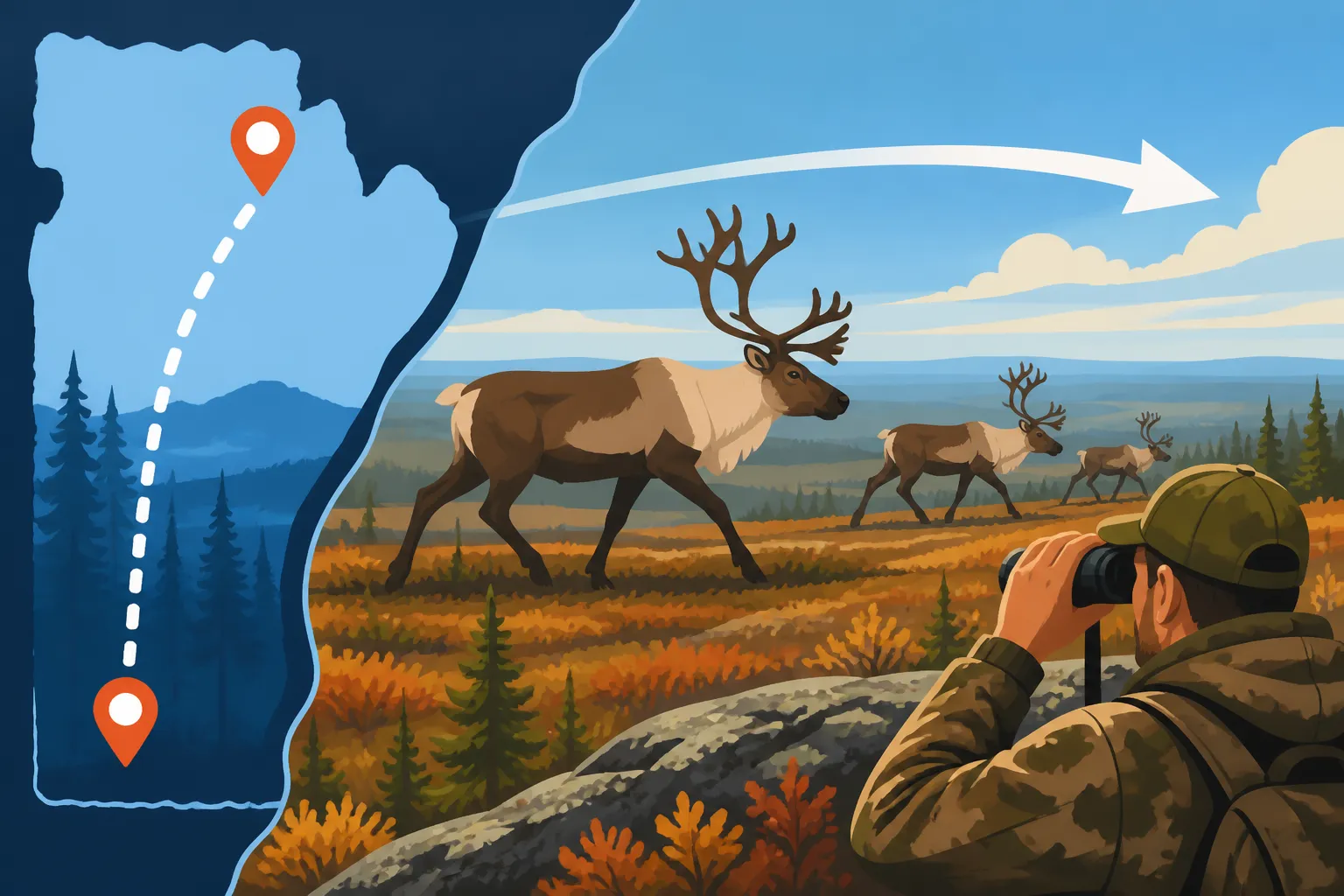
If there's one animal that embodies extensive movement in northern Manitoba, it's the barren-ground caribou. These animals are true nomads, driven by an instinct to follow the best forage and escape predation across vast, open landscapes. Their annual migrations are among the longest of any land mammal. In late winter and early spring, they travel north from their wintering grounds in the taiga to the treeless tundra for calving, seeking areas with low predator density and accessible forage.
Once calves are born and stronger, they typically aggregate into massive herds for protection against insects and predators, gradually moving through summer ranges. As fall approaches, they begin their southbound journey back towards the treeline, searching for areas where snow cover is not too deep to access ground lichen. This constant ebb and flow means that a caribou herd might be in a specific location for only a few days or weeks before moving on. Hunting them often involves positioning yourself along anticipated migration corridors, or leveraging tools like GoHunt to understand historical movement patterns, rather than trying to track individual animals. When Caribou Reach Northern Manitoba is a critical piece of information for planning such a hunt, as their arrival signals a period of intense activity followed by dispersal.
Moose: Adapting to Localized Abundance and Scarcity
Moose movements, while not as epic as caribou migrations, are still extensive and highly adaptive to local conditions. A moose in the boreal forest will often utilize a relatively large home range, shifting its feeding patterns and locations based on seasonal forage availability. In summer, they might spend significant time in lakes and ponds, feeding on aquatic vegetation, which is highly nutritious. As fall approaches and temperatures drop, they move more into timber, browsing on woody plants.
Winter can see them concentrate in areas with good cover and accessible browse, often referred to as winter yards. However, deep snow will quickly force them to move to areas where travel is easier or where they can access browse above the snow line. Hunting Moose on a Manitoba Cutline can be productive because these linear features often provide easier travel through deep snow for moose. Their movements are a constant negotiation between finding sufficient food, seeking thermal cover from extreme cold or heat, and avoiding predators. A herd of moose can be found one week on a particular ridge and be completely absent the next, having moved a few dozen kilometres to a fresh food source or to escape a persistent wolf pack.
Wolves: Following the Food Source
It's impossible to talk about the movement of northern game without mentioning wolves. Wolves are intrinsically linked to their prey's movements, often covering immense territories in search of food. Their movements are a direct reflection of where the caribou are, where the moose densities are highest, or where other prey species might be concentrated. If a caribou herd has migrated through, the wolves will follow, travelling hundreds of kilometres to stay with their primary food source.
In areas with resident moose populations, wolf packs will establish large territories, constantly patrolling and testing the defences of the moose within their range. A pack might make a huge circuit of its territory, covering 50-100 kilometres in a single day or two, before returning to a kill site or den. Their ability to cover ground silently and efficiently is remarkable. Hunters often look for wolf tracks or listen for howls to understand their presence, knowing that where the wolves are, their prey is either nearby or has recently been pushed out. Learning Hunting Wolves in Manitoba's North provides a different perspective on these movements, as you're often trying to intercept an animal driven by the very same forces that move its prey.
How Hunters Can Interpret and Adapt to Game Movement
Understanding why northern game moves so far is the first step. The next is learning how to use that knowledge to your advantage, or at least how to avoid being perpetually frustrated by it.
Leveraging Technology and Local Knowledge
In today's hunting world, we have incredible tools at our disposal that can help decipher game movements. Satellite imagery, available through platforms like GoHunt, allows you to scout vast areas from your living room, identifying potential bedding areas, feeding zones, or natural travel corridors that might be hidden to the naked eye. You can pinpoint Hunting a Boreal Muskeg Edge or Hunting a Hydro Line Right-of-Way – features that game use for easier travel or better forage. This kind of digital scouting is especially crucial in northern areas where covering ground physically is difficult and time-consuming.
Beyond technology, local knowledge is irreplaceable. Speaking with local conservation officers, trappers, First Nation community members, or even experienced bush pilots can provide insights into current conditions that no map can. They might know about unusual concentrations of browse, recent wildfire activity that has created new forage What Wildfire Did to Manitoba Game Range, or shifts in traditional migration routes. It's about combining broad understanding of movement drivers with real-time, ground-level intelligence. Don't be afraid to ask questions, observe your surroundings meticulously, and even read up on historical accounts of animal behaviour in your target area.
The Importance of Flexibility and Persistence
Hunting in northern Manitoba, especially for species prone to extensive movements, demands a hunter who is flexible and persistent. You cannot expect to sit on a stand for a week and have the game magically appear. Your strategy needs to be dynamic. If your initial scouting suggests a specific area for moose, but fresh sign indicates they've moved on due to deep snow or heavy predation, you need to be prepared to pack up and relocate, even if it means travelling significant distances to a new GHA or a different part of the one you're in.
This might mean embracing different hunting methods, too. Instead of static ambush hunting, you might need to become more mobile, still-hunting vast tracts of bush, or focusing on hunting a Manitoba cutline that allows for better travel and visibility. For caribou, it could mean being prepared for a Flying Into a Remote Manitoba Camp to intercept herds that are hundreds of kilometres from the nearest road. Patience is key, but it must be an active patience, combined with the willingness to adapt your plans based on what the animals are telling you through their sign and absence. Understanding that "empty" doesn't mean "no animals," but rather "animals are somewhere else," is the most crucial mindset change for northern hunting.
Disclaimer
This article is for general informational purposes only and does not constitute professional advice. Laws, prices and regulations vary by location and change over time. Consult a qualified professional for guidance on your specific situation.