Hunting a Boreal Muskeg Edge
Hunting in Manitoba's vast boreal forest is an experience unlike any other, often presenting challenges that can feel overwhelming, especially when you're trying to pinpoint where the game might be hiding. One of the most consistently productive, yet frequently overlooked, areas to focus your efforts is the humble muskeg edge. This guide will take a deep dive into why these unique transition zones are so critical for finding game, and how you can effectively hunt them.
Understanding the Boreal Muskeg Edge Ecosystem
The boreal forest in Manitoba is a sprawling, often daunting landscape, characterized by its dense stands of coniferous trees, countless lakes, and, of course, the distinctive muskeg. Understanding what a muskeg edge actually is, and why it's so vital, is the first step to unlocking its potential as a prime hunting spot.
What is a Muskeg Edge?
Imagine a landscape where solid ground gradually gives way to a spongy, waterlogged expanse. That's essentially a muskeg. These are types of peatlands, typically found in the boreal regions, formed over thousands of years as decomposing organic matter (mosses, sedges, and stunted trees like black spruce and tamarack) accumulates faster than it decays. The ground is often saturated, ranging from merely damp to outright boggy, making travel difficult for both humans and animals.
The "edge" of a muskeg is precisely where this soft, wet, nutrient-poor environment meets firmer ground, often characterized by a noticeable change in tree species, density, and ground cover. You might see the tall, mature pines and aspens of higher ground abruptly transitioning to the sparse, shorter black spruce and tamarack of the muskeg. This isn't always a sharp, distinct line, but often a gradual, irregular transition where the land rises slightly, or where a mineral soil ridge cuts through the peat. These edges are dynamic and incredibly important, creating a rich interface between two vastly different habitat types.
Why Game Animals Utilize Muskeg Edges
It's no accident that so many of Manitoba's big game animals, from the majestic moose to the elusive whitetail and black bear, are drawn to these muskeg edges. They act as critical arteries in the boreal ecosystem, providing a unique combination of resources that are hard to find elsewhere. For starters, the transition zone often offers a greater diversity of browse and forage. While the muskeg itself might have specialized plants like sedges and various ericaceous shrubs, the adjacent firmer ground hosts a different array of vegetation. Moose, in particular, are notorious for browsing on the willows, dogwoods, and young aspens that often thrive along these interfaces.
Beyond food, these edges offer crucial cover. The denser stands of trees on the firmer side provide bedding areas and protection from the elements, while the muskeg itself can act as a natural barrier or escape route. An animal can quickly slip into the thick, difficult-to-traverse muskeg to evade a predator, knowing that a human hunter will struggle to follow. Furthermore, these edges naturally create travel corridors. Animals often prefer to walk along the slightly drier, firmer ground of the edge rather than slog through deep muskeg or dense, impenetrable forest. These natural funnels concentrate animal movement, making them predictable spots for hunters. You'll often find parallel trails running along these edges, indicating consistent travel.
Scouting Strategies for Boreal Muskeg Edges
Effective hunting in Manitoba's boreal forest, especially around muskeg edges, begins long before you ever step foot in the bush with your rifle or bow. Thorough scouting, both from afar and on the ground, is absolutely non-negotiable. It helps you understand the landscape, predict animal movement, and ultimately, put yourself in a position for success.
Utilizing Topographical Maps and Satellite Imagery
Before you even load up the truck, spend a significant amount of time pouring over topographical maps and high-resolution satellite imagery. This is where modern technology really shines. Look for clear distinctions in vegetation types; the dark, uniform green of black spruce and tamarack often indicates muskeg, contrasting sharply with the brighter greens of deciduous trees or the varied textures of mixed forest. Pay close attention to subtle elevation changes. Even a rise of a few feet can mean the difference between wet bog and firm ground, and animals will almost always prefer the latter for travel and bedding.
Tools like the GoHunt app or similar mapping platforms are invaluable for this. You can overlay different map layers, analyze historical satellite images to spot past clearings or changes in water levels, and even mark potential stand locations and access routes from the comfort of your home. Identify natural pinch points where two muskegs funnel down to a narrow strip of dry land, or where a ridge extends into the bog. These are prime ambush locations. Remember, water features are also critical; muskegs are often intertwined with small ponds, creeks, and beaver runs. Look for these connections, as they too can act as highways for game. Mark every promising "edge" you find – you can always refine your scouting once you're on the ground.
Reading Physical Sign Along the Edge
Once you're actually in the field, it's time to become a detective. Walk the muskeg edges slowly, deliberately, and with your head on a swivel. Look for fresh tracks. Are they consistently running along the edge, or do they cut in and out of the muskeg? The firmer ground right at the transition point is often where you'll find the clearest tracks. Pay attention to the size and depth of the tracks – this tells you about the animal and how recently it passed through.
Scat is another excellent indicator of recent activity. Different species have distinct droppings, and the freshness can give you an idea of how active the area is. Look for rub lines on trees, especially during the rut for whitetails and moose. These indicate a buck or bull marking its territory, often right on the edge of a travel corridor. Browsed vegetation, especially fresh bites on preferred food sources like willow, aspen, or various shrubs, tells you exactly what animals are eating and where. Moose will often strip bark or break off branches in a very distinct way.
Don't forget game trails. Animals, especially larger ones like moose and bear, create well-worn paths. Along a muskeg edge, these trails will often run parallel to the transition line, or they might angle into or out of the muskeg to access water or specific feeding areas. These trails are gold. Use your GoHunt app to mark these trails and signs directly on your map as you find them, building a clearer picture of animal movement patterns. Look for areas where multiple trails converge or cross, as these are high-traffic intersections.
Effective Hunting Tactics for Muskeg Edges
Once you've done your homework and identified promising muskeg edges, it's time to translate that knowledge into effective hunting tactics. The unique nature of this terrain requires a blend of patience, strategic positioning, and adaptability.
Stand Placement and Ambush Points
When you're dealing with boreal muskeg edges, strategic stand placement is paramount. The goal is to intercept game as they use these natural travel corridors. Look for pinch points – areas where the strip of dry ground between the muskeg and another feature (like a dense thicket, a lake, or another muskeg) narrows significantly. Animals will often be forced through these constrictions, making them predictable crossing points.
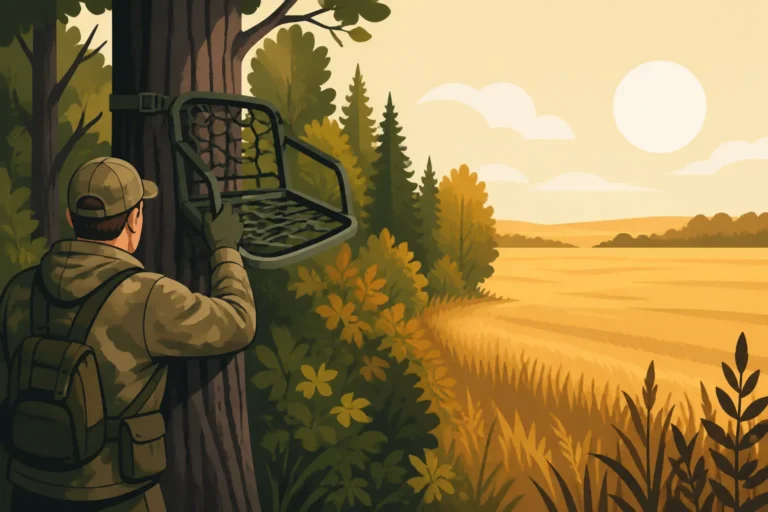
Consider the prevailing wind direction. In the boreal, the wind can be fickle, but generally, you want to set up downwind of where you expect the animals to come from. This can be tricky with a winding edge, so sometimes a slightly elevated position can give you a better scent cone. Treestands are often excellent choices along muskeg edges, especially if there are mature trees on the firmer ground that offer a good vantage point and concealment. A stand allows you to see over the shorter muskeg vegetation and provides a broad view of the transition zone. If treestands aren't feasible or desired, well-camouflaged ground blinds made from natural materials can also be effective, particularly if you can tuck them into a natural depression or behind a cluster of dense evergreens. Always ensure your setup provides a clear shooting lane for the most likely approach angles, without sacrificing concealment.
Still-Hunting and Stalking Approaches
Sometimes, sitting and waiting isn't the most productive approach, especially if you're actively searching for game sign or covering a long stretch of edge. Still-hunting along a muskeg edge can be incredibly effective, but it demands extreme patience and quiet movement. The damp, often mossy ground along these edges can actually be quieter to walk on than crunchy dry leaves or brittle twigs, but it also means you'll sink more easily. Take small, deliberate steps, pausing frequently to scan the surroundings. Use your binoculars constantly to pick apart the cover, looking for horizontal lines in a vertical world – a tell-tale sign of an animal.
When stalking, use the terrain to your advantage. The varied vegetation along the edge provides ample cover. Stay in the shadows, move slowly during brief lulls in the wind, and always be ready for a shot. The biggest challenge in still-hunting muskeg edges is the sound. Your rubber boots might slurp or squish in the soft ground, and brushing against stunted spruce branches can be surprisingly loud. Focus on placing your feet gently and deliberately. This type of hunting relies heavily on your ability to read the wind, spot subtle movements, and remain completely silent. It's a true test of a hunter's woodcraft and patience.
Gear Considerations for Boreal Muskeg Terrain
Hunting muskeg edges in Manitoba’s boreal forest isn't like a walk in the park. The environment itself presents unique challenges, from deep mud and standing water to dense, clinging vegetation. Having the right gear isn't just about comfort; it's about safety and effectiveness. Skimping on essentials here can quickly turn an exciting hunt into a miserable, even dangerous, ordeal.
Essential Clothing and Footwear
The number one rule for muskeg hunting is: stay dry. This means absolutely prioritizing waterproof and breathable clothing. A good quality rain suit, jacket and pants, is not optional – it's mandatory. Even on a clear day, you’ll be pushing through dew-laden bushes or stepping into unexpected puddles. Layering is also critical. Start with a moisture-wicking base layer, add insulating layers like fleece or wool, and top it off with your waterproof outer shell. Temperatures in the boreal can fluctuate wildly, especially during the shoulder seasons, so being able to adjust your layers prevents sweating (which leads to being cold) and keeps you comfortable.
Footwear is arguably the most important piece of gear. Forget your favorite leather hunting boots unless they are absolutely 100% waterproof and you pair them with gaiters. For muskeg, nothing beats tall, insulated rubber boots. They might not be as comfortable for miles of hiking on firm ground, but they are unparalleled for keeping your feet dry when crossing shallow water, stepping into boggy patches, or slogging through saturated ground. Look for boots with aggressive tread for traction on slippery surfaces. Good quality gaiters can also be a lifesaver, providing an extra barrier against moisture and keeping debris out of your boots, even if you opt for waterproof hiking boots for slightly drier edges.
Navigation and Safety Equipment
Given the remote nature of much of Manitoba's boreal forest, reliable navigation and safety equipment are non-negotiable. A handheld GPS unit is highly recommended, ideally with topo maps preloaded, even if you're using a smartphone app like GoHunt. Batteries can die, and electronics can fail, so always carry a physical compass and know how to use it, along with a laminated paper map of your hunting area. Marking your vehicle, camp, and entry points on your navigation device from the start is a good practice.
Beyond navigation, a comprehensive first-aid kit is crucial. Minor scrapes and blisters can quickly become major problems in a wet environment. A headlamp with extra batteries is essential, even if you plan to be out only during daylight hours, as unexpected delays can leave you walking in the dark. A whistle, fire-starting materials (waterproof matches, lighter, fire-starter tabs), and a small emergency shelter (like a space blanket or lightweight tarp) could be life-saving if you get turned around or injured. Given the prevalence of bears in the boreal, bear spray and knowing how to use it should also be part of your safety kit, especially during spring and fall hunts. Consider a satellite communication device or an inReach-style personal locator beacon for true peace of mind, as cell service is often non-existent in these remote areas.
Specific Species and Their Muskeg Edge Habits
While muskeg edges are generally productive for a variety of game, different species utilize these habitats in slightly different ways. Understanding these nuances can help you tailor your hunting approach and increase your chances of success.
Moose and Their Reliance on Muskeg
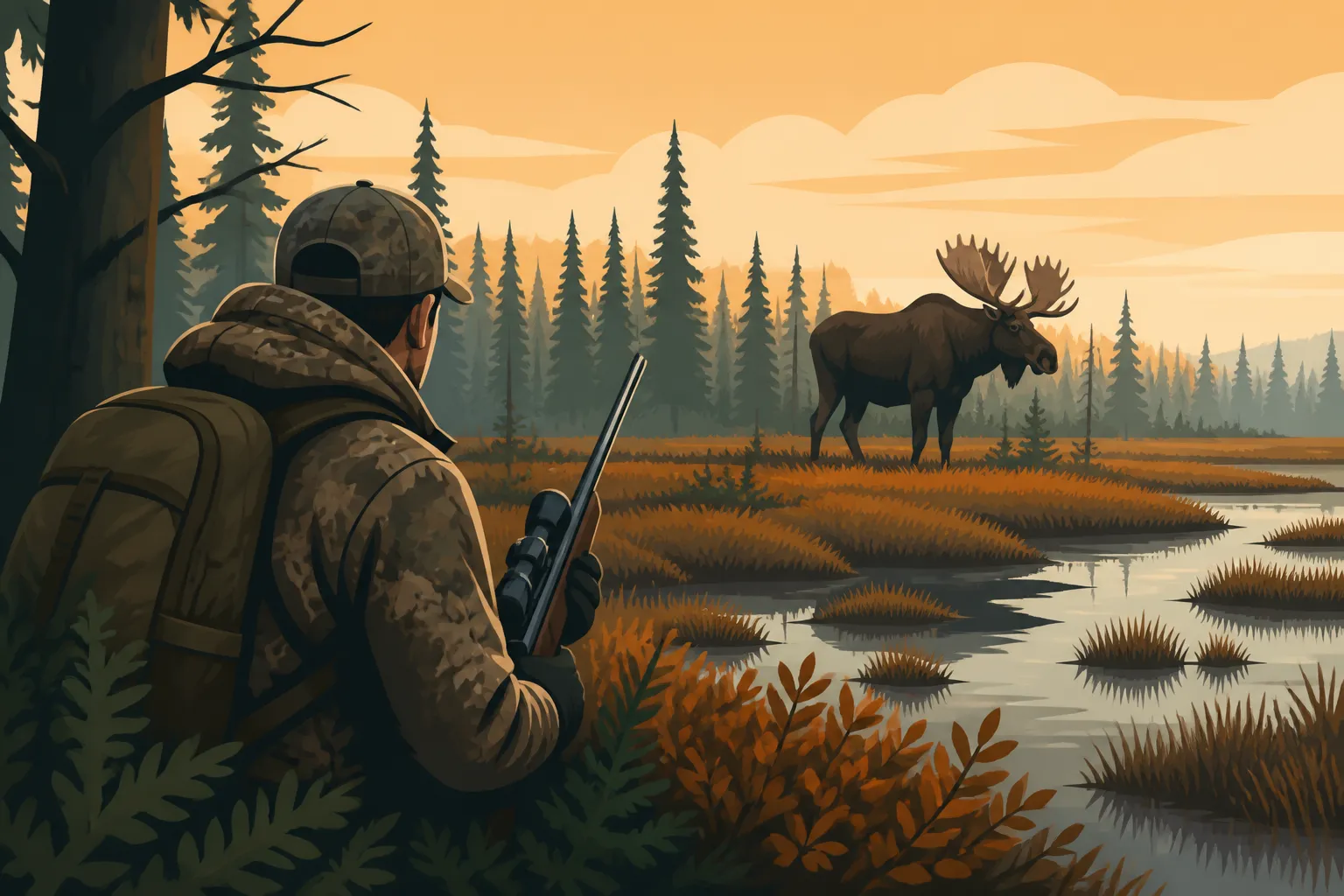
Moose are perhaps the species most intimately connected with muskeg ecosystems in Manitoba. These gentle giants thrive in wet, boggy environments, and the edges of muskegs offer them everything they need. The specific browse they prefer – like willows, red osier dogwood, and young aspens – often grows abundantly where the firmer ground transitions into the wetter bog. They'll also wade into the shallower parts of the muskeg itself to feed on aquatic vegetation.
During the rut, in early to mid-fall, a bull moose will often use these edges as travel corridors to cover ground while searching for cows. Cows, in turn, will lead their calves into the thick, protective cover offered by the stunted spruce of the muskeg itself when they feel threatened, using the difficult terrain as a natural fortress. When you're Calling a Bull Moose in the Rut, setting up near a muskeg edge that has fresh sign can be incredibly effective. The calling will carry through the more open muskeg, and bulls often respond by circling the edge to get downwind of the sound. Look for areas where the muskeg has small islands of drier ground or fingers of timber extending into it; these are often bedding areas or staging points for moose.
Whitetails, Bears, and Caribou Near Edges
While moose are king of the muskeg, other species also make significant use of these edges. Whitetail deer, for instance, especially in the more southern reaches of the boreal forest or in the aspen parkland fringe that blends into it, will use muskeg edges for both travel and escape cover. Big bucks often seek out the dense, difficult-to-penetrate cover that an adjacent muskeg provides, especially during daylight hours or when under pressure. They might bed just inside the timber line, on the firmer ground, but with easy access to slip into the bog if disturbed. They'll use the trails running parallel to the edges to move between feeding areas and more secure bedding grounds. Hunters looking to bag a big whitetail in tough country might want to consider Hunting Whitetails in Manitoba's Bush Country, and these edges are prime spots within that habitat.
Black bears are another frequent visitor. Bears are opportunists and will follow food sources. Muskeg edges, with their diverse vegetation, often provide berries, nuts, and other forage, particularly in spring and late summer. They'll also use the dense cover for bedding and to travel unnoticed. If you're Setting a Bear Bait Site in Manitoba, consider locating it near an accessible muskeg edge, as bears will naturally gravitate towards such transition zones.
Even barren-ground caribou, during their migratory movements through northern Manitoba, will often traverse the firmer edges of muskegs, especially when avoiding deeper bogs or dense timber. While these vast herds are typically hunted in more open tundra, knowing their tendency to follow terrain features like muskeg edges can be beneficial for hunters planning a Barren-Ground Caribou Hunting in Northern Manitoba trip. Understanding how different game utilize the subtle differences within this landscape, perhaps even by cross-referencing species habits with your GoHunt mapping data, can significantly improve your hunting strategy.
| Feature | Description | Hunting Implication | Key Tip |
|---|---|---|---|
| Muskeg | Waterlogged, peat-rich ground with stunted black spruce, tamarack. Difficult to traverse. | Provides escape cover, thermal regulation. Limits human pursuit. | Look for small, firmer islands within the muskeg for bedding. |
| Edge Transition | Where firm ground meets boggy muskeg. Diverse vegetation, subtle elevation change. | High animal traffic, natural funnels, concentrated browse. | Focus scouting efforts intensely on these interface zones. |
| Travel Corridors | Animals prefer firmer strips along the edge for easier movement. | Predictable movement patterns, good for stand placement. | Identify pinch points and trail intersections along the edge. |
| Browse/Forage | Mix of aquatic plants in muskeg and woody browse on firmer ground. | Attracts diverse herbivores, especially moose. | Look for fresh browsing on willows, aspen, dogwood. |
| Cover | Dense, stunted trees in muskeg, thicker forest on firm ground. | Excellent bedding and escape cover from predators and elements. | Set up stands overlooking cover where animals might emerge or bed. |
| Water Access | Muskegs often contain small ponds, creeks, or beaver runs. | Attracts animals for drinking and feeding on aquatic plants. | Scout areas where edges intersect with water sources. |
| Elevation Changes | Even slight rises can create dry spots. | Animals favor these for bedding and travel; easier for hunter movement. | Use topo maps and GoHunt to pinpoint subtle high ground. |
Hunters navigating Manitoba’s challenging wilderness often discover the deep satisfaction of success that comes from truly understanding the landscape. Exploring these unique environments, like a Hunting a Boreal Muskeg Edge, offers rich rewards. Whether you're after moose, whitetails, or black bears, focusing on these dynamic transition zones can significantly boost your odds. Remember to always prioritize safety and preparation when venturing into the wilds of Manitoba. Checking Manitoba Big Game Season Dates and understanding Manitoba's Game Hunting Areas will ensure you’re hunting legally and ethically. Planning for Meat Care in Manitoba's Cold Snaps is also crucial if you're successful, and knowing about Manitoba's CWD Sampling Requirements is an essential part of responsible hunting today. For those interested in other species, exploring options like Waterfowl Hunting Manitoba's Grain Fields or Rifle Hunting Manitoba's Whitetail Rut offers different adventures. Even mastering skills like Reading Sign After a Fresh Snow can provide valuable insights into animal movement. Before heading out, make sure you know the rules for Manitoba Landowner Permission Law and always refer to the official Manitoba hunting guide for the most up-to-date regulations.
Disclaimer
The information provided in this article is for general guidance and informational purposes only. Hunting regulations, seasons, and requirements can change frequently. It is the responsibility of every hunter to consult the official Manitoba Hunting Guide, relevant government websites, and local authorities to ensure compliance with all current laws and regulations before engaging in any hunting activities. Always prioritize safety, ethical hunting practices, and respect for wildlife and the environment.