What Wildfire Did to Manitoba Game Range
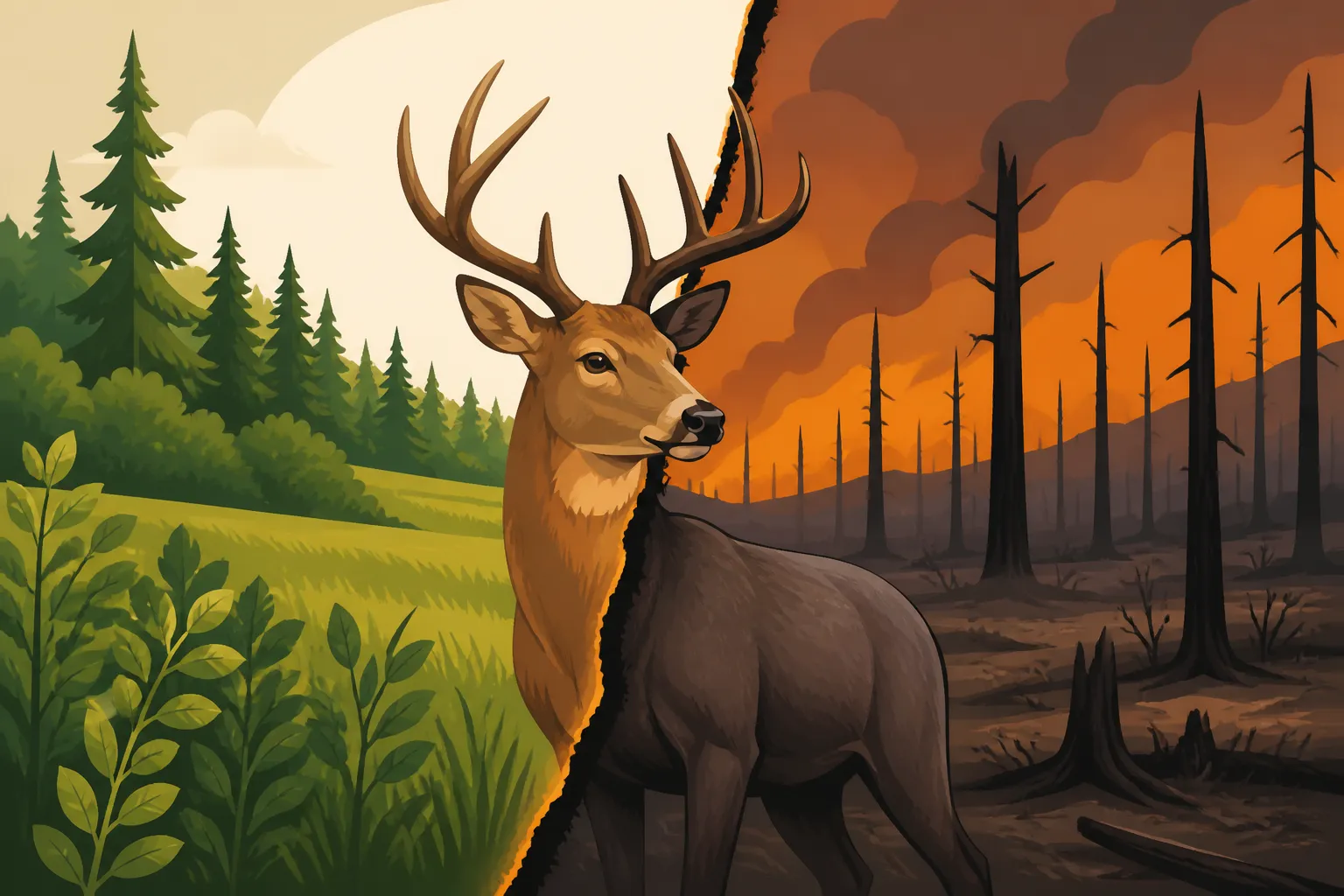
The sight of a devastating wildfire sweeping through the Manitoba bush can fill any hunter with dread and a deep sense of loss. You see the photos and hear the reports of blackened forests and wonder, quite understandably, what could possibly be left for our cherished game animals. The immediate aftermath certainly paints a bleak picture, leaving many of us feeling that prime hunting grounds and vital wildlife habitat have been irreversibly destroyed. But the truth, as nature often shows us, is far more complex and often reveals a surprising resilience. This guide will explore the profound and multifaceted impact of wildfires on Manitoba's game range, from the initial shock and destruction to the remarkable rejuvenation that can ultimately lead to richer, more productive landscapes for wildlife, and intriguing new challenges and opportunities for hunters.
Immediate Impacts of Wildfire on Game Populations
When a wildfire tears through an ecosystem, its initial effects are undeniably harsh and can be heartbreaking to witness. The sheer speed and intensity of some fires leave little room for escape, and the immediate environment becomes hostile to life.
Direct Mortality and Displacement
In the direct path of a fast-moving, high-intensity wildfire, animals often succumb to the flames, smoke inhalation, or heat exhaustion. While larger, more mobile animals like moose, deer, and bears can often outrun a fire if given enough warning and a clear escape route, slower-moving or very young animals, and those caught in sudden crown fires, are at significant risk. Nesting birds, small mammals, and amphibians are particularly vulnerable.
Even for those that escape direct harm, the sudden loss of their home range forces a mass displacement. Imagine a deer herd accustomed to a specific woodlot or a moose navigating a familiar bog. When a fire consumes that territory, these animals are abruptly pushed into unfamiliar adjacent areas, often already populated by other wildlife. This can lead to increased competition for resources, heightened stress, and greater exposure to predators. For example, a whitetail buck might find his bedding cover burned to ash, forcing him to seek refuge in a neighbouring agricultural field where he is much more exposed. This immediate upheaval is a critical period for survival, as animals must quickly adapt to new surroundings or face dire consequences.
Loss of Shelter and Forage
Beyond direct mortality, one of the most immediate and profound impacts of wildfire is the complete destruction of critical shelter and food sources. The dense canopy cover that provides shade in summer and thermal protection in winter for species like deer and moose can vanish overnight, leaving them exposed to the elements. This is especially challenging in Manitoba’s often harsh climate, where animals rely heavily on specific types of cover to regulate their body temperature.
The understory vegetation – the shrubs, forbs, and grasses that form the bulk of many animals' diets – is incinerated. This means that a landscape once rich with browse for a White-Tailed Deer, Manitoba's Most Hunted Animal or aquatic plants for a moose can become a barren wasteland. Animals surviving the initial blaze are immediately faced with a food crisis, forcing them to expend valuable energy searching for sustenance in fragmented, unburned pockets of habitat. This loss of forage can lead to malnutrition, weakened immune systems, and increased susceptibility to disease and predation, especially in the weeks and months following the fire. For instance, a bear that has lost its prime berry patches may be forced to travel much further to find food, increasing its energy expenditure and potentially bringing it into conflict with other bears or even human settlements.
The Phoenix Effect: Long-Term Ecological Changes and Game Recovery
While the initial scene after a wildfire is stark, it's essential to understand that fire is a natural and often necessary component of many ecosystems, particularly in Manitoba's vast boreal forests and aspen parklands. The destructive force of the flames often paves the way for a remarkable rejuvenation, creating entirely new conditions that can be highly beneficial for game populations in the long run.
Nutrient Cycling and Accelerated Plant Succession
The intense heat of a wildfire does more than just destroy; it also triggers a massive release of nutrients from the burned vegetation and organic matter back into the soil. Ash, rich in minerals, acts as a potent fertilizer. This nutrient flush, combined with the removal of dense canopy cover that previously shaded the forest floor, creates ideal conditions for a rapid burst of new plant growth.
This process is known as accelerated plant succession. Pioneer species, often fast-growing and highly nutritious for wildlife, quickly colonize the burned ground. We're talking about a proliferation of forbs, grasses, shrubs, and deciduous saplings like aspen and willow. These plants are frequently more palatable and digestible for browsers such as deer and moose than the older, tougher vegetation they replace. Within just a few years, a seemingly barren landscape can transform into a vibrant, diverse buffet for wildlife. This is a prime example of How Wildfire Changes Northern Game Range, turning dense, less productive forest into a dynamic and highly productive ecosystem.
Creating Habitat Mosaics and Edge Effects
One of the most significant long-term benefits of wildfire, especially patchy or mosaic burns, is the creation of incredibly diverse habitat structures. Fires rarely burn uniformly, leaving behind a mix of severely burned areas, lightly scorched zones, and untouched pockets of timber. This creates what ecologists call a "habitat mosaic."
These mosaics are characterized by abundant "edge effects," which are highly beneficial for wildlife. An "edge" is the transition zone between two different habitat types – for example, a burned area abutting unburned forest, or a regenerating clearcut next to mature timber. These edges provide the best of both worlds: dense cover in the unburned areas for security, combined with abundant food in the regenerating burn. Many game species thrive in these ecotones, utilizing the diverse resources available. A regenerating burn, for instance, might offer fresh browse, while the adjacent unburned forest provides bedding and escape cover. Over time, this creates a dynamic landscape that can support a greater diversity and higher density of game animals than a uniformly mature forest. This is a key reason why understanding these post-fire landscapes can be so crucial when you're Scouting a Manitoba Game Hunting Area.
Specific Species Responses to Post-Fire Landscapes
While the initial impact of wildfire is generally negative for most game species, their long-term responses can vary significantly, often resulting in increased populations and larger animals as the habitat recovers.
Whitetails and Moose: Initial Struggles, Future Bounty
For a few years immediately following a severe fire, deer and moose populations in the burned area may decline due to direct mortality, displacement, and lack of forage. Their survival becomes a challenge as they navigate an exposed and often food-scarce landscape. However, the regenerative power of fire quickly turns the tide. As the nutrient-rich soils sprout new, highly palatable forbs and shrubs, these areas become prime feeding grounds. Aspen, willow, and various berry bushes proliferate, offering a rich source of browse that is often more nutritious than what was available pre-fire.
This surge in high-quality forage can lead to increased body mass and antler growth in deer, and improved health and calf survival rates for moose. Hunters often observe that Why Burned Ground Grows Big Bulls is a real phenomenon, as the enhanced nutrition allows these animals to reach their full genetic potential. A fire can essentially "reset" a stagnant forest, transforming it into a vibrant food plot on a landscape scale. When you are Hunting Whitetails in Manitoba's Bush Country, especially a few years after a fire, you might find the animals concentrated in these recovering zones, taking full advantage of the abundant new growth. This positive long-term impact is one of the more surprising and beneficial aspects of wildfire for our largest game animals.
Black Bears and Small Game: Adapting to Change
Black bears, being highly adaptable omnivores, also exhibit a nuanced response to wildfire. Initially, they may be displaced from their home ranges, especially if dens or prime feeding areas are consumed. However, like deer and moose, they often benefit greatly in the mid to long term. Post-fire landscapes often see an explosion of berry-producing shrubs such as blueberries, raspberries, and saskatoons, which thrive in the open, sun-drenched conditions created by the fire. These fruit crops are a crucial food source for bears, helping them put on weight before hibernation. The influx of insects into decomposing wood also provides another food source.
For those interested in Black Bear Hunting in Manitoba, understanding these post-fire food cycles can be key to locating productive hunting areas. Smaller game animals, such as snowshoe hare, might experience an initial dip due to habitat loss, but as the regenerating forest provides dense, young growth, their populations can rebound significantly. This, in turn, can benefit predators like lynx and coyotes, demonstrating how fire can ripple through the entire food web. The mosaic of burned and unburned areas also provides diverse foraging and cover opportunities, helping bears thrive.
Upland Birds and Waterfowl: Mixed Fortunes
The impact of wildfire on upland birds like ruffed grouse, sharp-tailed grouse, and Hungarian partridge can be a mixed bag, depending on the fire's intensity and the specific species. Ruffed grouse, which prefer dense, regenerating aspen and willow thickets, might find their initial cover destroyed. However, as these preferred habitats regenerate, their numbers can surge. Sharp-tailed grouse, which thrive in open grasslands and prairies interspersed with shrubs, may benefit from fires that clear out encroaching woody vegetation, expanding their dancing grounds and feeding areas. Hungarian partridge, often found in agricultural fringes, are less directly impacted unless fires reach their specific habitat.
Waterfowl, such as ducks and geese, are generally less directly affected by forest fires, as their primary habitat is wetlands, lakes, and rivers. However, extensive wildfires in surrounding uplands can indirectly impact them by altering runoff patterns, water quality, and the vegetation surrounding marsh edges. For example, a severe fire that burns vegetation right up to a marsh edge could temporarily reduce nesting cover for ducks in that immediate vicinity. That said, the long-term changes to the terrestrial landscape from fire often have a far less direct and severe impact on waterfowl than on their terrestrial counterparts.
Navigating and Hunting in Burned-Over Areas
Hunting in areas that have experienced a wildfire presents a unique set of challenges and, once understood, can offer incredible rewards. It's a completely different experience than hunting in an untouched forest, requiring adaptability and a keen eye for new patterns.
Access Challenges and Terrain Hazards
One of the first hurdles hunters face in a post-fire landscape is simply getting around. Many areas that were previously accessible by vehicle or ATV may be closed due to safety concerns or for rehabilitation efforts. Even if roads are open, they might be severely degraded by erosion or fallen timber. It's crucial to check with Manitoba Sustainable Development for current conditions and to consult resources like Reading Manitoba Wildfire Closure Maps before heading out.
Once you’re on the ground, the terrain itself becomes a hazard. Standing dead trees, known as "snags," are unstable and can fall without warning, especially on windy days. The ground can be uneven, riddled with hidden ash pits that can burn hot for weeks or months, and tangled with downed logs and debris. Visibility can be both a blessing and a curse; while you might see further, the lack of distinct landmarks can make navigation challenging. You’ll also need to consider how Winter Road Access in Northern Manitoba might be further complicated by burned timber and erosion, making travel even more arduous. Using mapping tools like GoHunt can be invaluable here, helping you identify safe travel corridors and potential hazards by overlaying satellite imagery with topographic data. Safety should always be your top priority, and wearing appropriate safety gear, including a sturdy pair of boots, is essential.
Scouting and Strategizing in the New Environment
Hunting a burned-over area demands a significant shift in scouting and hunting strategies. The familiar trails and patterns of game may have vanished, replaced by new pathways dictated by the regenerating vegetation. Your first step should be extensive pre-season scouting, either on the ground or using remote tools. Look for unburned pockets of cover that might serve as bedding areas, focusing on ridges, gullies, or islands of green that were spared the flames.
Game animals will be drawn to the new, nutritious growth, so identifying areas with abundant young browse and forbs is crucial. These might be concentrated in specific moisture-rich depressions or areas with particular soil types. Pay attention to edges – the transition zones between burned and unburned areas are often hotspots of activity. This is where your skills in Scouting a Manitoba Game Hunting Area will truly be tested. Instead of looking for traditional rubs and scrapes in dense timber, you might be looking for fresh tracks in the ash, or browsing patterns on new growth. Remember, Hunting a Burned Block Three Years On is very different from hunting a freshly burned one, as the habitat will have undergone significant changes. Patience, observation, and adaptability are your greatest assets.
Managing and Monitoring Post-Wildfire Game Range
The relationship between wildfire and game populations isn't just a natural phenomenon; it's also an area of active management and scientific study. Understanding how these ecosystems recover is vital for ensuring the long-term health of our wildlife resources and the sustainability of hunting opportunities.
Restoration Efforts and Forest Regeneration
While nature is incredibly adept at regenerating after a fire, human intervention can sometimes play a role, particularly in areas where rapid recovery is desired or where specific species are at risk. In some instances, agencies might undertake replanting efforts, focusing on native species that provide crucial food or cover. However, much of the restoration in Manitoba's vast boreal regions relies on natural forest regeneration. Aspen and birch, common in many of Manitoba's game-rich areas, are particularly good at regenerating from root suckers after a fire, quickly providing dense cover and browse.
The long-term health of the forest and its game populations depends on allowing these natural processes to unfold. Fire, though devastating in the short term, is actually a critical component of healthy forest ecosystems, preventing the buildup of fuel, recycling nutrients, and creating a mosaic of different-aged stands that benefits a wide array of wildlife. For hunters, respecting any temporary closures or restrictions in burned areas is part of supporting these essential regeneration efforts.
Monitoring Game Populations and Habitat Health
Wildlife biologists and resource managers play a crucial role in monitoring how game populations respond to wildfires. They use a variety of methods, including aerial surveys, trail camera studies, and track counts, to assess changes in animal numbers, distribution, and health in post-fire landscapes. This data is invaluable for understanding the specific impacts of a fire and for making informed decisions about hunting seasons and quotas. For example, tracking Manitoba's Moose Population Trend in a newly burned area can help determine if hunting pressure needs to be adjusted to allow for recovery or to capitalize on increased productivity.
Understanding the long-term effects of fire also means monitoring habitat health. This includes tracking the regeneration of key forage species, assessing the presence of invasive plants, and observing how different species utilize the new landscape. This ongoing research helps us predict future trends and ensure that Manitoba's game populations remain robust for generations to come. As hunters, staying informed about these monitoring efforts, perhaps through official provincial resources, can give us a better overall picture of the health of our hunting grounds, and allow us to make smarter decisions about where and when to hunt in a fire-impacted area. Hunters must remember their role in ethical hunting and Manitoba Hunter Education Requirements which guide how to adapt to these changing conditions. We also need to be mindful of regulations regarding Meat Care in Manitoba's Cold Snaps if hunting in late season burns. The overall picture of hunting in Manitoba is deeply connected to these landscape-level events, and understanding them helps us appreciate the resilience and complexity of nature.
| Impact Type | Immediate Aftermath (0-1 Year) | Short-Term (1-5 Years Post-Fire) | Mid-Term (5-20 Years Post-Fire) |
|---|---|---|---|
| Vegetation | Ash, charred stumps, exposed soil. | Rapid growth of pioneer forbs, grasses, shrubs (aspen, willow). | Dense young forest growth, diverse successional stages. |
| Habitat Structure | Uniformly open, lack of cover. | Increased edge habitats, mosaic of burned/unburned areas. | Developing canopy, varied cover, dense thickets. |
| Deer & Moose | Direct mortality, displacement, food scarcity. | Increased browse, improved nutrition, higher birth rates. | Continued strong populations, potential for larger animals. |
| Black Bears | Displacement, loss of dens, temporary food scarcity. | Abundant berry crops, insects in decaying wood. | Return to pre-fire patterns as food sources mature, diverse habitat. |
| Upland Birds | Loss of nesting/brooding cover, potential direct mortality. | New cover from regenerating shrubs, increased food availability. | Good habitat for species preferring young forests (e.g., Ruffed Grouse). |
| Hunting Access | Road closures, hazardous terrain, poor visibility. | Improved visibility for spotting, new game trails, some road recovery. | Easier movement as undergrowth becomes established, but may be thick. |
| Hunting Strategy | Focus on unburned edges, remote pockets. | Target new browse areas, utilize improved sightlines along edges. | Focus on dense young stands, traditional travel corridors. |
| Primary Challenge | Safety hazards, finding game, navigating damaged areas. | Understanding new game patterns, adapting scouting techniques. | Maintaining access to increasingly dense regenerating stands. |
Disclaimer
This article is for general informational purposes only and does not constitute professional advice. Laws, prices and regulations vary by location and change over time. Consult a qualified professional for guidance on your specific situation.