Hunting Caribou on the Migration Route
Chasing caribou on their migration route in northern Manitoba presents a truly unique and often challenging hunting experience, far removed from the more familiar whitetail pursuits. Many hunters find themselves overwhelmed by the sheer scale of the landscape and the unpredictable nature of these herds, wondering how on earth to even begin locating animals that can cover hundreds of miles. This guide is designed to peel back the layers of that vastness, offering practical, in-depth advice on understanding caribou movements and effectively hunting them when they’re on the move.
Understanding Caribou Migration in Manitoba
The caribou migrations in Manitoba's northern reaches are a spectacle of nature, driven by ancient instincts and the relentless search for sustenance. Unlike deer or elk, which often occupy smaller, more predictable ranges, barren-ground caribou are true nomads, covering immense distances seasonally. This nomadic lifestyle is precisely what makes hunting them on their migration route both exhilarating and incredibly demanding.
The Qamanirjuaq Herd and Their Northern Journey
When we talk about caribou migration in Manitoba, we're primarily focused on the southern fringes of the vast Qamanirjuaq herd's winter range. This herd, one of the largest barren-ground caribou herds, spends its summers calving and feeding on the tundra plains of Nunavut and the Northwest Territories. As autumn approaches, and the brutal northern winter looms, they begin their southbound trek, often crossing into the northernmost reaches of Manitoba. This migration isn't a single, unified movement but rather a series of smaller groups, sometimes coalescing into massive rivers of animals, sometimes spreading out across the landscape. Their route isn't a fixed highway; it's a fluid path influenced by weather, snow depth, and forage availability. For a hunter, this means that while you can anticipate their general direction, pinpointing the exact time and place they'll pass can feel like trying to hit a moving target in a blizzard.
The Unpredictability of Timing and Location
One of the biggest frustrations for hunters keen on intercepting caribou on their migration is the sheer unpredictability. You might hear whispers of the herd "starting to move" from local communities or pilots, but that doesn't guarantee they'll be in your hunting area tomorrow, or even next week. Factors like early snowfalls pushing them south faster, or mild weather holding them longer on northern feeding grounds, can drastically alter their schedule. What constitutes a "migration route" is also variable; it's less a distinct trail and more a broad corridor, sometimes many miles wide, where the caribou prefer to travel. They might utilize frozen lake crossings, follow eskers (glacial ridges), or pick their way through open tundra dotted with sparse trees. This means scouting is less about finding a specific choke point and more about understanding the broader landscape features they're likely to exploit for efficient travel and feeding. It’s a hunt that demands patience, adaptability, and a deep respect for the power of nature.
Key Considerations for Planning Your Migration Hunt
A successful caribou migration hunt isn't something you decide on a whim; it requires meticulous planning, an understanding of extreme northern conditions, and a firm grasp of Manitoba's specific regulations. This isn't your typical drive-to hunt, and the logistics alone can be a significant undertaking.
Seasonality and Timing Your Expedition
The timing of your hunt is paramount when targeting migratory caribou. While Manitoba's official caribou season dates provide the legal window, the animals themselves rarely adhere to human schedules. Generally, the best opportunities to intercept the Qamanirjuaq herd in Manitoba fall in the late fall, typically from late October through November, and sometimes into early December. This is when the caribou are truly pushing south into their wintering grounds. However, this also coincides with the onset of severe northern weather. You're talking about temperatures that can plummet well below freezing, significant snowfall, and winds that can whip across the open tundra, creating whiteout conditions. Choosing your hunting dates means balancing the likelihood of caribou presence with your ability to withstand and operate in increasingly harsh conditions. It’s a gamble, and flexibility in your schedule can be a huge advantage. Early season might offer milder weather but fewer caribou, while late season provides more caribou but much harsher conditions. You can find specific information on the legal hunting periods in our guide on Manitoba Caribou Season Dates.
Navigating Licensing and Regulatory Complexities
Hunting barren-ground caribou in Manitoba, especially for non-residents, comes with specific rules and regulations that differ from other big game species. For instance, non-residents of Canada are typically required to hunt with a licensed guide or outfitter for caribou. This isn't just a suggestion; it's a legal requirement. Residents, however, can hunt independently, provided they hold the correct provincial licence and caribou tag. The draw system for tags can also vary, and it’s crucial to understand the application periods and odds, especially for prime GHAs. The provincial government mandates strict reporting requirements, and understanding your responsibilities before you head out is critical. Always check the current hunting guide and government resources for the most up-to-date information regarding Manitoba Caribou Licence Rules. Failing to adhere to these rules can not only jeopardize your hunt but also lead to serious legal consequences.
Remote Access and Logistic Challenges
The very nature of caribou migration means you'll be venturing into truly remote territory. Roads are non-existent in many of the prime caribou areas, making air travel your primary mode of access. This often means flying into a remote community or directly into a wilderness camp via float plane or ski plane, depending on the season and ground conditions. For hunters considering this type of adventure, understanding the logistics of Flying North for Manitoba Caribou is crucial. This includes everything from chartering aircraft, managing baggage and gear weight limits, to planning for potential weather delays that can leave you stranded. Communication is often limited to satellite phones or specialized devices, and self-sufficiency is key. Outfitters like Grand Rapids Caribou Camp or Gangler's North Seal River Lodge often specialize in these remote experiences, providing essential logistical support, but even with their help, personal preparedness is paramount. Consider how you will bring in all your food, fuel, and emergency supplies, and how you will get your trophy and meat out once successful.
Scouting and Locating Caribou on the Move
Finding a needle in a haystack seems easy compared to locating migratory caribou in the vastness of northern Manitoba. The scale of the landscape and the caribou's constant movement demand a multi-faceted approach to scouting, combining modern technology with traditional knowledge.
Leveraging Local Knowledge and Historical Patterns
While caribou migrations are notoriously unpredictable in their fine details, they do tend to follow broader, historical patterns. Local Indigenous communities and long-time residents of northern Manitoba possess an invaluable wealth of knowledge regarding these movements. Their observations, often passed down through generations, can offer critical insights into general migration corridors, preferred lake crossings, or areas where caribou tend to concentrate in certain weather conditions. Outfitters operating in the region also track these patterns meticulously year after year. While asking for specific "hot spots" might be fruitless due to the animals' fluidity, understanding the general direction of the herd movement, or which drainages and open areas tend to funnel caribou, can be incredibly beneficial. Combine this with studying historical weather trends – particularly early snowfalls or prolonged cold snaps – as these can often dictate when the caribou feel the urge to push south.
Utilizing Modern Technology for Vast Landscapes
In such expansive terrain, technology becomes an indispensable tool. GPS devices are non-negotiable for navigation, especially in featureless tundra or during whiteouts. But beyond basic navigation, advanced mapping applications and satellite imagery services offer a significant advantage for Scouting With Satellite Imagery in Manitoba. Platforms like GoHunt, Gaia GPS, or onX Hunt, when used with high-resolution satellite imagery, allow you to study the topography remotely. Look for natural funnels: long eskers, frozen river valleys, vast treeline edges where boreal forest transitions to open tundra, or the shores of large, frozen lakes. Caribou often prefer the path of least resistance, and these features can act as natural highways. These tools can also help identify potential glassing points, emergency shelters, or areas of thicker cover that might hold pockets of animals. Real-time satellite imagery, though expensive, can even show fresh snow lines or areas of recent animal disturbance if you know what to look for, offering clues about current migration routes.
The Art of Glassing and Reading the Landscape
Once on the ground, or more accurately, in the air during scouting flights, Glassing Tundra for Manitoba Caribou is a primary tactic. With binoculars (10x or 12x) and a high-quality spotting scope on a stable tripod, you'll spend hours scanning the horizon. Caribou, even at a distance, can appear as small specks or dark lines against the snow. Look for movement, obviously, but also look for patterns that break the natural monotony of the landscape – a series of dark shapes, or a faint trail winding over a ridge.
Reading sign on the ground also plays a role, though it’s less about finding a specific rub line and more about understanding recent activity. Fresh tracks in the snow, areas of pawed-through snow where caribou have fed on lichens and tundra plants, or even scat, can indicate recent presence and travel direction. On the open tundra, sign can be quickly obliterated by wind and snow, so fresh sign is key. Learning to differentiate old sign from fresh, and understanding how conditions affect its appearance, is a skill developed over time. Remember, you're not looking for a single animal, but rather the path of many.
Hunting Strategies on the Migration Route
Hunting caribou on their migration route is less about ambushing and more about intercepting. It demands patience, acute observation, and the ability to adapt to animals that are constantly on the move across incredibly vast and often featureless terrain.
Intercepting Moving Animals on Open Tundra
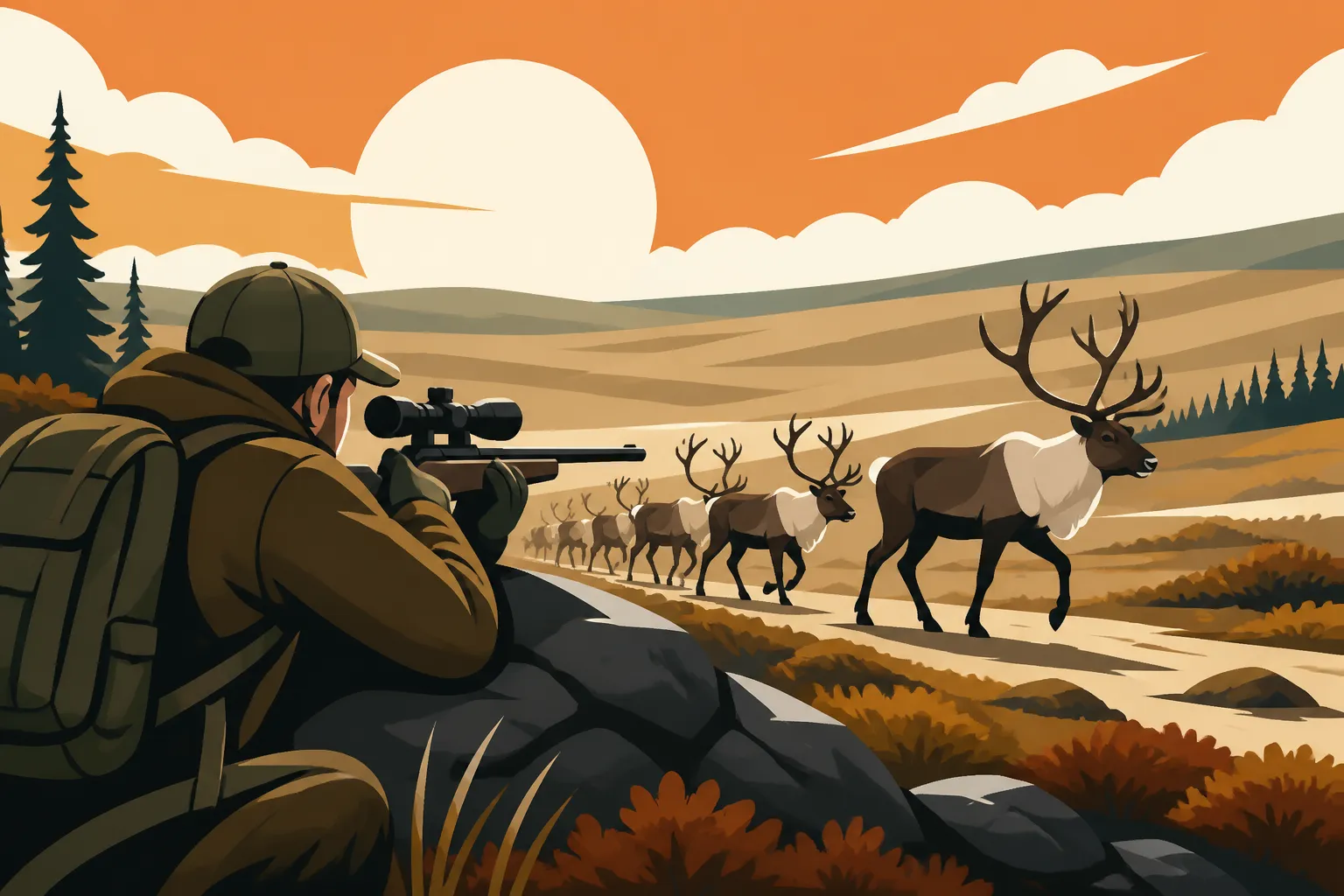
The primary strategy for hunting migratory caribou is often still-hunting or intercepting. This means positioning yourself along what you believe to be a migration corridor and waiting, or slowly moving to intercept a moving herd. Unlike treestand hunting for whitetails, there are rarely definitive "trails" on the open tundra, but caribou will often follow natural contours, frozen lake edges, or the transition lines between different types of terrain. Identifying these potential travel routes from your mapping or aerial scouting is critical.
When a herd is spotted, the challenge becomes anticipating their direction and speed, and then orchestrating an approach. Caribou, particularly those in large migratory herds, can be surprisingly tolerant of distant human presence, but they are incredibly sensitive to unusual movement or scent. A common strategy is to get ahead of the herd, using terrain features (even small rises, snowdrifts, or sparse willows) for cover, and let them come to you. This is where patience is key – rushing an approach on the open tundra will almost always lead to failure.
Approaching Wary Caribou in Wide-Open Spaces
The open nature of the caribou's habitat means approaches need to be executed with extreme caution and often over long distances. Stalking is usually a crawl-and-wait game. Use any available cover, no matter how small, and move slowly when their heads are down, feeding, or when they are out of sight behind a rise. The wind is your absolute best friend or worst enemy; always approach with the wind in your face or quartering. Caribou have an excellent sense of smell, and the open environment can carry human scent for surprising distances.
If the caribou are bedded, study their position carefully. Identify escape routes and the path of least resistance for your stalk. Often, you might need to make a long, circuitous route to get into position, sometimes covering miles to approach from an advantageous direction. The sheer scale of the landscape can be deceptive; what looks like a short walk can be a kilometer or more. Be prepared for multiple failed stalks, as a slight shift in wind or an unexpected rise of an animal can bust your efforts. This type of hunting is a true test of physical endurance and mental fortitude, as detailed in our comprehensive guide to Barren-Ground Caribou Hunting in Northern Manitoba and strategies for Glassing Tundra for Manitoba Caribou.
Choosing the Right Gear for Extreme Conditions
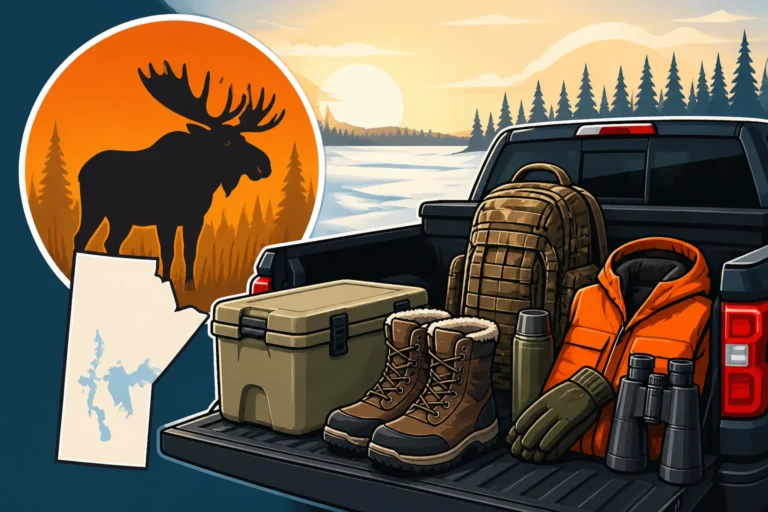
Hunting caribou on migration routes means venturing into some of the most unforgiving environments on the continent. Your gear choices are not just about comfort; they are about survival. Layering is non-negotiable. Start with a moisture-wicking base layer, add insulating mid-layers (fleece, down, or synthetic), and top it with a windproof and waterproof outer shell. Expect temperatures to be consistently well below freezing, often with significant wind chill. Good quality boots rated for extreme cold are essential for Hunting Safely in Deep Winter Cold. Consider pac boots or insulated mukluks to keep your feet warm during long periods of sitting or slow movement. Mittens are often warmer than gloves, with thin glove liners for dexterity when shooting. A heavy-duty backpack capable of carrying extra layers, food, water, and emergency supplies is a must. A sleeping bag rated for -40°C or colder is not overkill if you are planning to spike camp. Don't forget a quality rifle chambered in a cartridge suitable for caribou (e.g., .270, .30-06, .300 Win Mag) and optics that can perform in low light and extreme cold.
Trophy Care and Logistics in Remote Country
Harvesting a caribou on a migration hunt is a monumental achievement, but the work is far from over once the animal is down. The remoteness and harsh conditions pose significant challenges for field dressing, meat care, and ultimately, transporting your trophy and meat out.
Field Dressing in Sub-Zero Temperatures
Field dressing a caribou in sub-zero temperatures presents unique challenges. On one hand, the cold can be your ally, helping to cool the meat quickly. On the other, working with frozen fingers and dealing with internal organs that might be partially frozen can be difficult. It's crucial to have sharp knives, a game bag, and a strategy. The goal is to get the hide off the meat and the meat cooled as quickly as possible. Many hunters choose to quarter the animal immediately to facilitate cooling and transport. Be mindful of evidence of sex requirements; typically, a portion of the hide with the sex organs must remain attached to one of the quarters. For those brave enough to stay out in the elements, understanding proper Meat Care in Manitoba's Cold Snaps is absolutely vital to preserve the quality of your hard-earned harvest.
Preserving Meat Quality in the Arctic Environment
Once quartered, the meat needs to be protected. Game bags are essential to keep dirt, snow, and insects (if any are still present) off the meat. Hang the quarters if possible, off the ground, to allow for air circulation and further cooling. In very cold conditions, the meat can freeze solid, which is excellent for preservation but makes it challenging for any further processing until thawed. If you have an outfitter, they will typically have a dedicated meat cache or cold storage facility. If you are on a self-guided trip, consider portable meat shelters or insulated tarps to shield the meat from direct sun (even weak winter sun can cause surface thawing) and scavengers. The sheer size of a barren-ground bull caribou, weighing in at What a Barren-Ground Bull Weighs can be substantial, meaning you'll have a lot of meat to handle and preserve properly.
Transporting Game Out of Remote Areas
This is often the most logistical hurdle for a migration caribou hunt. If you're hunting with an outfitter, they will have a plan for getting your animal back to camp, often using snow machines, Argos, or even small aircraft if conditions allow. For independent hunters, this means planning for your own extraction. This could involve returning to a snowmobile, a side-by-side, or even a pre-arranged float plane pick-up.
When Packing Caribou Out to a Float Plane or any other transport, remember that weight limits are strict. Caribou meat and antlers are heavy. You might need to make multiple trips or prioritize the meat, leaving antlers for a later pick-up if feasible. Antlers can be cumbersome, and you may need to saw off skull plates to make them more manageable for transport. Discuss these logistics with your guide or pilot beforehand to avoid any surprises. Also, don't forget to account for any additional hunting opportunities, such as Adding a Wolf to a Caribou Hunt, which would add to your total load out weight.
Essential Gear for a Manitoba Caribou Migration Hunt
Packing for a northern caribou hunt requires careful consideration. Every item needs to be functional, durable, and reliable in extreme conditions. Here's a table summarizing some key gear categories and specific recommendations:
| Category | Essential Items | Specific Considerations |
|---|---|---|
| Clothing | Layered System | Base layers (merino wool, synthetic), Mid-layers (fleece, down/synthetic insulation), Outer shell (waterproof, windproof) |
| Extreme Cold Boots | Pac boots or insulated boots rated to -40°C or colder, with room for thick socks | |
| Headwear & Handwear | Insulated toque, balaclava, heavy mittens with glove liners | |
| Optics | Binoculars | 10×42 or 12×50 for scanning vast distances |
| Spotting Scope | High-quality 20-60x zoom with a stable tripod for long-range glassing | |
| Navigation | GPS Unit & Satellite Messenger | Redundancy is key; dedicated GPS (e.g., Garmin inReach) for tracking and emergency communication |
| Maps & Compass | Waterproof topographic maps of your hunting area, traditional compass as a backup | |
| Hunting Gear | Rifle & Ammunition | Reliable rifle chambered for caribou (e.g., .270, .30-06, .300WM), enough rounds for practice and hunting |
| Sharp Knives & Game Bags | At least two sharp knives, sharpening stone, multiple heavy-duty game bags (e.g., Alaska Game Bags) | |
| Backpack | Large capacity (60-80L) capable of carrying gear, food, and packing out meat | |
| Shelter & Camp | Tent / Bivy / Outfitter Camp | Appropriate shelter for conditions; if self-guided, a reliable winter tent rated for high winds and snow |
| Sleeping System | Sleeping bag rated for extreme cold (-40°C or colder), insulated sleeping pad | |
| Stove & Fuel | Reliable compact stove (liquid fuel often better in extreme cold), sufficient fuel for cooking and melting snow | |
| Safety & Misc. | First-Aid Kit | Comprehensive kit with personal medications |
| Fire Starting Kit | Multiple methods (lighter, waterproof matches, fire steel) | |
| Headlamp & Extra Batteries | High-lumen headlamp, plenty of spare batteries (lithium batteries perform better in cold) | |
| Emergency Repair Kit | Duct tape, zip ties, small multi-tool for field repairs | |
| Sunscreen & Lip Balm | Protection from sun and wind, even in winter |
Disclaimer
The information provided in this guide is for general informational purposes only and does not constitute legal advice. Hunting regulations, season dates, and licensing requirements in Manitoba are subject to change. Always consult the most current Manitoba hunting regulations guide and official government resources before planning any hunt. Safety should be your utmost priority when hunting, especially in remote northern environments.