Scouting Fields for Manitoba Waterfowl
There’s nothing quite as deflating as spending hours huddled in a freezing blind, decoys meticulously set, only for the sky to remain stubbornly empty. We've all been there, questioning our choices, wondering if we picked the wrong field or if the birds just decided to take a day off. The truth is, successful waterfowl hunting in Manitoba isn't just about calling and shooting; it's profoundly about knowing where the birds want to be, and that starts long before sunrise. This guide is dedicated to equipping you with the strategies and insights needed to effectively scout fields for Manitoba waterfowl, turning those frustrating blank days into memorable hunts.
Understanding Waterfowl Movements and Habits
Before you can effectively scout, you need to think like a duck or a goose. These birds aren't just randomly flying around; their movements are dictated by fundamental needs: food, water, and safety. Manitoba, sitting squarely in the Central Flyway, sees incredible numbers of migratory birds, from numerous species of ducks to vast flocks of Canada geese, snow geese, and even sandhill cranes. But even with millions of birds, finding the right field at the right time is paramount.
The Daily Grind: Feeding, Loafing, and Roosting
Waterfowl operate on a fairly predictable daily cycle, especially during migration and in their staging areas like Manitoba. Understanding this cycle is your first step to effective scouting.
- Roosting Areas: These are typically large bodies of water – lakes, major rivers, large marshes, or even vast flooded fields – where birds feel safe to spend the night. They gather in immense numbers, protected from predators, and rest until morning. These spots are usually off-limits for hunting, and disturbing them can push birds out of an area entirely, which isn't good for anyone. Your goal isn't to hunt the roost but to know where it is, as it's the launchpad for their morning feeding flights.
- Feeding Fields: This is where the magic happens for hunters. After leaving the roost at first light, birds will fly directly to their chosen feeding grounds. These are almost always agricultural fields, rich with leftover grains from the harvest. Think barley, wheat, pea, lentil, or corn stubble. They’ll spend a few hours gorging themselves, replenishing energy for their long journeys.
- Loafing Areas: After a hearty breakfast, birds often move to smaller, more secluded water bodies – potholes, sloughs, or smaller dugouts – to digest their meal, preen, and simply relax for a few hours before their afternoon feed. Sometimes they'll just sit in the middle of a large, secure field. While you can hunt these areas, feeding fields are usually the prime target for sheer volume.
- Afternoon Feed: As the afternoon progresses, many birds will venture out for a second feeding session, similar to their morning routine, before returning to the roost for the night. This is why afternoon and evening hunts can be just as productive, sometimes even more so, as the birds often return to the same fields they hit in the morning.
Knowing this pattern helps you narrow down your search. If you're scouting in the middle of the day and not seeing many birds, it doesn't necessarily mean the area is barren; they might just be loafing. Instead, focus on those early morning and late afternoon flights.
How Weather and Crop Cycles Influence Bird Behavior
Manitoba's weather, and the agricultural calendar, are huge factors in waterfowl movement. A dry fall might mean fewer flooded fields for ducks, concentrating them on specific water sources. An early cold snap can push birds south much faster, or a late warm spell can hold them longer than expected.
- Crop Rotation: What was a hot pea field last year might be wheat this year, and the birds might prefer a different crop. Farmers rotate crops, and smart scouts keep up. Leftover peas, lentils, or barley are often prime targets for ducks and geese alike, offering easy calories. For ducks, especially, a harvested grain field with some standing water after a rain can be an absolute magnet.
- Rain and Snow: Heavy rains can create temporary sheet water in fields, offering ducks new, smaller feeding or loafing spots. An early snowfall can cover up accessible grain, forcing birds to move to areas where crops are still exposed or more readily available, like taller standing corn or sunflower fields. When you're scouting for Field Hunting Geese in Manitoba Stubble, always consider what the most recent precipitation has done.
This constant dance between biology, agriculture, and weather means scouting is rarely a one-and-done affair; it's an ongoing process of observation and adaptation.
Essential Tools and Techniques for Effective Scouting
Gone are the days when scouting was purely a "drive-around-and-hope" endeavor. Modern technology, combined with traditional fieldcraft, offers an incredibly powerful toolkit for waterfowl hunters. Leveraging these resources will drastically improve your efficiency and success rates.
Satellite Imagery and Digital Mapping Apps
This is, without a doubt, one of the most transformative tools in a modern hunter's arsenal. Applications like GoHunt, OnX Hunt, or even Google Maps with satellite view, allow you to "scout" from your couch, identifying potential hot spots before you ever burn a drop of gas.
- Pre-Season Reconnaissance: Use satellite imagery to identify major water bodies (potential roosts), large blocks of agricultural land, and potential access points. Look for visible crop changes from year to year; historical images can sometimes show past crop types or popular feeding patterns. You can often tell the difference between harvested fields, standing crops, and pastureland. This digital reconnaissance is especially useful for Scouting With Satellite Imagery in Manitoba.
- Identifying Crop Types: While satellite imagery isn't perfect for identifying exact crop types, you can often infer. Broad, flat, open fields are usually cereal grains. Fields with tell-tale circular irrigation patterns might hold different crops. Look for the distinctive texture of harvested stubble or the tall stalks of standing corn.
- Pinpointing Access and Obstacles: Crucially, these apps help you see property lines, identify Crown land, and mark potential access roads or trails. This helps you avoid accidental trespass and plan your approach to a field. Imagine finding the perfect field, only to discover it's landlocked or surrounded by dense bush with no legal access. GoHunt’s detailed property layers are invaluable for avoiding such surprises and respecting landowner boundaries.
- Tracking Bird Sign: Once you're in the field, use the app to mark where you saw birds flying, where they landed, or where you found droppings. This helps build a "bird diary" for an area, revealing consistent patterns.
Optics: Binoculars and Spotting Scopes
While digital tools are great for broad strokes, nothing replaces good old-fashioned glass for confirming details and observing actual bird behavior from a distance.
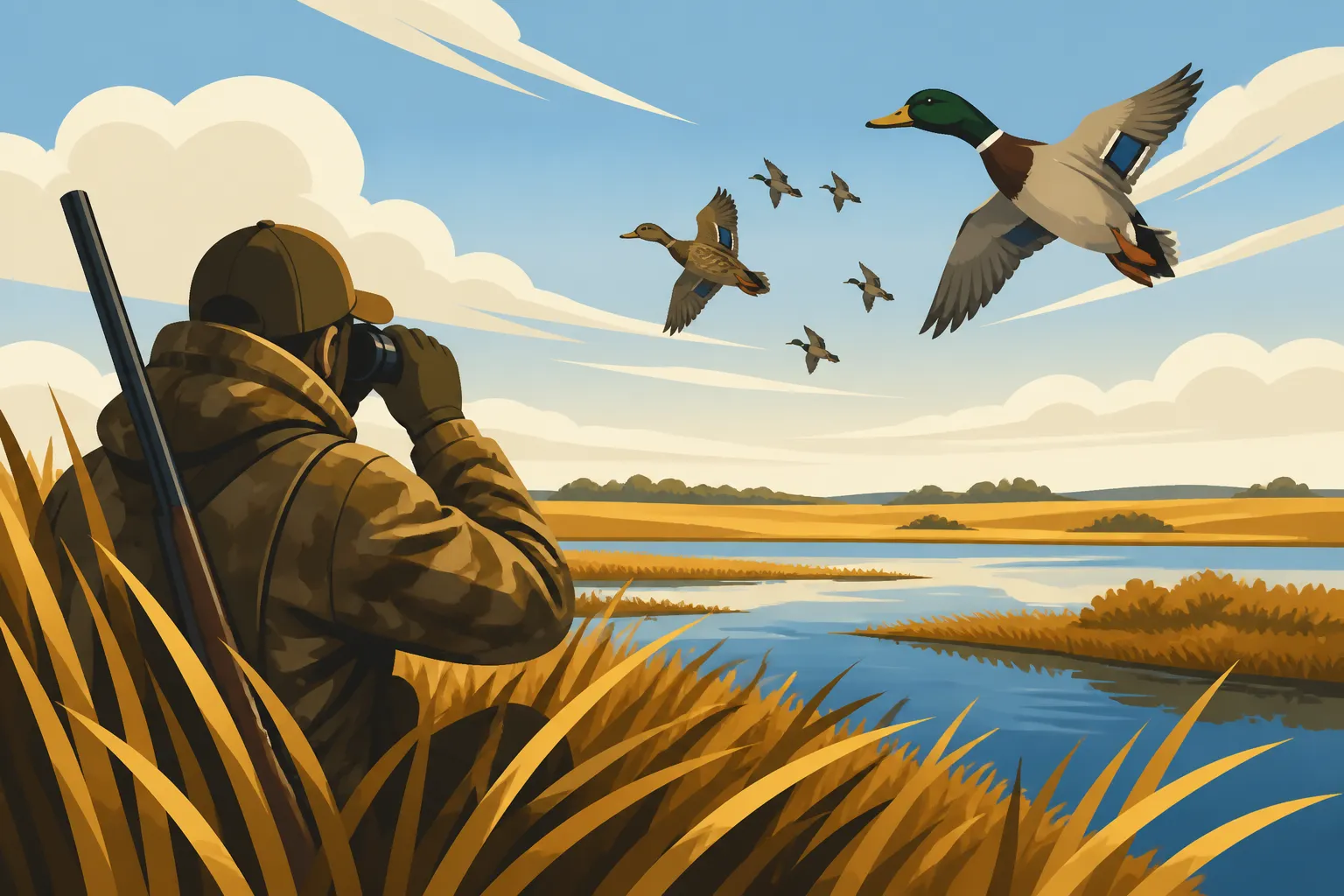
- Binoculars (10×42 or 12×50): These are your workhorse. Keep them handy in your vehicle. Use them to scan fields from a distance, looking for speckles that resolve into feeding ducks or geese. They're essential for identifying species, estimating flock sizes, and watching flight paths without spooking the birds. Always be subtle; pulling out huge binos and staring directly at a field from the road is a dead giveaway you're scouting.
- Spotting Scopes (20-60x or higher): For serious long-range observation, especially if birds are feeding far off a main road or you need to judge specific species in a mixed flock, a spotting scope is a game-changer. You can set it up on a tripod and watch birds for extended periods, noting their exact entry and exit points from a field, their preferred feeding zones, and if they're feeding on specific leftovers. This detailed observation is critical when planning a Setting a Goose Spread in Swathed Barley or Hunting Snow Geese Over a Big Spread.
Physical Reconnaissance: Boots on the Ground (or in the Truck)
No amount of technology can replace actual time spent observing in the field. This is where you connect the digital dots with real-world conditions.
- The Drive-By: Early morning or late afternoon drives are essential. As birds leave their roosts or head out for an evening feed, they become highly visible. Drive quiet backroads, away from major highways. Look for large groups of birds flying low, following natural contours like tree lines or river valleys. When you spot them, watch where they commit to land.
- Discreet Observation: Once you've identified a field with birds, find a safe, legal, and inconspicuous place to pull over. Park a good distance away, preferably out of sight or where your vehicle blends in. Use your optics. Watch for at least 15-30 minutes, or even longer. How many birds are there? What species? Where in the field are they? What direction did they come from, and where do they go when they leave? Are they undisturbed?
- Post-Harvest Inspection: If you can, and always with landowner permission, walk into a harvested field that looks promising. Check for waste grain. Feel the soil. Is it muddy, or firm? Ducks often prefer wetter conditions, while geese prefer drier ground. Look for droppings, feathers, and tracks. These are undeniable signs that birds have been feeding there.
| Scouting Tool | Best Use Case | Key Advantage | Considerations |
|---|---|---|---|
| GoHunt/OnX Hunt | Digital map recon, property lines, access planning | Time-efficient, pre-trip planning, reduces trespass risk | Requires subscription, internet access for full features |
| Binoculars | General field scanning, close-range bird identification | Portable, quick target acquisition, confirms bird presence | Limited magnification for distant birds |
| Spotting Scope | Long-range detailed observation, flight path tracking | High magnification, precise bird identification, minimal disturbance | Less portable, requires tripod, slower setup |
| Vehicle Drive-By | Covering large areas, observing active flights | Covers ground quickly, allows for real-time observation of bird movement | Can spook birds if not done discreetly |
| Foot Reconnaissance | Confirming food sources, finding droppings, assessing terrain | Unrivaled detail, confirms ground conditions, finds subtle sign | Requires landowner permission, time-consuming |
Remember, the goal is to gather as much information as possible without disturbing the birds. The more you interfere with their routine, the more likely they are to abandon a field.
Reading the Landscape and Bird Behavior
Scouting is more than just spotting birds; it's about interpreting what you see and understanding the nuances of the landscape. Manitoba's varied terrain, from the vast prairies to the aspen parkland, offers different challenges and opportunities for waterfowl hunters.
Identifying Prime Food Sources
Waterfowl are largely creatures of habit, and their habits are rooted in sustenance. They go where the food is plentiful and easily accessible.
- Grain Stubble Fields: This is the bread and butter for most goose hunters and many duck hunters. After combines have gone through, there's always waste grain left behind. Barley, wheat, and pea stubble are particular magnets. A field that has been recently harvested, especially if it was a good crop, will be loaded with calories. Hunting a Swathed Grain Field at Dusk or finding a good Hunting a Standing Canola Field Edge can be highly productive. Look for fields with visible waste grain or areas where the stubble appears "cleaned up" by feeding birds.
- Corn and Sunflower Fields: These taller crops can hold birds even after harvest, as kernels or seeds often drop to the ground or remain on the stalks. Geese, in particular, love corn. Standing corn offers excellent cover for birds, making them harder to spot but also providing a reliable food source when other fields are picked clean or covered by snow.
- Lentil and Pea Fields: These are gold mines. The small, protein-rich legumes are incredibly attractive to both ducks and geese. Fields that have been harvested often leave a significant amount of waste, providing easy pickings for hungry birds.
- Wet Fields and Potholes: For ducks, water is as important as grain. A harvested field that has some standing water—whether from rain, an overflowing slough, or a low-lying area—becomes incredibly attractive. These "sheet water" fields can concentrate ducks when larger wetlands are frozen or have less food.
When you're driving around, pay attention to what's been harvested and what crops are in the ground. If you see a lot of activity in a particular type of field, note it. Birds will often show preference for certain crops depending on the time of year and their nutritional needs.
Recognizing Flight Paths and Resting Areas
Beyond food, birds need safe passage and secure places to rest. Their flight patterns can tell you a lot about their routines.
- Flyways and Funnels: Birds often follow natural corridors – river valleys, treelines, shelterbelts, or even subtle changes in elevation – to move from roosts to feeding grounds. These act as funnels, concentrating bird traffic. Identifying these natural flyways can help you choose a setup location even if the birds aren't currently in the field. If you are Hunting a Bluff Between Two Fields or Hunting a Willow Run for Whitetails (though this article is about waterfowl, the principle of landscape features acting as travel corridors applies), apply that same thinking to where waterfowl might be flying.
- Landing and Take-Off Zones: Watch where birds enter and exit a field. They rarely land smack in the middle unless it's a huge flock. More often, they'll come in over a specific tree line, a low spot in a fence, or along a slight rise. They'll also typically take off into the wind. Knowing these preferred points of entry and exit is crucial for decoy placement and blind setup.
- Loafing Zones within Fields: Sometimes, birds won't just feed. They'll land, feed for a bit, then move to a slightly elevated, dry spot in the same field to rest before resuming feeding. These loafing zones are often where the largest groups gather, offering excellent opportunities if you can approach without spooking them.
Observing these patterns isn't just about finding birds today; it's about predicting their movements tomorrow.
The Impact of Weather on Bird Activity
Manitoba's weather can shift dramatically, and waterfowl react immediately to these changes. Being aware of the forecast and recent conditions is as important as knowing the local crops.
- Wind: Wind is a waterfowl hunter's best friend and worst enemy. Birds almost always land and take off into the wind. This knowledge is critical for decoy spread orientation and blind placement. A strong north wind often signals new birds arriving from farther north. Light winds can make birds harder to decoy, as they have more control.
- Temperature and Pressure Systems: A major cold front or a sudden drop in temperature can trigger massive migrations, bringing in fresh waves of birds. Conversely, a prolonged period of warm, stable weather might spread birds out, making them harder to find. High-pressure systems often lead to clear skies and stable flight patterns, while low-pressure systems and storms can keep birds grounded or force them to feed more aggressively before the weather hits. For instance, when
Manitoba's Duck Season Datesare in full swing and a big cold front hits, you might see a huge influx of new ducks. - Fog and Rain: Fog can make for incredibly exciting, close-range hunting, as birds drop out of the sky seemingly from nowhere. Heavy rain, especially drizzle, can also keep birds feeding longer and lower, as they struggle to see predators. However, torrential rain can ground them entirely.
Always check the forecast for wind direction, temperature changes, and precipitation. This information will not only guide your scouting efforts but also dictate your hunting strategy for the day.
Timing Your Scouting Efforts for Maximum Impact
Scouting isn't a one-time event; it's an ongoing process that requires dedication and flexibility throughout the hunting season. Knowing when to scout, and how often, can make all the difference between a successful hunt and a bust.
Pre-Season Groundwork: Setting the Stage
Long before opening day, you can start laying the groundwork for a successful waterfowl season. This early effort can save you a lot of frantic last-minute driving.
- Year-Round Observation: If you live in or near a good waterfowl area, pay attention to crop rotations throughout the summer. Note which fields are planted with grains preferred by waterfowl. Observe water levels in sloughs and potholes. This baseline knowledge is invaluable.
- Early Fall Drives: As soon as harvests begin in late August and early September, start your casual drives. Geese, especially Canada geese, will already be hitting stubble fields. Ducks will be transitioning from marshes to agricultural fields. These early observations can clue you into migration patterns and preferred feeding areas for the season. For Manitoba Duck Season Dates and Goose Season Dates by Zone, checking fields a week or two before the opener gives you a massive head start.
- Building Landowner Relationships: This is a huge, often overlooked, part of pre-season scouting. Many of the best fields are on private land. Start Knocking on Doors in Manitoba Farm Country well before the season. A friendly face and a polite request go a long way. Building trust means asking permission even if you only plan to scout, and then checking in before you hunt. A landowner might even tell you where the birds have been hitting recently, saving you hours of scouting. Remember, Manitoba Trespass Law for Hunters means you absolutely need permission to access private land.
Daily and In-Season Adjustments
Waterfowl are constantly on the move, especially during the peak migration periods. What was a hot field yesterday might be completely empty today.
- Morning vs. Evening Scouting: The golden hours are key. Birds are most active during the first few hours after sunrise and the last few hours before sunset. This is when they fly from roost to feed and vice-versa, making them easiest to spot and track.
- The Day Before the Hunt: Ideally, you want to scout the day before your hunt, or at the very least, early on the morning of your hunt. This gives you the most current information on where birds are feeding. If you're planning a weekend hunt, try to scout Friday evening.
- Scouting for a Specific Species: Are you targeting Hunting Manitoba's Sandhill Cranes? Or Hunting Ducks on a Manitoba Stubble Field? Their preferred fields and habits can differ. Cranes often hit pea fields, while mallards might prefer a wet barley stubble. Tailor your scouting to the species you're after.
- Adapting to Pressure: If an area gets heavily hunted, birds will quickly become wary and change their patterns. They might shift to less-pressured fields, change their flight times, or move to different roosts. Constant scouting helps you identify these shifts. Even if you're with a
Manitoba Waterfowl Outfitter, their success is often based on their dedicated, daily scouting efforts.
Ethical Considerations While Scouting
Scouting is not hunting. The goal is to observe, not to interfere.
- Minimize Disturbance: Avoid driving directly into fields with birds, walking through active feeding areas, or shining lights on roosts. Any action that spooks birds can make them abandon a field, ruining it for you and potentially other hunters. Park discreetly, use your optics, and keep a low profile.
- Respect Private Property: Always, always, always get permission before entering private land, even just to look for tracks or droppings. Getting Permission for a Goose Field is not just a courtesy, it's a legal requirement and essential for maintaining positive landowner-hunter relations. The future of hunting depends on it.
- Share Information Wisely: If you're hunting with a group, share your scouting information freely. However, be mindful about broadcasting hot spots to the entire world. Over-pressuring a field can quickly ruin it for everyone.
Scouting is an art as much as a science. It combines patience, keen observation, modern tools, and a deep respect for the birds and the land. By committing to thorough, ethical scouting, you're not just finding birds; you're truly connecting with the landscape and becoming a more skilled, responsible hunter. The satisfaction of a successful hunt, knowing you put in the legwork to find those birds, is truly unmatched.
Disclaimer
The information provided in this article is for general guidance and informational purposes only. Hunting regulations, seasons, and access rules in Manitoba can change. Always consult the most current Manitoba Hunting Guide, relevant provincial and federal regulations, and local authorities before planning any hunting activity. Ensure you have all necessary licences and permits, and always prioritize safety and ethical hunting practices.