Hunting Snow Geese Over a Big Spread
Hunting snow geese can be one of the most exhilarating, yet frustrating, pursuits in Manitoba. These birds are legendary for their keen eyesight and uncanny ability to spot a hunter's blind or a less-than-perfect decoy spread from hundreds of feet up. Many hunters spend countless hours setting up what they think is a decent spread, only to watch flock after flock flare off at the last second. This guide dives deep into the art and science of hunting snow geese effectively by deploying a truly massive spread, offering proven strategies to consistently bring these wary birds into range.
Understanding the Snow Goose Phenomenon in Manitoba
Manitoba sits squarely in the Central Flyway, making it a critical staging ground for millions of migratory waterfowl, including vast numbers of snow geese. These birds offer unique challenges and opportunities that differ significantly from hunting other waterfowl species. They travel in enormous flocks, often numbering in the thousands, which makes them incredibly wary and dictates a specific approach to hunting them successfully.
Why Snow Geese Require a Different Approach
Unlike Canada geese or ducks, which often respond well to smaller, more realistic spreads, snow geese demand an overwhelming visual stimulus. Their sheer numbers create a 'safety in numbers' mentality, making them suspicious of anything that doesn't look like a massive congregation of their own kind. A small spread of a dozen or two decoys just won't cut it; it looks unnatural to a flock of hundreds or thousands. They'll simply keep flying, barely giving your setup a second glance. It's not about realism in the individual decoy as much as it is about the scale and illusion of a giant, bustling feeding party.
Manitoba's vast agricultural fields, particularly the grain fields, provide critical sustenance during their migration. The birds quickly learn prime feeding locations and will travel significant distances between roosts and feeding grounds. This predictable pattern, coupled with their sheer numbers, means that when you do find them, you're often finding a lot of them. This abundance is both a blessing and a curse; it means more opportunities, but also that their collective intelligence and wariness are amplified. Successfully hunting Manitoba's Snow Goose Migration requires understanding these dynamics.
The Migration Patterns and Key Regions
Snow geese typically begin their southbound migration through Manitoba in late September and October, peaking around mid-October, though significant numbers can linger into November, especially with a mild fall. Their preferred staging areas in Manitoba are often around large bodies of water like Lake Winnipeg, Lake Manitoba, and the multitude of smaller lakes and wetlands in the Interlake region. From these roosting sites, they fan out into the surrounding agricultural lands to feed on leftover grain.
The key is to understand that these birds are constantly on the move, responding to weather changes and food availability. One day they might be concentrated in the southern Interlake, and the next, a cold front could push a new wave of birds into the Southwestern farmland regions. Effective scouting is paramount. Tools like GoHunt can be invaluable for pinpointing large concentrations of birds in specific areas, allowing you to focus your efforts where the action is hottest. When you're looking to capitalize on numbers and migratory patterns, checking the current Goose Season Dates by Zone is always the first step.
Crafting the Ultimate Big Spread
Building a big spread for snow geese is not just about quantity; it's about creating an illusion of safety, abundance, and natural movement that convinces thousands of high-flying birds to drop in. This requires careful planning, strategic decoy placement, and an understanding of how wind and sun affect the birds' approach.
Decoy Selection and Quantity
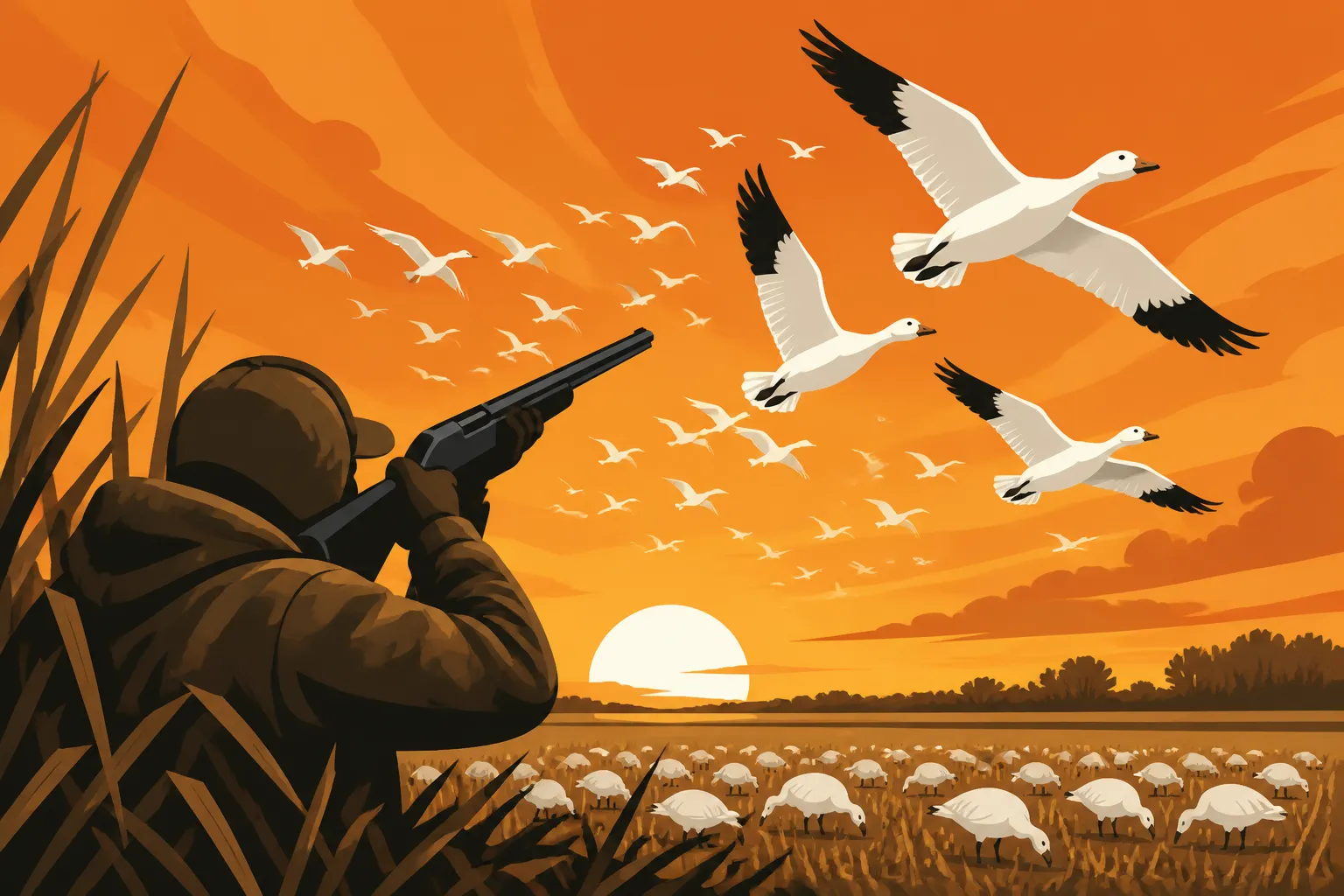
When we talk about a "big spread," we're not talking about fifty or a hundred decoys. We're talking about hundreds, if not thousands, of decoys. For a serious snow goose hunt, you should aim for a minimum of 500 decoys, with 1000-2000 being ideal if you have the resources and manpower. The more, the merrier, truly.
The most common and effective decoy types for snow geese are:
- Full-body decoys: While expensive and bulky, a few dozen full-bodies mixed into the kill hole or directly around the blind can add an incredibly realistic three-dimensional element, especially on calm days. They provide confidence to birds making their final approach.
- Socks (or windsock decoys): These are the workhorses of a big spread. They are lightweight, collapse for easy transport, and, most importantly, move incredibly realistically in the slightest breeze. Their movement is crucial for mimicking a feeding, active flock. You'll want hundreds of these.
- Silhouettes: Silhouettes are a good option for adding bulk and depth, particularly further out from the kill hole. They are flat but take up visual space and are easier to transport than full bodies.
- Fliers and Rotators: A few strategically placed fliers or rotators (motorized flapping wing decoys like a Motion Decoy or similar) can add a crucial element of motion and realism that catches the attention of high-flying birds. They simulate birds landing or taking off, which is a huge draw.
A good mix is key. Use full-bodies and a few fliers near your blind, then fill the vast majority of your spread with socks and silhouettes. This creates a cost-effective, yet highly effective, visual experience for the birds.
Strategic Layouts and the Kill Hole
The layout of your big spread is critical to funneling birds into shooting range. The general principle is to create a large, irregular "blob" of decoys that mimics a feeding flock, with a distinct "kill hole" or landing zone where you expect the birds to commit.
Consider these common layouts:
- The "J" or "U" Spread: This involves creating a large mass of decoys that forms a J or U shape, with the open end of the J or U downwind. The kill hole is positioned at the bend or within the open area of the shape. This funnels incoming birds right over your blinds as they try to land.
- The "Blob with a Hole": This is a more amorphous, natural-looking spread. Imagine a giant, irregular feeding flock. You simply leave a noticeable gap—your kill hole—in the downwind portion of the blob, where birds would naturally land to join the feeding frenzy.
- The "X" or Crosswind Spread: If the wind is inconsistent or swirling, a crosswind spread can sometimes work. It involves creating two arms of decoys extending out, with the kill hole in the middle. Birds can approach from multiple directions, but this is generally less effective than a downwind approach for snow geese.
Always place your kill hole directly downwind of your blind. Snow geese, like most waterfowl, prefer to land into the wind. By placing the hole downwind, they'll fly directly over your concealed position as they make their final approach. The size of the kill hole should be proportional to your spread, typically 20-40 yards across, wide enough for a flock to commit but close enough for good shooting.
Integrating Blinds and Concealment
Even the best spread is useless if the birds see you. Snow geese have incredibly sharp eyesight, making concealment paramount. Layout blinds are almost a necessity for hunting over big spreads in open fields.
- Layout Blinds: These low-profile blinds allow you to lie prone in the field, becoming virtually invisible when covered with natural vegetation from the field you're hunting (stubble, grass, etc.). Position your layout blinds within or very close to the kill hole, ensuring they blend seamlessly with the decoy spread and surrounding environment. For example, if you are Hunting a Swathed Grain Field at Dusk, using swathed grain to cover your blinds is ideal.
- Fabric Blinds/Panels: Some hunters use large fabric panels or camouflage netting to create a larger, low-profile blind that can accommodate more hunters. These need to be expertly brushed in with local flora to disappear against the field.
- The "White Out": In snowy conditions, wearing white camouflage can be incredibly effective, allowing you to sit upright among white sock decoys and literally become part of the spread. This is a specialized technique for hunting in deep winter cold.
No matter the blind type, ensure it's completely brushed in. Use local stubble, dirt, and even decoys around the edges to break up its outline. Test your concealment from various angles and distances, especially from a slightly elevated position, to simulate a bird's view. Even a small glint from a face or a piece of gear can cause a flock to flair.
| Decoy Type | Primary Use | Pros | Cons | Recommended Quantity (for 1000-decoy spread) |
|---|---|---|---|---|
| Socks/Windsocks | Bulk, motion, primary attraction | Lightweight, realistic motion, compact, affordable | Less realistic up close, can tangle in high wind | 800-900 |
| Silhouettes | Adding depth, filling gaps, visual mass | Lightweight, stackable, affordable | Two-dimensional, no motion without wind | 50-100 |
| Full-Bodies | Realism, confidence in kill hole | Highly realistic, durable | Heavy, bulky, expensive, limited motion | 20-50 |
| Fliers/Rotators | Eye-catching motion, landing/taking off illusion | Attracts attention from afar, dynamic | Battery dependent, can be costly, mechanical issues | 2-4 |
Advanced Field Tactics and Calling
Setting up the spread is only half the battle. Once you're concealed and ready, it's about executing the hunt with expert calling, awareness of bird behavior, and adaptability.
Mastering the Snow Goose Call
Snow goose calling is a high-energy, often chaotic affair that mimics the loud, incessant chatter of a huge feeding flock. Unlike the smooth, rhythmic calls for Canada geese, snow goose calling is about volume, variety, and realism.
- Volume and Aggression: You need to be loud! Snow geese flying high need to hear you over ambient wind and other natural sounds. Use short, sharp "KRRRs" and "KA-HONKS," often in rapid succession. Think of it as a constant, excited conversation.
- Variety is Key: Don't just make one sound. Incorporate high-pitched squawks from juvenile birds, deeper honks from adults, and constant clucking sounds that mimic feeding. Use multiple callers if possible, each focusing on different sounds and rhythms to create a chorus.
- Timing: Call loudly to get their attention when they are distant. As they get closer and show interest, you can tone down the volume slightly, but maintain the excited chatter. If they start to drift, crank up the volume and aggression again to pull them back. Watching a seasoned caller is the best way to learn, but practice, practice, practice is how you get good.
- Decoy Calling: Consider adding a specialized electronic caller, which is legal for snow geese in many jurisdictions (always check local regulations, including Snow Goose Limits and Late Seasons, as rules can vary). These callers can project incredibly realistic sounds at high volumes, crucial for attracting distant birds and providing a constant, convincing soundtrack for your spread. Place speakers strategically in the spread, away from your blinds, to draw the birds' attention to the decoys, not your hide.
Reading Bird Behavior and Adjusting on the Fly
Snow geese are highly intelligent and constantly assessing their environment. Learning to read their body language and flight patterns is crucial for knowing when to call, when to be quiet, and when to prepare to shoot.
- High Flyers: When birds are flying high and wide, they are likely still scouting. Call loudly and persistently to grab their attention. Watch for any change in flight path – a slight turn, a circle, or a drop in altitude indicates interest.
- Circling Birds: If they start to circle, they're considering your spread. Maintain calling, but watch for their wing beats. Slow, steady wing beats and extended feet mean they're getting ready to commit. Fast, erratic wing beats often mean they're nervous and might flair.
- The "Decoy Shy" Flairs: If flocks consistently flare off at the same spot, usually just outside shooting range, your blinds might be compromised, or the kill hole isn't convincing enough. If this happens, you might need to adjust your decoy spread slightly or improve blind concealment. Sometimes, they just need more space, or less pressure, which can be a tricky balance.
- Wind and Sun: Always consider wind direction for their approach and sun position for your visibility. Ideally, the sun should be at your back, blinding the birds as they approach and giving you a clear view. If the sun is in your eyes, it makes shooting incredibly difficult. Always try to set up with the wind coming over your shoulder and the sun in your face.
Safety Considerations in a Big Spread
Hunting with a large group over a big spread, especially with the chaotic nature of snow goose shooting, requires strict adherence to safety protocols.
- Shot Zones: Clearly define shooting lanes and zones for each hunter, especially when using layout blinds. All hunters should be aware of where others are and never shoot outside their designated safe zone.
- Calling the Shot: One experienced hunter should be designated to "call the shot," ensuring everyone is ready and only shooting at birds within safe and effective range. Communication is key to preventing accidents and maximizing success.
- Non-Toxic Shot: Remember, all waterfowl hunting in Manitoba requires the use of Non-Toxic Shot for Manitoba Waterfowl. Ensure everyone in your party is using the correct shot size and material for snow geese, which generally means larger steel shot (BB, 1, or 2) for their tougher bodies and fast flight.
- Retrieval: Have a plan for retrieving downed birds. In a large spread, it can be easy to lose track of where a bird falls. A good retriever dog can be invaluable, or clear communication among hunters. Always ensure your gun is unloaded and safe before leaving your blind to retrieve game.
Maximizing Your Success with Field Scouting
You can have the best decoys and the most expensive calls, but without birds, it's all for naught. That's why thorough scouting is arguably the most critical component of a successful snow goose hunt.
The Art of Pre-Hunt Scouting
Scouting for snow geese starts long before opening day. It involves understanding migration patterns, identifying key feeding areas, and, most importantly, locating active feeding flocks.
- Drive and Observe: Spend time driving rural roads in known snow goose zones. Look for large concentrations of birds in fields. Pay attention to the type of crop they are feeding on (stubble, pea fields, corn, etc.). Scouting Fields for Manitoba Waterfowl is a daily commitment.
- Roost to Feed Patterns: Identify their roosting areas (large lakes, marshes) and observe their flight lines in the morning and evening. This will help you narrow down the specific fields they are using. They often fly the same routes daily, especially if food sources are consistent.
- Permission is Paramount: Once you've identified a hot field, securing landowner permission is the next vital step. Many fields are private property. This often involves knocking on doors and asking for permission to hunt. You'll want to review the process for Getting Permission for a Goose Field. Be polite, offer to share meat, and always leave the field cleaner than you found it. Respect for landowners is paramount to maintaining hunting access.
- Satellite Imagery and Apps: Modern tools like GoHunt provide satellite imagery and landowner information that can greatly assist in pre-scouting. You can identify potential access points, field boundaries, and even gauge the amount of stubble or cover in a field before you even step foot in it. This can save valuable time and gas.
Adapting to Changing Conditions
Snow goose hunting is rarely static. What worked yesterday might not work today. Being adaptable is crucial.
- Weather Changes: Cold fronts, strong winds, or sudden temperature drops can dramatically alter bird behavior and migration patterns. Stay informed about the forecast and be prepared to move your entire operation if necessary. A change in wind direction, for example, necessitates a complete re-alignment of your spread and blinds to ensure birds approach into the wind.
- Field Rotation: Snow geese can deplete a feeding field surprisingly quickly, or simply move on to new fields if disturbed too often. If your chosen field isn't producing, don't be afraid to pull up stakes and move to a new location you've scouted. This could mean a few kilometers or even a significant drive to another region.
- Pressure Management: If a field is getting heavily pressured by other hunters, the birds will become even warier. Sometimes, finding a less-pressured field, even if it has fewer birds, can lead to better success rates simply because the birds are more relaxed.
- Decoy Adjustments: Sometimes, a subtle change in your spread can make all the difference. Add more motion, remove some decoys from the kill hole if birds are flaring, or even try a different shape if the "J" isn't working. Continuously observe how birds react and make small tweaks.
Hunting snow geese over a big spread in Manitoba is an investment in time, effort, and gear, but the reward of a huge flock committing to your carefully crafted setup is unmatched. It's a true test of a hunter's dedication and skill, bringing together elements of scouting, strategy, and sheer hard work.
Disclaimer
Hunting is a regulated activity. Always consult the current Manitoba Hunting Guide and provincial regulations before embarking on any hunt. Laws regarding licensing, season dates, bag limits, allowed equipment, and land access can change annually. Ensure you understand and comply with all federal and provincial hunting laws.