Hunting Ducks on a Manitoba Stubble Field
There's nothing quite like the rush of ducks banking overhead, committed to your spread, their wings cupped as they drop into a stubble field. But let's be honest, getting them to that point can be incredibly frustrating. You spend hours setting up, freeze in the blind, and still, those smart Manitoba birds often flare at the last minute, leaving you wondering what went wrong. This guide is all about taking the guesswork out of hunting ducks on a stubble field, diving deep into strategies, gear, and techniques to help you put more birds in the bag and truly enjoy the prairie hunting experience.
Understanding Stubble Field Duck Behavior
Hunting ducks on stubble fields isn't just about finding birds; it's about understanding why they're there and what makes them tick. These aren't pond birds, casually swimming around. These are high-flying, calorie-burning machines, focused on fuel for their migration. Without grasping their motivations, your efforts will often fall flat.
Why Ducks Use Stubble Fields
Ducks, particularly dabbling ducks like Mallards, Pintails, and Wigeon, are incredibly opportunistic feeders. After the combines have rolled through Manitoba's vast agricultural lands, leaving behind fields of wheat, barley, peas, canola, and corn, there's a treasure trove of waste grain just waiting to be eaten. This isn't just a snack for them; it's a critical energy source that helps them build up fat reserves for the long migration south and to sustain them through colder weather.
Think about it from a duck's perspective: a field of freshly harvested grain is a buffet. It's easy access to high-calorie food without having to dive or sift through mud. While they'll spend their nights roosting on larger bodies of water, like one of Manitoba's many prairie potholes or larger lakes, they'll often fly out to these fields first thing in the morning, sometimes again in the late afternoon, or even at midday if the weather is particularly inviting. The specific type of grain matters, too. Corn, for instance, offers not only a rich food source but also some residual cover from the standing stalks, making it especially attractive. Recognizing these patterns is the first step in successful stubble field duck hunting.
Identifying Key Feeding Patterns
Ducks aren't just randomly dropping into any stubble field. They are creatures of habit, and their feeding patterns are quite predictable once you know what to look for. This is where diligent scouting really pays off. When you're driving the backroads or using satellite imagery from a tool like GoHunt, you're not just looking for ducks; you're looking for evidence of their preferred dining areas.
The most tell-tale sign of a feeding hotspot is "duff" – the wet, dark, often muddy areas within the stubble where ducks have been actively feeding. You'll see their droppings, the disturbed stubble, and sometimes even down feathers. This tells you precisely where they've been landing and eating. Pay close attention to how they approach these areas. Are they flying over a specific treeline, following a creek bed, or coming in from a particular slough? These flight paths are invaluable for determining where to set up your spread and blinds. Ducks will use the same fields, and often the same distinct spots within those fields, day after day until the food supply is exhausted or they've been disturbed. Having multiple scouted fields is a massive advantage, as birds might shift locations due to hunting pressure, sudden weather changes, or simply because they've cleaned out a particular quarter section.
Reading the Weather and Its Impact
The weather isn't just a comfort factor for us; it's a huge driver for duck behavior on the stubble. Learning to "read" the weather and understand its influence is crucial for timing your hunts and setting up effectively.
Wind, above all else, is your best friend and your most significant challenge. Ducks almost universally land directly into the wind. This is an instinctual safety measure, giving them better control and lift for takeoff. This single fact dictates your entire spread layout and blind placement. You must position your landing zone into the prevailing wind for the birds to commit confidently. Cold fronts often trigger increased feeding activity. As temperatures drop, ducks need more calories to maintain their body heat and fuel their migration, making them more aggressive about hitting the fields. A steady, light rain can also be fantastic for stubble field hunting. It often keeps birds flying lower, helps to wash grain free from stubble, and makes them less wary than on bright, sunny days. However, heavy downpours can ground birds or push them to seek shelter, making hunting difficult. Fog can be a mixed bag; it sometimes keeps birds flying low and within range, but it can also make their movements unpredictable and, critically, reduce visibility, posing a significant safety concern.
Essential Gear and Setup for Stubble Field Hunts
Once you understand why ducks are using a field, the next step is perfecting how you'll entice them to your spot. This involves strategic use of decoys, mastering concealment, and effective calling. Many hunters overlook the nuances, thinking any old spread will do, but stubble field ducks are often educated and require a more sophisticated approach.
Decoy Spreads for Different Scenarios
When it comes to decoys for stubble field ducks, realism and movement are your absolute top priorities. While some may get away with shell decoys or silos, if you're serious about consistent success, full-body decoys are usually preferred, especially for wary, late-season birds. They offer a much more realistic profile and depth. Even better, integrate motion decoys like spinning-wing models or jerk strings. Nothing sells a spread like the illusion of active, feeding ducks on the ground.
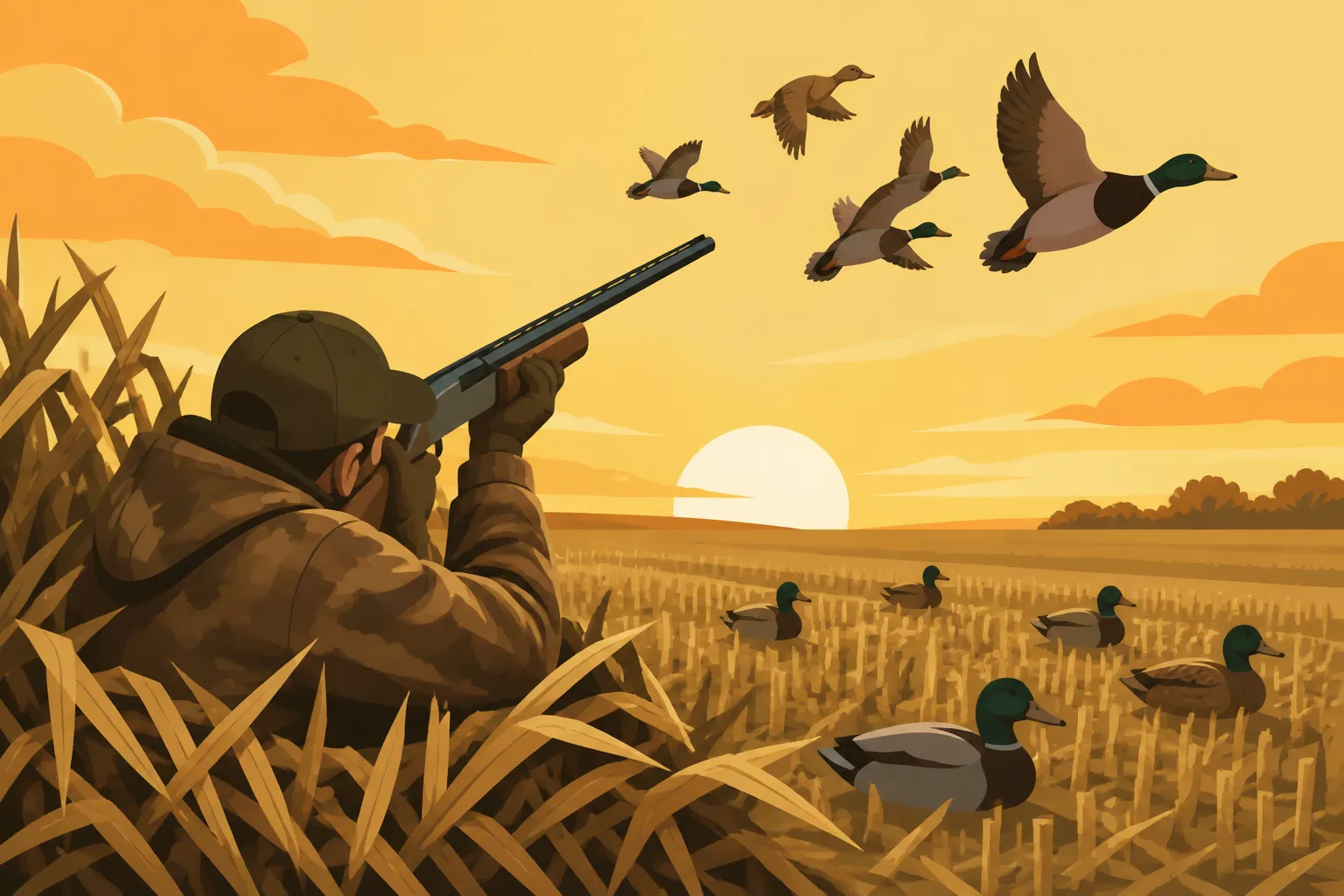
Classic spread patterns include the "U" or "J" shape, with the open end of the shape facing directly into the wind, acting as your designated landing zone. This open area should be clear of decoys and directly in front of your blind. Consider adding a few Canada goose decoys to your duck spread. Ducks often feel more confident landing among geese, seeing them as sentinels. This tactic can really make a difference, similar to how Setting a Goose Spread in Swathed Barley often involves creating a large, inviting landing pocket. For pressured birds, a smaller, tighter spread can sometimes be more effective than a massive one, suggesting caution rather than an overwhelming crowd. Experiment with different configurations based on bird behavior.
Concealment Strategies and Blinds
Ducks possess truly incredible eyesight, especially when looking down from hundreds of feet in the air. Any unnatural lump, shine, or contrasting color will instantly alert them, causing them to flare out of range. Therefore, mastering concealment is non-negotiable for stubble field hunting.
Layout blinds are the undisputed champion for this type of hunting. They keep you low to the ground, mimicking the natural contours of the field, and allow you to pop up quickly for a shot. However, simply buying a layout blind isn't enough; you must brush it in heavily. Use natural vegetation from the immediate field – stubble, weeds, dirt clods, and local grasses. Don't bring green branches into a brown stubble field, or vice-versa. The goal is to make your blind disappear entirely. Dress in camouflage patterns that match the stubble and earth tones. No shining faces – use face paint or a mask. No reflective gear whatsoever, not even a glint from a phone screen. Even the smallest oversight can send a flock sailing away, offering nothing but tailfeathers.
Calling Techniques and Tools
Calling ducks is an art form, not a science, and it takes practice, patience, and careful observation. The ultimate goal isn't to be the loudest or fanciest caller, but to sound like happy, contented ducks that are inviting others to join their meal.
A good Mallard call is the cornerstone for most stubble field duck hunting in Manitoba. Focus on mastering the basic quack, a contented feeding chuckle, and a comeback call. Less is often more, especially as birds get closer. A few soft, reassuring quacks can be far more effective than loud, frantic honking that might make wary birds suspicious. Watch the birds' reactions intently. If they respond and turn towards your spread, keep calling with confidence. If they seem to lose interest, try a different call sequence or increase the volume. If they suddenly veer off or gain altitude, stop calling immediately and go silent; you might be doing more harm than good. Don't overlook other calls, especially whistles. Pintail and Wigeon whistles can be incredibly effective, particularly on calm days when the louder Mallard calls might sound unnatural. Practice is key, and listening to real ducks is the best teacher.
Scouting and Execution Strategies
Successful stubble field duck hunting in Manitoba isn't about luck; it's about meticulous preparation and precise execution. Without a solid scouting plan and a well-thought-out setup, even the best gear and calling won't consistently put birds in your spread.
Pre-Season and Day-Of Scouting
Scouting is, without a doubt, the single most critical component of a successful stubble field duck hunt. You simply cannot expect to drive up to a random field on opening morning and have consistent success. Dedicated scouting begins days, sometimes weeks, before you even plan to hunt. Drive the rural roads, use good binoculars, and utilize tools like GoHunt or other satellite imagery services to identify promising areas from afar. This proactive approach helps you narrow down potential hot spots before you invest time on the ground, connecting well with the principles of Scouting Fields for Manitoba Waterfowl.
Observe everything: flight lines, feeding times (morning, midday, evening), species composition, and prevailing wind direction. Note which fields have specific crops, as ducks often have preferences. What might be a hot field today could be empty tomorrow due to hunting pressure or simply because the ducks have moved on to a fresh food source. Critically, perform day-of scouting. Before you commit to setting up, drive around at dawn to verify that birds are still using the field you identified. Have conditions changed? Has someone else set up there? Always ensure you have explicit permission from the landowner before stepping foot on private land. This isn't just a courtesy; it's a legal requirement in Manitoba, and understanding Getting Permission for a Goose Field (which applies to all waterfowl) is vital for respecting both the law and private property owners.
Setting Up for Success
Once you've scouted and secured your spot, the setup is all about precision and stealth. Arrive at your chosen field well before shooting light, ideally while it's still dark. This allows you to set up your blinds and decoys without spooking any early birds or revealing your position.
Start by placing your layout blinds. Position them along natural contours, a slight rise, or a dip in the field, making them as inconspicuous as possible. Then, heavily brush in your blinds using the stubble and weeds directly from the field. Remember, the goal is for your blind to disappear entirely. Next, deploy your decoys. Ensure your designated landing zone is clear, free of decoys, and oriented directly into the wind, facing your blind. Position yourself and your hunting partners to have clear shooting lanes downwind into the landing zone, and ensure you can see approaching birds from a distance. Before any birds are in the air, take a few minutes with your hunting partners to discuss shooting zones and safety protocols. Establish clear lines of fire and always know where your partners are positioned. Communication is paramount for both safety and success.
Shot Placement and Retriever Use
The moment of truth arrives when birds commit to your spread. This is where patience, good judgment, and ethical shot placement come into play. It's easy to get excited and shoot too soon, often resulting in missed birds or, worse, wounded birds that fly away.
Wait for the ducks to fully commit and be within effective shooting range. Resist the urge to "sky-bust" at birds that are still high and out of range. Ideally, let them drop their feet, hover over the decoys, and present a clean shot. Aim for the head and neck, or the front of the bird for a quick, clean kill. Always use appropriate Non-Toxic Shot for Manitoba Waterfowl as mandated by federal and provincial regulations; steel shot is the most common choice. A well-trained retrieving dog is an invaluable asset for stubble field hunting. Not only do they speed up the recovery of downed birds, but they are crucial for preventing lost birds, especially in thick stubble or difficult light conditions. An ethical hunter strives to recover every bird. If you don't have a retriever, mark the exact spot where a bird falls, and retrieve it immediately to avoid losing it.
Safety and Etiquette on the Field
Hunting in a stubble field, especially with multiple hunters, demands constant vigilance regarding safety and a deep respect for the land and its owners. Overlooking these critical elements can lead to dangerous situations or loss of access to valuable hunting grounds.
Hunter Safety in Field Environments
Safety must always be your absolute priority. Follow the cardinal rules of firearm safety: always treat every firearm as loaded, keep the muzzle pointed in a safe direction, keep your finger off the trigger until you're ready to shoot, and be absolutely sure of your target and what is beyond it. In a field environment, this means being acutely aware of your hunting partners. Never swing your gun barrel towards another hunter, especially when birds are coming in low.
Before the hunt begins, establish clear zones of fire with your group. This ensures everyone knows their safe shooting lanes and prevents accidental shots. It's a good practice to wear blaze orange when walking to and from your blinds, especially during big game seasons, removing it only when you're fully concealed in your blind. Be mindful of environmental factors like fatigue and cold; principles learned from Hunting Safely in Deep Winter Cold can be surprisingly relevant even in milder conditions, as exposure can dull your senses and judgment. Always communicate with your partners, especially regarding incoming birds, downed game, or any safety concerns.
Respecting Landowners and Property
This point cannot be stressed enough: Always, without exception, obtain explicit permission from the landowner before hunting on private land. This is not merely good etiquette; it is the law in Manitoba. Trespassing, even unintentionally, can lead to fines, loss of hunting privileges, and, most importantly, can damage the reputation of all hunters.
Once you have permission, treat the land with the utmost respect. Leave no trace of your presence. This means picking up all spent shotgun shells, any packaging, food wrappers, and especially any stray decoy lines or broken decoys. Be mindful of farming operations. Even after harvest, stubble fields are working farms. Drive only on established trails or field edges if permitted by the landowner, and avoid driving across open fields unless explicitly told it's okay. If you encounter other hunters on adjacent properties or even approaching your area, be courteous and communicate. Do not crowd another hunting party. Understand Manitoba's Manitoba Landowner Permission Law thoroughly to ensure you are always hunting legally and ethically. Maintaining good relationships with landowners is vital for preserving hunting opportunities for everyone.
Disclaimer
Please remember that hunting regulations, seasons, and licensing requirements can change. Always consult the most current Manitoba Hunter's Guide and provincial regulations before planning any hunt. This guide is for informational purposes only and does not substitute for official government regulations or professional instruction.