Hunting Snowshoe Hare in Manitoba’s Bush
When the crunch of fresh snow is the loudest sound in the forest and big game seasons have either wrapped up or your tags are already filled, it's easy to feel that familiar yearning for the bush. But don't hang up your hunting boots just yet! Manitoba's sprawling woodlands offer a fantastic, often overlooked opportunity for thrilling winter action: hunting snowshoe hare. These adaptable little creatures provide a challenging hunt, delicious table fare, and an invaluable chance to sharpen your woodsmanship skills even in the deepest cold. This guide will equip you with the knowledge and tactics to successfully pursue snowshoe hare throughout Manitoba's diverse bush country.
The Allure of Snowshoe Hare Hunting
Many hunters focus solely on big game, and while there's certainly an undeniable thrill to pursuing a trophy whitetail or a massive bull moose, the world of small game hunting offers its own unique rewards. Snowshoe hare, with their iconic seasonal coat changes and surprisingly elusive nature, present a fantastic opportunity to stay active, refine your outdoor skills, and bring home some tasty meat when other seasons are closed or drawing down. It's an accessible form of hunting that often requires less specialized gear than big game, making it perfect for new hunters or those looking for a different kind of challenge.
More Than Just a Meal
While snowshoe hare are absolutely delicious and make for excellent stews, roasts, or fried rabbit, the appeal of hunting them extends far beyond just filling the freezer. For many, it's about the pure joy of being in the winter woods, experiencing the quiet beauty of a snow-covered landscape. It’s a chance to immerse yourself in nature, pay close attention to details, and engage in a primal pursuit. The act of tracking, interpreting subtle signs in the snow, and patiently navigating dense cover helps hone your observation skills in a way that can translate to all types of hunting.
Moreover, hunting snowshoe hare is a fantastic way to introduce new hunters, especially youth, to the ethics and excitement of the sport without the high pressure or demanding physical requirements of a big game hunt. The action can be fast-paced at times, but the stakes are lower, allowing for more teaching moments and less stress. It’s an ideal way to practice marksmanship with a .22 rifle or small gauge shotgun, understanding shot placement and animal anatomy in a low-stakes environment. Plus, the sheer abundance of snowshoe hare in certain areas means that success is often within reach, boosting confidence and encouraging continued participation in hunting.
An Excellent Winter Pursuit
When the cold winds howl and the snow piles up, many hunting opportunities become scarce. However, this is precisely when snowshoe hare thrive, making them an ideal target for a winter adventure. Their populations tend to cycle, often peaking every ten years or so, leading to incredible densities in prime habitat. You'll often find that the areas where snowshoe hare are abundant are also stunningly beautiful, offering breathtaking winter scenery. This pursuit gets you outdoors during a time of year when many people are cooped up inside, combating cabin fever and embracing the raw beauty of a Manitoba winter.
Hunting snowshoe hare in Manitoba's deep winter cold also forces you to pay close attention to important aspects of survival and comfort. You quickly learn the importance of proper layering, protecting extremities, and staying hydrated in frigid temperatures. This self-reliance and preparedness are invaluable skills for any outdoorsperson. It’s a rewarding way to connect with the landscape and its inhabitants on a deeper level, understanding the rhythms of nature even in its dormant season. Many seasoned hunters will tell you that the lessons learned while patiently tracking a hare through a snowy tangle of willows are just as valuable as those learned while waiting for a deer. Plus, it gives you a perfect excuse to bundle up, grab your rifle or shotgun, and spend a peaceful day in the wilderness.
Finding Snowshoe Hare in Manitoba's Bush Country
Snowshoe hare are creatures of dense cover, and understanding their preferred habitat is key to finding them consistently. These animals rely on thick vegetation for protection from predators like coyotes, foxes, owls, and lynx, especially during the lean winter months. Once you know what kind of cover to look for, you'll start seeing potential hare hotspots everywhere you go in Manitoba's vast bush country.
Preferred Habitat and Cover
Snowshoe hare, true to their name, thrive in areas with abundant snowfall and dense undergrowth. Their large, fur-covered hind feet act like natural snowshoes, allowing them to navigate deep snow with relative ease compared to many other small mammals. This adaptation influences where they choose to live. Look for areas with young, regenerating forests – often a few years after a cut block, burn, or natural disturbance. These areas are typically choked with dense stands of spruce, fir, pine, willow, and especially thick aspen saplings and brush. The more interwoven and impenetrable the cover, the better.
Swampy areas, alder thickets, and the edges of larger coniferous forests also provide excellent habitat. They often prefer a mix of food sources, so areas adjacent to mature timber or open areas with browse are prime locations. Thickets bordering agricultural fields or clearings can also be incredibly productive. When you're out scouting a Manitoba Game Hunting Area (GHA), keep an eye out for these "tanglefoot" areas. A useful tool like GoHunt can help you identify areas of dense forest or regenerating clearings on topographical maps before you even step foot in the bush, saving you valuable time. Remember that areas with heavy pressure from other predators might see lower hare numbers, so seeking out slightly less accessible spots can sometimes yield better results.
Key Locations in Manitoba
Manitoba offers vast expanses of prime snowshoe hare habitat, particularly in the central and northern regions, and anywhere the boreal forest begins to transition or has been disturbed. Provincial forests and Crown Lands are excellent starting points for finding these small game animals. Consider areas within the Duck Mountain Provincial Forest or the Porcupine Provincial Forest, where logging activities create varied age classes of timber and plenty of dense regrowth. The Interlake region, with its mix of treed cover, swamps, and agricultural edges, also holds strong populations.
Further north, the sheer expanse of boreal forest guarantees ample habitat. Even the fringes of agricultural zones that back into dense bush can be incredibly productive, as hare will utilize the dense cover for safety and then venture out to browse on available vegetation. When you're planning your trip, consider "Manitoba Provincial Forests and Hunting" as these areas are generally accessible and managed for multiple uses, including hunting. For those willing to venture further, remote regions can offer undisturbed habitat and larger numbers of hare. Always consult your Manitoba GHA map before heading out, as regulations can vary by zone, and be aware of "Quad and Side-by-Side Rules on Crown Land" if you plan to use an ATV for access.
Effective Methods for Hunting Snowshoe Hare
Hunting snowshoe hare can be approached in several ways, each offering its own unique challenge and rewarding experience. Whether you prefer a quiet, solitary stalk, the excitement of hunting with a dog, or the more passive approach of trapping, there's a method that fits your style.
Still-Hunting and Tracking
One of the most satisfying ways to hunt snowshoe hare is by still-hunting or tracking them through their dense habitat. This method is incredibly rewarding as it demands patience, keen observation skills, and a deep understanding of animal behaviour. You'll move slowly, pausing frequently to scan the undergrowth for any sign of movement or the tell-tale black eye or ear tip that gives away a camouflaged hare. After a fresh snowfall, "Reading Sign After a Fresh Snow" becomes an art form. Look for distinct hare tracks – often described as a bounding pattern with the two large hind feet landing ahead of the smaller front feet. These tracks will lead you directly to their feeding areas, bedding sites, or escape routes.
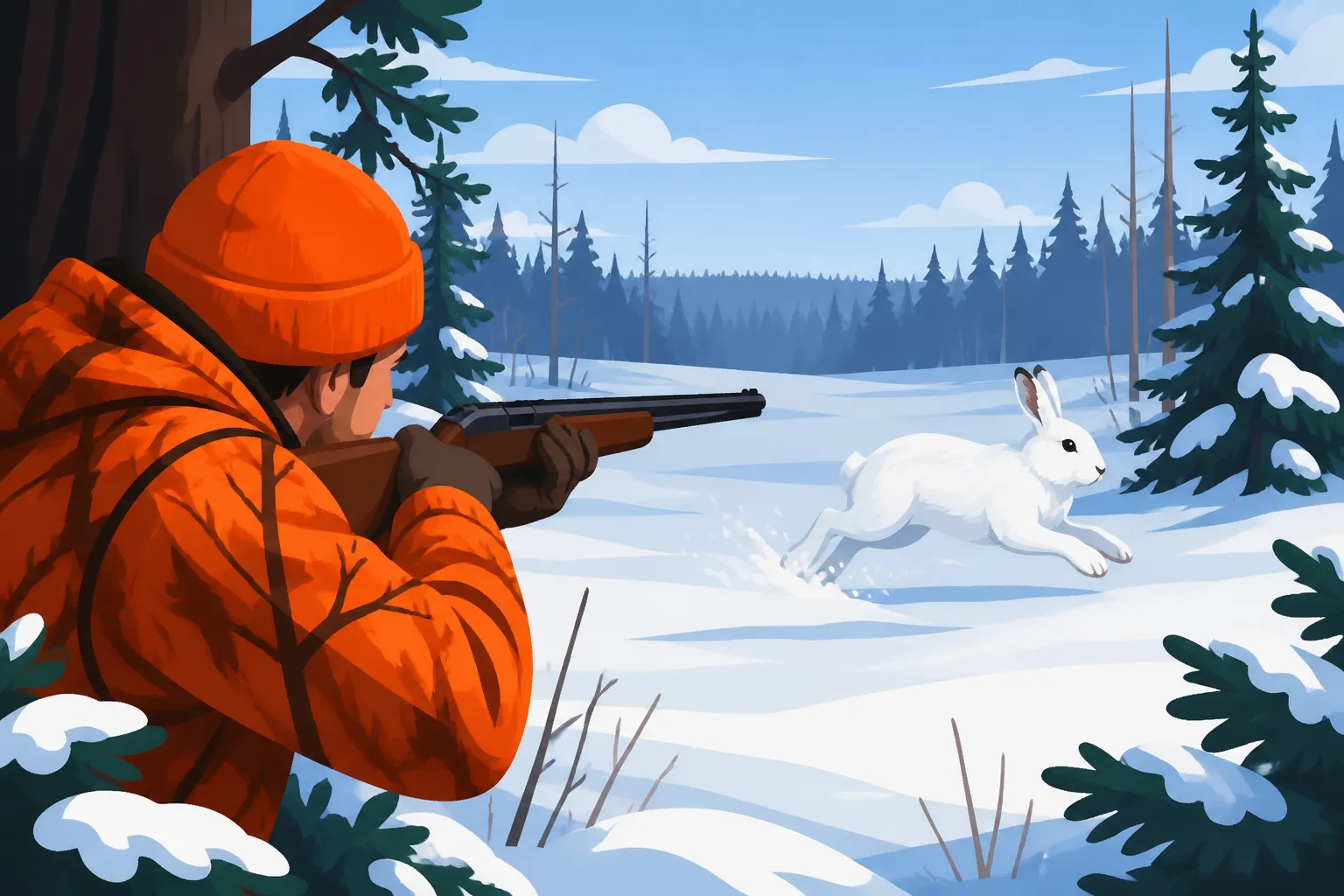
As you track, pay close attention to changes in terrain or cover density, as hare will often use these features to evade predators. They are masters of camouflage, especially in their white winter coats, and can remain perfectly still, blending seamlessly into the snow-covered brush. This is where patience is paramount. Don't rush; take your time to thoroughly glass every thicket and downed log. When you do spot a hare, often it's because it twitches an ear or moves slightly. Your shot will likely be quick and at close range, so be ready. This method not only provides the opportunity for a harvest but also sharpens your woodsmanship and observational skills, which are invaluable for all forms of hunting.
Hunting With Dogs
For many, hunting snowshoe hare with dogs, particularly Beagles or other small game hounds, is the quintessential experience. The high-energy pursuit and the melodious baying of a dog on a hot trail add an incredibly exciting dimension to the hunt. Dogs excel at flushing hare from the thickest cover where a human hunter would struggle to penetrate. The hare, once flushed, will typically run in a large circle, attempting to lose the dog before eventually returning to its home territory. Hunters strategically position themselves along these anticipated escape routes or return paths, waiting for the hare to come into view.
This method requires good communication with your dog and an understanding of how hare behave when pressured. It's often a social activity, with a group of hunters spreading out to cover various escape routes. The challenge lies not just in shooting the hare, but in anticipating its movements and placing yourself in the right spot at the right time. The dog does the hard work of sniffing out the hare and keeping it moving, allowing the hunter to focus on marksmanship and strategy. It's a loud, lively, and incredibly fun way to chase these swift creatures, creating lasting memories with friends and canine companions. Just remember to ensure your dog is well-trained and that you adhere to all local regulations regarding hunting with dogs.
Using Traps and Snares
While hunting with firearms or bows offers a dynamic experience, trapping and snaring provide a more consistent and often highly effective method for harvesting snowshoe hare, especially if you're looking to put a significant amount of meat in the freezer. This method is particularly popular in remote areas or for those who appreciate the historical and traditional aspects of wild food procurement. Snares are typically set in hare runs – well-worn trails through the snow or brush that hare use repeatedly. These runs are usually easy to identify by the compacted snow and abundant droppings.
A simple snare, often made from fine gauge wire, is set in a loop directly in the run, positioned at the average height of a hare's head to ensure a humane and quick catch. Placement is crucial; the snare should be camouflaged and securely anchored. Box traps or live traps, baited with willow twigs or apple slices, can also be effective, especially near dense cover. Trapping requires patience and daily checks to ensure humane treatment and prompt harvest. While less active than still-hunting or dog hunting, trapping is an excellent skill to learn for self-sufficiency and understanding animal patterns. Always check Manitoba's specific regulations regarding trapping and snaring, as rules can vary, and ensure you have the appropriate licences.
| Hunting Method | Pros | Cons | Best Time | Gear Needed |
|---|---|---|---|---|
| Still-Hunting/Tracking | Develops woodsmanship, quiet, solitary experience, less gear | Requires high patience and keen observation, can be physically demanding in deep snow | Post-fresh snow, during daylight hours | Small calibre rifle (.22), warm clothing, binoculars, map/GPS (GoHunt app) |
| Hunting with Dogs | Exciting, effective at flushing from dense cover, social activity | Requires trained dogs, can be noisy, dogs need care/training, less focus on tracking | Early winter to late spring, when snow is not too deep for dogs | Shotgun (20 or 12 ga), bird shot, dog and dog handling gear, radio |
| Trapping/Snaring | Highly effective for quantity, passive effort once set, historical skill | Requires daily checks, less "active" hunting, specific regulations to follow | Throughout winter, especially consistent cold periods | Fine gauge wire, pliers, bait (optional), trap tags, warm clothing |
Essential Gear and Practical Tips for Success
No matter your chosen method, heading into Manitoba's bush for snowshoe hare demands preparation. The right gear and a few practical tips can make all the difference between a frustrating day and a successful, enjoyable hunt. Remember, safety should always be your top priority, especially when venturing into remote winter landscapes.
Recommended Firearms and Ammunition
When it comes to hunting snowshoe hare, you don't need heavy-hitting calibers. In fact, lighter firearms are often preferred for their ease of carry and the minimal meat damage they inflict.
- Rifles: A .22 caliber rimfire rifle is arguably the most popular and effective choice. Its low recoil, inexpensive ammunition, and sufficient power for small game make it ideal. Hollow-point .22 rounds are often preferred for their enhanced terminal performance. Shots are typically at close range in dense cover, so an open sight or a low-magnification scope (e.g., 1-4x) works perfectly. The quiet report of a .22 also makes it less disruptive to other wildlife and comfortable on the ears without hearing protection in some instances.
- Shotguns: For hunting with dogs, or if you prefer a more versatile firearm, a 20-gauge or 12-gauge shotgun loaded with small game shot (e.g., #6 or #7.5 birdshot) is excellent. The pattern of a shotgun offers a wider margin for error on fast-moving targets flushed from cover. Choose a scattergun that's light and easy to maneuver in thick brush.
- Archery: While less common, bowhunting for snowshoe hare can be an incredibly challenging and rewarding experience for archers looking to hone their skills. Small game points or blunts are ideal to minimize penetration and prevent arrows from getting lost in the brush.
Regardless of your choice, ensure your firearm is sighted in and you're comfortable shooting it in real-world conditions. Remember, "Manitoba Hunter Education Requirements" stress safe firearm handling at all times.
Cold Weather Preparedness and Safety
Hunting snowshoe hare often means venturing out in true Manitoba winter conditions, where temperatures can plummet and snow can be deep. Being prepared for the cold isn't just about comfort; it's about safety and survival. Layering is paramount: start with a moisture-wicking base layer, add insulating layers like fleece or wool, and finish with a waterproof, windproof outer shell. Don't forget a warm hat, insulated gloves or mitts, and warm, waterproof boots suitable for deep snow. Traction aids for your boots, like ice cleats, can be lifesavers on slippery terrain.
Beyond clothing, a well-stocked "Winter Truck Kit for a Manitoba Hunt" is essential. This should include extra warm clothing, emergency food and water, a fire-starting kit, a first-aid kit, a headlamp with spare batteries, a fully charged cell phone (though service can be spotty in the bush), and a way to communicate like a satellite messenger if you're in remote areas. It's wise to tell someone your hunting plan, including your expected return time and exact location. Staying hydrated is also crucial in cold weather, so bring a thermos of hot tea or cocoa. When you do harvest a hare, remember proper "Meat Care in Manitoba's Cold Snaps" to ensure your hard-earned meal doesn't spoil. The combination of dense bush, deep snow, and frigid temperatures makes "Hunting Safely in Deep Winter Cold" a serious consideration, so don't cut corners on preparedness.
Disclaimer
The information provided in this guide is for general informational purposes only and does not constitute legal advice. Hunting regulations in Manitoba are subject to change. It is the sole responsibility of the hunter to be aware of and comply with all current federal, provincial, and local hunting laws and regulations, including obtaining appropriate licences and tags, understanding season dates, bag limits, and legal hunting methods in specific Game Hunting Areas. Always consult the official Manitoba Hunting Guide and relevant government resources before heading afield.