Field Hunting Geese in Manitoba Stubble
Hunting geese in Manitoba's vast stubble fields can be incredibly rewarding, but it's also a challenge that leaves many hunters scratching their heads. You've scouted for days, set your alarm for way too early, and hauled a mountain of gear into a seemingly perfect field, only to watch flock after flock flare off at 100 yards. This guide is all about cutting through that frustration, diving deep into the art and science of consistently bringing those big birds into range over Manitoba's rich agricultural landscape.
Understanding the Stubble Field Attraction for Geese
Manitoba's agricultural heartland offers an irresistible buffet for migrating geese, drawing them in by the thousands. But it's not just any stubble field that catches their eye. There's a method to their madness, and understanding it is the first step to putting more birds in your bag.
Why Geese Choose Specific Fields
Geese, especially Canada geese, are creatures of habit and efficiency. When they descend upon a stubble field, they're looking for a very specific combination of factors. Primarily, it's about food. Manitoba harvests yield an incredible amount of leftover grain – think barley, wheat, peas, corn, and even canola. After the combines have rolled through, there's always spillage, and for a goose, that's a gourmet meal waiting to be picked. A field that's recently been harvested, particularly if it was a bumper crop, will hold more readily available grain and become a prime feeding spot. They're not just looking for any grain, though; they're looking for easily digestible calories to fuel their long migrations and sustain them through the cold snaps. This is why you'll often see them prefer one field over another, even if they're side-by-side.
Beyond food, security is paramount. Geese are highly wary birds, and those big, open stubble fields offer excellent sightlines. They can see danger approaching from a long way off, giving them plenty of time to take flight. They prefer areas where they feel less exposed, often gravitating towards the middle of large fields or subtle high points that offer a commanding view. While they might occasionally dabble along field edges, the core feeding activity often occurs where they feel safest from predators, including hunters. Understanding this dual drive for sustenance and safety helps you predict their patterns.
Reading Goose Movement and Feeding Patterns
Geese operate on a fairly predictable daily routine, often moving between a safe roosting area, a feeding field, and sometimes a water source for drinking and loafing. Typically, they'll leave their roost just before sunrise, fly to a feeding field, spend a few hours gorging themselves, then often move to a water body to digest, preen, and rest, before returning to a feeding field in the late afternoon for another meal, and finally heading back to their roost for the night. This pattern, however, isn't set in stone and can be influenced by weather, hunting pressure, and food availability.
Scouting is absolutely essential to pinpointing these patterns. You need to be out there, long before the sun rises and well after it sets, observing their flight paths. Pay close attention to where they commit to landing, not just where they fly over. Sometimes, they'll approach a field from one direction, circle, and then land from another, dictated by the wind or an ingrained flight corridor. Wind direction, in particular, plays a massive role in their approach. Geese always land and take off into the wind, much like an airplane. This crucial piece of information dictates where you'll want to set up your decoy spread and blinds. If the wind shifts, so too will their approach, and if you haven't accounted for it, you'll be watching them land behind you all morning.
Essential Gear for Stubble Field Goose Hunting
Once you've nailed down where the geese want to be, the next challenge is convincing them to commit to your spot. This is where your gear comes into play. From realistic decoys to effective concealment, having the right tools for the job is non-negotiable for success in Manitoba's open fields.
Decoy Spreads and Types
When it comes to goose decoys, you've got a few options, each with its pros and cons. Full-body decoys are, hands down, the most realistic. They offer a three-dimensional representation of a goose, casting shadows and looking natural from all angles. However, they are bulky, heavy, and expensive, meaning you often need a trailer and a strong back to deploy a significant spread. Shell decoys are lighter and stackable, making them easier to transport and deploy in larger numbers, but they lack the full realism and shadow of full-bodies. Silhouettes offer excellent realism from certain angles and are incredibly easy to transport and deploy, making them a great option for adding bulk to a spread quickly. Finally, wind socks or "flapping" decoys add crucial motion, which can be the difference-maker on calm days.
For field hunting in Manitoba, you'll likely need a significant quantity of decoys to truly draw attention and create the illusion of a safe, active feeding flock. A spread of 100-200 decoys isn't uncommon, especially for wary Canada geese. The goal is to create a scene that looks completely natural and inviting, mimicking geese happily feeding and resting without a care in the world. Mixing and matching different types can be effective: full-bodies up close to the blind, shells or silhouettes to fill out the edges, and wind socks strategically placed to add life. Remember, realism and motion are key to fooling these sharp-eyed birds. For a successful hunt, understanding how to lay out your spread is just as important as the decoys themselves, which is why we'll touch on Setting a Goose Spread in Swathed Barley later.
Blinds and Concealment in Open Fields
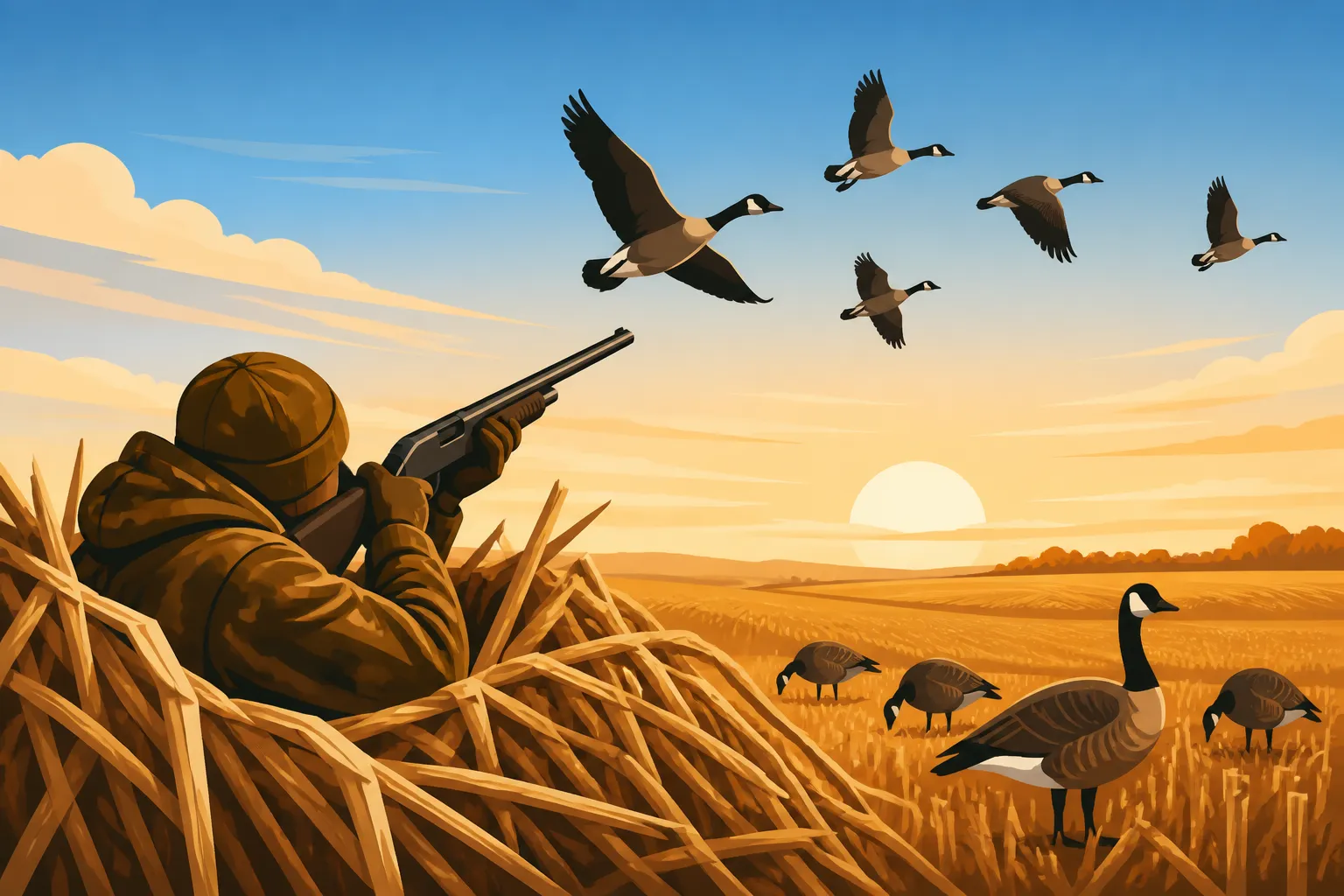
Manitoba's stubble fields offer very little natural cover. Unlike hunting in bush country or marshes, you can't just tuck yourself into a thicket. This means effective concealment is paramount. Layout blinds have become the gold standard for field goose hunting. These low-profile blinds allow you to lie flat, almost invisible in the stubble, until the birds commit. They're designed to be "stubbled in," meaning you cover them with actual stubble, straw, and other field debris to make them blend seamlessly with the environment. Many hunters even have specialized covers for different types of stubble to match their hunting grounds precisely.
A-frame blinds are another popular option, especially for larger groups or when you can position them near existing features like a fence line, tree row, or even a strategically placed hay bale. These blinds offer more room and allow you to sit upright, which some hunters prefer for comfort. However, they require more effort to conceal in the middle of a wide-open field and can create a larger profile that wary geese might spot. The key with any blind is meticulous concealment. No shiny objects, no unnatural lines, and absolutely no movement until the birds are in range and the shot is called. Even the smallest flash of an un-stubbled blind or a reflective surface can send a flock spiraling out of range.
Shotguns and Ammunition Selection
When those geese are finally cupped and committed, you need the right tools to bring them down cleanly and ethically. A 12-gauge shotgun is the workhorse of goose hunting, offering a good balance of pellet count and power. While 20-gauge shotguns can be effective, especially for youth or recoil-sensitive hunters, most seasoned goose hunters opt for a 12-gauge for its versatility and knockdown power. Choke selection is also important; modified or improved modified are good starting points, offering a balance of spread and density. Some hunters prefer a full choke for longer shots, but it requires more precise shooting.
Crucially, in Manitoba (and throughout Canada), you must use non-toxic shot for all migratory game birds, including geese. Steel shot is the most common and affordable option, but it requires larger shot sizes and faster velocities due to its lighter density compared to lead. Bismuth, tungsten-matrix, and other heavier-than-lead non-toxic alternatives offer performance closer to lead, with tighter patterns and more energy retention, but come at a higher cost. For geese, common shot sizes include #1, BB, BBB, and T, depending on the specific species (smaller for Snows, larger for big Canadas) and the range you expect to shoot. Always pattern your shotgun with your chosen ammunition before the season to understand its performance and limitations. To ensure you're compliant, you can always check the specific rules regarding Non-Toxic Shot Requirements for Waterfowl on the provincial website.
Scouting Strategies for Productive Stubble Fields
The old adage "you can't shoot geese where they ain't" rings true for a reason. Scouting is not just a part of the hunt; it is the hunt before the hunt. It's the most critical factor in consistent success when pursuing geese in Manitoba's agricultural zones.
Pre-Season and In-Season Reconnaissance
Effective scouting is a year-round commitment for dedicated goose hunters, but it intensifies dramatically as the season approaches. Pre-season reconnaissance involves driving the backroads, identifying potential feeding areas, and noting current crop types and harvest statuses. This gives you a baseline understanding of the landscape. As the season progresses and birds begin to arrive, your in-season scouting becomes more focused. You'll spend hours glassing fields from a distance, often using binoculars or spotting scopes, looking for feeding flocks. Pay attention to how many birds are in a field, what species they are, and crucially, where they are entering and exiting the field.
Modern technology can be a huge asset here. Apps like GoHunt provide invaluable tools for identifying land ownership, viewing satellite imagery, and marking potential hot spots. You can use these to understand property lines and identify potential access points before you even step out of the truck. This kind of detailed mapping can help you narrow down your search and maximize your time in the field, helping you pinpoint key flight corridors and reliable feeding areas. Remember, geese are looking for fresh food, so focus your efforts on fields that have been recently harvested and show signs of consistent goose activity.
Securing Landowner Permission
This step cannot be overstated: always secure landowner permission before hunting on private property. Manitoba's landscape is a patchwork of Crown land and private farms, and most of the prime stubble fields are privately owned. Showing up without permission is not only illegal and disrespectful but also quickly shuts down future hunting opportunities for everyone. The best approach is to knock on doors, be polite, and introduce yourself. Explain what you're looking to do, offer to share some of your harvest, and assure them you'll leave their property cleaner than you found it.
A little bit of common courtesy goes a long way. Make sure you confirm which specific fields you have permission for and respect those boundaries. If you don't connect with the landowner directly, leave a polite note with your contact information. Remember, your behaviour reflects on all hunters. Building a good relationship with landowners is a long-term investment that can provide access to prime hunting spots year after year. For a deeper dive into this vital step, check out our guide on Getting Permission for a Goose Field.
Observing Goose Behaviour in the Field
When you find a field with geese, resist the urge to immediately jump out and set up. Instead, spend time observing them. How are they landing? Are they coming in hot, or slowly circling and descending? Where in the field are they concentrating their feeding? This helps you identify the "X" – the exact spot they want to be. Pay attention to their behaviour: are they nervous, constantly looking up, or are they relaxed, heads down and feeding? Nervous birds suggest high hunting pressure or a recent disturbance.
Also, note their direction of approach and departure. Geese almost always land and take off into the wind. This is a critical piece of information for setting your decoy spread and positioning your blind for optimal shooting opportunities. The influence of weather conditions, such as fog, rain, or strong winds, can drastically alter their flight patterns and feeding habits. On foggy days, birds might fly lower and be less wary. Strong winds can make them fly faster and commit harder to a spread that looks secure. The more you observe, the more effectively you can set up your hunt to intercept them exactly where they want to be.
Setting Up Your Spread for Success
You've scouted, secured permission, and got your gear. Now, the moment of truth: translating all that preparation into an irresistible invitation for incoming geese. The layout of your decoy spread and the hidden perfection of your blinds are what will make or break your hunt.
Decoy Placement and Spacing
This is where the artistry of goose hunting truly shines. The goal is to replicate a natural feeding flock, and geese are rarely evenly spaced. They tend to congregate in family groups, with some individuals scattered around the edges. The most common and effective spread for Canada geese is often a "U" or "J" shape, with the open end of the shape facing into the wind. The "kill hole" – the sweet spot where you want the geese to land – is placed within this opening, usually 20-30 yards directly in front of your blinds. This setup creates a natural landing zone that birds instinctively funnel into.
Within your spread, mix up the postures of your decoys. Have some feeders, some sentries (heads up), and some resting birds. Group your decoys in clusters of 3-7, mimicking family units. This adds realism and visual appeal. For snow geese, the numbers are much higher, often hundreds or even thousands of decoys, creating a vast "rag spread" that screams security and food. No matter the species, always set your decoys facing into the wind or slightly quartering into it, as this is how real geese position themselves when feeding. For a closer look at specific techniques, our guide on Setting a Goose Spread in Swathed Barley offers even more insights.
Concealment Techniques for Blinds
A perfectly laid out decoy spread is useless if your blinds stick out like a sore thumb. Meticulous concealment is paramount. If you're using layout blinds, the process of "stubbling in" is critical. Collect plenty of local stubble, straw, corn stalks, or whatever natural debris is found in your chosen field. Generously cover every inch of your blind, breaking up its outline and ensuring it blends seamlessly. Pay special attention to the edges and any areas that might cast a shadow. You want to look like just another bump in the field.
Avoid any reflective surfaces, like shiny water bottles, un-camouflaged gun barrels, or even uncovered faces. Wear face masks and gloves that match your surroundings. If using an A-frame blind, ensure it's completely covered with natural vegetation or camouflage netting that matches the field's colours. Position it strategically against an existing feature like a fence line or a large hay bale if possible, to further break up its outline. Before the hunt, have a buddy walk out 50-100 yards and look back at your setup from different angles to ensure it's truly invisible from a goose's perspective. It’s an exercise in paranoia, but it pays off.
Calling Strategies for Incoming Geese
Goose calling is an art form, and mastering it can significantly improve your success rate. There are two main types of calls: flute calls (long and resonant) and short-reed calls (sharper, more versatile). Most experienced goose hunters use short-reed calls for their ability to replicate a wide range of goose vocalizations, from loud hail calls to soft clucks and moans. The key to effective calling is not necessarily how loud or fancy you can be, but how realistic and timely your calling is.
Start with hail calls to get the attention of distant birds. As they turn and approach, switch to more aggressive comeback calls if they start to veer off. Once they are within 100-150 yards and showing interest, tone down your calling to softer clucks, moans, and murmurs, mimicking a contented feeding flock. This tells them, "Come on in, the food is good, and it's safe here." Watch the birds' reactions carefully. If they seem to be flaring, ease off the call. If they're responding positively, continue to work them. Learning when to call and, just as importantly, when to be quiet, comes with practice and observation. A good caller can turn a borderline flock into a committed one.
Executing the Hunt and Post-Harvest Practices
All the scouting, gear preparation, and setup culminate in these crucial moments. What you do from the moment geese appear until you pack up your last decoy determines not only your success for the day but also your reputation as a responsible hunter.
In-the-Blind Conduct and Shooting Ethics
Once you're tucked into your blind and the decoys are set, patience becomes your most important virtue. Stay absolutely still and quiet. Resist the urge to peek out or adjust your gear. Any unnatural movement or sound will alert approaching geese. Your call to shoot should come from one designated person, usually the most experienced caller or guide, once the birds are fully committed and within effective shooting range. This ensures everyone shoots at the same time, maximizing impact and minimizing cripples.
When the shot is called, rise smoothly and quickly, pick a bird, and make a clean, ethical shot. Don't "sky-bust" – shooting at birds that are too high or too far away. This not only wastes ammunition and often results in missed shots but also educates the birds, making them warier for future hunters (and yourself). Focus on bringing birds down cleanly. It's far better to pass on a marginal shot and wait for another opportunity than to wound a bird and potentially lose it. Safety is always paramount: know your shooting lanes, be aware of other hunters, and never point your muzzle at anything you don't intend to shoot.
Retrieving Birds and Post-Shot Care
The moment a bird hits the ground, it's crucial to mark its location immediately. In a vast stubble field, a downed goose can be incredibly hard to find, especially if it glides some distance after being shot. Use natural landmarks or even your GoHunt app to drop a pin where the bird fell. A good retriever dog is an invaluable asset for field hunting, not only making recovery faster but also minimizing lost birds. If you don't have a dog, organize a systematic search pattern to ensure every downed bird is accounted for.
Once recovered, proper field dressing is important, especially on warmer days. Removing the entrails helps to cool the carcass faster, preserving the meat quality. Store the birds in a cool, shaded area or a cooler with ice, taking care not to let them sit in standing water. Respect the game you've harvested by treating it with care. Later, you'll need to consider Meat Care in Manitoba's Cold Snaps when temperatures drop, but quick cooling is always a good practice.
Here's a quick comparison of popular goose decoy types:
| Decoy Type | Realism | Transport/Setup Ease | Cost (per dozen) | Motion | Ideal Use Case |
|---|---|---|---|---|---|
| Full-Body | Excellent | Difficult | High | None (static) | Close to blind, small spreads, realism focus |
| Shell | Good | Moderate | Medium | None (static) | Filling out mid-range of spread, adding bulk |
| Silhouette | Fair-Good | Easy | Low-Medium | None (static) | Adding numbers, creating depth illusion |
| Wind Sock | Fair | Very Easy | Low | Excellent (wind) | Adding movement to any spread, distant filler |
| Banded Feeder | Excellent | Difficult | High | Excellent (wind) | Ultra-realism near kill zone, critical motion |
Maintaining Landowner Relationships
Your hunt doesn't end when the shooting stops. The clean-up process and your conduct afterward are just as important as the hunt itself, especially for maintaining landowner goodwill. Before you leave the field, meticulously clean up every piece of trash, including spent shotgun shells, food wrappers, and any other debris. Leave the field in pristine condition, or even better than you found it.
Take the time to thank the landowner in person, if possible, or follow up with a phone call or card. Offer them some of the birds you harvested. This small gesture can go a long way in solidifying a positive relationship and ensuring you're welcome back for future seasons. Remember, access to prime hunting land is a privilege, not a right. Being a respectful and responsible hunter ensures that these opportunities continue for years to come.
Adapting to Manitoba's Goose Migration and Seasons
Manitoba is a major hub on the Central Flyway, meaning you'll encounter a variety of goose species throughout the season, each with slightly different behaviours and migration patterns. Understanding these nuances is crucial for year-round success.
Understanding Migration Patterns
The goose hunting season in Manitoba kicks off in early September with local Canada geese and early migrators. These birds are often less wary, especially the local populations, and can offer fast-paced action. As the fall progresses into October and November, waves of geese push down from the north, bringing in new, often warier birds that have already encountered hunting pressure. You'll see larger flocks of Canada geese, often intermingled with Greater White-fronted Geese (Specklebellies) and various species of snow geese (Lesser Snows and Ross's geese). The late season, extending into December in some zones, can offer incredible hunting for large concentrations of birds, but it often comes with extreme cold weather.
Each species has a slightly different migration timing and preference for certain fields. For instance, while Canada geese might prefer barley or wheat stubble, snow geese are often found in pea or corn fields, especially later in the season. Keeping an eye on the weather patterns to the north can give you an indication of when major migrations might occur. Heavy snowfalls or prolonged cold fronts in northern Saskatchewan and Nunavut will push birds south into Manitoba, concentrating them in feeding areas. Knowing when Goose Season Dates by Zone are, and where, is essential for timing your hunts.
Weather's Impact on Field Hunting
Weather is perhaps the single biggest factor influencing goose behaviour after food availability. Cloudy, windy days are often considered ideal for goose hunting. The low clouds help to keep birds flying lower, and the strong winds force them to fly into the wind, making them easier to decoy. The wind also adds crucial motion to your decoy spread, making it look more realistic. On bluebird, calm days, geese tend to fly higher and be much warier, making them harder to decoy. This is when realistic decoys and impeccable calling become even more critical.
Cold fronts, especially those that bring snow, can push new birds into the area and often trigger aggressive feeding behaviour as geese try to fuel up before hunkering down or continuing their migration. Conversely, prolonged periods of unseasonably warm weather can slow down migration and scatter birds. It's essential to dress appropriately for Manitoba's often unpredictable fall weather, which can swing from mild to brutally cold in a matter of hours. For those late-season hunts when the mercury really drops, our guide on Hunting Safely in Deep Winter Cold offers vital tips.
Species-Specific Field Hunting Considerations
While many principles apply to all geese, there are distinct differences when targeting Canada geese versus snow geese or Specklebellies. Canada geese are generally more responsive to realistic decoy spreads (even smaller numbers can be effective if well-placed) and nuanced calling. They tend to fly in smaller, more organized flocks. For them, focus on realism, quality over quantity in decoys, and precise calling.
Snow geese, on the other hand, are often hunted with massive spreads – sometimes hundreds or even thousands of decoys – to create the overwhelming illusion of a safe staging area. Their calling is much louder, a cacophony of high-pitched gabbling. Our guide on Hunting Snow Geese Over a Big Spread dives deep into this specialized form of hunting. Specklebellies, or Greater White-fronted Geese, are known for their distinct "clack" call and tend to be incredibly wary. They often respond well to smaller, more realistic spreads of decoys and specific Specklebelly calls. Learning to differentiate their calls and flight patterns will significantly improve your success. For more on these cunning birds, check out Hunting Specklebellies Over Decoys.
Remember, regardless of the species, always carry your Manitoba Migratory Bird Permits and be aware of bag limits. Responsible hunting ensures these incredible opportunities continue for all of us.
Disclaimer
The information provided in this guide is for informational purposes only and is not a substitute for checking current Manitoba hunting regulations. Regulations can change frequently. Always consult the official Manitoba Hunting Guide and relevant government websites before heading out into the field to ensure full compliance with all laws and safety requirements.