Rattling and Calling Parkland Whitetails
Trying to coax a cagey whitetail buck out of the scattered cover of Manitoba's parkland can feel like an impossible task sometimes. You've spent hours scouting, found decent sign, but when it comes time to hunt, those mature bucks seem to vanish into thin air, leaving you wondering if you're even in the right place. It's a frustration many of us know all too well, especially when those big bodied prairie deer seem to have an uncanny ability to evade detection. This comprehensive guide will dive deep into the art and science of rattling and calling specifically for these elusive parkland whitetails, equipping you with the tactics to turn those close encounters into successful harvests.
Understanding Parkland Whitetail Behavior and Habitat
Manitoba's parkland region is a mosaic of agricultural fields, brushy woodlots, aspen bluffs, and sloughs. This diverse landscape shapes how whitetail deer live, move, and react to hunting pressure, making it a unique challenge for hunters. It's not the dense, unbroken bush, nor is it wide-open prairie. It's a tricky blend that requires a specific approach.
The Unique Challenges of Parkland Hunting
Hunting in Manitoba's parkland is a different beast compared to the expansive boreal forest or the endless fields of the deep south. Here, deer often have readily available food sources in agricultural crops like canola, wheat, and corn, which means they don't have to travel far to eat. This can make them less predictable. They'll spend their days bedded down in small, isolated bluffs or slough rings, only to emerge at dusk to feed. These pockets of cover might seem insignificant, but they offer incredible security for mature bucks, especially those that have seen a few hunting seasons. The challenge is often finding them in these smaller, disconnected patches of habitat, or figuring out their travel routes between them. Often, a buck might only need to cross a short stretch of open field to move from his bedding area to a prime feeding spot, making him vulnerable for only a brief window.
Another significant challenge is the hunting pressure. Parkland areas, especially closer to populated centres, tend to see more hunters. This pressure makes deer more nocturnal and incredibly sensitive to human presence. They learn quickly, becoming masters of stealth and evasion. You might find a massive rub line one day, only for the buck to disappear completely the next. This sensitivity means your tactics, especially with rattling and calling, need to be executed flawlessly and with a deep understanding of how deer react under pressure. For a broader perspective on the region, check out our guide on Hunting Manitoba's Parkland Region.
Reading Whitetail Sign in Parkland Environments
Successfully rattling and calling relies heavily on understanding where deer are and what they're doing. In the parkland, reading sign is paramount. Look for fresh scrapes, which are typically found on field edges, near trails leading into woodlots, or along fencelines. These are prime communication hubs for bucks, especially during the pre-rut and peak rut. A big, fresh scrape with an overhanging licking branch is like a beacon telling you a buck is actively working that area. Rubs, on the other hand, tell you about a buck's travel patterns and his size. Larger rubs on thicker trees indicate a mature buck is in the vicinity. Pay attention to the direction of the rub – it can tell you which way the buck is generally moving.
Identifying natural travel corridors is also critical. These are often subtle funnels of cover, like a narrow strip of aspen connecting two larger bluffs, a willow-lined ditch, or even a low swale running through a stubble field. Deer will use these to move between bedding and feeding areas, or in search of does. In areas with standing corn or heavy cattails, these can become almost impenetrable havens for deer. Using satellite imagery, perhaps with a tool like GoHunt, can help identify these subtle features before you ever step foot in the field, allowing you to plan your approach more effectively. Our article on Reading Whitetail Sign in Manitoba Aspen can provide more insights into interpreting these subtle clues.
The Art of Rattling for Parkland Whitetails
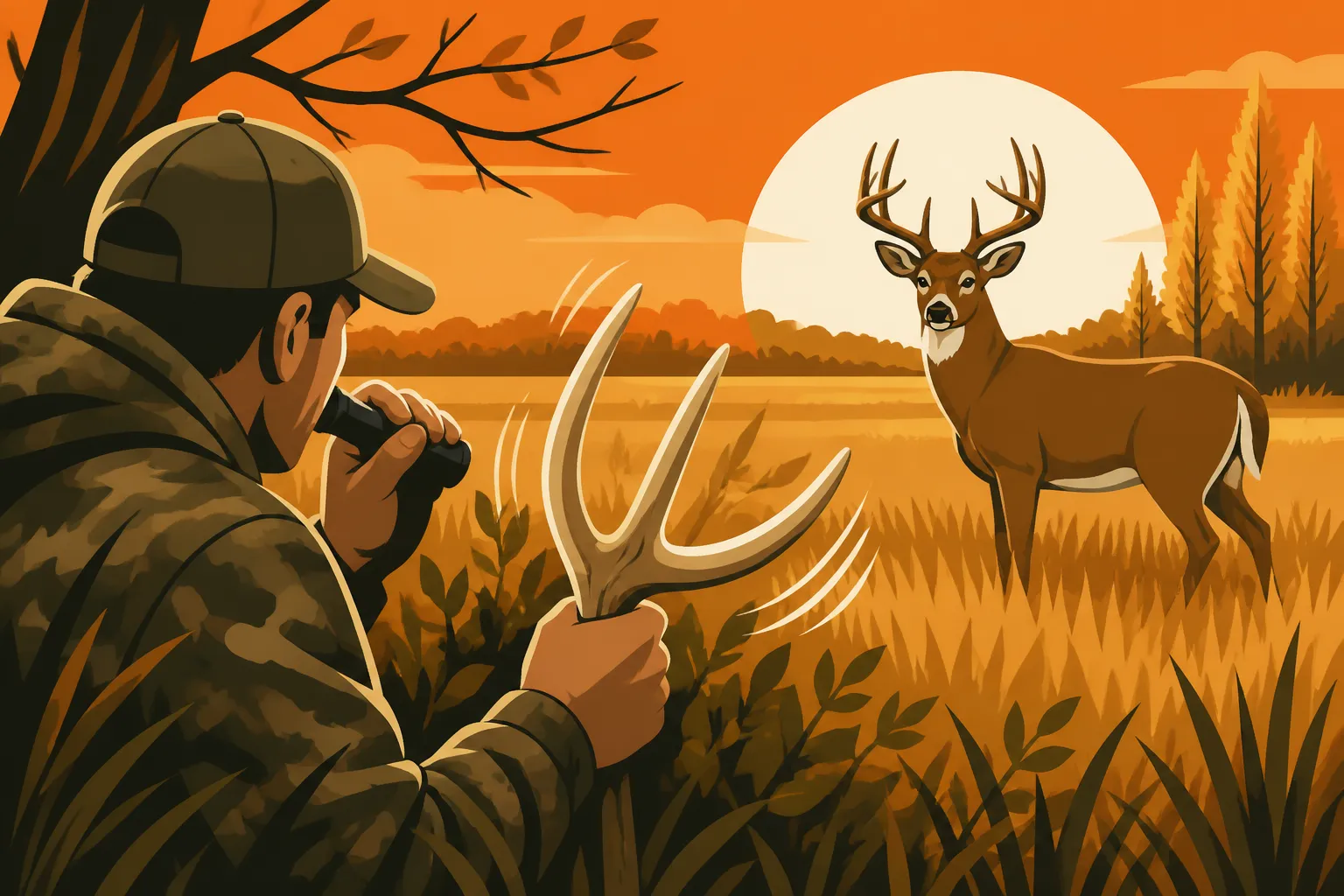
Rattling is essentially imitating a fight between two bucks. It's an aggressive tactic that, when done right, can trigger a territorial response from a mature buck, bringing him right into your lap. But it's not just about clanging two pieces of antler together; it's an art that requires finesse and understanding.
Choosing the Right Rattling Antlers and Techniques
When it comes to rattling antlers, you have options: natural antlers or synthetic ones. Natural antlers from a real deer offer an authentic sound, but they can be bulky and noisy to carry. Synthetic options, like the Rattle Bag from Knight & Hale or various rattling horns from Primos, are often more compact and can produce a surprisingly realistic sound with less effort. The key is to choose something that you can manipulate to create a variety of sounds. You want to mimic the sounds of antlers crashing, sparring, and grinding. Start with a light tickling and sparring sound, gradually increasing the intensity to simulate a more aggressive fight. Don't just crash them together randomly; envision two bucks fighting, pushing, shoving, and then breaking apart.
A typical rattling sequence might start with light sparring for 30 seconds, followed by a minute or two of silence, then a more aggressive clash for another 30 seconds to a minute, interspersed with some grinding. Finish with more light sparring as if the fight is winding down, then wait patiently for at least 15-20 minutes. It's crucial to pause and listen. Bucks will often circle downwind to scent-check the "fight" before committing. Sometimes, a curious doe might come in first, followed by a buck. Patience is your best friend here.
Timing Your Rattling Sequences
The effectiveness of rattling is highly dependent on the phase of the rut.
- Pre-Rut (Late October – Early November): This is a fantastic time for rattling in the parkland. Bucks are feeling their oats, establishing dominance, and actively looking for the first does to come into estrus. They're competitive and responsive to the sound of other bucks fighting. Start with moderate to aggressive rattling.
- Peak Rut (Mid-November): While many hunters consider this the prime time, it can be a bit more nuanced for rattling. Bucks might be "locked down" with a receptive doe, making them less likely to abandon her to investigate a fight. However, if a buck is cruising for does or has just bred one and is looking for another, aggressive rattling can still draw him in. Some of the most intense responses come during this time, so don't shy away from it, just be aware of the "lockdown" phenomenon. This is a critical period covered in our Hunting the Rut in Early to Mid November guide.
- Post-Rut (Late November – Early December): As the rut winds down, rattling becomes less effective. Bucks are often exhausted, focusing more on feeding to regain weight lost during the rut. While a very dominant buck might still respond to a challenge, it's generally best to scale back your rattling efforts and focus more on subtle calling.
Always remember that rattling is about mimicking reality. If the natural conditions don't suggest bucks are fighting (e.g., in the middle of summer), your rattling efforts will likely fall on deaf ears. The best times are usually early morning and late afternoon when deer are most active.
Mastering Deer Calls in the Parkland
Rattling might draw attention, but combining it with realistic calling can seal the deal. Deer communicate constantly, and learning to speak their language can give you a significant advantage.
Essential Calls for Whitetails
There are a few key calls that every parkland whitetail hunter should master:
- Grunt Calls: These are perhaps the most versatile. A deep, guttural buck grunt signals a buck on the move, asserting dominance, or searching for does. Use short, sharp grunts to stop a moving deer for a shot, or longer, drawn-out grunts to imitate a buck searching. During the rut, an excited grunt can challenge a dominant buck or attract a curious younger one. Primos and Flextone make excellent adjustable grunt tubes that allow you to vary pitch and tone.
- Doe Bleats: These are softer, often higher-pitched calls that can signal a receptive doe or a deer contentedly feeding. A "estrous bleat" is a longer, more drawn-out sound that mimics a doe ready to breed, which can be incredibly attractive to cruising bucks, especially during the peak rut. Use these sparingly and realistically.
- Fawn Distress Calls: A crying fawn call can attract both does (out of maternal instinct) and bucks (who might follow a doe). This call is often most effective outside of the peak rut when deer are less focused on breeding. It can be particularly useful if you suspect does are nearby and you want to bring a buck in on their heels.
- Snort-Wheeze: This is an aggressive call, used by dominant bucks to challenge other bucks. It's a short, sharp snort followed by a wheezing sound. This is a high-risk, high-reward call. It can either bring a dominant buck charging in, or it can send a younger, less confident buck fleeing. Use it only when you're sure there's a mature, dominant buck in the area and you're ready for an aggressive response.
When calling, pay close attention to your surroundings. The sounds shouldn't be too loud or too soft for the conditions. In open parkland, sound travels further, so you might need to adjust your volume.
Integrating Calling with Rattling
The real magic happens when you combine calling with rattling. It adds another layer of realism to your imitation. Imagine two bucks fighting, and in their excitement, they're grunting and snort-wheezing. This is what you want to replicate.
Here’s a typical integrated sequence:
- Start with a few soft doe bleats to get any deer in the area curious.
- Begin light sparring rattles, gradually building to more aggressive crashing, as described earlier.
- Intersperse grunt calls during the more aggressive phases of rattling. A few sharp grunts here, a deeper, longer grunt there. If you hear a distant grunt in response, you might even throw in a snort-wheeze if you're feeling bold and confident in your setup.
- Finish with some soft sparring and a final, softer grunt or two, as if the combatants are moving away.
- Be silent and vigilant for 15-20 minutes. Keep your rifle or bow ready. Deer can appear silently and quickly, often from downwind.
The key is making it sound natural. Don't overdo it. If you rattle and call for too long, it sounds fake. If a deer responds, try to gauge its reaction. If it's coming in, stop calling and get ready. If it hangs up, a soft bleat or grunt might entice it closer. This dance between calling and listening is crucial for success.
Strategic Setups for Calling and Rattling Success
Even the most perfect rattling and calling sequence will fail if your setup isn't right. In the parkland, where deer are wary and cover is often broken, your position is everything.
Picking the Perfect Ambush Location
When choosing a spot for rattling and calling, several factors need to align.
- Wind Direction: This is non-negotiable. You absolutely must have the wind in your favor, blowing your scent away from where you expect deer to approach. Parkland deer are masters of circling downwind, so anticipate this. Set up so that any buck trying to scent-check you will have to pass through your shooting lane before winding you. This might mean setting up with your back to a field edge, and rattling into the woodlot, knowing a buck will circle out into the field to get your scent.
- Cover and Concealment: You need enough cover to break up your silhouette and conceal your movements, especially when rattling. A dense stand of aspen, a thick willow clump, or even a deep draw can work wonders. However, don't let the cover obstruct your visibility too much. You need clear shooting lanes in the direction you expect deer to approach.
- Visibility: You want to be able to see deer approaching from a distance, giving you time to prepare. A common tactic in the parkland is to set up on a high point or the edge of an aspen bluff overlooking a field or a known travel corridor. This allows you to observe a wider area. Using an app like GoHunt can help you pinpoint these elevated positions and visualize potential approach routes.
- Escape Routes: Always have a clear, quiet exit strategy. If you call in a deer and it doesn't present a shot, or if you bump a deer on your way in, you want to be able to leave without spooking other deer in the area.
Consider setting up near fresh sign, like a scrape line or heavily used trail, but position yourself downwind of it. You want to bring the deer to you, not walk right into them. For more details on finding prime spots, refer to our article on Scouting a Manitoba Game Hunting Area.
Decoy Tactics and Scent Control
Adding a decoy to your setup can significantly enhance the realism of your rattling and calling. A visual stimulant can be the final piece of the puzzle that convinces a cautious buck to commit.
- Buck Decoy: A quartering-away buck decoy can be very effective, especially during the pre-rut and early rut when bucks are establishing dominance. It makes your "fight" seem real and gives an approaching buck something to focus on other than you. Position the decoy 20-30 yards downwind from your calling position, facing slightly away, as if it's engaged in a fight. This naturally draws an approaching buck into a good shooting position as he circles to confront the "intruder."
- Doe Decoy: A doe decoy can work well during the peak rut, signaling a receptive female. This can be especially potent when combined with estrous bleats. Some hunters even combine a buck and doe decoy for a breeding scenario, but this can be cumbersome.
- Scent Control: No matter how perfect your rattling or calling, if a buck smells you, the game is over. In the parkland, where wind swirls and deer are constantly circling, meticulous scent control is paramount. Use scent-eliminating sprays, wash your hunting clothes in scent-free detergent, and store them in airtight containers. Avoid strong-smelling foods, deodorants, or fuels before and during your hunt. Even a slight whiff of human scent can send a wary parkland buck packing. Some hunters swear by earth-scents or deer urine, but the most important thing is to eliminate human odor as much as possible.
Remember to consider the visual aspect of decoys. Make sure they are visible but not overly obvious from a distance, and position them to present a natural image.
| Rut Phase | Rattling Intensity | Calling Strategy | Decoy Recommendation | Scent Control |
|---|---|---|---|---|
| Pre-Rut | Moderate to Aggressive | Grunts, some doe bleats, light snort-wheezes | Buck or sparring duo | Critical |
| Peak Rut | Aggressive, then subtle | Estrous bleats, aggressive grunts, snort-wheezes | Buck or Doe | Absolute |
| Post-Rut | Light sparring, less frequent | Soft grunts, fawn bleats, contentment calls | Fawn or none | High |
Adapting to Different Parkland Scenarios
The parkland is ever-changing, from the lush green of early fall to the snow-covered landscape of late season. Your rattling and calling strategies need to adapt accordingly.
Hunting During the Early Season and Pre-Rut
When Manitoba's archery season opens in September, and into the early parts of October, bucks are often still in their bachelor groups, or just starting to break up. Their primary focus is on food and building up reserves for the coming rut. Aggressive rattling at this time can be counterproductive, as serious fighting isn't typically on their minds yet.
During the early season, focus on subtle curiosity calls. Soft grunts, gentle sparring, or a few doe bleats can pique their interest without alerting them. You might call in a bachelor group, but don't expect a raging buck to come charging in. Instead, focus your efforts on known feeding areas, like the edges of a standing corn field or alfalfa fields, or along travel routes to and from these food sources. This is a great time to focus on Hunting Manitoba's September Archery Opener, when bucks are still in their summer patterns. As you move into late October, the pre-rut kicks in, and bucks become more responsive to moderate rattling and grunting as they start to establish dominance and rub velvet. This is when you can gradually increase the intensity, especially around scrapes and rub lines.
Mid-Season and Peak Rut Strategies
Mid-November is often the peak of the rut in Manitoba, and this is when aggressive tactics truly shine. Bucks are actively seeking does, their testosterone levels are through the roof, and they are more susceptible to the sounds of a challenge or a receptive doe. This is the prime time for Rattling and Calling Parkland Whitetails. You can be much more assertive with your rattling sequences, creating loud, prolonged crashes and grinds. Combine these with aggressive grunts and even snort-wheezes.
Be mindful, however, of the "lockdown" phase during the peak rut. A mature buck might be holed up with a hot doe, and no amount of calling will pull him away. In these situations, it's often more effective to target cruising bucks who are actively searching. Focus on areas where you know does frequent, or where multiple travel corridors converge. Persistence is key during the peak rut; you might have to rattle and call from several different setups throughout the day to find that responsive buck. Remember that bucks during this period are burning a lot of energy, so their activity can be intense but also sporadic.
Late Season Adjustments for Post-Rut Bucks
By late November and into the extended December season, the rut is largely over. Bucks are worn out, have lost a significant amount of weight, and their primary focus shifts back to survival: finding food and conserving energy. Rattling typically becomes much less effective, as their fighting urges have subsided.
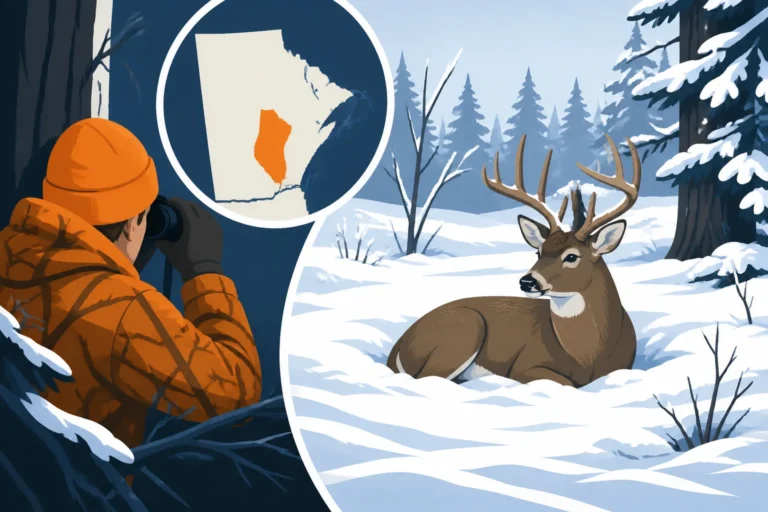
During the late season, subtle calling becomes your best bet. Think about using soft grunts to mimic a buck moving casually, or fawn bleats to attract does, hoping a buck might be shadowing them. Focus your efforts heavily on food sources – standing corn, grain fields, and remaining alfalfa. Deer will often yard up in thicker cover during deep snow, venturing out only to feed. Your approach needs to be quieter, and your calls more understated. The deer are much warier now, having survived weeks of hunting pressure. The priority is to simply locate deer and then entice them gently, rather than trying to challenge them into a fight. This period often aligns with hunters filling a Second Deer Licence in Manitoba, focusing on any deer available.
Common Mistakes and How to Avoid Them
Even seasoned hunters can make mistakes when rattling and calling, especially when hunting the notoriously wary parkland whitetail. Understanding these pitfalls can help you avoid them and increase your chances of success.
Over-Calling and Under-Calling Pitfalls
It's a delicate balance, and many hunters struggle with finding the right rhythm.
- Over-Calling: This is probably the more common mistake. Hunters get excited, especially if they hear a distant response, and they keep rattling and grunting excessively. The problem is that it sounds unnatural. Real deer fights, while intense, don't last forever, nor are they a constant barrage of noise. Over-calling can make the "fight" sound fake, or it can alert deer to your exact location without giving them a reason to approach. If a buck starts coming in, stop calling and get ready. Let his curiosity do the rest. The best strategy is to perform a sequence, then go silent and listen intently for 15-20 minutes, or even longer, before trying again.
- Under-Calling: On the flip side, some hunters are too timid. They might do a quick rattle and give up if nothing happens immediately. In the vastness of the parkland, or if deer are bedded down a bit further away, your calls might not carry or be convincing enough to grab their attention. Don't be afraid to be assertive during the peak rut. A longer, more aggressive sequence, followed by sufficient waiting time, is often necessary to truly pique a mature buck's interest. Sometimes, that buck needs to think about it for a while before deciding to investigate. If you're Rattling Volume in Open Parkland, remember sound dissipates quickly, so a bit more oomph might be needed.
The key is to read the deer and the conditions. If you get a response, back off and listen. If nothing happens after a good sequence and a patient wait, move to a new location or try a slightly different call.
Overlooking Wind and Entry/Exit Routes
These are fundamental hunting principles, yet they are often the downfall of rattling and calling attempts, especially in the parkland.
- Disregarding Wind Direction: As mentioned earlier, ignoring the wind is a guaranteed way to go home empty-handed. Parkland whitetails, having survived intense hunting pressure, are incredibly adept at using their nose. They will almost always circle downwind to scent-check the source of the sound. If your scent cone is blowing directly into their approach, they will smell you long before you see them, and they'll vanish without a trace. Always scout your locations with the wind in mind. Use a wind checker constantly. Sometimes, the best rattling spot might require a longer walk or a different angle to ensure the wind is perfect. This often requires setting up further away from where you expect the action, allowing for the deer to circle without smelling you.
- Poor Entry and Exit Routes: Getting to and from your stand or ground blind quietly and undetected is just as important as the rattling itself. If you're crunching through frozen leaves, walking across open fields in daylight, or making a ruckus on your way in, you've likely alerted every deer in the vicinity before you even start calling. Plan your routes to use existing cover, walk slowly and deliberately, and avoid making unnecessary noise. Similarly, your exit should be quiet. If you spook deer on your way out, you're educating them and making future hunts in that area much tougher. For some late-season scenarios, this might even involve considerations for Hunting Safely in Deep Winter Cold and navigating crunchy snow.
By paying meticulous attention to these details, you transform your rattling and calling efforts from a hopeful endeavor into a strategic and highly effective hunting method for Manitoba's parkland whitetails. These are truly some of the biggest and wariest deer around, so being on top of your game makes all the difference. For more detailed information, consider our comprehensive guide on Whitetail Hunting in Manitoba.
Disclaimer
Hunting is an inherently dangerous activity. The information provided in this guide is for informational purposes only and should not replace proper hunter education, safety courses, or professional guidance. Always adhere to all local, provincial, and federal hunting regulations, carry the appropriate licences and permits, and prioritize safety above all else. Be aware of your surroundings, know your target and what is beyond it, and hunt ethically and responsibly.