Rattling Volume in Open Parkland
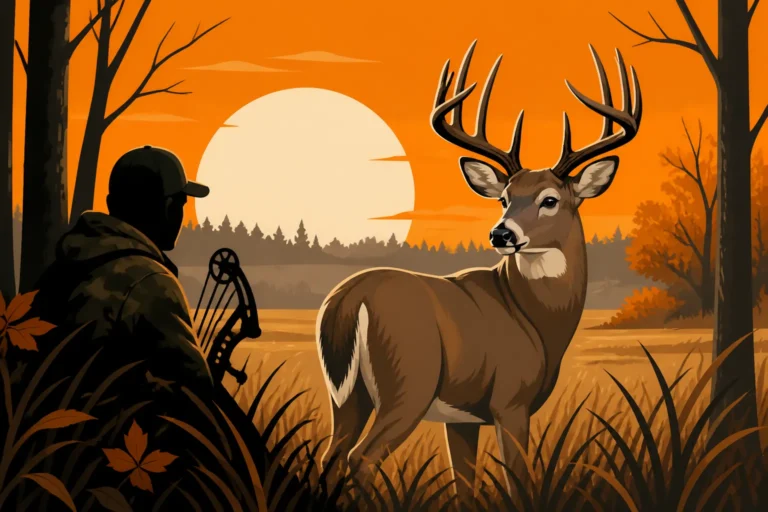
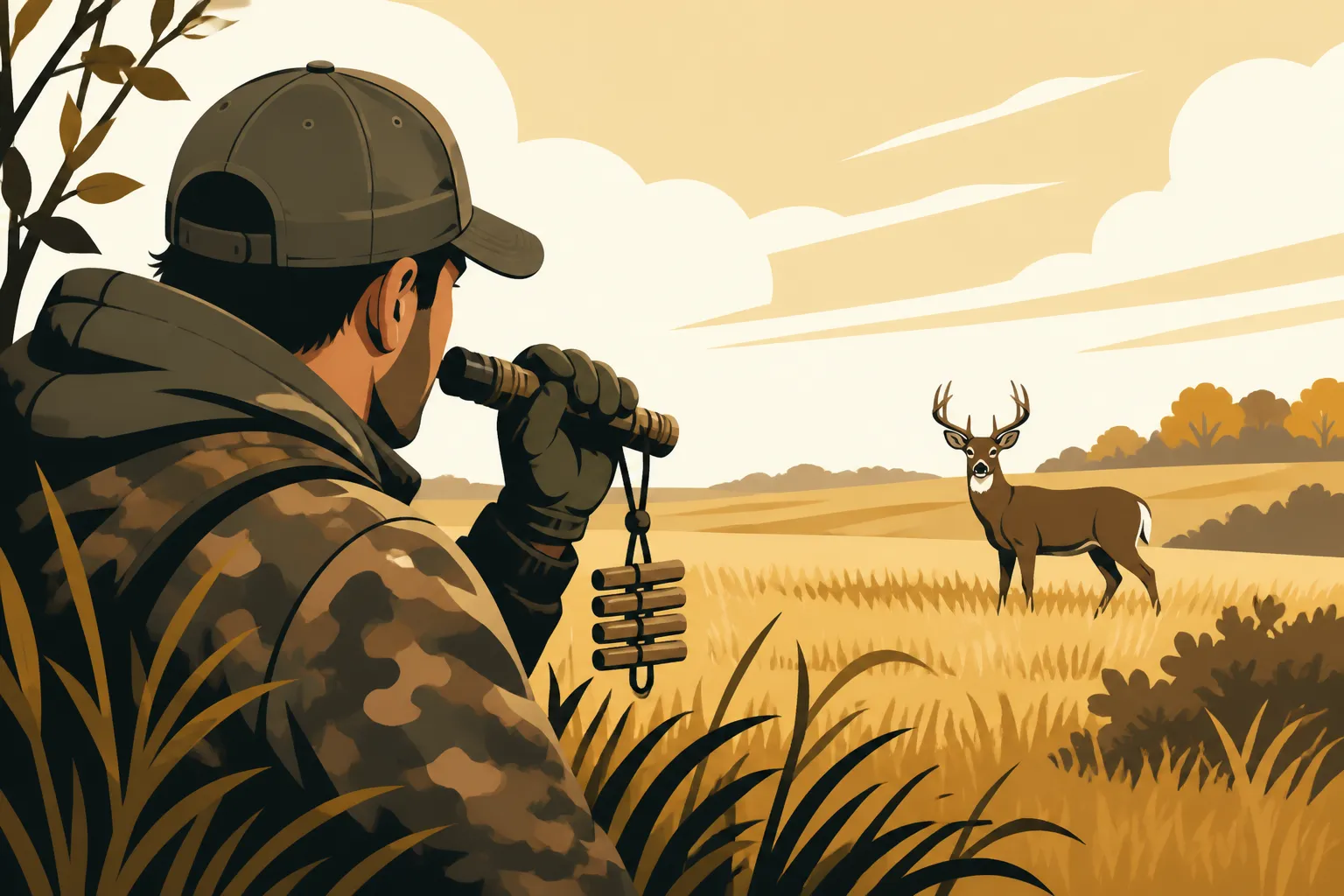
One of the trickiest aspects of chasing whitetails in Manitoba’s expansive parkland regions is figuring out how to make your rattling calls heard and, more importantly, believed. Unlike the dense bush, where every crack and clash echoes loudly, open country can swallow your best attempts, leaving you frustrated and wondering if you’re doing it all wrong. This guide is all about mastering the art of rattling volume in these wide-open spaces, helping you adjust your approach to effectively draw in those big bucks.
Understanding the Acoustics of Open Parkland
Hunting in Manitoba’s parkland offers incredible opportunities, but it also presents unique challenges, especially when it comes to sound. The way your rattling calls travel and are perceived is drastically different here than in the thick boreal forest or dense river bottom cover.
Why Open Parkland is Different for Calling
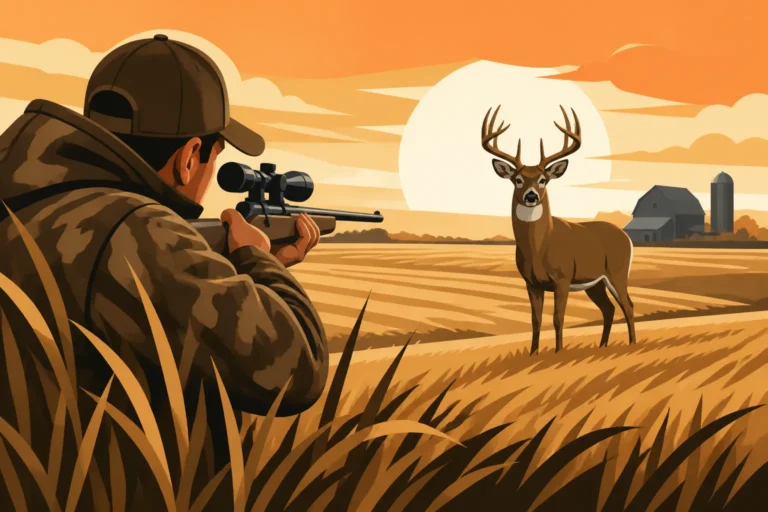
Imagine two bucks sparring in a thick aspen stand. The sharp crack of antlers, the thrashing of brush, the guttural grunts – it all reverberates through the trees, making the fight sound incredibly intense and close. Now, picture that same fight happening on a vast stubble field or a rolling prairie pasture. The sound dissipates quickly into the open air. There’s no canopy to trap the noise, no dense undergrowth to muffle and redirect it. This lack of acoustic 'furniture' means that what sounds aggressive and realistic to you might barely register as a whisper a few hundred yards away.
Hunters often feel a distinct frustration trying to make their calls cut through the silence of the parkland. You put your heart into a rattling sequence, only to see deer grazing nonchalantly in the distance, seemingly oblivious. Or, conversely, you go too loud too soon and spook a deer you never even saw. It's a delicate balance, and understanding why it's different is the first step to mastering it. The long sightlines, while great for spotting, also mean a buck can pinpoint your exact location much easier if your calling sounds out of place or too aggressive for its perceived distance.
Factors Influencing Sound Projection
Several environmental elements conspire to dictate how far and how clearly your rattling sounds will carry in open parkland. Ignoring these factors is like trying to yell into a hurricane and expecting to be heard.
First and foremost is wind direction and speed. A strong headwind will absolutely gobble up your calls, making them practically inaudible even at relatively short distances. Conversely, a steady breeze at your back can carry your sound surprisingly far, but it also carries your scent, which is a critical consideration. You're always playing a chess match with the wind, trying to make your calls effective without giving away your presence. Light, shifting breezes are often the trickiest, creating unpredictable sound dispersal patterns.
Next, terrain plays a subtle yet significant role. While it might appear "open," Manitoba's parkland is rarely truly flat. There are often gentle rises, shallow coulees, willow runs, and bluffs that can act as natural sound channels or, conversely, sound blocks. A small rise can sometimes shield your sound, while a slight depression or a linear patch of brush might help carry it. For instance, rattling into a slight down-slope often carries better than rattling directly across a flat field. Recognizing these subtle contours, perhaps through detailed scouting or by using tools like those offered by GoHunt, can help you position yourself for optimal sound projection. Even a minimal treeline or shelterbelt on the horizon can act as a backdrop, giving your calls something to bounce off and carry further, mimicking natural echo.
Finally, atmospheric conditions like humidity and temperature inversions can also impact sound. High humidity can sometimes help sound travel further, while extreme cold, common during Manitoba's late season, can make the air denser and capable of carrying sound with remarkable clarity, often much further than you expect. A temperature inversion, where warm air sits above cold air, can act like a sound mirror, bouncing sound back down to the ground and making it carry for miles. Understanding these conditions on any given hunting day can drastically change how you approach your rattling strategy.
Adjusting Your Rattling Volume for Open Country
The key to successful rattling in Manitoba’s open parkland is not to have one "go-to" volume, but a dynamic approach that adapts to the conditions and the deer's likely response. It's more like conducting an orchestra than playing a single note.
Starting Soft and Working Up
In open country, subtlety is often your best friend, especially when you’re unsure of how close deer might be or what their current mood is. A common mistake is to immediately crash antlers together with full force. This can easily blow out any close-by, curious bucks who might be lurking just over a rise or tucked into a small patch of cover. Think of it like walking into a quiet room – you don’t start shouting.
The strategy here is to begin with soft, subtle rattling. This might involve just gently tickling the tines together, rubbing the bases, or even a very light, short clash. This low-volume approach mimics smaller bucks sparring, or the initial stages of a larger fight before it escalates. It's enough to pique curiosity without raising immediate alarm. After your initial soft sequence, pause. Critically, listen for a response. Scan the area with your binoculars, looking for flicking ears, a raised head, or any subtle movement. Bucks, especially those that are wary or slightly out of sight, might respond with a soft grunt, a head turn, or even by just slowly walking in to investigate without making a sound.
If you don't get an immediate visual or auditory response, then you can gradually increase the volume and intensity. Your second sequence might involve slightly harder clashes, a bit more thrashing of brush (if you have any handy), and perhaps a few more aggressive grunts. Still, maintain pauses to listen. This escalation mimics a fight that’s intensifying, drawing in bucks that might have ignored the initial subtle sounds. It’s a way to test the waters without committing to an all-out brawl that could send sensitive deer running. Remember, you can always go louder, but you can’t go softer once you’ve already crashed them together at full volume.
When to Go Loud and Aggressive
While subtlety has its place, there are definitely times in the open parkland when you need to unleash a full-blown, aggressive rattling sequence. These scenarios typically involve longer distances, high winds, or the absolute peak of the rut when bucks are actively seeking out dominance encounters.
If you’ve spotted a buck a long way off – say, 800 yards to a mile – and he doesn't seem to be heading your way or responding to softer calls, that's when you might consider going loud and aggressive. In such vast distances, your soft calls will simply not carry, and you need to simulate a major event to grab his attention. This means crashing the antlers together with significant force, grinding them aggressively, and incorporating plenty of brush thrashing if you have it. The goal is to make it sound like two heavy-bodied Manitoba bucks are locked in a violent dispute over a hot doe. This kind of intensity can travel surprisingly far on a calm day or with a favorable wind.
During the peak of the rut, bucks are often much more willing to investigate a fight, sometimes even running to the sound. Their testosterone levels are surging, and the desire to breed or assert dominance outweighs caution. This is prime time for aggressive rattling. Don't be afraid to make a racket that sounds truly convincing, just like two mature deer fighting for territory. The duration of your sequences can also increase when you go loud; a long, drawn-out fight sounds more realistic and gives distant bucks more time to register and process the sound before committing to come closer. When you're ready to really lay into the antlers, remember to keep it realistic – short bursts of intense action, followed by a pause, just like a real fight ebbs and flows.
Using the Environment to Your Advantage
In open parkland, simply clashing antlers is only half the battle; how you position yourself and interact with your surroundings determines the other half. Every hunter knows the wind is crucial, but it's particularly important here. Always aim to position yourself so the wind is blowing your scent away from where you expect deer to approach from, or at least across your setup so they don't get directly downwind. Ideally, the wind would carry your scent perpendicular to their approach lane. Simultaneously, if possible, have the wind at your back or quartering from behind you to help carry your sound forward. It’s a tough juggle, but essential.
Beyond wind, look for even the slightest topographical features or linear cover that can help project or funnel sound. An elevated position, even a subtle knoll, can significantly extend the range of your calls, allowing the sound waves to travel over lower obstacles. Conversely, if you’re trying to call a buck that’s in a slight depression or coulee, you might need to adjust your angle or move to a spot where the sound can drop into their location. Remember, sound waves travel best unimpeded. Hunting a bluff between two fields can provide excellent opportunities, as the bluff itself can help funnel sound or provide a backdrop for it to resonate against.
Finally, and perhaps most crucially in open country, always consider your concealment after calling. Because deer can often see for vast distances, they will be looking for the source of the sound. Position yourself near a willow run, a small clump of trees, or even behind a round bale if you’re on farmland. This allows you to rattle, then quickly disappear from view while keeping an eye on where the buck might appear. This hide-and-seek aspect is vital in open terrain where you don't have the luxury of dense bush to vanish into. Practicing this quick transition from active calling to silent observation is a skill that comes with experience.
Equipment and Techniques for Effective Parkland Rattling
Having the right tools and knowing how to use them are paramount when rattling in the wide-open spaces of Manitoba's parkland. It's not just about noise; it's about believable noise.
Choosing the Right Rattling Antlers or Call
When it comes to rattling, hunters generally fall into two camps: real antlers or synthetic calls. Both have their merits, especially when you're trying to project sound across open country.
Real antlers are often favored for their authentic sound. The natural density and irregular shapes produce a truly realistic clack, grind, and thud that synthetic materials sometimes struggle to replicate. For open parkland, larger, heavier real antlers (from a good-sized buck) can generate more volume and a deeper, more resonant sound, which is crucial for carrying over distance. The downside? They can be bulky, noisy to carry, and a real pain if you're trying to stay mobile. However, if you can find a pair with good tines and heavy bases, they're hard to beat for realism and volume.
Synthetic calls, often made from composite materials or contained in a rattling bag, offer convenience and portability. Brands like RattleBag and primos offer excellent options. These can be particularly handy for the mobile hunter who might be covering a lot of ground in the parkland. While some synthetic calls struggle to replicate the full spectrum of sounds from real antlers, many modern designs are remarkably good. For open country, look for synthetic calls designed to produce louder, sharper sounds, or rattling bags that allow you to really crash the components together. One significant advantage of a rattling bag is the ability to control the "thrashing" sounds – mimicking a buck raking brush – which is a critical part of a convincing fight sequence. The challenge here is making sure you can generate enough sustained volume without sounding tinny or artificial. Carrying a good quality rattling bag, perhaps from a reputable brand you might find on GoHunt, can provide versatility, especially when you need to quickly deploy a rattling sequence.
Integrating Other Calls with Rattling
Rattling alone is powerful, but when combined with other vocalizations, it becomes an almost irresistible magnet for curious bucks, especially during the rut. In open parkland, where every advantage counts, this multi-sensory approach can make all the difference.
Grunt calls are your absolute best friend when rattling. A deep, guttural grunt often accompanies a buck fight, especially from the more dominant animal. Incorporating a few aggressive grunts during or immediately after a rattling sequence adds another layer of realism. A short, sharp grunt can also be used as a standalone call to stop a moving buck you've just rattled in, giving you a shot opportunity. During the pre-rut and peak rut, a steady grunt alongside your rattling signals a buck that another buck is encroaching on his territory, often driving them in for a confrontation. Learning to make grunt calls late in Manitoba's rut can significantly enhance your chances.
For truly aggressive situations, the snort wheeze is the ultimate challenge call. This isn’t a sound you throw out casually, but when a buck is acting hesitant or ignoring your rattling, a snort wheeze can be the catalyst to push him over the edge. It's the sound of a buck saying, "I'm coming for you." In open parkland, where bucks have plenty of space to retreat, this bold challenge can sometimes be the only thing that convinces a dominant buck to commit and close the distance. Use it sparingly, and usually after a convincing rattling sequence has already been established.
Think of your calling sequence as a story: the subtle tickles are the introduction, the crashing antlers are the main event, and the grunts and snort wheezes are the rising action and climax. By using this "full package" approach, you create a dynamic, believable scenario that triggers a buck's primal instincts, drawing him closer to investigate the commotion, even across those vast open fields. Remember to pause and listen after each part of your sequence; sometimes, the subtle response is all you need to confirm a buck's interest.
Observing Buck Behavior Post-Rattle
You've just completed a killer rattling sequence, complete with grunts and perhaps a snort wheeze. Now what? This is where patience, keen observation, and understanding whitetail behavior in open country become paramount. Many hunters make the mistake of calling and then immediately getting antsy, moving, or repeating the sequence too soon.
After your calling, the first thing you need to do is become absolutely motionless and scan the horizon meticulously. In open parkland, a buck might approach from any direction, and often without making a sound. Their ability to materialize out of seemingly nowhere is astounding. Use your binoculars to systematically glass every edge, every willow clump, every slight rise within sight. Look for subtle signs: a flicker of an ear, a flash of white belly, or the silhouette of antlers cresting a knoll. Bucks might take anywhere from a few minutes to half an hour or more to show up, especially if they are coming from a long distance. Don't assume they're not coming just because you don't see them immediately.
Once a buck appears, start reading its body language. Is he walking in cautiously, head low, scent-checking the wind? This might indicate wariness, and he's trying to pinpoint the source of the sound without exposing himself. Is he trotting in, ears pinned back, bristled up? This buck is aggressive and ready to fight, likely a dominant male. Or is he approaching casually, perhaps even nibbling on some grass? This might be a younger, curious buck, or an older buck who’s seen it all and isn't quite convinced. Your observation dictates your next move. If he’s wary, you might need to stay absolutely still, or perhaps offer a very soft, calming grunt to reassure him. If he’s aggressive, you might stay quiet, letting his curiosity pull him in, or offer another, equally aggressive call if he hangs up out of range.
Knowing when to re-rattle or switch tactics is also key. If a buck hangs up out of range, showing interest but unwilling to commit, a soft follow-up grunt or a very subtle, short rattling sequence can sometimes be enough to coax him closer. If he seems to be losing interest, walking away, or simply not showing up after a significant wait, then it might be time to move to a new location or try a different calling strategy. Remember that bucks will often circle downwind to get a scent check, so always be prepared for an approach from an unexpected direction. Understanding how deer behave after hearing calls in open country will greatly increase your success rate. For more insights on this, consider checking out articles like Scouting a Manitoba Game Hunting Area or Hunting the Parkland Fringe for Big Bucks.
Here’s a quick reference table for adjusting your rattling volume in different parkland conditions:
| Condition | Starting Volume | Follow-Up Volume | Rattle Duration | Key Considerations |
|---|---|---|---|---|
| Calm Day, Unknown Deer Proximity | Soft/Subtle | Moderate/Escalating | Short bursts | Test the waters; avoid over-calling. Listen carefully. |
| Windy Day, Long Distance | Loud/Aggressive | Loud/Aggressive | Longer sequences | Needs to cut through wind. Position downwind of deer. |
| Peak Rut, Aggressive Buck | Moderate/Loud | Aggressive | Variable, intense | Bucks are looking for a fight; add grunts/wheezes. |
| Pre-Rut, Wary Buck | Soft/Moderate | Gradual Increase | Short bursts | Pique curiosity, don't spook. Be patient. |
| Post-Rut, Checking for Does | Subtle/Moderate | Subtle/Grinding | Light, short | Bucks are tired but still curious; less aggressive. |
| Near Known Bedding Area | Very Soft | Gentle Rake | Very short | Don't blow them out; only light sparring. |
Ultimately, rattling in Manitoba's open parkland is an art form that blends understanding acoustics, adjusting your volume strategically, and keenly observing deer behavior. It’s a rewarding challenge, and with practice, you’ll find that sweet spot between silence and a full-blown buck brawl. Knowing when and how to rattle can turn a quiet day into an unforgettable encounter with one of Manitoba's impressive whitetails. Don't forget to practice different scenarios. Perhaps you want to learn more about Hunting Whitetails on Manitoba Farmland or even how to read Whitetail Sign in Manitoba Aspen. For timing your hunt perfectly, you might also want to consult articles like Hunting the Rut in Early to Mid November.
Disclaimer
The information provided in this article is for general guidance and educational purposes only. Hunting regulations, seasons, and practices can change. Always consult the most current Manitoba Hunting Guide and regulations issued by Manitoba Sustainable Development before planning any hunting activity. Ensure you have all necessary licenses and permits and adhere strictly to all safety guidelines. Hunting involves inherent risks, and individual success cannot be guaranteed.