Getting a Moose Out With a Quad
There are few feelings as exhilarating as connecting with a massive Manitoba moose, but that initial rush quickly gives way to a daunting realization: now you have to get it out of the bush. These incredible animals often choose the gnarliest, wettest, thickest spots in the boreal forest to live and, naturally, expire. Trying to drag or pack out hundreds of pounds of meat and bone by hand in Manitoba's challenging terrain is a recipe for exhaustion, injury, and potentially spoiled meat. This guide is all about turning that logistical nightmare into a manageable task by leveraging the power and utility of a quad.
The Challenges of Moose Recovery in Manitoba's Bush
Manitoba offers some truly spectacular moose hunting, with healthy populations roaming vast expanses of wild country. But make no mistake, hunting these giants isn't just about finding them and making the shot; it's about the monumental effort required after the shot. The sheer scale of a moose, combined with the often-remote and rugged habitat they call home, presents a unique set of challenges that can overwhelm even the most seasoned hunter.
Understanding Manitoba's Moose Habitat
Picture this: you've been still-hunting through miles of dense black spruce and tangled willow thickets, your boots sinking into spongy muskeg with every step. Suddenly, you spot him – a magnificent bull moose, standing knee-deep in a beaver pond or bedded down in a swampy depression. You make a perfect shot, and he drops right there. That's fantastic, but now you're faced with the reality of getting that animal out of a location that was barely accessible on foot.
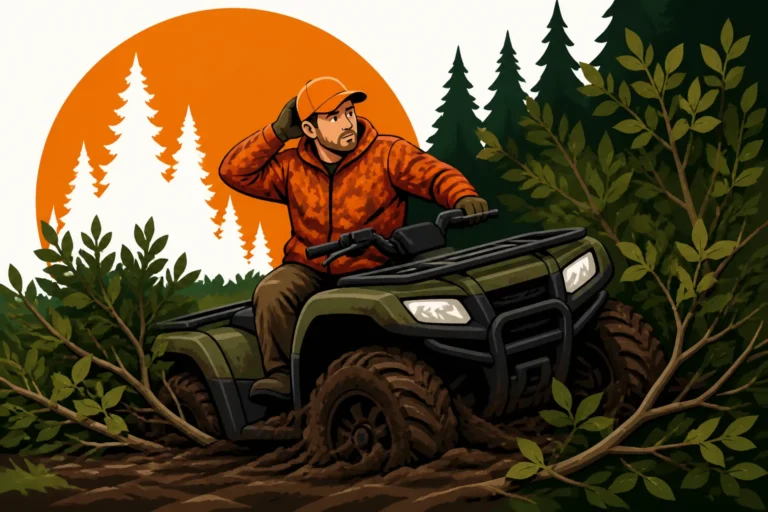
Manitoba's moose primarily inhabit the province's vast boreal forest, a mosaic of timber, wetlands, and rocky outcrops. This means hunters are often dealing with dense stands of trees, thick undergrowth, boggy muskeg, and numerous sloughs and rivers. Areas like the Interlake or the northern regions, where Moose Across Manitoba's Boreal Forest are plentiful, are notorious for their challenging terrain. Roads are few and far between, and even established trails can quickly degrade into muddy ruts or vanish entirely into brush. Trying to drag an animal of this size, even a quartered one, through such an environment without mechanical assistance is not just difficult, it's often impossible and always incredibly slow, putting your valuable meat at risk.
The Sheer Size and Weight of a Moose
A mature Manitoba bull moose is an awe-inspiring animal, and their size isn't just about their impressive antlers. These animals are massive, with some bulls tipping the scales at over 1,500 pounds live weight, and even a smaller cow moose can easily be 700-800 pounds. To get a sense of just What a Big Bull Moose Weighs Here, imagine trying to move a small car by hand.
Once field-dressed, you might remove a couple of hundred pounds of viscera, but you're still looking at a carcass weighing well over half a ton. Even when quartered, each section can weigh upwards of 150-250 pounds, depending on how you butcher it. The physical toll of trying to drag these heavy, unwieldy pieces through thick bush, over downed logs, and across soft ground is immense. It's back-breaking work that can quickly lead to exhaustion and potential injury. Beyond the physical strain, there's the critical issue of meat care. In Manitoba's variable climate, especially during early seasons, temperatures can rise quickly. Delaying extraction means risking spoilage, and all that hard work, money, and effort could be for nothing. Proper Meat Care in Manitoba's Cold Snaps or warm spells is paramount, and a quad significantly speeds up the process.
Essential Quad Setup for Moose Extraction
Given the formidable challenge of extracting a moose, a well-equipped quad isn't just a luxury; it's practically a necessity for many Manitoba hunts. But not just any quad will do. You need the right machine, properly outfitted, and a suite of essential recovery gear to ensure both efficiency and safety in the backcountry.
Choosing the Right Quad and Accessories
When it comes to picking a quad for moose extraction, think "heavy-duty" and "reliable." This isn't the time for a light-duty recreational machine. You're going to be pushing its limits, often far from help.
Firstly, consider engine size and power. A minimum of a 500cc engine is advisable, but honestly, something in the 700cc to 1000cc range will provide the torque and power needed to pull heavy loads through thick mud, over obstacles, and up inclines. Look for models from reputable manufacturers known for durability, like Polaris, Can-Am, or Honda. These brands often offer robust utility models designed for exactly this kind of work. Next, 4×4 capability is non-negotiable. You'll encounter challenging terrain where two-wheel drive simply won't cut it. Good ground clearance is also critical to prevent getting high-centered on logs or rocks. Equally important are durable, aggressive tires – think mud or all-terrain specific treads that can find traction where standard tires would spin uselessly.
Now for the accessories:
- Winch: A powerful winch, ideally mounted on the front, is your best friend. A 3,500-pound capacity is a good minimum, but 4,500 pounds or more is better. Some hunters even add a rear winch for ultimate versatility. This will be invaluable for pulling your moose, your loaded trailer, or even your own quad if it gets stuck.
- Heavy-Duty Racks: The stock racks on many recreational quads might be sufficient for light gear, but for moose quarters, you'll want something more robust. Aftermarket heavy-duty racks or dedicated cargo boxes designed to carry substantial weight are a smart investment.
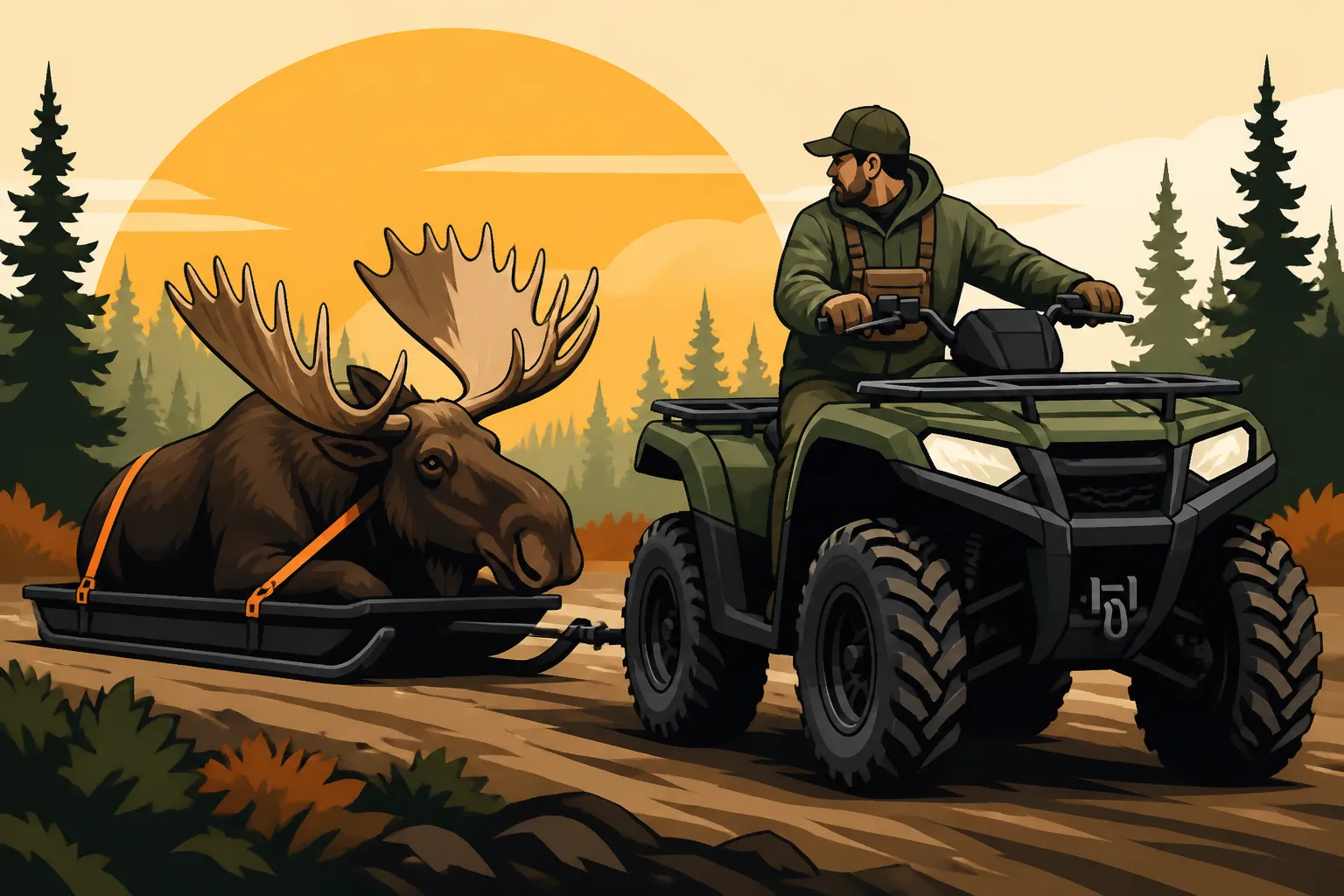
- Trailer or Sled: This is often the real game-changer. A small, sturdy utility trailer designed for quads, or a heavy-duty plastic sled (often called an Otter Sled or similar) can make a world of difference. The sled is particularly useful in snowy or wet, muddy conditions, allowing you to slide heavy quarters out with less friction than dragging directly on the ground. When you're making a run into a remote area, having the ability to load up quarters securely and make fewer trips is key.
Recovery Gear and Safety Considerations
Having the right quad is only part of the equation; you also need the tools to use it effectively and safely. Getting stuck or breaking down in remote areas of Manitoba, especially if you're Hunting Safely in Deep Winter Cold or alone, can quickly become a serious emergency.
Here's what should always be in your recovery kit:
- Winch Accessories: This includes tree savers (straps that protect trees when winching), snatch blocks (to double your winching power or change direction), and heavy-duty tow straps. Never winch directly off a tree without a tree saver; you'll damage the tree and potentially your cable.
- Cutting Tools: A reliable chainsaw (with extra fuel, bar oil, and a sharpening kit) and a good axe are essential for clearing fallen trees or dense brush to create a path for your quad. Many Manitoba trails can be quickly overgrown.
- Navigation and Communication: GPS devices are indispensable. Consider a satellite messenger or phone (like a Garmin InReach or Spot device) because cell service is practically non-existent in much of Manitoba's boreal forest. Apps like GoHunt, which integrate mapping and GPS, can be invaluable for pre-planning routes and tracking your progress in the field.
- First-Aid and Survival: A comprehensive first-aid kit, emergency shelter (tarp or space blanket), fire starter, extra food, and water are critical. Always prepare for the possibility of an overnight stay, even if you don't plan for one.
- Visibility: Always wear blaze orange, especially when operating a quad during hunting season. This is a safety requirement in many situations and simply good practice to make yourself visible to other hunters who might be in the area.
- Understanding Regulations: Familiarize yourself with Quad and Side-by-Side Rules on Crown Land. There are specific regulations about where and when you can operate off-road vehicles on public land in Manitoba, including restrictions in certain wildlife management areas or during specific times of the year.
Table: Essential Quad & Recovery Gear Checklist
| Category | Item | Description |
|---|---|---|
| Quad Specs | Engine Size | 500cc+ (700-1000cc recommended for heavy loads) |
| Drive System | 4×4 (essential) | |
| Ground Clearance | High clearance for obstacles | |
| Tires | Aggressive mud or all-terrain tires | |
| Power Steering | Highly recommended for maneuverability with heavy loads | |
| Recovery Gear | Winch | 3,500-4,500+ lb capacity (front-mounted, rear optional) |
| Tree Savers / Snatch Blocks | Protects trees, doubles pulling power | |
| Tow Straps | Heavy-duty, non-elastic for towing or pulling | |
| Chainsaw & Fuel | For clearing downed trees and brush | |
| Axe | Smaller clearing tasks, splitting wood | |
| Transport | Heavy-Duty Racks | Securely carry quarters on quad |
| Utility Trailer / Sled | For larger loads or easier dragging in snow/mud | |
| Navigation | GPS Device | Handheld or quad-mounted |
| Satellite Messenger | For communication outside cell service (e.g., Garmin InReach, Spot) | |
| Digital Mapping App | GoHunt or similar, pre-downloaded maps for offline use | |
| Safety/Misc. | First-Aid Kit | Comprehensive kit for injuries |
| Emergency Shelter | Tarp, space blanket | |
| Fire Starter / Lighter | For warmth and signaling | |
| Extra Fuel / Tools | For quad, chainsaw; basic repair kit | |
| Blaze Orange | High-visibility clothing/gear | |
| Game Bags / Tarps | To keep meat clean and cool |
Strategies for Efficient Moose Extraction with a Quad
With your quad ready and your recovery gear packed, it's time to strategize the actual extraction. A downed moose is a time-sensitive situation, and having a clear plan will save you immense effort and ensure you get your valuable meat home in prime condition.
Field Dressing and Quartering for Transport
The first step, once your moose is down and tagged, is proper field dressing. This isn't just about removing the guts; it's about starting the cooling process and preparing the animal for manageable transport.
Immediately after ensuring the animal is expired, start field dressing. Remove the entrails as quickly and cleanly as possible to allow the carcass to begin cooling from the inside out. In a large animal like a moose, this is critical. If you have a tarp, try to lay it down to keep the meat off the forest floor as much as possible, reducing contamination.
Next comes quartering. Trying to drag a whole, field-dressed moose with a quad is usually too much for one machine and often impractical in thick bush. The most common approach for moose is to break the animal down into four large quarters (two front shoulders, two hindquarters), plus the backstraps, tenderloins, neck meat, and sometimes the rib meat. Some hunters go a step further and bone out the meat right in the field, which significantly reduces weight and bulk. While more time-consuming initially, boning out means less weight to move and often allows you to fit more meat on your quad or trailer. If you plan to keep the hide for tanning or the antlers for a trophy, ensure they are handled carefully, especially the cape if you want a shoulder mount. Remember, every minute counts in getting that meat cooled, especially if the weather is mild. Quartering a Moose Alone in the Bush is a skill worth practicing or reviewing before your hunt.
Utilizing the Quad for Mechanical Advantage
This is where your quad truly shines. Instead of brute force, you're employing mechanical advantage to do the heavy lifting.
- Initial Positioning: If the moose dropped in an absolutely terrible spot (e.g., halfway into a swamp), you can use your winch to gently pull the entire field-dressed animal to slightly firmer, more accessible ground before quartering. Secure your winch line to a sturdy anchor point like a large tree, and slowly winch the moose out.
- Loading Quarters: Once quartered, loading these heavy pieces onto your quad racks or into a trailer/sled can still be a challenge. If you have a partner, it's much easier to lift. If alone, you can use the winch again. Position your quad, attach the winch line to a loop of rope around a quarter (or use a game hoist if you have one), and slowly winch the quarter onto your rack or into the trailer. Make sure all quarters are securely strapped down to prevent shifting during transit. Using sturdy game bags for each quarter will keep the meat clean and allow for better airflow.
- Clearing a Path: Often, the biggest obstacle isn't the weight, but the dense bush. Use your chainsaw to clear a path, opening up a narrow "moose trail" for your quad. Remove fallen trees, cut back thick willows, and create a route that minimizes banging and scraping your precious cargo. GoHunt's mapping features can sometimes highlight old, faint trails or logging cutlines that might offer a slightly easier route. Consider trying to find a natural corridor or old Hunting a Moose on a Manitoba Cutline to reduce the amount of clearing needed.
- Navigating Terrain: With a loaded quad, take your time. Go slow over rough ground. Use your 4×4. If you encounter a particularly muddy section or a steep incline, use your winch proactively rather than risking getting stuck. Secure your quad to a tree ahead, and use the winch to assist your machine's traction.
Planning Your Extraction Route
A good extraction plan starts long before you pull the trigger. Ideally, you've done some pre-scouting, either in person or with satellite imagery, to identify potential routes.
- Pre-Scout with Maps: Use detailed topographical maps or satellite imagery (GoHunt and similar apps are excellent for this) to identify natural corridors, old logging roads, seismic lines, or even game trails that run in the direction of the nearest accessible road or truck trail. Look for areas with slightly higher ground to avoid the worst of the muskeg. When scouting a Manitoba Game Hunting Area, identifying these routes in advance can save hours of headache.
- Minimize Distance and Obstacles: Try to get your quad as close as safely possible to the downed animal before you start the heavy work. This minimizes the distance you have to drag or carry quarters by hand. Plan a route that avoids major obstacles like deep rivers, huge beaver ponds, or impassable thickets. Sometimes, a slightly longer route that avoids major challenges is faster than a shorter, brutal one.
- Respect Land Designations: Be aware of different land designations. While you can usually access Manitoba's Crown Land Access with a quad, some areas, like provincial parks or specific wildlife management zones, might have restrictions. Always double-check your GHA map. If you're near private land, make sure you have permission to cross it, even for retrieval. Getting your animal out is no excuse for trespassing.
Legalities, Logistics, and Final Tips
Beyond the physical act of getting a moose out, there are crucial legalities and logistical considerations that every Manitoba hunter needs to be aware of. Overlooking these details can lead to fines, difficulties, or even an unsafe situation.
Understanding Manitoba's Regulations for Off-Road Vehicles
Manitoba has specific rules governing the use of off-road vehicles (ORVs) like quads, especially on Crown land. It's not a free-for-all, and ignorance of the law is no excuse.
Firstly, you need to understand where you can actually operate your quad. While ORVs are generally allowed on Crown land, there are exceptions. Some Wildlife Management Areas (WMAs) may have seasonal or permanent closures to ORVs to protect sensitive habitats or minimize disturbance to wildlife. Provincial parks are typically off-limits for hunting and ORV use outside of designated trails. Always check your current hunting guide and GHA map for specific regulations pertaining to your hunting area. Operating your quad in unauthorized areas can result in significant fines.
Furthermore, always be mindful of your impact. Stick to existing trails or cutlines where possible. Avoid creating new ruts or damaging vegetation unnecessarily. Noise pollution is also a factor, particularly if you're hunting in an area with other people. Ethical conduct means minimizing your footprint and respecting the environment.
Finally, remember the rules around Transporting Game Meat in Manitoba. Once your moose is loaded, ensure it's properly tagged, and you're carrying your licence. There are rules about exhibiting evidence of sex on certain animals, and ensuring your kill is validated correctly.
Preparing for the Unexpected
Even with the best planning and equipment, things can go wrong in the Manitoba bush. Being prepared for the unexpected is a hallmark of a responsible hunter.
- Quad Breakdown/Stuck: Your quad is a mechanical beast, and mechanical beasts can fail or get stuck. Always carry a basic tool kit (wrenches, zip ties, duct tape), spare spark plugs, and extra fuel. Know how to perform basic troubleshooting. If you get truly stuck, remember your winch is your primary recovery tool. If the winch fails or you have no anchor points, that's when your satellite messenger becomes absolutely invaluable for calling for help. Never go into remote areas alone, especially for extraction. A hunting partner or two makes all the difference in these situations.
- Communication Gaps: Much of Manitoba's prime moose habitat has little to no cell service. Relying solely on your phone is a dangerous gamble. This is why a satellite messenger or phone is critical. Before you head out, file a detailed trip plan with a responsible person, including your intended route, expected return time, and contingency plans.
- Weather Changes: Manitoba weather can be unpredictable. A warm, sunny day can turn into a cold, wet one quickly. Have rain gear, extra layers, and supplies for an unexpected overnight stay. Your meat care needs to adapt to these changes as well.
Post-Extraction Care
Once you've successfully navigated the bush and delivered your hard-earned moose quarters to your truck or camp, the work isn't quite over.
- Quad Cleaning and Maintenance: Give your quad a thorough cleaning. Mud, dirt, and blood can get into every crevice, potentially causing issues down the line. Inspect your machine for any damage, loose components, or worn tires. This post-hunt inspection ensures your quad is ready for its next adventure and prevents small problems from becoming big, expensive ones.
- Meat Storage: Ensure your meat is properly hung, cooled, and stored immediately. Whether it's in a walk-in cooler, a processing facility, or a cool shed, rapid and sustained cooling is essential to prevent spoilage. You've gone through immense effort to harvest and extract this animal; don't let it go to waste in the final stages.
Getting a moose out with a quad in Manitoba isn't just about hauling; it's about smart preparation, understanding the terrain, utilizing the right tools, and respecting the land and its regulations. It turns a potential ordeal into a manageable and rewarding part of the hunting experience, ensuring your freezer is full of prime, wild game.
Disclaimer
The information provided in this article is for general guidance and informational purposes only. Hunting regulations, seasons, and requirements can change frequently. Always consult the most current Manitoba Hunting Guide, official government websites, and local authorities before planning any hunting trip. Safety should be your number one priority when engaging in any outdoor activity, especially hunting in remote areas.