The Grouse Species You Will Find Here
Navigating the vast and varied landscapes of Manitoba for upland birds can sometimes feel like trying to find a needle in a haystack, especially if you're not entirely sure which "needles" you're even looking for. Many of us have spent countless hours trudging through thick cover, wondering if we're in the right place, for the right bird. This guide aims to clear up that confusion by providing a deep dive into the specific grouse species you'll encounter here, their preferred haunts, and how to successfully pursue them across our incredible province.
Understanding Manitoba's Grouse Diversity
Manitoba is a surprisingly rich province when it comes to upland bird hunting, and grouse are a huge part of that appeal. From the dense boreal forests of the north to the rolling parkland and agricultural fringes, these resilient birds have adapted to a wide array of environments. It’s not just about finding "a" grouse; it's about understanding which species inhabits which niche and what that means for your hunting approach.
Why Grouse Thrive in Our Varied Landscapes
Manitoba's geological and ecological diversity is the secret sauce for our healthy grouse populations. We've got everything from vast tracts of aspen parkland, characterized by poplar bluffs and willow thickets, to expansive coniferous forests further north, and even pockets of prairie grasslands. Each of these distinct zones offers a unique mosaic of food sources and protective cover that different grouse species have evolved to exploit. For instance, the younger, regenerating forests, often a result of past logging or natural disturbances, provide the perfect dense cover and abundant browse for certain species, while open grasslands cater to others. This varied habitat means that a hunter willing to explore different regions can often pursue multiple grouse species in a single season, offering a truly diverse experience. The sheer amount of undeveloped land, particularly Crown land, contributes significantly to sustaining these populations, providing undisturbed breeding and foraging grounds that are increasingly rare in more developed regions.
The Appeal of Grouse Hunting in Manitoba
There's a special charm to grouse hunting that's hard to replicate with other game. It’s often a more active, walk-and-stalk affair, demanding keen observation, good stamina, and quick reflexes. Unlike sitting in a blind waiting for waterfowl, grouse hunting keeps you moving, immersing you fully in the natural environment. The sudden flush of a bird from dense cover, the thunder of its wings, and the challenge of a snap shot are exhilarating. Beyond the shot, the beauty of the bird itself, with its intricate plumage, is a reward. For many, it's also about the simplicity – a shotgun, a dog if you have one, and a pair of good boots are often all you need. It’s an accessible hunt for many, and the generous seasons and limits for upland birds in Manitoba mean there are plenty of opportunities to get out there. Plus, there's the added bonus of delicious table fare, which makes the effort even more worthwhile. You don't need a huge, expensive setup to get started, which lowers the barrier to entry for new hunters and keeps it enjoyable for seasoned veterans.
Ruffed Grouse: The King of the Bush Trails
Ah, the ruffed grouse. For many Manitoba hunters, this is the quintessential upland bird. Known affectionately as "partridge" by many locals, these little dynamos offer thrilling flushes and fantastic eating. You'll find them almost everywhere there's a good mix of forest and edge habitat, making them a staple target throughout much of the hunting season.
Habitat and Behavior of Ruffed Grouse
Ruffed grouse are creatures of the dense undergrowth, preferring young, regenerating forests, aspen bluffs, mixed woodlots, and thick willow runs. Think of areas where timber has been harvested five to twenty years ago, creating a tangled mess of new growth, or the edges of agricultural fields bordering bush. They absolutely thrive in habitats like the Duck Mountain Provincial Forest or the Sandilands Provincial Forest, where there's a constant cycle of disturbance and regrowth. These areas provide the perfect blend of cover from predators, abundant food sources like buds, catkins, berries, and insects, and drumming logs for the males to establish their territories.
When you're out looking for them, pay close attention to old logging roads, ATV trails, and natural clearings. They often feed along these edges, especially in the early morning and late afternoon, and then retreat into the dense cover during the middle of the day. Their camouflage is incredible, allowing them to sit motionless until you're almost on top of them before erupting in a heart-stopping flush. It's this explosive departure that often catches hunters off guard, turning what could be an easy shot into a challenging exercise in quick reflexes. Understanding their need for thick cover means knowing where to focus your efforts.
Hunting Strategies for Ruffed Grouse
Hunting ruffed grouse is often a game of walking and listening. Slow, deliberate movements through good cover are key. Don't rush. Pause often, listen for subtle sounds, and be ready when that bird rockets out of the brush. Many hunters find success by walking old trails and logging roads, especially those with good cover adjacent to them. As you walk, swing your shotgun continuously, ready to shoulder it the moment a bird flushes. Dogs, particularly flushing breeds like Springer Spaniels or pointing breeds like German Shorthaired Pointers, can be incredibly effective for Ruffed Grouse Hunting Manitoba's Bush Trails. A good dog helps locate birds you might otherwise walk past and can also retrieve downed birds from thick tangles, preventing lost game.
If you don't have a dog, consider hunting with a partner. One person can walk the trail while the other parallels them 20-30 yards into the bush, helping to push birds out into more open shooting lanes. Early in the season, before heavy snows, grouse might be higher in the trees, feeding on buds. As winter approaches, they'll typically be found closer to the ground, seeking thermal cover. Always be mindful of Ruffed Grouse Season Dates and Limits and local regulations before heading out. Sometimes, simply knowing the preferred food sources for the time of year – whether it’s berries in early fall or aspen buds later on – can help you pinpoint their locations more effectively.
Sharp-Tailed Grouse: The Prairie's Lively Dancers
Move out of the dense woods and into Manitoba's more open parkland and grassland habitats, and you'll encounter the sharp-tailed grouse. These birds are a true emblem of our prairie fringe, known for their distinctive plumage and their fascinating lekking (dancing) rituals in the spring. For hunters, they offer a different kind of challenge and a unique experience in a different kind of landscape.
Preferred Habitat and Social Dynamics
Sharp-tailed grouse, often called "sharptails," prefer a mosaic of native grasslands, brushy coulees, and agricultural field edges. They thrive in areas like the mixed-grass prairies of southwestern Manitoba, the open parkland of the Interlake region, and even areas around Riding Mountain National Park where agricultural lands meet natural bush. Unlike ruffed grouse, sharptails aren't typically found in dense, unbroken forest. Instead, they need open spaces for feeding and their communal dancing grounds (leks), but also rely on brushy cover – think willow bluffs, stands of chokecherry, or dense clumps of silver buffaloberry – for roosting and protection from predators.
These birds are often found in coveys (flocks) throughout much of the hunting season, which can make for exciting flushes when you stumble upon a large group. Their social dynamics, especially during the spring breeding season when males gather on leks to perform elaborate dances to attract females, are truly remarkable. While you won't be hunting them during this time, understanding this behavior helps appreciate their connection to the landscape. They feed on a variety of items including grains, seeds, buds, and insects, adapting their diet to what’s available in their specific environment. Knowing this, if you're Hunting a Swathed Grain Field at Dusk, you might just encounter a covey moving out to feed.
Tactics for Hunting Sharp-Tails
Hunting sharp-tailed grouse is often a wide-ranging affair, best suited to covering a lot of ground. Walking long stretches of native prairie, grassland pastures, or along the edges of grain fields is a common approach. This is where a good pointing dog really shines, allowing you to walk up the birds after they've been located. Walking Up Sharp-Tailed Grouse in Manitoba can be incredibly rewarding, but prepare for some serious leg work. Sharptails tend to hold a bit tighter than ruffed grouse in dense cover, but in more open country, they might flush at a greater distance, so be ready for longer shots.
Using a dog is highly recommended for these birds. A pointing dog allows you to approach the covey cautiously, setting up for a cleaner shot as the birds flush. Without a dog, it can be tough to pinpoint where birds are holding, and they might run ahead of you or flush wild. If you're hunting without a dog, focus on walking the edges of brushy cover that borders open fields, especially during cooler parts of the day when they might be feeding. In the hotter midday hours, they'll often be tucked into the shadiest, densest cover available, such as deep coulees or large willow bluffs. Always remember to check Sharp-Tailed Grouse Season and Limits for the specific dates and bag restrictions in your chosen Game Hunting Area (GHA). Utilizing scouting tools like GoHunt can provide valuable insights into potential cover and access points in these expansive landscapes.
Spruce Grouse: The North's Tamest Fowl
Venturing further north into Manitoba's true boreal forest brings you into the domain of the spruce grouse. These birds are markedly different from their ruffed and sharp-tailed cousins, both in appearance and behavior. Often called "fool hens" due to their notorious lack of fear, they offer a unique and often surprisingly easy hunting experience.
Where to Find Spruce Grouse
Spruce grouse are inextricably linked to coniferous forests. You'll find them primarily in the vast expanses of black spruce, jack pine, and tamarack stands that dominate central and northern Manitoba. Think of areas around The Pas, Thompson, or the more remote regions of the Eastern Shield country. They thrive in boggy areas, muskeg edges, and drier jack pine ridges, often near water sources. Their diet consists heavily of conifer needles, particularly spruce and pine, which gives their meat a slightly distinct flavour compared to other grouse. They'll also eat berries, fungi, and insects, but their dependence on conifers for food and cover means you won't find them far from these specific tree types.
Unlike the explosive flush of a ruffed grouse, spruce grouse are known for their calm demeanor. They'll often sit quietly, sometimes even allowing you to approach within a few feet before finally deciding to flush, and even then, it's often a short, low flight before they land in another nearby tree. This calm behavior is a defining characteristic and something to remember when Hunting Spruce Grouse in Black Spruce. If you're hunting in the north for other species like moose or bear, keep an eye out for these birds, as they are often an opportunistic bonus to a larger hunt. They blend in incredibly well with the dense needles, often only revealing themselves by a subtle movement or a glint of an eye.
Hunting for Spruce Grouse in Boreal Forests
Hunting spruce grouse doesn't require the same quick reflexes or extensive walking that hunting other grouse species does. In fact, many are taken opportunistically while hunters are pursuing bigger game or simply walking through appropriate habitat. The key is to move slowly and deliberately through spruce and jack pine stands, scanning the branches both high and low. They often sit very still, relying on their camouflage to avoid detection. Using binoculars can sometimes help in spotting them amongst the dense foliage.
Because of their reluctance to flush, a .22 rifle or even a pellet gun is sometimes used where legal and safe, though a shotgun with fine shot is still perfectly effective. The biggest challenge is often spotting them before they blend completely into the background. Listen for their soft clucking or the rustle of leaves if they're feeding on the ground. A good pair of eyes is your best tool for these birds. They don't typically travel in large coveys, so often you'll encounter them as singles or small family groups. When you do find one, be prepared to search the surrounding trees as there might be others nearby. Ensure you're aware of the specific Manitoba Upland Bird Seasons and limits for spruce grouse, as they can sometimes differ slightly from other species depending on the GHA.
Identifying and Distinguishing Grouse Species
Being able to tell the difference between Manitoba's grouse species isn't just a matter of bragging rights; it's crucial for understanding habitat, predicting behavior, and adhering to specific bag limits. While all grouse share some similarities, each species has distinct features and preferred environments that make them unique.
Key Visual Differences
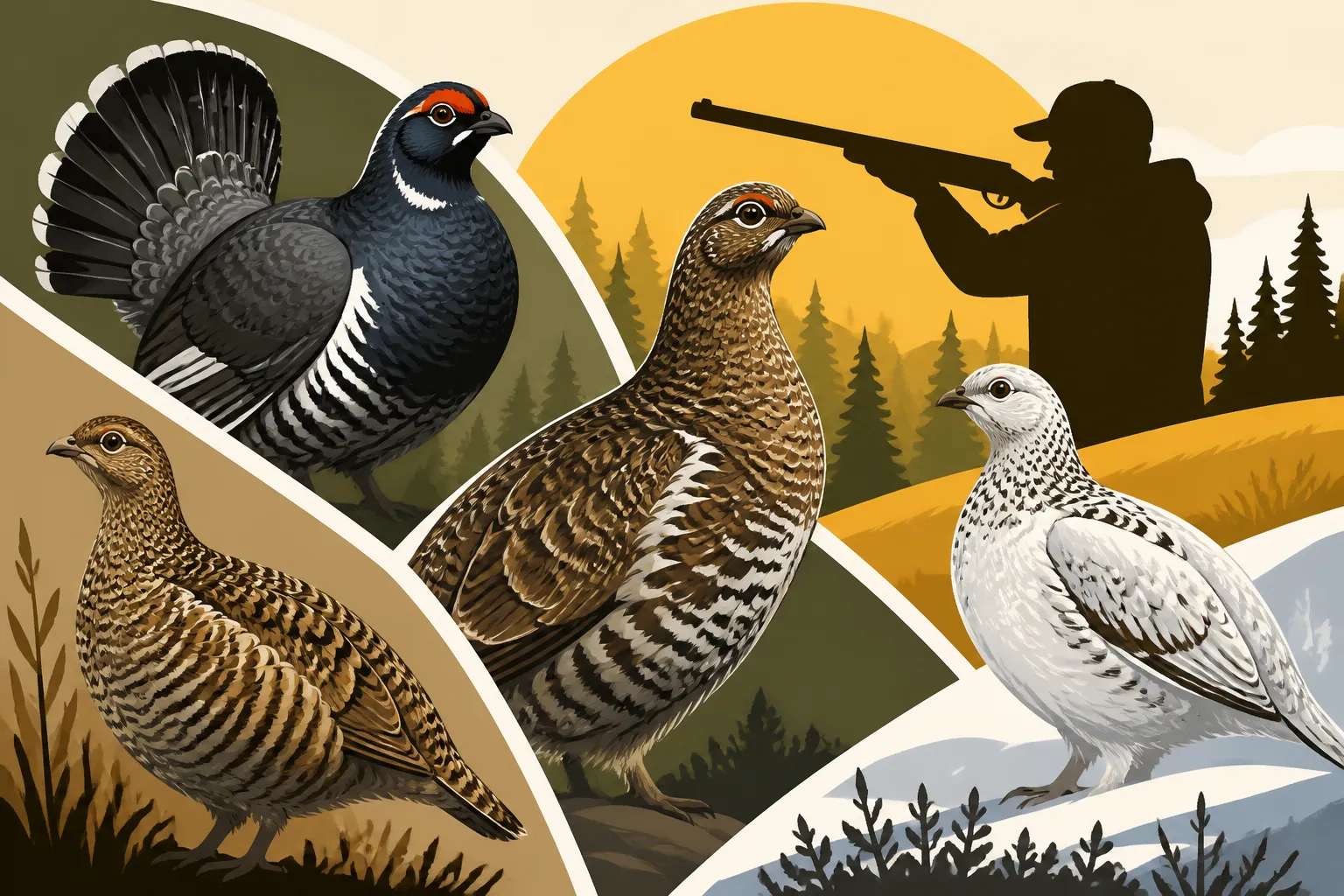
Understanding the visual cues for each grouse species is the first step to successful hunting. Here's a quick rundown of what to look for:
Ruffed Grouse (Bonasa umbellus):
- Size: Medium-sized, often resembling a small chicken.
- Coloration: Highly variable, ranging from reddish-brown to grey, perfectly camouflaged for deciduous and mixed forests.
- Key Features: Distinctive "ruffs" of iridescent black or brown feathers on the sides of the neck (more prominent on males). A fan-shaped tail with a broad, dark subterminal band (the "ruff"). Small crest on the head.
- Tail: Fan-shaped with a dark band.
Sharp-Tailed Grouse (Tympanuchus phasianellus):
- Size: Similar to ruffed grouse, perhaps slightly larger bodied.
- Coloration: Mottled brown and white overall, with V-shaped markings on the breast, lighter belly.
- Key Features: A short, pointed tail (hence "sharp-tailed") with white outer tail feathers. They lack neck ruffs. Often have a patch of bare skin above the eye that can be yellow (males).
- Tail: Short and pointed, with white outer feathers.
Spruce Grouse (Canachites canadensis):
- Size: Slightly smaller than ruffed grouse, more compact.
- Coloration: Males are strikingly dark, mostly grey and black with white barring on the flanks and a prominent red comb over the eye. Females are more mottled brown and grey, blending perfectly with conifer needles.
- Key Features: Dark overall plumage, especially males. Short, black tail with a rufous (reddish) band at the tip (females and immatures) or entirely black (males). No neck ruffs.
- Tail: Short, black, sometimes with a reddish band.
Here’s a handy table to help summarize these differences:
| Feature | Ruffed Grouse | Sharp-Tailed Grouse | Spruce Grouse |
|---|---|---|---|
| Size | Medium | Medium to Large | Small to Medium |
| Primary Color | Reddish-brown to grey (mottled) | Mottled brown/white with V-shapes | Dark grey/black (male), mottled (female) |
| Tail Shape | Fan-shaped with dark band | Short, pointed with white sides | Short, black, sometimes rufous tip |
| Neck Feathers | Prominent "ruffs" on males | Absent | Absent |
| Habitat | Young mixed/deciduous forests | Grasslands, parkland, open brush | Coniferous forests (spruce, pine) |
| Behavior | Explosive flush | Often flushes in coveys, runs | Tame, reluctant to flush |
Habitat Clues for Identification
Beyond visual identification, understanding the preferred habitat of each grouse species is an invaluable tool, almost like an extra sense when you’re out hunting. These birds are highly specialized, and their environment will often tell you exactly what kind of grouse you’re dealing with, even before you see them. If you're deep in a dense black spruce bog near The Pas, it's highly unlikely you're going to flush a sharp-tailed grouse. Conversely, traversing wide-open prairie grasslands dotted with willow bluffs in southwestern Manitoba probably won't yield a spruce grouse.
Think of it this way:
- For Ruffed Grouse: Look for thick aspen stands, mixed woods, old logging cuts, or dense willow cover along creeks and field edges. If you're walking an old bush trail and see fresh catkins or berry bushes, you're in prime ruffed grouse country. This is especially true if you are in areas commonly associated with Hunting Whitetails in Manitoba's Bush Country, as deer and ruffed grouse often share similar preferences for thick, diverse cover.
- For Sharp-Tailed Grouse: Focus on expansive open grasslands, rolling hills, native prairies, brushy coulees, and the fringes where agricultural fields meet these natural habitats. If you're seeing cattle pastures, large tracts of untouched prairie, or shelterbelts, be on high alert for sharptails. Understanding Manitoba's Parkland Region is key to finding these birds.
- For Spruce Grouse: Your search should be concentrated in pure coniferous forests, particularly black spruce bogs, jack pine ridges, and tamarack swamps. The presence of dense evergreen canopy and needle litter on the forest floor is a dead giveaway. If the ground is spongy with moss and covered in pine needles, you're in the right place.
By combining visual identification with habitat knowledge, you'll not only become a more effective hunter but also gain a deeper appreciation for the intricate ecosystems that support these fantastic game birds. Tools like GoHunt can help you overlay habitat types and access points, making your scouting efforts far more efficient.
Essential Gear and Conservation for Grouse Hunters
Heading out for grouse doesn't require a truckload of specialized equipment, which is part of its appeal. However, a few key items will significantly enhance your experience and ensure your safety and success. Equally important is embracing a mindset of conservation, ensuring these magnificent birds continue to thrive for generations to come.
Recommended Equipment for a Successful Hunt
While grouse hunting can be relatively low-barrier, having the right gear makes a huge difference.
- Shotgun: A 12 or 20 gauge shotgun is ideal. For ruffed and sharp-tailed grouse, modified or improved cylinder chokes are versatile. For the closer flushing spruce grouse, open chokes like cylinder or improved cylinder are perfect. Stick to lighter loads, typically 7 ½ or 6 shot. Many hunters prefer an over-under or side-by-side for quick follow-up shots, but a pump or semi-automatic works just as well.
- Ammunition: Carry plenty of shells. Grouse can be missed, and you don't want to run out of ammo when the birds are flushing. Non-toxic shot is not typically required for upland birds, so lead shot is generally fine, but always double-check local regulations.
- Boots and Clothing: This is paramount. You'll be walking a lot, often through wet, uneven, and brushy terrain. Waterproof, comfortable, and supportive hunting boots are non-negotiable. Wear durable, briar-resistant pants and a comfortable jacket suitable for the weather. Layering is always a good idea in Manitoba's unpredictable fall weather. Don't forget your blaze orange for safety, as required by How Much Blaze Orange Manitoba Requires.
- Game Vest/Pouch: Essential for carrying your birds, extra shells, water, and perhaps a snack. Many vests also have a built-in game pouch on the back that keeps the birds secure and away from your body heat.
- Water: Always carry water. Even on cooler days, walking through tough cover can be dehydrating.
- Navigation: A reliable GPS unit or a smartphone with a mapping app (like GoHunt) is crucial, especially when Scouting a Manitoba Game Hunting Area or delving deep into unfamiliar bush. It helps you keep track of your location, mark spots where you've flushed birds, and most importantly, find your way back to your vehicle.
- Dog (Optional but highly recommended): If you have one, a well-trained flushing or pointing dog can dramatically increase your success and enjoyment. They locate birds you'd never see, retrieve downed game, and simply make the experience richer. For more on this, check out Using a Flushing Dog in Thick Cover or Using a Pointing Dog on Manitoba Prairie.
- Field Dressing Kit: A sharp knife and game bags are useful for field dressing your birds to cool them quickly, especially on warmer days, and keep them clean. For tips on meat care in Manitoba's varied temperatures, you can check out Meat Care in Manitoba's Cold Snaps.
Ensuring Sustainable Grouse Hunting for Future Generations
Conservation is not just a buzzword; it's a responsibility every hunter shares. Sustainable hunting practices ensure that future generations can enjoy the same opportunities we do today.
- Respect Bag Limits and Seasons: Always adhere to the Manitoba Upland Bird Seasons and daily/possession limits. These limits are set based on population surveys and biological data to ensure healthy populations. Taking more than your legal limit is poaching and harms the resource.
- Targeting Species Accurately: Knowing how to tell the difference between a ruffed grouse and a spruce grouse means you can adhere to specific limits if they differ by species in certain GHAs. Don't just shoot "a grouse"; know what you're shooting.
- Respect Private Land: Always obtain permission before hunting on private land. This not only avoids trespassing but also builds positive relationships between landowners and hunters. For more on this, understand Manitoba Landowner Permission Law.
- Leave No Trace: Pack out everything you pack in. Don't leave spent shotgun shells, food wrappers, or any other trash in the field. Leave the natural environment as you found it, or better.
- Report Poaching: If you witness any illegal hunting activity, report it to the Manitoba Conservation Officer Service. Poachers steal from all of us. You can find information on how to do this through Manitoba's Turn In Poachers Line.
- Support Conservation Organizations: Consider joining and supporting organizations like the Manitoba Wildlife Federation or similar groups that advocate for habitat preservation, wildlife management, and responsible hunting. Their work is vital for the long-term health of our game populations.
By equipping yourself properly and hunting ethically, you'll not only enjoy a more successful day in the field but also contribute to the vital efforts of preserving Manitoba's grouse populations for years to come.
Disclaimer
The information provided in this guide is for general informational purposes only and is not intended as legal advice. Hunting regulations, seasons, and licensing requirements are subject to change. Always consult the most current Manitoba Hunting Guide and relevant provincial and federal regulations before engaging in any hunting activities. It is the hunter's responsibility to know and follow all applicable laws.