Manitoba Heated Blinds and Late Season Camps
Oh, that late season chill, eh? There's nothing quite like the crisp air and the promise of a big, heavy-bodied Manitoba buck or a late-season bear, but let's be real, sitting still in sub-zero temperatures can be downright brutal on the soul and the body. Many hunters dream of extending their time afield when the snow flies, but the cold often sends them packing early. This guide is all about how heated blinds and comfortable late-season camps can transform your cold-weather hunting experience from a shivering ordeal into a truly enjoyable and productive adventure, letting you stay out longer and focus on the hunt, not the frostbite.
The Unique Challenges and Rewards of Late Season Hunting in Manitoba
Manitoba's late season, especially once November rolls in and December approaches, brings a whole new set of challenges that can test even the most seasoned hunter. The landscape transforms into a beautiful, stark wonderland of white, but with that beauty comes an intense cold that demands respect. However, with those challenges come some incredible opportunities that are hard to beat at any other time of the year.
Battling the Deep Chill and Drifting Snow
When we talk about late-season hunting in Manitoba, we're often talking about temperatures that dip well below freezing, sometimes flirting with -20°C (-4°F) or even colder with the wind chill. Sitting in an open stand or even a basic unheated blind in these conditions can quickly become unbearable. Your toes go numb, your fingers lose dexterity, and your mind starts to drift from the deer tracks to how quickly you can get back to a warm truck. It's a constant battle to stay warm enough to be effective. Then there's the snow – sometimes it's a light dusting, other times it's a full-blown blizzard that can make access tough and visibility poor. Drifting snow can cover trails, make travel by foot or ATV challenging, and even obscure game sign. It's not for the faint of heart, that's for sure. You really need to prepare for Hunting Safely in Deep Winter Cold when you're out here.
The Unparalleled Opportunities of a Winter Landscape
Despite the cold, late season hunting offers some of the best opportunities in Manitoba. The snow cover makes tracking game so much easier, turning the forest floor into a giant, readable storybook. You can spot fresh tracks from a distance and follow a deer's movements with much greater precision than in a dry fall. Also, many big game animals, especially whitetail deer, are actively seeking food sources to bulk up for the winter or recover from the rut. This means they're often on the move during daylight hours, hitting specific food plots or agricultural fields. The mature bucks, often more nocturnal earlier in the season, can become more visible as they push for calories. Plus, the sheer quiet of a snow-covered landscape, punctuated only by the crunch of your boots or the distant howl of a coyote, is an experience in itself. There's a certain magic to hunting in the snow that's hard to replicate at any other time. Reading Sign After a Fresh Snow becomes an essential skill.
The Comfort Advantage of Heated Blinds
Heated blinds are truly a game-changer for late season hunting. They allow you to extend your time in the field significantly, maintain focus, and simply enjoy the hunt without the constant distraction of battling the cold. This isn't just about luxury; it's about increasing your odds by increasing your effective hunting time.
Different Types of Heated Blinds for Manitoba Conditions
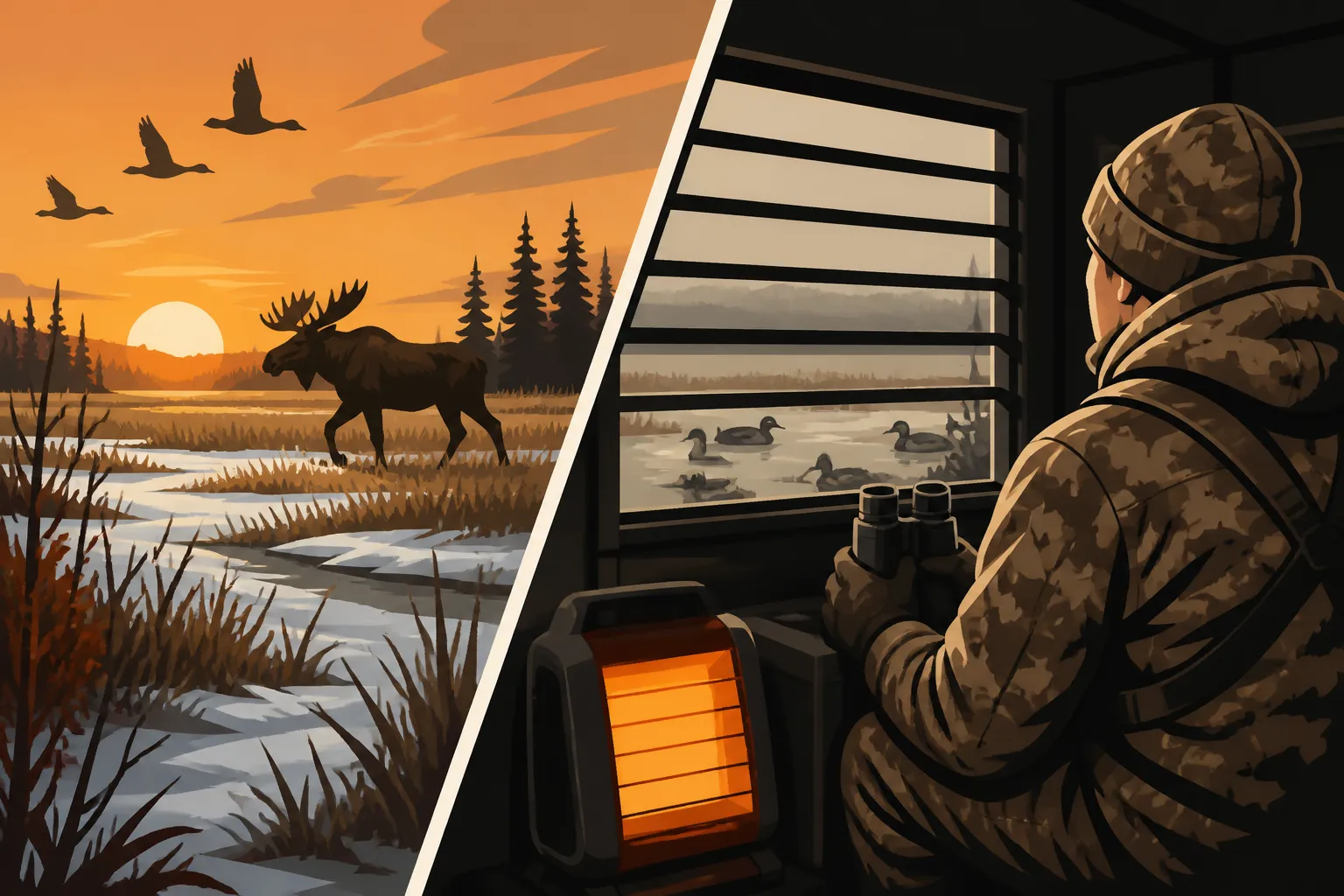
When it comes to heated blinds, you'll generally find a few main types, each with its own advantages, especially in Manitoba's varying terrain. Ground blinds are common, offering a natural feel and easy access, often tucked into brush lines or field edges. They can be purpose-built, permanent structures or portable pop-up blinds. Elevated blinds, or tower blinds, are fantastic for gaining a better vantage point, especially in areas with tall crops, brush, or rolling terrain like the Parkland region. They often provide excellent visibility over long distances and can keep your scent higher off the ground. Some outfitters even offer fully enclosed cabins on skids that can be moved to hot spots, complete with small wood stoves or propane heaters. The key, regardless of the type, is that they are well-insulated and seal out drafts effectively. Many are even built with carpeted floors and comfortable chairs, a far cry from a treestand platform in a howling wind. You can really get comfortable and practice Sitting All Day in a Manitoba Blind.
Common Heating Methods and Their Pros & Cons
The method of heating is crucial for a comfortable blind. The most common options are propane heaters and wood stoves, each with their own set of considerations.
- Propane Heaters: These are incredibly convenient. They ignite instantly, provide consistent heat, and are relatively easy to regulate. Modern propane heaters are designed with safety features like oxygen depletion sensors, which is critical in an enclosed space. The downside is that you need to carry propane tanks, and in extreme cold, they can sometimes struggle, or you might go through fuel faster than anticipated. They also produce some moisture, so proper ventilation is still important.
- Wood Stoves: For a truly rustic and powerful heat source, a small wood stove is hard to beat. They create a dry heat, and there's something incredibly satisfying about a crackling fire in a hunting blind. Wood is often readily available in many hunting areas, eliminating the need to haul propane tanks. However, they require more active management – you need to feed the fire, and they take up more space. There's also a learning curve to managing the smoke and ensuring safe operation in a small enclosure. Sparks can be a concern if not properly installed and maintained.
Here's a quick comparison:
| Feature | Propane Heater | Wood Stove |
|---|---|---|
| Heat Output | Consistent, easily regulated | Intense, dry heat, can be very hot |
| Fuel | Propane tanks (portable, but need refills) | Wood (often found locally, but requires cutting) |
| Ease of Use | Instant ignition, minimal management | Requires active feeding, ash disposal |
| Safety | Oxygen depletion sensors, carbon monoxide risk | Fire risk, carbon monoxide risk, proper ventilation crucial |
| Space | Compact, less intrusive | Larger footprint, chimney required |
| Maintenance | Tank refills, regular checks | Ash removal, chimney cleaning, wood collection |
| Noise | Silent or low hum | Crackling fire, occasional wood handling |
Strategic Placement for Maximum Effectiveness
A heated blind is only as good as its location. Outfitters who specialize in late season hunts understand this intimately. They'll place blinds in high-traffic areas where deer or other big game are most likely to be moving during daylight. This often means overlooking key food sources, such as standing corn, alfalfa fields, or food plots specifically planted for late season attraction. Blinds might also be strategically positioned along natural travel corridors, like a shelterbelt connecting two bush pockets, a creek bottom, or a well-used game trail between bedding and feeding areas. Hunting a Manitoba Bush Edge or Hunting a Standing Canola Field Edge are classic examples of where these blinds can shine. They'll consider wind direction, sun exposure (to avoid glare and help warm the blind naturally), and access routes to minimize disturbance. The goal is to maximize the time you can spend undetected and comfortable, waiting for that perfect shot opportunity.
What to Expect from a Late Season Camp Experience
Beyond the blind itself, a late-season hunting trip with an outfitter in Manitoba often means a comfortable, supportive camp experience designed to make your hunt as enjoyable and successful as possible, even when the thermometer plummets.
Lodge Versus Cabin Setups in Winter Conditions
Manitoba outfitters offer a range of accommodations for late season hunts, catering to different preferences and group sizes.
- Main Lodges: Many outfitters operate from a central lodge. These are typically larger, well-insulated buildings with common areas, dining rooms, and multiple private or semi-private bedrooms. Think cozy communal dinners, warm showers, and a place to relax and share stories with fellow hunters in the evening. Lodges often come with Wi-Fi, satellite TV, and all the comforts of home, making them perfect for those who appreciate a social atmosphere and full amenities after a cold day afield.
- Remote Cabins: For a more secluded or specialized experience, some outfitters use remote cabins or spike camps. These might be smaller, more rustic, but still fully heated and comfortable. They're often closer to the hunting action, minimizing travel time in the mornings and evenings. They can provide a more intimate experience, ideal for smaller groups or those seeking a deeper immersion in the wilderness. Regardless of the setup, reliable heat, warm beds, and a place to dry gear are non-negotiable for a late season hunt.
Essential Camp Amenities for Cold Weather Hunting
A well-equipped late season camp goes far beyond just a warm bed. Thoughtful amenities can make all the difference when you're dealing with extreme cold.
- Hot Meals & Drinks: You need fuel in the cold! Most reputable outfitters provide hearty, home-cooked meals, often served family-style. Waking up to a hot breakfast and returning to a warm, delicious dinner after a day in the cold is incredibly restorative. And let's not forget the endless coffee or hot chocolate that seems to be a staple in every good hunting camp.
- Drying Rooms/Areas: This is critical. Snow, slush, and sweat can quickly make your gear damp. A dedicated drying room or area with good ventilation and heat allows you to dry out your boots, gloves, and outer layers overnight, ensuring you start each new day with warm, dry gear. Without this, you're fighting a losing battle against the cold and potential hypothermia.
- Showers and Facilities: While a lodge will almost certainly have modern bathrooms, even remote cabins often have well-maintained outhouses and sometimes even portable or temporary shower facilities. A hot shower after a long, cold day is pure bliss and essential for hygiene and comfort.
- Game Processing and Storage: A good outfitter will have facilities or arrangements for processing and storing game, including walk-in coolers or freezers, crucial for preserving your harvest in fluctuating temperatures. They'll also assist with caping and preparing trophies for taxidermy. They understand that Meat Care in Manitoba's Cold Snaps is vital.
Guide Support and Logistics in Challenging Conditions
Booking with an outfitter for a late season hunt also means invaluable guide support. These professionals know the land, the game, and how to operate safely and effectively in winter conditions.
- Local Knowledge: Guides have an intimate understanding of the hunting areas, including game movements, bedding areas, and feeding patterns, which can shift dramatically with snow and cold. They'll know Where Manitoba Whitetails Bed in Deep Snow or where moose might be yarding up.
- Access and Transportation: Winter access can be tricky. Outfitters often have specialized vehicles like tracked ATVs, snowmobiles, or heavy-duty 4×4 trucks equipped to navigate snow-covered roads and trails, getting you to and from your blind safely.
- Safety and Preparedness: Good guides prioritize safety. They'll have emergency communication devices, first aid kits, and contingency plans for unexpected weather or situations. This peace of mind allows you to focus solely on the hunt.
- Tracking and Recovery: Recovering game in deep snow can be hard work. Guides are skilled at tracking and will assist with the heavy lifting of getting your animal out of the bush and back to camp.
Finding the Right Outfitter with Heated Blinds and Late Season Camps
So, you're convinced that a heated blind and a comfortable camp are the way to go for your next late season Manitoba hunt. The next step is finding the right outfitter. This requires some careful research and asking the right questions.
Researching Outfitters Who Specialize in Winter Hunts
Not all outfitters are set up for late season, cold-weather hunting. When you start your research, look for those who explicitly advertise heated blinds, comfortable winter camps, and experience with cold conditions. Check their websites, social media, and online reviews. Many will showcase photos of their heated blinds and camp facilities, giving you a good visual idea of what to expect. Pay attention to what species they focus on during the late season; whitetails and bears are common, but moose and elk can also be targeted in some areas, depending on specific Manitoba Big Game Season Dates. Look for testimonials that specifically mention the comfort and effectiveness of their winter setups. Platforms like BookYourHunt can be a great starting point, as they often filter by amenities like heated blinds or provide detailed descriptions of what each outfitter offers.
Key Questions to Ask Before Booking Your Trip
Once you've narrowed down a few potential outfitters, pick up the phone and have a conversation. Don't be shy about asking detailed questions.
- About the Blinds: How many heated blinds do you operate? What kind of heating system do you use (propane, wood stove)? What are the blinds like inside (size, seating, windows)? How far are the blinds from camp? Are they permanent structures or portable?
- About the Camp: What kind of accommodation do you offer (lodge, cabin)? What are the sleeping arrangements? What amenities are included (showers, drying room, Wi-Fi)? What kind of meals are provided?
- Logistics & Safety: What are the typical daily hunting hours? How do you handle transportation to and from the blinds in snowy conditions? What are your emergency procedures for extreme cold or bad weather? What is your policy on Getting a Refund When a Guide Cancels due to weather?
- Guide Services: What is the typical guide-to-hunter ratio? Will I have the same guide each day? What level of assistance do guides provide (tracking, recovery, field dressing)?
- Success Rates: While no outfitter can guarantee a kill, it's fair to ask about historical success rates for late season hunts, specifically for the species you're targeting. Ask about shot opportunities versus harvest rates.
- What to Bring: Get a clear list of recommended gear, especially clothing for extreme cold. They'll know what works for Dressing for Manitoba's November Cold and Boots for Sitting Still in Deep Cold.
Leveraging Booking Platforms Like BookYourHunt and GoHunt
Online booking platforms can be incredibly useful tools for your research. They consolidate information from many outfitters, often with filters that allow you to search for specific amenities like "heated blinds" or "lodge accommodation."
- BookYourHunt: This platform, for example, allows you to browse various outfitters by species, location, and specific services offered. You can often see detailed descriptions of their camps, photos of their blinds, and read reviews from previous clients. It helps you get a broad overview of what's available and quickly identify outfitters who meet your criteria for a comfortable late-season hunt.
- GoHunt: While often more focused on western US hunting, some Canadian outfitters might list on similar platforms, or you can use their resources for research and ideas for what questions to ask. The key is to use these platforms as a starting point to find outfitters who clearly cater to the unique demands of cold-weather hunting. Always follow up with direct communication with the outfitter to confirm details and get a personal feel for their operation.
Making the Most of Your Late Season Hunt in a Heated Blind
Having a heated blind and a warm camp gives you a huge advantage, but you still need to put in the effort to make the hunt successful. It's about combining comfort with smart hunting tactics.
Patience, Persistence, and Strategic Timing
One of the biggest benefits of a heated blind is the ability to sit comfortably for extended periods. This breeds patience, which is a hunter's best friend. Instead of shivering and cutting your sit short, you can stay put through the entire morning or afternoon, often seeing game when others have already retreated to warmth. Late season animals, especially big deer, can move at unexpected times as they forage for food. They might not stick to strict dawn and dusk patterns if the pressure is low and a good food source is available. Being persistent and waiting out the mid-day hours from the comfort of a heated blind can often pay off with a surprise encounter. Many successful late season hunts happen during those quiet midday hours when most other hunters are having lunch. You might even find yourself Hunting the Rut in Early to Mid November in a heated blind, making those all-day sits much more bearable.
Layering Effectively and Managing Scent
Even with a heated blind, proper layering is crucial. You'll want to dress in layers that allow you to shed clothing when the heater is running and bundle up when you step outside or turn the heat down for quiet. Think moisture-wicking base layers, insulating mid-layers, and a quiet, waterproof/windproof outer shell. Your outer layers might even be thicker than usual, for those moments you need to step out or if the heater unexpectedly runs out of fuel. Staying Warm in a Manitoba Stand is still important, even with a heater.
Scent control is also paramount. While being in an enclosed blind helps contain your scent, it's not foolproof. The heated air can carry odors out of cracks or when you open windows. Use scent-free detergents for your hunting clothes, shower with scent-eliminating soap, and store your hunting clothes in airtight bags. Pay attention to how the air currents move around your blind, even subtle shifts. A heated blind gives you the comfort to stay still and quiet, so you don't want to blow your advantage with poor scent management.
Minimizing Noise and Movement Inside the Blind
The warmth of a heated blind can sometimes lull hunters into a false sense of security regarding noise and movement. Remember, sound travels far in a quiet, snowy landscape. Even subtle movements or noises inside the blind can be amplified. Practice extreme discipline:
- Quiet Gear: Ensure all your gear is quiet. No jingling zippers, noisy Velcro, or rattling calls.
- Slow Movements: If you need to adjust your position, do it slowly and deliberately, especially when scanning out the windows.
- Heater Noise: If using a propane heater, be aware of any fan noise. A quiet heater is a huge asset. If using a wood stove, be mindful of creaking wood and loading fuel quietly.
- Window Management: Practice opening and closing windows smoothly and silently. When a game animal appears, you don't want to scare it with a sudden squeak or bang.
By combining the comfort of your heated blind with disciplined hunting practices, you're not just enduring the cold, you're truly hunting smarter and increasing your chances of success.
Preparing for Your Trip: Beyond the Blind
Even with the promise of a warm blind and camp, preparation is key for a successful and enjoyable late season hunt in Manitoba. This involves more than just packing warm clothes; it's about being mentally ready and understanding the logistical considerations.
Essential Gear for Extreme Cold, Even with a Heated Blind
While your heated blind will provide warmth while you're in it, you still need to be fully prepared for the moments you're outside. This includes walking to and from the blind, tracking an animal, or dealing with an unexpected vehicle issue.
- Layering System: As mentioned, a robust layering system is crucial. Think synthetic or wool base layers, fleece or down mid-layers, and a heavy, quiet, waterproof/windproof outer shell. Bring extra gloves, hats, and socks.
- Footwear: Insulated, waterproof boots are non-negotiable. Ensure they are rated for extreme cold and are large enough to accommodate thick socks without cutting off circulation. Good quality boots designed for Boots for Sitting Still in Deep Cold will save your feet.
- Hand Warmers: Even with good gloves, chemical hand warmers can provide that extra boost of warmth for your fingers, especially when handling a rifle or bow.
- Headlamp: Essential for navigating in the dark mornings and evenings. Choose one with a red light setting to preserve night vision.
- Navigation Tools: A reliable GPS device or a smartphone with downloaded maps (like onX Hunt) is vital, especially when snow might obscure familiar landmarks. Make sure they're cold-rated and carry extra batteries or a power bank.
- Emergency Kit: Always have a small pack with fire-starting tools, a first-aid kit, emergency food, a thermal blanket, and a way to communicate (satellite messenger or fully charged cell phone if service is available).
Mental Fortitude and Realistic Expectations
Hunting in extreme cold, even from a heated blind, requires a certain level of mental toughness. Conditions can change rapidly, and even comfortable hunting can have its frustrating moments.
- Patience is Paramount: You might sit for hours without seeing anything. Be prepared for this and enjoy the solitude.
- Flexibility: Weather can dictate plans. Be flexible if the outfitter needs to adjust hunting areas or methods due to snow, wind, or extreme cold.
- Positive Attitude: A positive mindset goes a long way. Embrace the challenge, enjoy the unique beauty of Manitoba's winter landscape, and appreciate the opportunity to be out there.
- Physical Preparation: While you'll be warm in the blind, ensure you're physically capable of walking in snow, tracking, and assisting with game recovery. You might be Getting a Deer Out on a Frozen Trail when the moment comes.
Understanding Logistics for Non-Resident Hunters
For non-resident hunters coming to Manitoba, there are additional logistical considerations that need careful planning, especially when booking with an outfitter.
- Licensing and Permits: Understand the requirements for Manitoba Hunting Licences and What They Cost and ensure you have all necessary permits in advance. Your outfitter can often assist with this, but it's ultimately your responsibility.
- Firearms Declaration: If bringing your own firearm, you'll need to complete a Non-Resident Firearm Declaration Form (RCMP 5589) to import it into Canada. This should be done in triplicate and presented at the border. Ensure your firearms meet the legal requirements for Legal Rifle Calibres for Big Game or Bow Draw Weight Rules in Manitoba.
- Travel Arrangements: Plan your travel well in advance, especially during the winter months. Road conditions can be unpredictable, and flights might be delayed due to weather. Confirm transportation from the airport or entry point to the camp with your outfitter. Many outfitters offer services for Flying Into Winnipeg for a Hunt and transport from there.
- Currency and Payment: Clarify payment methods and currency exchange rates beforehand.
- Trophy and Meat Transport: Discuss with your outfitter how you plan to transport your meat and trophy home. There are specific rules for Taking Meat and Antlers Across the Border, and your outfitter can help arrange processing, taxidermy, and shipping services. Many outfitters have arrangements for Getting Meat Processed in Manitoba.
By being thoroughly prepared on all fronts, you'll ensure your late season Manitoba hunting adventure, complete with heated blinds and a cozy camp, is as comfortable, productive, and memorable as possible.
Disclaimer
This article is for general informational purposes only and does not constitute professional advice. Laws, prices and regulations vary by location and change over time. Consult a qualified professional for guidance on your specific situation.