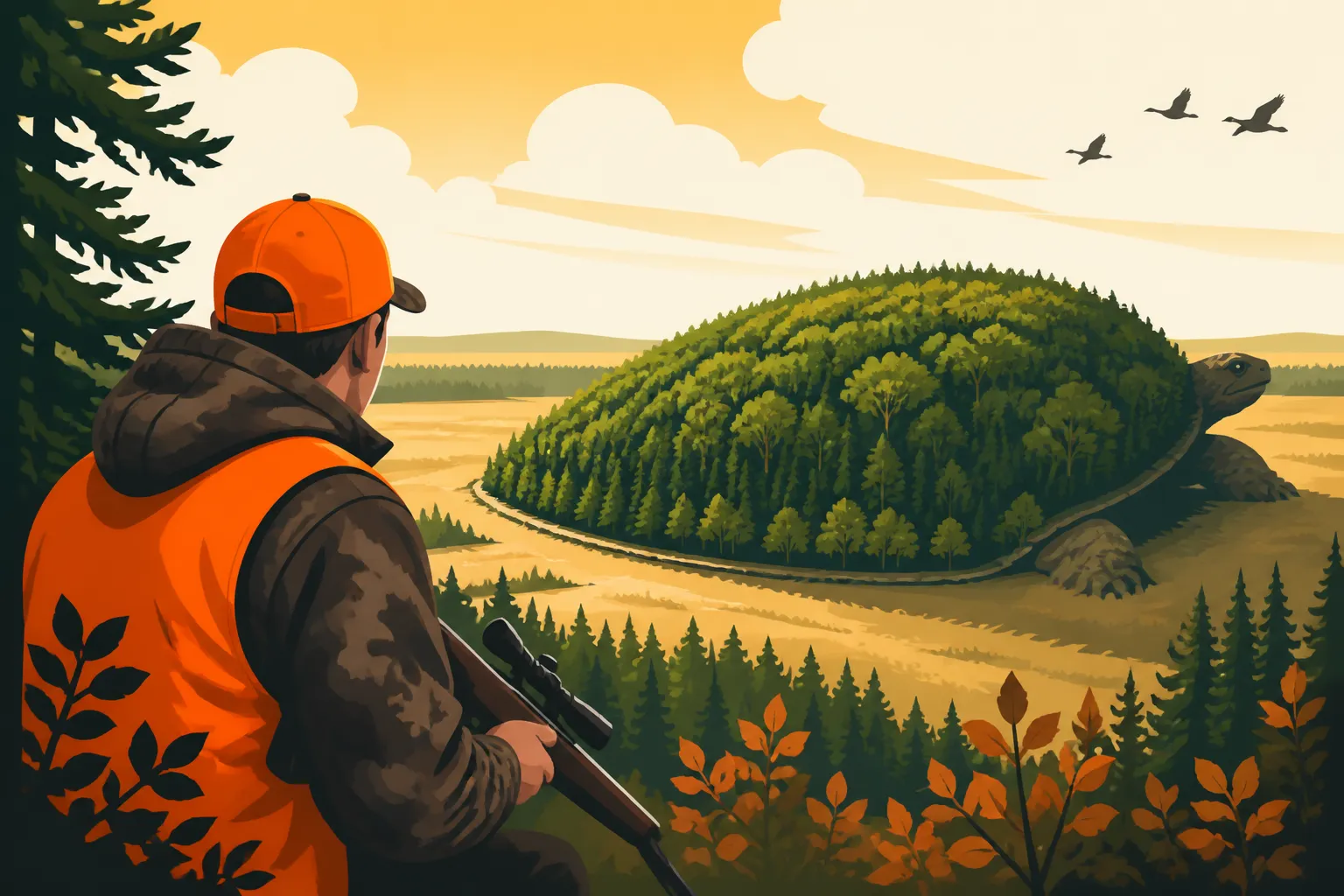
Hunting a Turtle Mountain Timber Pocket
Hunting those secluded timber pockets in Manitoba's Turtle Mountain region can feel like trying to find a needle in a haystack, especially when the deer seem to vanish into thin air the moment you step foot in the woods. This guide is all about peeling back the layers of this unique hunting landscape, offering up practical strategies and insights to help you locate and harvest deer in these challenging, yet incredibly rewarding, hidden gems.
Understanding the Turtle Mountain Landscape
The Turtle Mountains aren't what most folks picture when they think of "mountains." Instead, imagine a sprawling plateau, rising gently from the surrounding prairie, heavily forested with a mix of aspen, oak, and scattered conifers, all interspersed with wetlands, fields, and rolling hills. It’s an ecological island, distinct from the vast open farmlands that surround it, and this uniqueness profoundly shapes how deer live and move.
Unique Habitat Features
What makes these timber pockets so special – and often frustrating – for hunters is their density and isolation. You'll find everything from thick stands of young aspen that are almost impenetrable, to mature oak forests offering acorns that draw deer in like magnets during the fall. Interspersed within these are brushy draws, natural springs, and even small, hidden pastures that provide critical bedding and feeding areas. The sheer variety of cover, often within a small geographic area, means deer have an abundance of places to hide, feed, and feel secure. This isn't your wide-open bush country; it's a patchwork quilt of dense refuge. Understanding this mosaic is the first step to figuring out where those elusive bucks might be holding tight.
Deer, especially mature bucks, thrive in this broken landscape. They use the thick timber for bedding, particularly during hunting pressure or harsh weather, and they'll move through these pockets to access water sources or nearby agricultural fields that offer prime foraging. The edges of these pockets, where the dense timber meets more open areas or brush, are often high-traffic zones. You might find a well-worn deer trail emerging from a dense stand of oak, leading directly to a small, hidden clover patch or a nearby cornfield. These habitat transitions are key. The challenge is that these areas can be so dense that even a short walk through them can be a sweaty, noisy affair, making it tough to move silently or see more than a few yards in front of you.
Deer Behavior in Timber Pockets
Deer in the Turtle Mountains, like deer everywhere, are creatures of habit, but their habits are heavily dictated by the terrain and pressure. In these dense timber pockets, they prioritize security above almost everything else. During daylight hours, especially once hunting season kicks into gear, older bucks will often bed deep within the thickest cover, moving only sparingly. They might sit tight just a few hundred yards from a busy road, confident that the dense undergrowth offers enough concealment. When the rut approaches, however, these same bucks will become more active, cruising through these pockets searching for does. This means their typical travel routes might shift, and new, temporary trails can appear overnight.
The wind plays a crucial role in how deer utilize these timber pockets. They’ll often bed on ridges or in draws that give them an advantage, allowing them to smell danger approaching from downwind while watching their back trail. Being aware of prevailing winds and how they swirl through the varied topography of the Turtle Mountains is critical. It's not uncommon to find deer bedded on a leeward slope, catching thermals or updrafts that carry scents away from their bedding area. Understanding that deer are constantly using the wind to their advantage is paramount to getting close without being detected. This knowledge can also help you determine the best approach when you're still-hunting a Manitoba bush edge.
Scouting Strategies for Timber Pockets
Effective scouting is the bedrock of successful hunting in the Turtle Mountains. You can’t just walk in blindly; these deer are too smart and the cover is too thick. You need a methodical approach that combines modern technology with old-fashioned boots-on-the-ground effort.
Pre-Season Aerial Reconnaissance
Before you even step into the woods, start your scouting from above. Satellite imagery and digital mapping tools are absolute game-changers for identifying potential timber pockets and understanding their relationship to surrounding habitat. Programs like GoHunt offer detailed aerial views that let you zoom in and pick out those dense stands, identifying natural funnels, pinch points, and travel corridors between different patches of cover. Look for areas where fields extend into the timber, or where a narrow finger of woods connects two larger blocks. These are often high-traffic zones, especially when bucks are cruising during the rut. Pay close attention to subtle changes in tree density or type, as these often correlate with changes in elevation or water sources.
Don't just look at the woods in isolation. Consider how these timber pockets connect to nearby agricultural fields, water sources, and other bedding areas. A small patch of woods that might seem insignificant on its own could be a crucial midday bedding site or a staging area before deer move into a large field at dusk. Use the mapping tools to mark potential stand locations, noting prevailing wind directions for each. Think about how you would access these spots silently and how you would exit without disturbing other deer in the area. This kind of virtual scouting, utilizing detailed imagery, allows you to narrow down your focus dramatically before you ever burn a drop of gas or wear out your boot leather.
Boots-on-the-Ground Sign Reading
Once you've identified promising areas from your aerial scouting, it's time to hit the ground. There's simply no substitute for walking the terrain and seeing the sign firsthand. In dense timber pockets, deer sign can be subtle, so you need to be observant. Look for fresh tracks, especially along the edges of thickets or where different habitat types meet. Scrapes and rubs are invaluable, indicating active deer movement and, during the rut, potential buck territories. Even if they're not fresh, a line of old rubs can show you a buck's historical travel route, which they often stick to year after year.
Focus on finding bedding areas within the densest cover. These will often be slightly elevated spots that offer a good vantage point or areas protected from the wind. Look for deer droppings, chewed browse, and matted-down grass or leaves where deer have lain. The fresher the sign, the more active the area. When you find good sign, don't just move on; spend time trying to discern the deer's likely travel patterns. Where are they entering and exiting? What are they feeding on? Are there water sources nearby? This detailed examination of the ground can tell you a story about how deer are using that particular timber pocket. Remember to be stealthy, as you don't want to spook deer out of a key area before the season even begins. Understanding Reading Whitetail Sign in Manitoba Aspen is crucial here.
Effective Hunting Tactics in Dense Cover
Hunting in Turtle Mountain timber pockets requires a shift in mindset from hunting more open country. Visibility is often limited, shots are close, and stealth is paramount. You need tactics that account for the close quarters and the deer's inherent wariness in their secure cover.
Stand Placement and Access
When placing a stand in a timber pocket, consider two primary factors: scent control and shot opportunity. In dense cover, deer are often closer than you think, so your wind is even more critical. Position your stand to take advantage of the prevailing wind, but also be ready for unpredictable swirls common in hilly, broken terrain. Deer trails, rubs, and scrapes will guide your placement, but don't just set up on the first fresh sign you find. Look for pinch points or funnels within the timber that naturally constrict deer movement, forcing them past your stand within bow or rifle range. A small gap in the brush, a downed log that creates a natural barrier, or a narrow strip of hardwoods between two thickets can be ideal.
Access to and from your stand is equally vital. You need a route that allows you to approach silently and without being detected by deer already in the area. This often means using natural terrain features like ditches, creek beds, or ridge lines that offer concealment. Avoid walking directly on deer trails when approaching your stand, as this can leave too much scent and alert resident deer. If possible, have multiple entry and exit routes depending on the wind direction for the day. This level of meticulous planning for Hanging a Stand on a Manitoba Bush Edge can make all the difference between seeing deer and spooking them long before they get close.
Still-Hunting and Drives
For those who prefer a more active approach, still-hunting through these timber pockets can be incredibly effective, though it requires immense patience and discipline. Move incredibly slowly, pausing often to scan for movement or subtle details like an ear twitch or a horizontal line that shouldn't be there. Use your binoculars constantly, even in dense cover, to pick apart the shadows and confirm what you're seeing. Walk into the wind or with a crosswind, always paying attention to your scent. Focus on transitions – the edges of thickets, where two cover types meet, or along old logging trails that deer might use as travel lanes. This method is about covering ground quietly and methodically, looking for bedded deer or deer moving slowly through their sanctuary.
Small, organized drives can also be a viable tactic in certain timber pockets, especially late in the season when deer are holding tight. This usually involves one or two "pushers" moving slowly and deliberately through a section of cover, while "standers" are positioned on the downwind side or at known escape routes. Communication is key, and safety must be the absolute priority. This isn't about running deer out; it's about gently nudging them towards prepared positions. Drives work best in smaller, more contained timber pockets where you have a good understanding of deer movement and escape routes. Always ensure you have permission from landowners and communicate clearly with your hunting partners.
Calling and Rattling in Tight Quarters
Don't underestimate the power of calling and rattling, even in the dense confines of a Turtle Mountain timber pocket. While you might not get the long-range responses you would in open country, the tight quarters can work to your advantage. Grunt calls, doe bleats, and fawn distress calls can be very effective at drawing in curious deer or stopping a buck that's just out of sight. Keep your calls soft and realistic; loud, aggressive calling can spook deer at close range.
During the rut, rattling can be particularly potent. The sound of two bucks fighting can really draw in a dominant buck looking for a challenge or a satellite buck hoping to steal a doe. In thick cover, you don't need to be overly aggressive with your rattling sequence. A short, sharp burst followed by some light grunts and pauses can be enough to pique a buck's interest. The key is to wait patiently after a calling or rattling sequence. Deer might circle downwind to scent-check the area before committing, so be ready for them to appear from unexpected directions. Patience and realism are your best friends when trying Rattling and Calling Parkland Whitetails in these dense pockets.
| Hunting Method | Best Conditions | Advantages | Disadvantages |
|---|---|---|---|
| Still-Hunting | Wind, light precipitation, mid-day | Highly adaptable, covers ground, intimate | Requires extreme patience, quiet movement |
| Stand Hunting | Consistent wind, identified travel routes | Can be low impact, allows for long sits | Fixed location, scent control critical |
| Small Drives | Late season, stubborn deer, small pockets | Can move reluctant deer, good for groups | Requires coordination, can be noisy, safety concerns |
| Calling/Rattling | Rut, calm winds, deer nearby | Attracts curious/aggressive deer, brings them closer | Deer may circle downwind, can spook if overdone |
Gear Considerations for Turtle Mountain
The unique environment of Turtle Mountain timber pockets demands specific gear choices to ensure both comfort and success. From what you wear to the tools you carry, every item plays a role in your ability to hunt effectively.
Clothing and Footwear
Manitoba's weather, especially in the fall, can be incredibly unpredictable, swinging from mild to bone-chilling cold in a single day. When hunting dense timber, layered clothing is essential. Start with a moisture-wicking base layer, add insulating mid-layers like fleece or wool, and top it with a durable, quiet outer shell that's waterproof and windproof. Even if the forecast calls for mild temperatures, always pack an extra warm layer; sitting still in a stand in the shade of a timber pocket can get cold quickly. Blaze orange, as mandated by Manitoba regulations, is crucial for safety, ensuring you're visible to other hunters while remaining camouflaged to deer.
Footwear is arguably the most critical component for still-hunting or extended periods in a stand. You'll be traversing uneven terrain, often wet and marshy, so waterproof, insulated boots with good ankle support are non-negotiable. Look for boots that are also quiet as you walk, minimizing crunching sounds on dry leaves or sticks. Many hunters prefer a sturdy rubber boot for its waterproof qualities and ease of scent control, but others opt for insulated leather boots for comfort during long walks. Whatever your choice, ensure they are well broken-in before your hunt to prevent blisters and discomfort. Remember, staying warm and dry goes a long way toward focusing on the hunt, especially when you're Hunting Safely in Deep Winter Cold.
Firearms and Archery Gear
For rifle hunters in the dense timber pockets, a shorter barrel and a quick-handling rifle can be a distinct advantage. Shots are typically at close range, often under 100 yards, so extreme long-range accuracy isn't as critical as the ability to quickly shoulder your rifle and make an accurate shot through a small window in the brush. Consider calibers that offer good stopping power for whitetails, like a .30-30, .308, or .35 Remington, though many modern deer calibers will suffice. Low-power variable scopes (1-4x or 2-7x) are excellent choices, providing a wide field of view for quick target acquisition while allowing for a bit of magnification if needed.
Archery hunters will find the dense cover to their advantage for closing the distance. A compound bow set to a comfortable draw weight, equipped with a reliable sight and quiet accessories, is ideal. Broadhead selection is critical; a sharp, durable fixed-blade or mechanical broadhead that creates a large wound channel will help ensure a quick, ethical harvest and a shorter blood trail in thick cover. Practice shooting at close ranges, even from unconventional positions, as you never know how you might be positioned when that buck appears. Always confirm Manitoba's Bow Draw Weight Rules in Manitoba and other regulations before heading out. Using a mapping tool like GoHunt can also help you mark potential shooting lanes from proposed stand sites, visualizing those tight windows you might have.
Navigating Access and Regulations in Turtle Mountain Timber
Knowing where you can hunt and understanding the rules is just as important as knowing how to hunt. The Turtle Mountain area features a mix of Crown land, private land, and designated provincial forests and parks, each with its own set of rules and access requirements.
Understanding Land Ownership and Access
The Turtle Mountain Provincial Forest forms a significant portion of the hunting grounds here, offering vast tracts of public access. However, even within the Provincial Forest, there can be smaller parcels of private land, so it’s crucial to know exactly where you are. Beyond the forest boundaries, the landscape quickly transitions into agricultural lands, which are predominantly private. For private land, gaining permission from landowners is not just a courtesy; it's a legal requirement in Manitoba. Always carry a copy of your hunting license and any permission slips you've received. Utilizing digital mapping apps that overlay land ownership boundaries, such as those provided by GoHunt, can be incredibly helpful in determining whether you're on public or private ground in real-time, preventing accidental trespass.
It's also worth noting that some areas within the Turtle Mountains might be designated as Wildlife Management Areas (WMAs) or even parts of Turtle Mountain Provincial Park, which may have specific hunting regulations or prohibitions. Always consult the current Manitoba Hunting Guide to understand the specific rules for the Game Hunting Area (GHA) you plan to hunt. Researching specific GHAs in the area, like those covered in Hunting the Turtle Mountain Bush, can provide detailed insights into local access rules and potential restrictions. Never assume access; always verify.
Following Manitoba's Hunting Regulations
Manitoba has a clear set of hunting regulations designed to ensure sustainable wildlife populations and hunter safety. Before heading out, make sure your hunting license and any required tags are valid for the species and GHA you are hunting. Pay close attention to season dates, bag limits, and legal shooting hours. In the dense timber pockets, identifying your target clearly is paramount before taking a shot. Visibility can be limited, so always be absolutely certain of your target and what's beyond it.
Additional regulations, such as those concerning blaze orange requirements, firearm transportation, and rules around baiting, must be strictly followed. For example, specific rules apply to Manitoba Rules on Baiting Big Game that hunters need to be aware of. It's your responsibility as a hunter to be fully informed and compliant with all provincial hunting laws. If you're ever in doubt, contact Manitoba Conservation and Climate or refer to the official hunting guide. Being a responsible and ethical hunter ensures not only your own success but also the future of hunting opportunities in places like the Turtle Mountains. Always remember that conservation officers are present in these areas and will enforce regulations to protect both wildlife and public safety.
Disclaimer
The information provided in this article is for general guidance and informational purposes only. Hunting regulations, seasons, and access rules in Manitoba can change. Always consult the most current Manitoba Hunting Guide and official government resources before planning or engaging in any hunting activities. It is the hunter's responsibility to know and obey all applicable laws and regulations.