Hunting Manitoba’s Aspen Parkland Bluffs
Hunting Manitoba's aspen parkland bluffs can be incredibly rewarding, but it often presents a frustrating puzzle for hunters. These unique transitional zones, with their mix of dense bush and open fields, make it tricky to predict deer movement and pinpoint where those big bucks might be hiding. This comprehensive guide will delve deep into understanding these prime habitats, equipping you with the strategies and insights needed to successfully hunt the elusive whitetails that call Manitoba's bluffs home.
Understanding the Unique Appeal of Aspen Parkland Bluffs
Manitoba's aspen parkland region is a mosaic landscape, a truly special blend of open prairie, rich agricultural fields, and rolling pockets of aspen, oak, and other deciduous trees. Within this diverse ecosystem, the "bluffs" stand out as critical hubs for wildlife, particularly for white-tailed deer. They're not just random patches of trees; they are intricate habitats that offer everything a deer needs to thrive.
Defining Manitoba's Parkland Bluffs
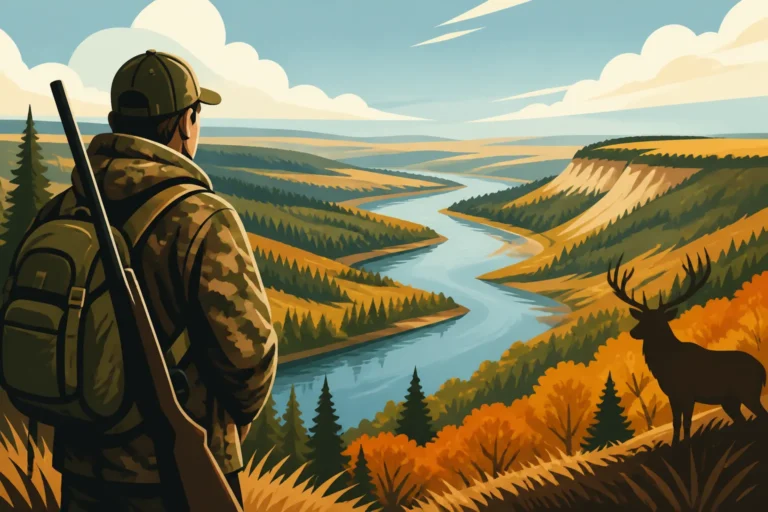
Imagine rolling hills, often carved by ancient glaciers, adorned with dense stands of trembling aspen, balsam poplar, bur oak, and various shrubs like saskatoon and highbush cranberry. These are Manitoba's bluffs. They typically rise above the surrounding flat farmlands or lower, wetter areas, providing natural elevation and complex topography. Unlike the vast, unbroken boreal forest to the north or the endless prairie to the south, these bluffs are characterized by their segmented nature—islands of cover amidst a sea of agricultural production. This fragmented landscape creates abundant edge habitat, which is notoriously productive for deer.
These bluffs are distinct from the continuous bush country, acting more like defined islands or fingers of cover that jut into open areas. A hunter looking at a topographic map or using a mapping application like GoHunt will immediately notice the elevation changes and the distinct tree cover, often forming a clear boundary with cultivated fields. This distinct edge is a magnet for deer, offering both refuge and access to diverse food sources.
Why Deer Find Sanctuary and Sustenance Here
White-tailed deer are masters of adapting to their environment, and the aspen parkland bluffs offer a near-perfect balance of security, food, and thermal cover. These areas become crucial during different seasons, but their year-round appeal is undeniable.
Firstly, the dense woody cover found in bluffs provides excellent escape cover. When danger approaches, deer can quickly melt into the thick underbrush, using the undulating terrain to their advantage. A mature buck, especially, will often seek out the densest parts of a bluff to bed down, relying on his keen senses and the protective cover to stay safe. During hunting season, particularly when pressure mounts in open fields, deer retreat deep into these bluff systems, making them challenging but rewarding places to hunt.
Secondly, bluffs are abundant food sources. Beyond the browse available from aspen, willow, and various shrubs, the bluffs often transition directly into agricultural fields, providing deer with easy access to high-energy crops like canola, peas, wheat, and corn. They can feed heavily in the fields under the cover of darkness and then retreat into the bluffs at first light. Additionally, the native vegetation within the bluffs themselves offers seasonal delicacies such as acorns from bur oaks, saskatoon berries, and chokecherries, which are vital for pre-winter conditioning.
Finally, thermal protection is a huge draw. In Manitoba's harsh winters, deep snow can make travel difficult and expose deer to the cold. The dense canopy and leeward sides of bluffs provide shelter from biting winds and heavy snowfall, offering critical bedding sites where deer can conserve energy. Conversely, in the early fall when temperatures can still be warm, the shade provided by the aspen canopy offers relief from the heat. This makes bluffs year-round prime real estate for whitetails.
Decoding Deer Movement in Bluff Country
Successfully hunting Manitoba's aspen parkland bluffs hinges on your ability to interpret deer sign and understand how these animals navigate their environment. Deer don't just wander aimlessly; they use the terrain and cover to their advantage, creating predictable travel patterns once you learn what to look for.
Identifying Key Travel Corridors
Deer in bluff country are creatures of habit, often using the path of least resistance or the most secure route to move between bedding areas, feeding grounds, and water sources. Identifying these key travel corridors is paramount to placing yourself in the right spot.
Look for natural funnels within the bluffs, such as saddles between two hills, narrow strips of timber connecting larger blocks, or low-lying draws that offer concealed passage. These areas often show heavy track sign, especially after a fresh snow, providing clear evidence of regular use. Deer will frequently use the edges of dense cover as their highways, so pay close attention to the transition zones where the thick woods meet more open areas or even field edges. A well-worn trail leading from a dense poplar ridge down to a standing corn field is a classic example of a high-traffic corridor. You can find excellent advice on Hunting a Poplar Bluff at First Light by understanding these patterns.
Another critical corridor type is a "fingers" of timber extending from a main bluff out into a field. Deer will often follow these fingers under the cover of darkness to access feed, and then return the same way, or cut across open ground at the narrowest point to reach another section of cover. Using satellite imagery, perhaps on a mapping tool like GoHunt, can help you visualize these fingers and identify pinch points where deer traffic will naturally concentrate.
Finding Bedding Areas and Rub Lines
Pinpointing where deer bed and signpost their presence is vital intelligence for any hunter. In the bluffs, bedding areas are often found in the thickest, most secluded pockets of cover, typically on the downwind side of a ridge or hill, allowing deer to smell danger approaching from below and see anything coming from above.
When scouting, look for matted-down vegetation, often in groups, indicating where deer have rested. These spots will have fresh droppings nearby, and sometimes even shed hair. During the rut, these bedding areas become even more active with sign. Mature bucks will create elaborate rub lines, often along the tops of ridges or the edges of dense cover, where they scent mark trees and shrubs. These aren't just random rubs; they follow a pattern, usually leading from a primary bedding area to a food source or a doe bedding area. The size of the rubs can often give you an indication of the buck's maturity and antler size. Detailed scouting can help with Reading Whitetail Sign in Manitoba Aspen.
Similarly, scrapes—areas where bucks paw away leaves and urinate, often beneath an overhanging branch (the "licking branch")—are clear indicators of a buck's presence and activity. While scrapes can pop up anywhere, community scrapes, which are used by multiple deer, are often found along major travel corridors or near prime bedding. Observing fresh rub lines and scrapes, especially those near thick cover within a bluff, tells you you're in a highly active area. The more fresh sign you find, the closer you are to uncovering the core area of a dominant buck.
Strategic Hunting Methods for Bluffs
Hunting Manitoba's aspen parkland bluffs demands a strategic approach, blending patience, stealth, and an understanding of deer behavior in this unique environment. You can't just walk in and expect success; precise planning and execution are key.
Stand and Blind Placement
Effective stand or blind placement is perhaps the most critical factor for success in bluff hunting. Because deer rely heavily on these bluffs for cover, you need to set up where you can intercept them moving into or out of these areas, or while they are within the bluffs themselves.
First, scout thoroughly to identify those key travel corridors, pinch points, and funnel areas that deer habitually use. Look for natural breaks in the terrain, saddles, or areas where dense cover narrows. A classic setup is on a bluff edge overlooking an agricultural field, positioned to catch deer as they enter or exit the field at dawn and dusk. For a more subtle approach within the bluff, focus on internal trails connecting bedding to secondary food sources or water. Consider a stand where a main trail crosses a small drainage or where a narrow timber finger connects two larger blocks of cover. Check out tips on Hanging a Stand on a Manitoba Bush Edge for more insights.
Wind direction is absolutely paramount in bluff country. With undulating terrain, thermals can be tricky, often rising in the morning and falling in the evening. Always hunt with the wind in your favor, especially when setting up near a bedding area. Even the slightest swirl of wind can carry your scent to a deer. Portable blinds, while less common for spot-and-stalk, can be effective if placed well in advance and brushed in naturally near high-traffic areas, offering scent containment and concealment. Remember, the goal is to be invisible and odorless to the deer.
Still-Hunting and Drives in Bluff Country
While stand hunting is effective, the dynamic nature of bluffs also lends itself well to more active methods like still-hunting or small, controlled drives. These tactics allow you to cover more ground and push deer out of dense cover.
Still-hunting involves moving extremely slowly and deliberately through the bluff, pausing frequently to scan for deer. This isn't a casual walk in the woods; it's a methodical process of taking a few steps, stopping to look and listen, then repeating. Focus on moving into the wind or with a crosswind, always checking shadows and thickets where a deer might be bedded. Pay attention to changes in terrain, such as a slight rise or a dense clump of aspen, which might conceal a deer. This method is excellent for scouting new areas or for hunting those pockets of cover that are too small for a stand or blind. It demands intense focus and patience, but can be incredibly rewarding when you stalk up on a bedded buck.
Small, controlled drives can be highly effective in bluffs, especially with a small group of hunters (2-4). The key is "controlled." Instead of crashing through the bush, one or two hunters (the "drivers") move slowly and quietly through the densest part of a bluff, pushing deer towards strategically placed "standers" who are positioned to intercept escaping deer. The drivers should move methodically, pausing to listen, and using the terrain to funnel deer towards the standers. The standers must be ready, concealed, and positioned for clear shots at moving game. Communication (via radios or pre-arranged signals) is crucial to ensure safety and effectiveness. This method is particularly useful during the later parts of the season or if you're trying to clear a known bedding area.
An Example of Strategy in Action
Imagine you've located a substantial bluff system that borders a large field of standing corn. Through scouting (and perhaps using GoHunt to identify terrain features), you've discovered a well-used trail that funnels through a narrow saddle in the bluff, leading directly from a thick bedding area on a south-facing slope to the cornfield.
For a morning hunt, you'd position a stand or ground blind downwind of this saddle, about 20-30 yards from the main trail. You'd arrive well before first light, minimizing disturbance. As dawn breaks, deer will typically be moving from the cornfield back to their bedding area in the bluff. Your stand offers a clear shot as they pass through the funnel.
For an afternoon hunt, especially later in the season during Rifle Hunting Manitoba's Whitetail Rut, you might consider a different approach. If multiple hunters are available, you could execute a small drive. Two drivers could slowly push the thickest part of the bluff from the upwind side, making just enough noise to encourage deer to move. Standers would be positioned at the narrowest escape points further downwind, ready to intercept any deer trying to slip through the edges of the bluff or cross an open patch to reach another timber island. This multi-pronged strategy maximizes your chances in these complex habitats.
| Hunting Method | Pros | Cons | Ideal Scenario |
|---|---|---|---|
| Stand Hunting | High concealment, scent control, prolonged sit potential, less disturbance. | Requires pre-scouting, weather dependent, limited range of vision/shot. | Morning/evening movements between fields and bedding, especially during the rut. Patience is key. |
| Still-Hunting | Covers more ground, adaptable to changing conditions, exciting. | Requires immense patience and stealth, can spook deer if not careful. | Exploring new bluff pockets, tracking fresh sign, picking apart dense cover. |
| Small Drive | Forces deer out of thick cover, effective for specific pockets. | Requires multiple hunters, coordination is critical, potential for spooking deer if not controlled. | Targeting specific, known bedding areas within a bluff, especially in late season. |
Essential Gear and Preparation for Parkland Bluff Hunts
Hunting the diverse terrain of Manitoba's aspen parkland bluffs requires not just the right strategy, but also the right gear and thorough preparation. The weather can change quickly, and the terrain demands specific considerations for comfort and effectiveness.
Clothing and Footwear for Varied Terrain
Manitoba weather is notoriously unpredictable, especially during hunting season. A crisp fall morning can quickly turn into a warm afternoon, and November can bring anything from mild temperatures to deep freezes. Layering is your best friend. Start with a moisture-wicking base layer, add insulating mid-layers like fleece or wool, and top it with a durable, quiet, and waterproof outer shell. You might be walking through dew-covered grass, pushing through wet brush, or sitting in a blind during a light drizzle, so waterproof outer garments are non-negotiable.
The terrain in bluffs can be uneven, with hidden logs, badger holes, and slippery leaf litter. Sturdy, waterproof boots with good ankle support are crucial. Opt for insulated boots if you plan on hunting late into the fall or winter when temperatures drop significantly. Nothing ruins a hunt faster than cold, wet feet. Consider the demands of Dressing for Manitoba's November Cold to ensure you have adequate thermal protection for prolonged sitting, especially in a stand. Your clothing should also be quiet; rustling fabrics will betray your presence in the stillness of the bluff.
Tools for Success: Optics, Calls, and Mapping
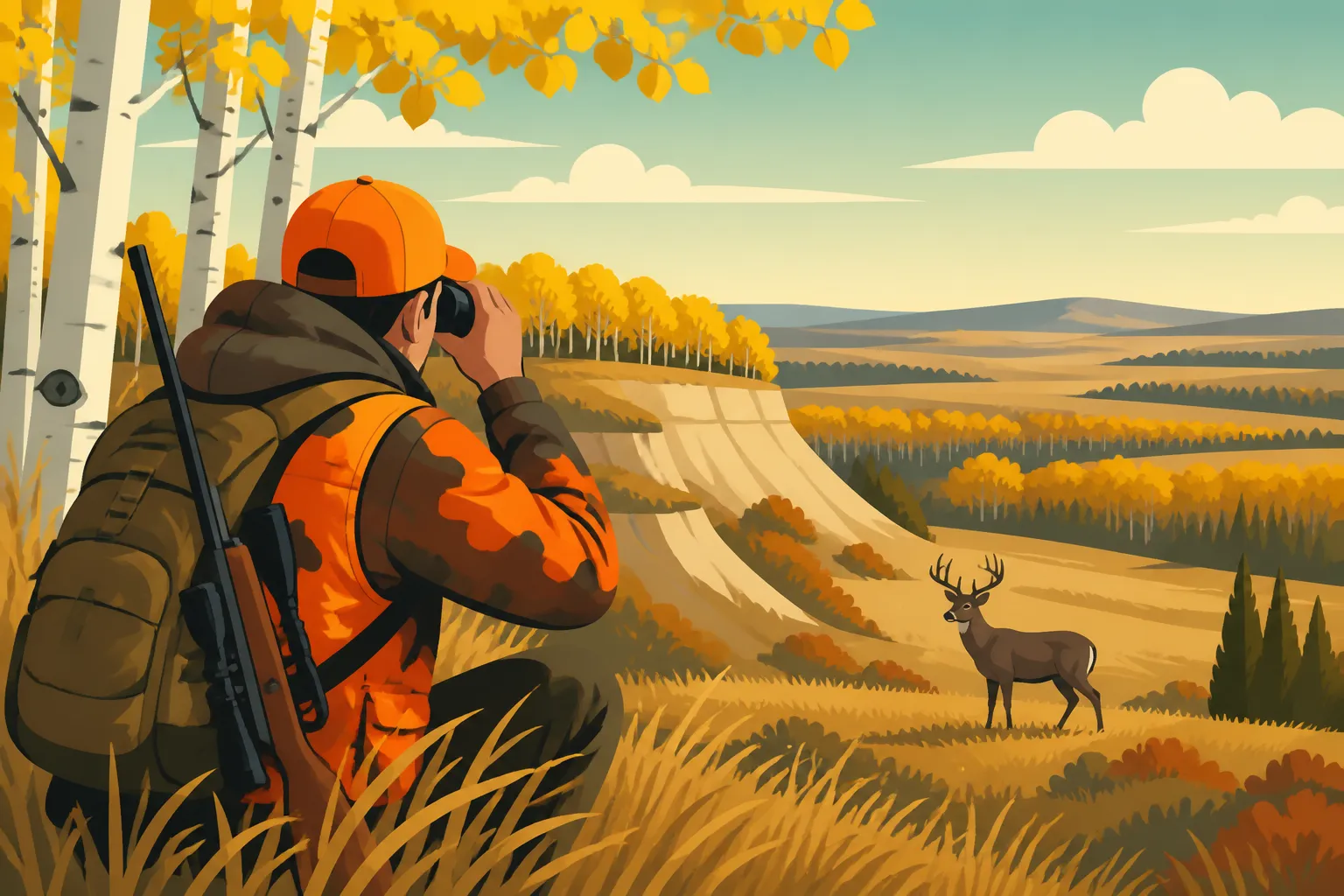
Beyond your rifle or bow, several tools can significantly enhance your chances of success in bluff country. Optics are paramount. A good pair of binoculars (10×42 or 12×50) will allow you to glass open field edges from the cover of the bluff at dawn and dusk, or to pick apart distant timber lines for deer movement without having to expose yourself. They're also essential for identifying key features while still-hunting, like subtle deer trails or distant rubs.
A reliable mapping application on your phone, such as GoHunt, is invaluable. It allows you to study topography, identify property lines (especially important when Hunting Whitetails on Manitoba Crown Land or asking for permission on private land), mark key sign, and navigate silently and efficiently. Knowing precisely where you are and where you're going prevents getting disoriented in dense bush and helps you maintain a strategic advantage. Pre-download maps for areas with spotty cell service. For deeper insights, learn about Scouting With Satellite Imagery in Manitoba.
When it comes to calls, a grunt tube and a doe bleat can be incredibly effective, especially during the rut. Bucks are constantly searching for does and challenging other bucks, and a well-timed call can bring a curious or aggressive buck right into your shooting lane. A wind checker, a small bottle of powder or thread, is a simple but critical tool for constantly monitoring wind direction, ensuring your scent isn't being carried towards deer.
Don't forget the essentials for safety and comfort: a headlamp for early morning or late evening treks, a sharp knife, a small first-aid kit, water, and some high-energy snacks. Being prepared for varying conditions and potential challenges means you can focus entirely on the hunt, not on unforeseen discomforts or emergencies.
Navigating Access and Seasons in the Parkland Bluffs
Understanding where and when you can hunt in Manitoba's aspen parkland bluffs is just as important as knowing how. Access to land and adhering to season dates are fundamental to a legal and ethical hunt.
Gaining Access to Prime Bluff Country
Many of Manitoba's productive parkland bluffs are located on private land, interspersed with agricultural fields. This means that gaining landowner permission is often crucial for accessing the best hunting spots. Don't be shy; approach landowners respectfully, well in advance of the season, and be prepared to explain your intentions. Offer to share meat or help with chores in exchange for access. Building good relationships with landowners can lead to consistent hunting opportunities year after year. For those without private land access, Manitoba also offers significant areas of Crown Land, provincial forests, and Wildlife Management Areas (WMAs) in the parkland region, many of which contain excellent bluff habitat. Knowing how to Reading a Manitoba GHA Map Before You Go and utilizing online mapping tools to identify these public parcels is key.
Another option for finding prime hunting ground without direct private landowner permission is to focus on the periphery of larger public land blocks, or those smaller, overlooked bluffs that connect to larger systems. Many hunters drive past these smaller, seemingly insignificant pockets of cover, not realizing the quality of game they can hold. These areas often receive less pressure and can be fantastic hidden gems.
Key Season Dates and Considerations
The whitetail deer season in Manitoba's parkland bluffs typically offers various opportunities, from archery to rifle. Archery season usually opens in September, providing a chance to hunt deer before heavy hunting pressure sets in. This is a great time to pattern deer moving between bluffs and fields. For specific dates, always consult the current year's Manitoba Hunting Guide or check the official provincial website. Understanding When Manitoba's Archery Season Opens can help you plan early trips.
The general rifle season for whitetails usually opens in mid-November, coinciding with the peak of the rut in many areas. This is often when the biggest bucks are on the move, actively seeking does, and more vulnerable to calling and aggressive tactics. For a detailed breakdown of seasons by zone, refer to Manitoba Whitetail Season Dates by GHA. Early to mid-November is a particularly exciting time to be in the bluffs, as bucks will be covering a lot of ground, using the bluffs for cover as they cruise between different doe groups.
Later in the season, as temperatures drop and snow accumulates, deer often yard up in the densest, most sheltered parts of the bluffs. Hunting then can be challenging but rewarding, as deer movement becomes more concentrated. Regardless of the season you choose, always verify the specific Game Hunting Area (GHA) regulations, bag limits, and any special antler restrictions before heading out. Being prepared with your licences and tags is non-negotiable.
Disclaimer
The information provided in this guide is for general informational purposes only and does not constitute legal advice. Hunting regulations in Manitoba can change, and it is the responsibility of every hunter to consult the official Manitoba Hunting Guide and relevant provincial regulations annually to ensure compliance with all current laws and safety guidelines. Always prioritize safety, ethics, and respect for wildlife and private property.