Hunting Manitoba’s Interlake Between the Lakes
Hunting in Manitoba's Interlake region can feel like stepping into a wild, watery labyrinth, especially if you're used to more traditional farmland or dense boreal forest. The unique blend of sprawling lakes, vast marshes, narrow ridges, and scattered agricultural pockets presents both incredible opportunities and frustrating challenges for hunters. This guide aims to peel back the layers of this fascinating landscape, offering you insights and strategies to confidently pursue game in the heart of Manitoba, between the great lakes of Winnipeg and Manitoba.
The Interlake: A Hunter's Geographical Gem
The Interlake is far more than just "the land between the lakes." It's a complex, dynamic ecosystem that has been shaped by millennia of geological activity and constant interaction between water and land. Understanding this unique environment is the first step to becoming a successful hunter here. It's a place where the landscape itself dictates the movement and patterns of game, and if you can learn to read it, you'll find success.
A Landscape Shaped by Water and Ice
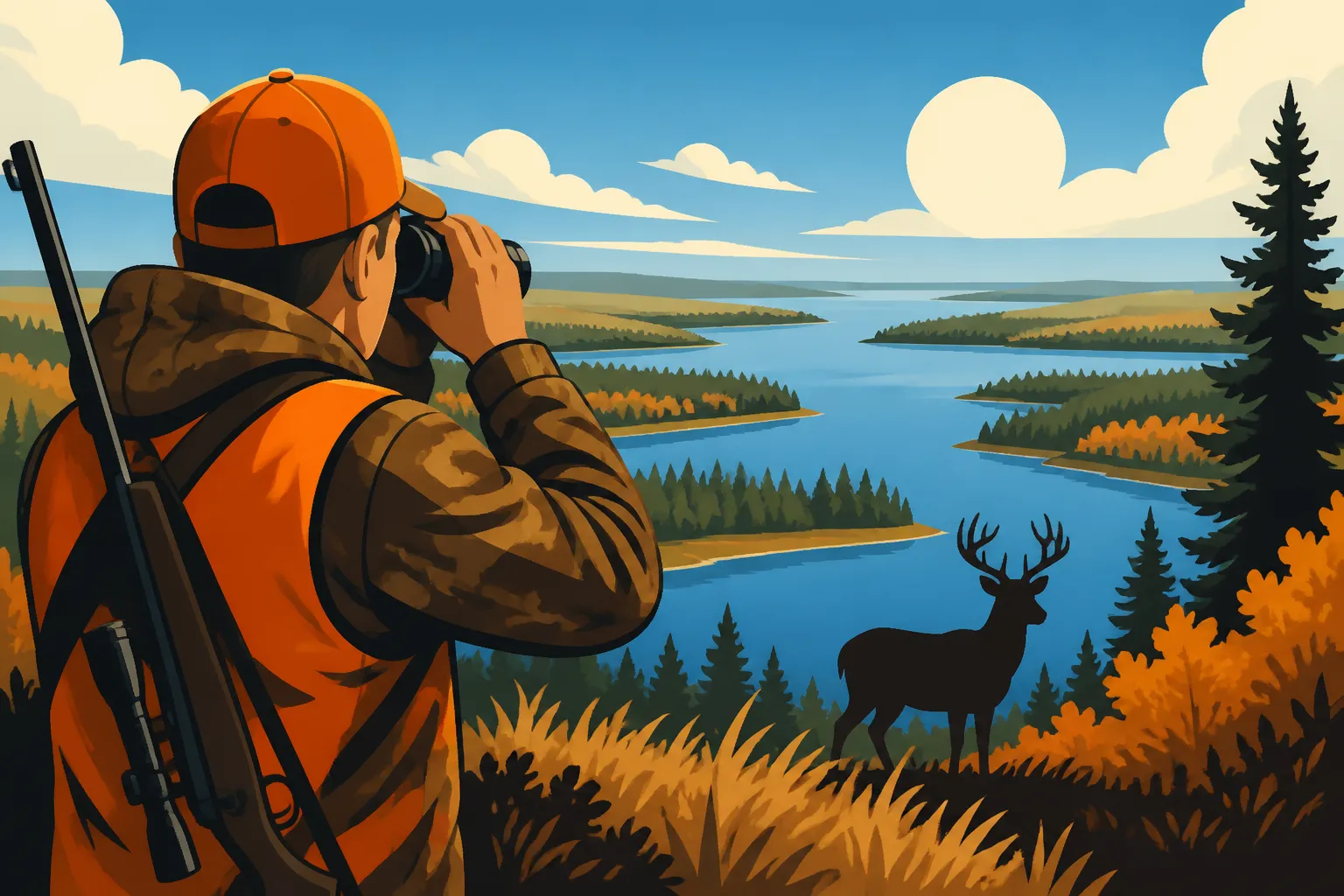
Imagine a land sculpted by ancient glaciers, then repeatedly flooded and drained by the ebb and flow of massive post-glacial lakes. That's the Interlake. What you see today is a mosaic of habitats: the enormous shallow waters of Lake Winnipeg and Lake Manitoba on either side, vast tracts of cattail and bulrush marshes that seem to stretch forever, and then sudden, dry aspen and oak ridges that rise like islands. These ridges are often remnants of ancient beach lines, left behind as the water receded. Between these features, you'll find areas of mixed woods, willow thickets, and low-lying scrub. This intricate pattern of wet and dry, open and covered, creates an incredible amount of "edge habitat," which every seasoned hunter knows is prime territory for wildlife. Whether you're thinking about Hunting a Frozen Slough Crossing for whitetails or finding a secluded spot for ducks, the water is always a dominant factor.
Understanding the Interlake's Wildlife Mosaic
Because of this varied terrain, the Interlake supports a diverse array of game species, though their distribution can be patchy. Whitetail deer are, without a doubt, the stars of the show in many areas. They thrive in the mixed woods and brush, finding abundant cover and browse. Waterfowl hunting is legendary here, with ducks and geese utilizing the expansive marshes and agricultural fields for staging, feeding, and breeding. You'll find everything from mallards and canvasbacks to vast flocks of Canada geese and snow geese. Black bears also roam the more forested and less populated northern sections of the Interlake, especially where denser bush provides sanctuary. Coyotes are prevalent across the entire region, drawn by the healthy populations of deer, rabbits, and waterfowl. Understanding the local ecology is key to predicting where game will be.
Agricultural Patches and Their Influence on Game
While much of the Interlake is wild, there are significant agricultural areas, especially in the southern and central parts. These include fields of wheat, barley, corn, sunflowers, and hay. These cultivated lands are absolute magnets for wildlife. For deer, they provide crucial food sources, particularly in the fall and winter, leading to well-worn travel corridors between bedding cover in the bush and feeding areas in the fields. Waterfowl, of course, flock to these fields to feed on waste grain after harvest, creating incredible opportunities for field hunting. The interplay between these agricultural patches and the surrounding natural cover creates a complex web of wildlife movement. You might find whitetails using a shelterbelt to move from a bush block to a standing cornfield, or geese pouring into a freshly swathed barley field at dawn. Mapping tools like onX Hunt can be incredibly useful for identifying these key agricultural zones and adjacent cover.
Unlocking Public Access: Navigating Interlake Hunting Lands
One of the biggest questions for any hunter is, "Where can I actually hunt?" In the Interlake, the answer isn't always straightforward. It's a mix of designated public lands, vast tracts of Crown land, and private holdings. Knowing how to identify and access these areas legally and responsibly is paramount for a successful hunt.
Hunting on Crown Land: Your Public Playground
Manitoba boasts a significant amount of Crown land, and a good portion of it lies within the Interlake. This is your public playground, open to hunters (with the proper licences) unless otherwise restricted. However, "Crown land" isn't always a neatly marked, easily accessible block. It can be swampy, heavily treed, or cut off by private property. Often, access involves navigating old logging trails, following obscure paths, or simply walking a long way in. This is where modern technology becomes a game-changer. Using an app like onX Hunt or GoHunt with its satellite imagery and land ownership layers can be invaluable. It lets you see exactly where Crown land begins and ends, identify potential access points, and scout for key features like sloughs, ridges, or bush edges from your couch. Remember, while Crown land is public, respect for the environment and other users (trappers, hikers, Indigenous communities) is crucial. Always pack out what you pack in, and leave no trace. Understanding Manitoba's Crown Land Access is fundamental before you even leave your driveway.
Wildlife Management Areas: Concentrated Opportunities
The Interlake is home to several important Wildlife Management Areas (WMAs) designed to protect critical habitats and provide regulated hunting opportunities. These include significant areas like the Alonsa WMA, Lake Francis WMA, and portions of the Delta Marsh complex (though Hunting the Delta Marsh Style Wetland itself is a rich topic). WMAs are excellent places to find concentrated populations of game, particularly waterfowl and whitetail deer, due to their habitat protection and often reduced pressure compared to other public lands. However, WMAs often come with their own specific rules and regulations that can differ from general provincial hunting laws. These might include restrictions on vehicle access, weapon types, or even specific dates for certain species. It's vital to check the current Manitoba hunting guide and GHA maps for the specific WMA you plan to hunt. They are managed for wildlife, which means they are often prime hunting grounds, but you need to do your homework to avoid running afoul of the rules.
Provincial Forests and Other Public Holdings
Beyond general Crown land and WMAs, the Interlake also contains sections of provincial forests and other types of public access land. Areas like the Fairford Provincial Forest or smaller forested blocks scattered throughout the region offer additional opportunities. These areas typically have fewer specific regulations than WMAs but might still have restrictions on motorized vehicle use or certain activities. They often consist of mixed forest, aspen bluffs, and willow bottomlands, providing excellent habitat for deer and bears. When researching these areas, refer to official Manitoba government maps and the provincial hunting guide. Always be aware of any nearby private land and ensure you are not trespassing. Good land navigation skills, whether with a GPS unit or a detailed map, are indispensable when hunting these less defined public spaces. For a broader understanding of Manitoba's Game Hunting Areas, it's always good to consult the official maps.
| Public Land Type | Key Features | Typical Game | Access Considerations |
|---|---|---|---|
| Crown Land | Undesignated public land, vast and varied, often remote. | Whitetail, bear, waterfowl, coyotes. | Requires detailed mapping, can be difficult to access. |
| Wildlife Management Area | Designated for wildlife, specific habitat, often with special rules. | Waterfowl, whitetail. | Check specific regulations, often good access points. |
| Provincial Forest | Managed timberland, mixed forest, often with established trails/roads. | Whitetail, bear, moose (rare), coyotes. | Good for walking, but know forest-specific rules. |
Whitetail Strategies for the Interlake's Unique Terrain
Hunting whitetails in the Interlake is a different ball game than in open agricultural areas or dense northern forests. The fragmented nature of the habitat – the constant interplay of bush, marsh, and small clearings – requires adaptable strategies and a keen eye for subtle details.
Decoding Deer Sign in Bush and Slough Country
In the Interlake, deer sign is often found in and around the transition zones. Look for rubs on small aspens or willows along the edges of bluffs, especially where they drop into lower, wetter ground. Scrapes will frequently appear near these same edges or along subtle rises within dense cover. Deer here tend to funnel through pinch points created by sloughs, beaver dams, or narrow strips of dry ground between two wet areas. You'll find heavy deer trails leading from dense willow and dogwood thickets, which provide bedding cover, to agricultural fields or oak bluffs that offer acorns and other food. Reading Whitetail Sign in Manitoba Aspen can give you an edge, as deer use these stands for both cover and browse. Don't overlook the edges of frozen marshes in late season – deer will often use these hard, flat surfaces as easy travel routes when the snow gets deep.
When you're out there, really look at the ground. Is there a faint trail winding through the tall grass at the edge of a cattail marsh? Are there fresh tracks crossing an old logging road that disappears into a dense poplar bluf? Pay attention to browse lines in the willows and aspens. These small details, combined with understanding the landscape, will tell you where deer are moving, feeding, and bedding. The deer here are masters of using the complex cover, so learning their habits is key.
Strategic Stand and Blind Placement
Given the broken terrain, successful stand or blind placement in the Interlake hinges on identifying these natural funnels and pinch points. A classic strategy is to place a stand where a dry ridge narrows between two large sloughs or marshy areas. This forces deer movement into a predictable corridor. Another effective spot is on the edge of a dense bush block that borders a cultivated field, especially if there's a prevailing wind that allows you to approach undetected. Look for mature oak bluffs, as the acorns are a major draw in the fall. During the rut, don't shy away from setting up near water sources or even small islands of cover within a larger marsh, as bucks will cruise these areas looking for does. Consider using ground blinds in dense cover, especially if you plan to sit for extended periods in colder weather. For tips on Hanging a Stand on a Manitoba Bush Edge, remember that the unique habitat here might require some creative thinking. Always consider wind direction carefully; the swirling winds near water bodies can be tricky, so a mobile approach or multiple stand locations might be your best bet.
Rut Hunting in the Interlake: Calling and Cruising
The whitetail rut in Manitoba, particularly in the Interlake, is an exciting time. Bucks are on the move, and their usual patterns can be disrupted. In this diverse landscape, both calling and cruising tactics can be highly effective. Rattling antlers can draw in curious bucks, especially in more open aspen parkland or along bush edges where the sound carries well. Combine rattling with grunt calls to mimic a sparring match and grab attention. Early to mid-November is prime time for Hunting the Rut in Early to Mid November.
Consider still-hunting or slow-cruising along the edges of dense cover, through narrow strips of bush between fields, or along the drier hummocks within marshy areas. Bucks will often be scent-checking these locations for does. The key is to move slowly, stopping frequently to scan, listen, and glass, taking advantage of the broken visibility. Don't be afraid to sit all day in a promising area, as bucks can be active at any time during the rut, especially in response to hunting pressure. Being patient and persistent in these prime rut windows can pay off with a big Interlake buck.
Waterfowl: A Signature Interlake Hunting Experience
For many, the Interlake is synonymous with world-class waterfowl hunting. Situated directly on the Central Flyway, and with its abundance of wetlands and agricultural lands, it's a magnet for ducks and geese during migration. If you dream of skies filled with birds, the Interlake should be on your radar.
The Migratory Crossroads: Ducks and Geese
The Interlake's geographical position, nestled between two of North America's largest freshwater lakes (Winnipeg and Manitoba), makes it an unparalleled staging ground for migrating waterfowl. Add to this the countless smaller lakes, prairie potholes, and vast marsh systems, and you have a perfect storm for ducks and geese. Species like mallards, pintails, canvasbacks, redheads, wigeon, and gadwall fill the skies. Large numbers of Canada geese, specklebellies, and snow geese also utilize the region, pausing to refuel on waste grain before continuing their journey south. It's truly a place where Why the Interlake Concentrates Birds becomes evident the moment you witness a major migration push.
This incredible concentration of birds means diverse hunting opportunities. Whether you prefer big field spreads for geese, jump-shooting potholes for ducks, or sitting in a marsh blind, the Interlake offers it all. Knowing the timing of the migrations for different species is crucial for planning your hunt; early season might see more local birds, while later in the fall brings in the massive northern flights.
Field Hunting Strategies for Geese and Ducks
Field hunting is a popular and often highly successful method in the Interlake, particularly for geese. Scouting is absolutely paramount here. You'll spend hours driving grid roads, glassing fields at dawn and dusk to pinpoint where birds are feeding. Once you've found a consistent feeding pattern, getting permission from the landowner is the next step. For Setting a Goose Spread in Swathed Barley, you'll typically need a large spread of decoys, often hundreds for snow geese, using full-bodied decoys, silhouettes, or rag decoys. Layout blinds are essential for concealment in open fields.
For ducks in fields, a smaller spread of mallard or pintail decoys, often augmented with a spinning-wing decoy, can be deadly. Position your blinds downwind of the decoys, anticipating how the birds will approach. Calling is a huge part of field hunting – sharp, confident goose calls and varied duck quacks can draw birds in close. Patience is key; sometimes you'll wait for hours for the right flight, but when it happens, it's unforgettable. Always ensure you're using Non-Toxic Shot for Manitoba Waterfowl as required by law.
Marsh and Pothole Hunting Adventures
Beyond the fields, the Interlake's marshes and potholes offer a more intimate and often equally productive waterfowl experience. Jump-shooting small prairie potholes can be an adrenaline rush, especially for fast-flushing ducks. Walking slowly along the edges of these water bodies, being ready to shoot when birds explode from the cover, requires stealth and quick reflexes. Remember to respect private land boundaries, even around small potholes.
For larger marsh systems, like those found around Lake Francis or parts of the Delta Marsh, setting up a stationary blind for pass shooting or decoy hunting can be fantastic. Whether it's a permanent blind or a portable pop-up blind brushed in with natural vegetation, concealment is key. Decoy spreads in marshes can be simpler than in fields, often focusing on dabblers and divers appropriate to the water body. Retrieving birds in marshy terrain often requires a good dog or stout waders, and understanding the nuances of Marsh Hunting Ducks in the Interlake will greatly enhance your success. The quiet solitude of a marsh hunt, broken by the whistle of wings, is a unique and rewarding experience.
Beyond Deer and Ducks: Other Interlake Game
While whitetails and waterfowl dominate the hunting scene, the Interlake still offers opportunities for other species, ranging from the powerful black bear to cunning coyotes and even some upland birds. These hunts often require different tactics and a deeper understanding of the specific habitats they prefer.
Black Bear Opportunities and Considerations
Black bears are present in the more remote and heavily treed parts of the Interlake, particularly in the northern sections where the bush is denser and less fragmented by agriculture. These areas provide the cover and food sources (berries, nuts, natural forage) that bears need to thrive. Bear hunting in Manitoba is typically done either in spring or fall, and baiting is a common and effective method. Setting a Bear Bait Site in Manitoba requires careful planning, consistency, and a good understanding of bear behavior.
Safety is paramount when hunting bears. Always be aware of your surroundings, carry bear spray, and inform others of your hunting location. Understanding how to judge the size and sex of a bear is also important, especially if you're targeting a mature boar. While not as abundant as in some other regions of Manitoba, the Interlake can definitely offer a rewarding black bear hunt for those willing to put in the effort and scout the right locations.
The Elusive Moose and Its Interlake Presence
While moose were once more common throughout the Interlake, their populations have seen declines in many southern Manitoba regions. Today, moose hunting opportunities in the Interlake are extremely limited and often restricted to specific Game Hunting Areas (GHAs) with special draw licences or closures to aid in population recovery. In some GHAs, moose hunting may be entirely closed. Where Moose Hunting Is Closed Entirely is an important piece of information to check.
If you are fortunate enough to draw a tag for one of the very few areas where moose hunting is permitted, expect a challenging hunt. Moose in the Interlake will be found in dense, wet boreal forest pockets, often near beaver ponds or in areas with thick willow and alder growth. This is truly big woods hunting, requiring patience, stealth, and often significant physical effort to navigate the terrain. Always consult the most current Manitoba hunting regulations to confirm moose seasons and GHA restrictions.
Predator and Upland Bird Pursuits
The Interlake is rife with coyotes, offering year-round hunting opportunities for these intelligent predators. Coyote hunting can be a thrilling pursuit, whether you're calling them in with distress sounds, stalking them in mixed cover, or hunting over a winter bait site. They are prevalent across agricultural fields, bush edges, and even around the fringes of human habitation, constantly on the prowl for mice, rabbits, and carrion. Calling Coyotes in Manitoba Farm Country provides valuable tactics applicable to much of the Interlake.
For upland bird enthusiasts, ruffed grouse and sharp-tailed grouse can be found in appropriate habitats. Ruffed grouse prefer dense aspen and mixed woods, often along old logging trails or creek bottoms. Sharp-tailed grouse favor more open grassland and brushy edges, particularly where there's a mix of pasture and scattered bush. While not as abundant as in some other parts of the province, pockets of good habitat exist. Hunting these birds often involves walking slowly, listening for flushes, and being ready for a quick shot. A good flushing dog can be a huge asset in the Interlake's thick cover.
Rules, Ethics, and Planning for a Successful Interlake Hunt
No matter how experienced you are, hunting in a new area like the Interlake requires careful planning and a deep understanding of the rules and ethical considerations. Manitoba has specific regulations that hunters must adhere to, and respecting the land, wildlife, and other users is paramount.
Navigating Licences, Tags, and GHAs
Before you even step foot in the Interlake, ensuring you have the correct licences and tags is crucial. As a Manitoba resident, you'll need a general resident hunting licence, along with species-specific tags for big game like deer or bear. Non-residents have different requirements and often require guides for certain species, so be sure to understand Manitoba Non-Resident Licence Options. The Interlake falls within several different Game Hunting Areas (GHAs), and season dates, bag limits, and specific regulations can vary significantly from one GHA to another. For example, some GHAs might have an extended antlerless deer season, while others might be closed to moose hunting entirely. Always consult the official Manitoba hunting guide and GHA maps for the specific area you plan to hunt. Websites and apps like GoHunt can provide GHA-specific information, but always cross-reference with the official government resources. Understanding your Manitoba Resident Hunting Licence Cost and the associated tags is the first administrative step.
Landowner Relations and Respect for the Landscape
A significant portion of the Interlake, especially the more accessible agricultural land and many of the desirable bush pockets, is privately owned. Gaining permission from landowners is not just a courtesy; it's the law in Manitoba. Manitoba Landowner Permission Law states you must have written permission to hunt on private land. This means knocking on doors, introducing yourself, and respectfully asking for permission well in advance of the season.
When you do get permission, treat the landowner's property with the utmost respect. Close gates, don't drive across fields unnecessarily, pack out all your trash, and leave the property exactly as you found it. Offering to share some of your harvest, or even just a sincere thank you, can go a long way in building positive relationships that might secure future hunting opportunities. Remember, a good reputation as a hunter benefits everyone.
Safety, Conservation, and Trip Preparation
Hunting in the Interlake, with its remote areas and variable terrain, demands a strong focus on safety and preparedness. The weather can change rapidly, from warm fall days to bitter cold and heavy snow. Always carry a well-stocked first-aid kit, navigation tools (GPS and a physical map are a must, especially in areas with no cell service), and reliable communication devices (satellite messenger or spot device are recommended for remote areas). Let someone know your hunting plan, including your exact location and estimated return time. Hunting Safely in Deep Winter Cold is a must-read if you're planning a late-season hunt.
Conservation is also a responsibility we all share. Adhere strictly to bag limits, season dates, and ethical shot placement. If you harvest an animal, especially a deer, in one of Manitoba's CWD (Chronic Wasting Disease) surveillance zones, ensure you understand and follow the Manitoba's Mandatory CWD Sampling GHAs requirements. This disease is a serious threat to our deer populations, and hunter participation in sampling is vital.
Finally, prepare your gear for the specific conditions. Waders or waterproof boots are often essential in the wet Interlake environment. Layers of clothing are critical for adapting to temperature swings. Familiarize yourself with your hunting area using scouting trips, aerial photos, and digital mapping apps like GoHunt or onX Hunt. These tools can help you identify access routes, bedding areas, and food sources, maximizing your chances for a safe and successful hunt in this incredible region.
Disclaimer
This article is for general informational purposes only and does not constitute professional advice. Laws, prices and regulations vary by location and change over time. Consult a qualified professional for guidance on your specific situation.