Calling Coyotes in Manitoba Farm Country
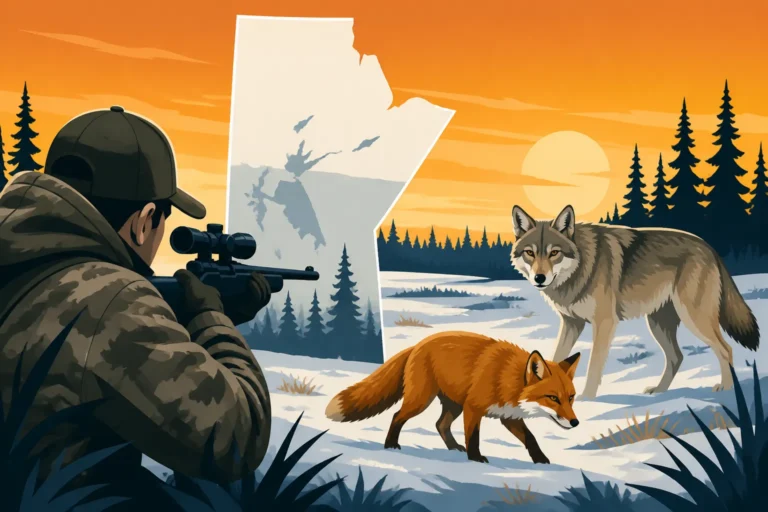
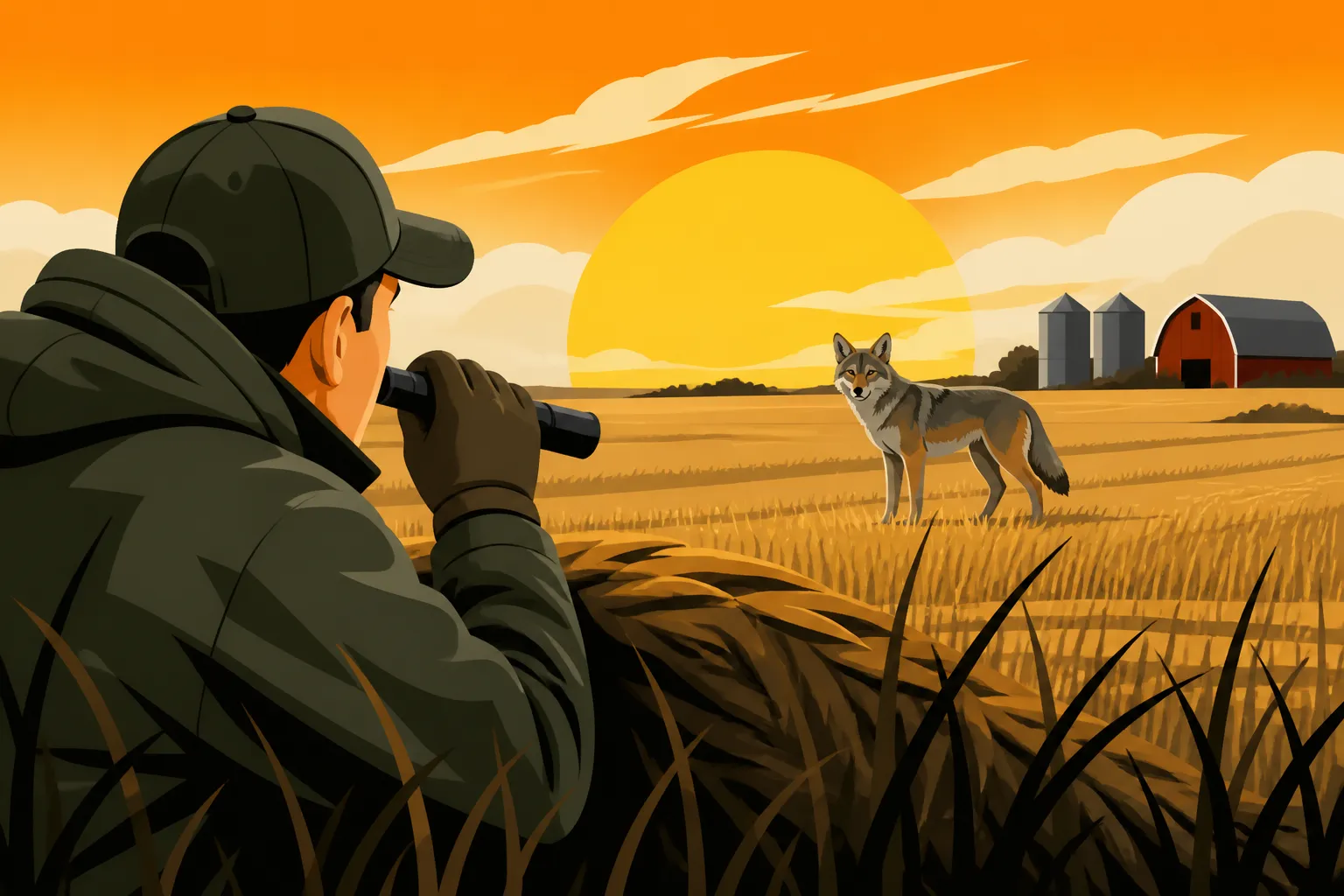
There’s nothing quite like the feeling of watching a wily coyote come loping in across a sprawling Manitoba stubble field, drawn in by a series of calls you’ve meticulously crafted. For many, especially those in our vibrant farm communities, coyotes can be a real nuisance, impacting livestock and game populations alike. This comprehensive guide is designed to help you understand these intelligent predators, master the art of calling them in Manitoba’s agricultural landscapes, and ultimately, increase your success rate out in the field.
Understanding Coyote Behavior in Farm Country
Coyotes in Manitoba's farm country are a different breed, adapting remarkably well to human-dominated landscapes. Their survival hinges on understanding the rhythms of agricultural life, and to effectively call them, you need to think like they do. It's about more than just making noise; it's about anticipating their movements and leveraging their instincts.
Why Coyotes Thrive on Farmland
Manitoba’s agricultural regions are a buffet for coyotes, offering an incredible abundance of food and cover that allows their populations to flourish. Unlike the deep boreal forest, farmland provides a mosaic of habitats perfect for these adaptable canids. Think about it: a seemingly endless supply of rodents, from voles and mice hiding in grass ditches to gophers in pastures, forms the base of their diet. Then there's the opportunistic scavenging of crop residues, fallen grain, and even deer carcasses after a tough winter. Livestock, particularly vulnerable newborn calves or lambs, can also become targets, which is why farmers are so keen on managing coyote numbers.
Beyond food, the sheer variety of cover available in farm country is a game-changer for coyotes. Shelterbelts of trees planted to protect fields from wind erosion offer dense thermal cover in winter and crucial shade in summer, acting as natural highways and bedding areas. The tall, standing crops like corn, sunflowers, or mature canola provide exceptional concealment, allowing coyotes to move unseen and ambush prey. Even large, frozen sloughs with their cattails and willows become important travel corridors and hunting grounds, especially when snow cover is deep. The edges of these various habitats – where field meets bush, or pasture meets slough – are prime coyote territory, concentrating prey and offering strategic vantage points. Understanding these preferences is key when you're Hunting Whitetails on Manitoba Farmland and want to avoid spooking game, or when you're directly targeting coyotes.
Daily and Seasonal Movement Patterns
Coyote movements are highly influenced by the agricultural calendar and the changing seasons. While they are often associated with nocturnal activity, coyotes in farm country can be quite active during daylight hours, especially during cooler periods or when pressure is low. In the summer and early fall, when crops are standing tall, coyotes might move mostly under the cloak of dense vegetation, making them harder to spot. They’ll often use those deep, overgrown ditches and fence lines as linear travel routes, moving between different feeding areas or dens. As harvest progresses, exposing vast fields, their movements become more exposed, leading them to be more cautious or concentrate their activity during dawn and dusk.
Winter brings a significant shift. With snow cover blanketing the fields, tracks become highly visible, revealing their travel corridors. Coyotes will often stick to the paths of least resistance – plowed roads, snowmobile trails, and the wind-swept ridges of fields – while avoiding deep drifts. They also tend to concentrate around areas where prey is readily available, such as cattle pastures, hay bales, or specific stands of cover that offer refuge for rodents. The rut in late winter also sees increased daytime activity as males search for mates. If you're out Hunting the Late December Season for deer, you'll undoubtedly notice more coyote tracks as they become more brazen in their search for food and mates.
Interpreting Coyote Sign in Agricultural Settings
Becoming a successful coyote caller isn't just about calling; it's about being a detective. Reading sign in farm country is a bit different than in dense bush. You're looking for subtle clues that tell you where coyotes are actively hunting, traveling, and living. Scat is a goldmine of information, indicating their diet and presence. Look for it along field edges, trails, or elevated points. If it’s full of hair and bone fragments, you know they're feeding well on natural prey. If it contains bits of corn or other crop residue, they've been scavenging.
Tracks in the mud, dust, or snow are perhaps the most direct evidence. Pay attention to the direction of travel, the number of tracks (indicating singles or a pair), and how fresh they are. Fresh tracks in newly fallen snow are like a hot lead. In winter, look for tracks crossing frozen sloughs or leading to specific clumps of cover. Kill sites, often identified by scattered fur or feathers, tell you where they've been successful. These can be particularly telling around livestock pastures or where deer frequently browse. Territorial markings, like urine on fence posts or small scrapes of dirt, also indicate their active presence. A good scouting app, like what you might use with GoHunt, can help you mark these signs on a map, building a picture of their movement over time. Just like Reading Whitetail Sign in Manitoba Aspen, understanding these subtle clues specific to a particular environment will greatly increase your chances of finding and calling in coyotes.
Essential Gear for Calling Coyotes
Just like any specialized form of hunting, successfully calling coyotes in Manitoba's farm country requires the right tools for the job. Having the appropriate firearms, calls, and optics can make the difference between a frustrating blank stand and a successful encounter.
Firearms and Ammunition Choices
When it comes to putting down a coyote, ethical and effective shot placement is paramount. For the wide-open spaces of Manitoba’s farmland, a flat-shooting rifle is often the tool of choice. Calibers like the .223 Remington, .204 Ruger, and .243 Winchester are immensely popular. They offer a good balance of velocity, accuracy, and minimal recoil, making follow-up shots easier if needed. The .22-250 Remington is another classic choice for its blistering speed. When selecting ammunition, varmint-specific bullets with rapid expansion are ideal, ensuring a humane kill and minimizing ricochet on hard ground. Hollow-point or ballistic tip designs are excellent for this purpose. For closer encounters, particularly in thicker cover like deep shelterbelts or around farmyards, a shotgun loaded with buckshot can be incredibly effective. A 12-gauge with #4 buckshot offers a dense pattern and good stopping power within 40-50 yards. Some hunters even carry a shotgun as a backup for coyotes that commit hard and come charging in.
Electronic and Mouth Calls
The world of coyote calls offers a vast array of options, each with its own advantages. Electronic callers (e-callers) have revolutionized coyote hunting. Brands like Foxpro, Primos, and Lucky Duck offer units with extensive sound libraries, remote controls, and impressive volume. The ability to place the caller away from your position, cycle through different sounds without movement, and crank up the volume to reach distant coyotes in windy conditions is a huge asset in wide-open farm fields. They excel at playing realistic rabbit distress, fawn bleats, and various howls.
Mouth calls, on the other hand, offer unparalleled realism and portability, albeit requiring more practice to master. Open-reed calls are versatile for distress sounds, while closed-reed calls are great for consistent rabbit or mouse squeaks. Diaphragm calls can produce convincing howls and barks. The key with mouth calls is to be able to vary the intensity, tone, and cadence to mimic a truly desperate or injured animal. Many experienced callers combine both: using an e-caller for initial long-range attention and then switching to a mouth call for a more subtle, realistic finish as the coyote closes in. Learning to use both can significantly enhance your versatility.
Optics and Camouflage
Good optics are non-negotiable for coyote hunting in farm country. High-quality binoculars (8×42 or 10×42) are essential for scanning vast fields, spotting incoming coyotes at a distance, and identifying potential hazards. A rangefinder is also crucial for confirming shot distances, especially when coyotes might stop at the edge of your effective range. Given the open nature of agricultural land, a good scope with clear glass and a suitable reticle (such as a BDC or mil-dot for holdovers) is vital for precise shots. Brands like Vortex, Leupold, and Nikon offer excellent options for various budgets.
Camouflage choice is equally important. In the fall, when fields are mostly stubble and muted colours, patterns that mimic dry grass, cornstalks, or bare earth are ideal. As winter sets in and snow blankets the landscape, snow camouflage becomes critical. A simple white suit worn over your regular hunting clothes can provide excellent concealment against a snowy backdrop. Some hunters even opt for a ghillie suit in open conditions for maximum break-up of their human outline. Remember, coyotes have excellent eyesight, so blending into your surroundings, and minimizing movement, is key. When you’re spending hours perched in a ditch line, you'll appreciate gear that keeps you both hidden and comfortable, especially if you're out Hunting Safely in Deep Winter Cold.
Mastering Coyote Calling Techniques
Calling coyotes is far more than just blowing into a call; it's about storytelling. You're trying to paint a picture for that coyote, tapping into its primal instincts. Understanding which sounds to use and when to use them is the true art form.
The Art of Distress Calls
Distress calls are arguably the most effective and widely used sounds for luring coyotes. They tap into a coyote's innate predatory instinct, signaling an easy meal. The most common are rabbit distress calls, mimicking a cottontail or jackrabbit caught in distress. These are versatile and work year-round. Start with a series of loud, frantic squeals to grab attention, then dial it back to more sporadic, weaker cries as if the animal is tiring. Varying the intensity and duration is key; you want it to sound authentic, not like a broken record.
Fawn bleats are incredibly effective, especially in late spring, summer, and early fall when deer fawns are vulnerable. A lost or injured fawn is an irresistible target for a hungry coyote. These calls should be softer, more plaintive, building up in urgency. Rodent distress calls, like mouse or vole squeaks, are excellent for close-in work or for wary coyotes. They are generally quieter and more subtle, mimicking a small critter caught in the grass. When using any distress call, remember to cycle through periods of calling and silence, mimicking a real animal’s struggle and listening intently for a response. GoHunt users often share their success stories using specific distress call sequences that have worked in various regions of Manitoba.
Incorporating Howls and Challenge Calls
Howls are a different beast entirely, used more for communication and territorial assertion than outright predation. Lonesome howls are a great way to initiate contact or locate coyotes over long distances, particularly in the vast fields of farm country. They're typically long, drawn-out single howls, meant to sound like a lone coyote looking for its pack. An interrogation howl is a shorter, often rising howl used after you've heard a coyote howl back. It's like asking, "Are you still there? Who are you?"
Group howls, often a cacophony of different pitches and durations, mimic a pack of coyotes and can trigger a strong territorial response, especially from dominant males. Challenge howls are aggressive, deeper howls, sometimes ending in barks. These are often used to provoke a dominant coyote into investigating, especially during the breeding season in late winter and early spring. The trick with howls is not to overdo them. A few well-placed howls to gauge interest, followed by distress calls, is often a potent combination. Using howls to confirm their presence before switching to a distress call can be a good strategy, especially if you’re trying to call coyotes At First Light and want to know where they’re bedded.
Pup Distress and Aggressive Barking
While distress calls and howls form the foundation, pup distress and aggressive barking can be incredibly powerful in specific scenarios. Pup distress calls, mimicking a young coyote in trouble, can draw in adult coyotes – both males and females – who are protective of their young. This is particularly effective during and shortly after the denning season (late spring through summer). Imagine a mother coyote hearing her pup in distress; she'll often come charging in to investigate or defend, providing an excellent calling opportunity.
Aggressive barking, often mixed with growls, is used to mimic a confrontation between coyotes or another predator. This can be effective if you suspect a coyote is wary but territorial. It’s a bold move, as it can sometimes spook an animal, but it can also trigger a strong protective or aggressive response. It’s a good call to experiment with when you’ve got a call-shy coyote that’s ignored everything else. When using these more aggressive calls, be prepared for a quick, decisive approach from the coyote.
Strategic Setups and Approaching Stands
Successfully calling coyotes isn't just about the sounds you make, but also about where you make them and how you position yourself. The wide-open nature of Manitoba’s farm country demands meticulous attention to detail in your setup.
Reading the Wind and Terrain
This is perhaps the single most critical factor in coyote calling. Coyotes rely heavily on their sense of smell, and if they catch your scent, the hunt is over before it even begins. Always, always approach and set up with the wind in your favor, blowing your scent away from where you expect the coyote to approach from. This often means circling around to get to your stand location. A small wind checker, a bottle of powder, or even simply observing the grass and leaves can help you confirm the wind direction.
Beyond wind, understanding the terrain is paramount. In farm country, this might mean utilizing subtle changes in elevation, like a gentle rise, a shallow coulee, or the edge of a bluff. These features can provide crucial concealment for your approach and offer a better vantage point without silhouetting yourself. Look for natural funnels – lines of trees, drainage ditches, or narrow strips of cover between fields – that can direct a coyote’s approach into your shooting lane. You can get a good feel for these nuances when you’re Scouting a Manitoba Game Hunting Area and making note of the topographical features.
Choosing a Stand Location
Your stand location is your hidden fortress. You want to choose a spot that offers a clear view of the surrounding area (especially downwind), provides a solid backdrop to break up your silhouette, and gives you open shooting lanes. Excellent backdrops include a dense shelterbelt, the crest of a hill, or a large hay bale. Avoid sky-lighting yourself by standing on top of a hill; instead, position yourself just below the crest.
In Manitoba farm country, common effective stand locations include:
- The edge of a shelterbelt: This offers excellent cover and allows you to scan the fields on either side.
- A bluff or slight rise in a field: This provides a vantage point. Consider Hunting a Bluff Between Two Fields for elevated visibility.
- A deep ditch or coulee: These offer superb concealment for your approach and setup, as long as you can still see where coyotes might come from.
- The corner of a field: Often a natural travel corridor where coyotes cut corners.
- Near a standing crop: If you can position yourself with the crop as a backdrop, or with a clear view of its edge, this can be productive. Try Hunting a Standing Canola Field Edge or a Hunting a Swathed Grain Field at Dusk.
Remember to consider the sun's position, especially at dawn and dusk, to avoid glare directly into your eyes. You want it at your back if possible, making it harder for incoming coyotes to spot you.
Stealthy Approaches and Departures
Your approach to the stand can make or break the hunt. Drive quietly, parking your vehicle out of sight from where you intend to call. Many hunters will walk the last few hundred yards to avoid disturbing the area. Keep noise to an absolute minimum; equipment should be secured to prevent clanking. Move slowly and deliberately, constantly scanning the terrain for any lurking coyotes, especially on your downwind side. Remember, you might bump a coyote on the way in, so always be ready.
Once you’ve chosen your spot, take a moment to scan the area thoroughly with your binoculars before setting up your e-caller or making your first sound. Coyotes are masters of concealment and might be watching you already. After your calling sequence is complete and you’ve given the area ample time (often 15-20 minutes after your last call) to ensure no coyote is slowly working its way in, depart as stealthily as you arrived. Don't assume a blank stand means no coyotes were present; they may have simply heard you or smelled you before you even called.
Seasonal Considerations for Success
Just like deer and other game, coyote behavior in Manitoba is deeply intertwined with the seasons. Adapting your calling strategy to the time of year can dramatically increase your success rate.
Early Fall and Post-Harvest Hunting
Early fall is a fantastic time to hunt coyotes in Manitoba. Young coyotes are often less wary, having not yet experienced significant hunting pressure. Food sources, like rodents and insects, are still abundant, and deer fawns are still relatively small. As crops begin to mature and fields are harvested, the landscape changes dramatically, forcing coyotes to adjust their patterns.
Post-harvest, fields become wide open, making coyotes more visible but also more cautious. They'll often transition from using dense standing crops for cover to relying on shelterbelts, ditches, and sloughs. This is a prime time for distress calls, as hungry young coyotes are more apt to respond. Look for areas adjacent to fresh stubble fields, where coyotes might be scavenging for spilled grain or hunting rodents that are now exposed. A successful strategy often involves setting up on the edge of a woodlot or a prominent shelterbelt that borders a large harvested field. Keep in mind that other hunters may also be out during this period, so ensuring you know How Much Blaze Orange Manitoba Requires is good for general safety, even when primarily targeting coyotes.
Winter Strategies and Snow Conditions
Manitoba winters present unique challenges and opportunities for coyote hunters. The snow cover, while making travel more difficult, also provides an invaluable tracking medium. Fresh snow can tell you exactly where coyotes are moving and how recently. This makes scouting incredibly efficient; you can literally follow tracks to understand their travel routes, bedding areas, and hunting grounds. Coyotes become more reliant on denser cover for thermal protection and will often use frozen water bodies and snow-packed roads as travel corridors.
During the deep winter, coyotes are often hungrier and may respond more readily to calls. Distress calls remain effective, but howls, especially challenge howls, can be potent as the breeding season approaches. Look for areas where coyotes are concentrated around winter food sources, such as cattle feedlots (with permission, of course) or known deer wintering areas. Don't underestimate the impact of extreme cold; coyotes, like all animals, conserve energy. You might need to call more aggressively or patiently. Being prepared for the cold is essential; a good Winter Truck Kit for a Manitoba Hunt can be a lifesaver. You might also find coyotes using a Hunting a Frozen Slough Crossing to move between cover and food sources, offering a predictable ambush point.
Spring and Denning Season Tactics
Spring brings new life, and with it, a shift in coyote behavior. As the denning season approaches and pups are born (typically April-May), adult coyotes become incredibly protective and focused on providing food for their young. This is when pup distress calls can be exceptionally effective. Mimicking a lost or injured pup can trigger a strong, aggressive response from adult coyotes looking to protect their offspring.
During this period, focus your efforts around known denning areas, which often include dense bush patches, overgrown riverbanks, or even secluded areas within large shelterbelts. Be mindful of ethical considerations; some hunters choose not to target coyotes during the peak denning season to avoid leaving pups orphaned. However, for landowners dealing with significant predation on livestock, managing coyote numbers during this time can be crucial. Always check Manitoba's specific regulations regarding hunting during different seasons. Understanding What Coyotes Do to Fawn Survival is another important aspect, as spring is when deer fawns are born, and managing coyote populations can contribute to healthier deer numbers.
Troubleshooting and Advanced Tactics
Even the most seasoned coyote callers have days when the coyotes seem to outsmart them. That’s when it’s time to pull out some advanced tactics and troubleshoot why your usual methods aren't working.
Dealing with Call-Shy Coyotes
Manitoba coyotes, especially in heavily hunted farm areas, can become incredibly "call-shy." These are coyotes that have heard it all before, perhaps even been shot at after responding to a call. They might come in, but they’ll hang up at a distance, circling downwind, always looking for the trap. Dealing with these intelligent animals requires patience and cunning.
First, vary your calls. If you've been using rabbit distress, switch to a fawn bleat or even a bird-in-distress sound. Try different brands of calls, as each has a slightly different tone. Second, reduce your volume. Sometimes, a subtle, quiet distress call is more effective than a blaring e-caller, especially if the coyote is already relatively close or has been pressured. Third, increase your pauses. Instead of continuous calling, try longer periods of silence (3-5 minutes or more) between short bursts of calling. This mimics a real animal struggling, then resting, then struggling again. Lastly, use a decoy. A motion decoy can distract the coyote's attention from your position, drawing its focus to a visual stimulus rather than trying to pinpoint your hidden location. If you know a particular area holds call-shy coyotes, try scouting on a platform like GoHunt to find less pressured spots.
Maximizing Success with Decoys
Decoys add a powerful visual element to your calling setup, often proving irresistible to a curious or territorial coyote. There are several types of decoys, each with its own advantages:
- Motion Decoys: These are perhaps the most effective. Designed to mimic a small, struggling animal (like a rabbit or a bird), they typically have a small flag or topper that moves erratically. This movement catches a coyote’s eye from a long distance and gives them something specific to focus on, often drawing them in closer and distracting them from your position. Place them 20-40 yards upwind of your position, so the coyote is looking at the decoy and not at you as it circles downwind to get scent.
- Full-Body Decoys: These are less common for coyotes but can be used. They typically mimic a small deer fawn or a rabbit. While they lack motion, they can add realism to your setup, especially when combined with motion decoys or electronic calls.
- Scent Lures: While not strictly "decoys," scent lures can be a powerful addition. A few drops of rabbit urine or coyote gland lure placed near your decoy or on a nearby bush can pull a circling coyote in that last critical distance. Remember to avoid putting lure on yourself or your clothing!
When deploying decoys, always consider the wind. You want the decoy to be visible, but also positioned so that the coyote approaches it, ideally, from a direction that gives you a clear shot.
Adapting to Different Weather Conditions
Manitoba weather is famously unpredictable, and it plays a huge role in coyote behavior and calling success.
- Wind: Wind is your biggest challenge. It can carry your scent, make it hard to hear distant coyotes, and make your calls less effective. On very windy days, you might need to use an e-caller at higher volumes and position yourself in more sheltered areas, like a thick shelterbelt, or a deep coulee, and work hard to keep the wind directly in your face. Coyotes tend to stay out of high winds, seeking cover. They also use the wind to their advantage, often circling well downwind of a call before committing.
- Rain/Snow: Light rain or snow can actually be fantastic for calling, as it dampens human scent and muffles sounds, allowing for a stealthier approach. Coyotes are often active in these conditions. Heavy rain or blizzards, however, will usually send coyotes to seek shelter, making calling less productive.
- Extreme Cold: As discussed, Manitoba gets cold. Coyotes will conserve energy, so calls might need to be more urgent or persistent. They’ll also be more likely to be out during midday when temperatures are slightly warmer. Dress warmly, consider using heated blinds, and ensure your equipment, particularly e-callers, can withstand the cold. Hunting Whitetails at Thirty Below applies equally to coyotes, as enduring the cold is a major part of success.
Remember, every stand is a learning experience. Observe how coyotes react (or don't react) to your calls, your setup, and the weather. This continuous learning will refine your skills and make you a more effective coyote caller in Manitoba’s diverse farm country.
Coyote Calling Quick Reference Guide
| Call Type | Primary Purpose | Best Season(s) | Response Type Expected | Key Usage Tip |
|---|---|---|---|---|
| Rabbit Distress | Attract hungry predators, easy meal | Year-round, especially early fall & winter | Fast, direct approach | Vary intensity; short bursts followed by silence |
| Fawn Bleat | Mimic vulnerable young, strong maternal/predatory urge | Late spring, summer, early fall | Cautious, investigative | Softer, plaintive calls; good for call-shy coyotes |
| Rodent Squeak | Close-range attraction, curiosity | Year-round, often used as a finisher | Curious, slow investigation | Quiet, subtle; great for drawing in wary coyotes |
| Lonesome Howl | Locate coyotes, communicate presence | Year-round, effective at dawn/dusk | Response howl, sometimes approach | Single, drawn-out howl; listen for a reply before changing calls |
| Group Howl | Provoke territorial response | Late winter (rut), anytime pack is present | Aggressive approach, challenge | Multiple pitches; use only when confident in coyote presence |
| Challenge Howl | Incite dominant males, aggression | Late winter (rut) | Aggressive, direct approach | Deep, guttural howls with barks; be ready for quick action |
| Pup Distress | Draw protective adults | Late spring, summer (denning season) | Urgent, defensive approach | Mimic young coyote in trouble; often draws in pairs |
| Aggressive Bark | Mimic confrontation, provoke investigation | When coyotes are wary but territorial | Aggressive, direct, or retreat | Short, sharp barks; use sparingly as it can spook some |
Disclaimer
Hunting involves inherent risks, and conditions in Manitoba can be challenging. Always prioritize safety, understand and follow all provincial and federal hunting regulations, and obtain appropriate licenses and permissions. This guide is for informational purposes only and does not endorse illegal or unsafe hunting practices. Consult official Manitoba hunting regulations for the most current and accurate information.