Where Manitoba Deer Yard in Deep Snow
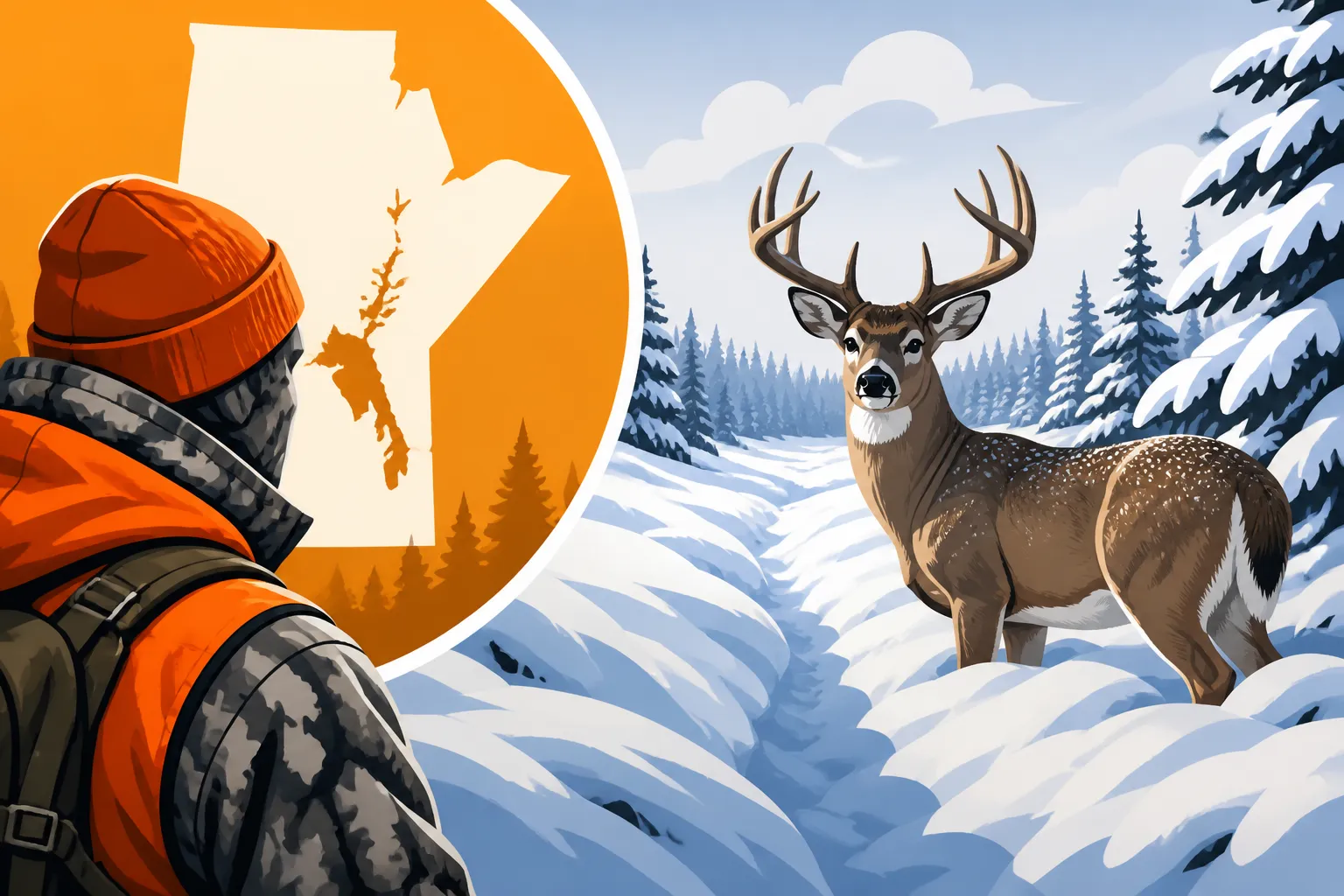
When the deep snows of a Manitoba winter descend, turning the familiar landscape into a vast expanse of white, deer don't just disappear. Instead, they shift their entire pattern of existence, seeking out specific havens known as "deer yards." For hunters, understanding where these vital winter refuges are located, and why deer choose them, is absolutely crucial for any late-season success or even just to appreciate the incredible resilience of these animals. This guide will walk you through the intricacies of Manitoba deer yarding, helping you identify these critical areas and understand the survival strategies that define a whitetail's coldest months.
Understanding Why Deer Yard Up in Manitoba's Harsh Winters
Manitoba winters are no joke. We're talking about sustained periods of frigid temperatures, biting winds, and snowfalls that can pile up in feet, not inches. For a whitetail deer, these conditions aren't just uncomfortable; they're a life-or-death challenge. The concept of "yarding" is their brilliant, instinctual response to survive these extreme conditions, concentrating in areas that offer the best chance for food, shelter, and escape from predators when movement is severely restricted.
The Critical Need for Thermal Cover
Imagine trying to walk through chest-deep snow for days on end, all while a relentless wind whips around you, sucking away your body heat. That's the reality for deer in a typical Manitoba January. Moving through deep snow expends an enormous amount of energy, energy that deer simply don't have to spare when food is scarce. Thermal cover becomes their most valuable asset.
This isn't just about being out of the wind; it's about minimizing heat loss and conserving every calorie. Dense stands of timber, particularly conifers, trap heat, create a warmer microclimate, and block the wind. These sheltered pockets can be several degrees warmer than open areas, and crucially, the snow under them isn't as deep or crusted, making travel easier. Deer will gravitate to these areas, often creating a network of well-worn trails that become their highways and byways within the yard. Without these vital pockets of shelter, the energy drain from fighting cold and snow would quickly lead to starvation. It's a fundamental part of Where Manitoba Whitetails Bed in Deep Snow.
Food Sources Become Scarce and Concentrated
As the snow deepens, an overwhelming amount of natural forage becomes inaccessible. The succulent forbs and lush browse of summer and fall are now buried beneath a thick white blanket. This forces deer to rely on whatever they can reach above the snow line, or areas where the snow depth is naturally less severe. This scarcity isn't just about finding any food; it's about finding enough high-energy food to fuel their internal furnace and ward off hypothermia.
This leads to a concentration of feeding activity in the same areas they seek thermal cover. Within a deer yard, you'll often find specific plants that are hardy enough to offer browse even in winter, like dogwood, willow, and young aspen sprouts. Deer will strip bark, nibble on evergreen needles, and aggressively browse any exposed woody vegetation. This intense feeding pressure within a yard creates a distinct browse line, a visible testament to their struggle for survival. The interplay between accessible food and thermal cover is paramount; one without the other significantly reduces a yard's effectiveness.
Prime Yarding Locations: Where to Look When the Snow Flies
Knowing why deer yard up is one thing, but knowing where to find those yards is the real challenge for hunters and wildlife enthusiasts. Fortunately, deer aren't random in their choices; they select specific types of terrain and vegetation that consistently provide the best chances for winter survival. Learning to identify these patterns will drastically improve your chances of locating these critical wintering areas.
Coniferous Stands and Dense Bush Pockets
When the temperature plummets and the snow starts piling up, deer immediately seek the thickest, most protective cover available. In Manitoba, this almost always means coniferous stands – think spruce and pine. These evergreens provide dense overhead canopy that intercepts snow, keeping the ground underneath relatively clear and shallow. More importantly, their thick branches block the wind, creating those precious pockets of thermal cover that are several degrees warmer than the surrounding open landscape.
Beyond solid coniferous forests, dense pockets of mixed bush, especially those with a significant understory of young aspen or willow, can also serve as excellent yarding areas. These areas might not offer the same thermal advantage as a spruce stand, but their sheer density makes it difficult for predators to move through, offering a measure of security. Deer will hunker down in these areas, particularly on north-facing slopes, to avoid direct sunlight, which can ironically cause snow to melt and refreeze, forming a hard crust that's difficult to break through. When you're out hunting Manitoba's bush country, especially in the late season, these are the kinds of spots you should be keying in on.
River Valleys, Sloughs, and Natural Depressions
Topography plays a huge role in determining where deer will yard. River valleys, deep coulees, large sloughs, and even subtle natural depressions in the landscape offer inherent protection from the elements. The banks of a river or the sheltered side of a hill can act like a natural windbreak, drastically reducing the chill factor. Furthermore, snow tends to drift and settle differently in these areas, sometimes leaving shallower patches or creating natural ramps that deer can use.
South-facing slopes within these topographical features are particularly attractive. While deer in dense bush might avoid direct sun to prevent crusting snow, on a more open slope, the sun's warmth can be a critical advantage, helping to melt snow and expose browse, or simply providing a few degrees of extra warmth. These areas often have a mix of timber and open ground, offering both cover and access to varied food sources. In parts of the province, you might find deer congregated in the sheltered bottoms of river valleys, only moving up to feed on exposed browse when conditions are less severe. Hunting a frozen slough crossing, for example, can be a great way to intercept deer moving between different pockets of cover within a larger yarding area. Hunting a Frozen Slough Crossing will often put you right where deer feel safest in the cold.
Standing Crops and Unharvested Fields
This might seem counterintuitive at first glance – open fields as a winter haven? But in Manitoba's agricultural belt, certain standing crops can be an absolute magnet for deer in deep snow. Tall, dense crops like standing corn or even heavy sunflowers, if left unharvested, provide incredible cover and an immediate, calorie-rich food source. The stalks of corn, for instance, create a thick barrier against wind and drifting snow, almost acting like a natural blind. The sheer volume of corn cobs provides a vital energy boost that can literally mean the difference between life and death for a deer facing prolonged cold.
When deer find such a resource, they will often yard up right within these fields or in very close proximity to them, using the crop as their primary winter base. They'll create intricate networks of trails through the stalks, making movement easier while staying hidden from predators. The frustrating part for hunters, of course, is that these fields can be incredibly difficult to hunt effectively without pushing deer out. However, understanding their draw means you can focus your efforts on the edges of these fields, or where they meet a bush line, catching deer as they transition in and out. Hunting a Field of Standing Corn describes this in more detail.
| Cover Type | Primary Benefit | Secondary Benefit | Typical Location | Example Species |
|---|---|---|---|---|
| Coniferous Forest (Spruce) | Extreme Thermal Cover | Wind Block, Reduced Snow Depth | Boreal Forest, Parkland Fringe | Black Spruce, Jack Pine |
| Dense Aspen/Mixed Bush | Good Wind Block | Predator Concealment | Parkland, Interlake | Trembling Aspen, Balsam Poplar |
| River Valleys/Coulees | Topographical Windbreak | Varied Food Access | Pembina Valley, Assiniboine River | Mixed Forest, Shrubs |
| Standing Corn/Sunflower | Food and Cover | Wind Block, Energy Source | Agricultural Regions, Farm Edges | Corn, Sunflower |
| Large Willow/Buckbrush | Moderate Wind Block | Good Browse, Hiding Cover | Slough Edges, Wetland Margins | Various Willow, Red-Osier Dogwood |
Reading the Landscape for Deer Signs in Winter
Once you understand why and where deer yard, the next step is to actually find the evidence. The winter landscape, while often appearing barren, is a canvas filled with clues for the observant hunter. Learning to read these signs effectively can save you countless hours and put you in the right place at the right time. For hunters interested in Whitetail Hunting in Manitoba, these skills are indispensable, especially when targeting Why Manitoba Bucks Grow Heavy Bodies.
Tracks, Trails, and Cratered Snow
When the snow is deep, deer don't just wander aimlessly; they create highways. Look for heavily compacted trails that weave through the densest cover. These trails are often a tell-tale sign of a deer yard, indicating repeated use by multiple animals over a sustained period. These aren't just single tracks; they're troughs in the snow, sometimes a foot or more deep, making it easier for deer to move with less energy expenditure. Fresh snow will temporarily obscure these, but even a few inches won't completely hide the deeper, underlying pathways. Reading Sign After a Fresh Snow becomes an art form in these conditions.
Beyond these main travel lanes, look for areas where the snow has been "cratered." This is where deer have pushed their heads down into the snow to access buried browse or fallen acorns. These craters, often a few feet across and several inches deep, are direct evidence of feeding activity. The fresher the crater, the more recent the feeding. Pay attention to the size and number of tracks; a proliferation of smaller tracks alongside larger ones indicates a doe and fawns, while significantly larger, singular tracks might point to a mature buck utilizing the same yard.
Browse Lines and Rubs within the Yard
Once you've located an area with concentrated tracks and trails, start looking for more subtle, yet equally important, indicators of sustained deer presence: browse lines and rubs. A browse line is a very distinct horizontal line on trees and shrubs, visible above the snow, where deer have consistently stripped leaves, twigs, and bark. This line typically sits at the height a deer can comfortably reach, demonstrating continuous feeding pressure in that specific area. In a well-used yard, this line can be incredibly pronounced, indicating that deer have been relying on these plants for an extended period.
Rubs, too, can persist through the winter. While most rubs are made during the fall rut, a heavily used yard might show older rubs that have been exposed by wind and snowmelt, or even some fresh ones as bucks continue to mark territory in anticipation of spring. While not a direct sign of active winter feeding, a cluster of rubs in dense cover near a browse line reinforces the idea that this particular area is a long-standing, important piece of deer habitat. For anyone who hunts Hunting the Rut in Early to Mid November, these signs are second nature.
Using Tools to Locate Potential Yards
In this modern age, we have tools at our disposal that make scouting for winter yards easier than ever before. Satellite imagery and digital mapping applications are incredibly powerful for identifying potential yarding areas from the comfort of your home. You can zoom in on large blocks of timber, paying close attention to the density of cover, the presence of coniferous trees, and topographical features like creek bottoms or steep river banks. Platforms like GoHunt, and others, allow you to layer different maps, highlighting changes in vegetation and elevation, helping you pick out those likely thermal cover strongholds.
Think about areas that are hard to access on foot in the snow, places off the beaten path where deer might feel less pressured. Use contour lines to find south-facing slopes in sheltered valleys or deep depressions. Look for standing agricultural fields adjacent to dense bush. While these tools won't show you fresh tracks, they will help you narrow down your search area significantly, allowing you to focus your limited time in the field on the most promising locations. This kind of Scouting With Satellite Imagery in Manitoba is an invaluable skill for serious hunters.
Strategies for Hunting Deer in Winter Yards
Hunting deer that are concentrated in winter yards requires a unique approach, one that prioritizes minimal disturbance and a deep understanding of their survival instincts. These are not the free-roaming deer of the early season; they are animals in full survival mode, hyper-alert and reluctant to move far from their safe zones.
Patience and Low-Impact Scouting
The golden rule when hunting deer in their winter yards is patience and minimal disturbance. Blowing deer out of a yard can have severe consequences for their winter survival, forcing them to expend precious energy unnecessarily. Aggressive, noisy scouting is counterproductive. Instead, opt for quiet, slow movements, using binoculars to scan ahead for movement or subtle signs. Avoid pushing directly into the densest parts of the yard unless you are absolutely confident in your approach and have a clear objective.
Consider scouting from a distance using optics, or by utilizing trails on the periphery of the yard. If you confirm deer are present, plan your hunt carefully, focusing on pinch points, travel corridors, or feeding areas just outside the main bedding cover. The goal isn't to invade their sanctuary, but to intercept them as they move within or on the edges of it. Recognize that deer in winter often move less during daylight, choosing dawn and dusk for brief feeding forays.
Stand Placement and Wind Direction
With deer concentrated, precise stand placement becomes even more critical. Since deer are actively conserving energy, their travel within and around the yard will be efficient and predictable. Look for natural funnels, such as narrow strips of bush connecting two larger blocks of cover, or choke points where topography forces deer into a specific travel lane. These are ideal spots for a stand. Hanging a Stand on a Manitoba Bush Edge can be incredibly effective when deer are moving from cover to feed.
Always, always pay meticulous attention to wind direction. In the deep cold, your scent will travel further and linger longer. Deer in a yard are already on high alert, so a compromised setup due to swirling or unfavorable winds will almost guarantee failure. Plan your approach and stand entry/exit routes based on the prevailing wind, ensuring you remain undetected. A thermal hub or heavily covered area might block wind at ground level, but scent will still swirl upwards.
Understanding Deer Movement in Extreme Cold
Deer movement patterns are drastically altered by extreme cold and deep snow. Unlike the rut when bucks might cruise all day, winter deer are largely sedentary. Their primary objective is to stay warm and conserve calories. This means periods of activity will be shorter and often confined to the warmest parts of the day, or just before dawn and after dusk. On bitterly cold, windy days, deer might not move much at all during daylight hours, preferring to remain bedded in the thickest cover. Hunting Whitetails at Thirty Below requires a specific mindset and strategy.
Your best bet for encountering moving deer in a yard is usually during a slight break in the weather – a day with less wind, or when temperatures creep up a few degrees. These are the days deer might feel comfortable enough to extend their feeding forays. However, be prepared to sit for extended periods in brutal conditions if you're targeting these animals. Mobility is limited, and deer won't rush their movements. Success often comes down to enduring the elements and being present when they finally decide to make a move. For tips on staying warm, check out Hunting Safely in Deep Winter Cold and for meat preservation, read Meat Care in Manitoba's Cold Snaps.
Disclaimer
This article is for general informational purposes only and does not constitute professional advice. Laws, prices and regulations vary by location and change over time. Consult a qualified professional for guidance on your specific situation.