Hunting a Field of Standing Corn
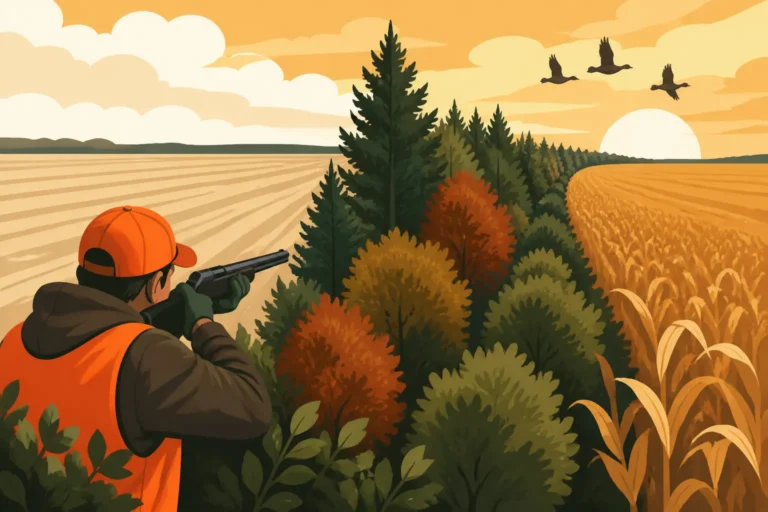
Hunting a field of standing corn can feel like staring into a giant, green labyrinth, full of promise but also overwhelming uncertainty. You know the deer are in there, relishing the cover and food, but finding them can be an exercise in frustration. This guide is all about demystifying the standing cornfield, offering practical strategies to turn that frustration into a successful hunt in Manitoba's prime agricultural zones.
The Allure and Challenge of Standing Corn for Whitetails
For whitetail deer across Manitoba's agricultural belt, a standing cornfield isn't just a food source; it's a fortress, a five-star resort, and a maternity ward all rolled into one. Understanding why deer are drawn to it so strongly is the first step in figuring out how to hunt it effectively.
Why Deer Love Standing Corn
Imagine you're a whitetail buck trying to survive hunting season. A field of standing corn offers nearly everything you could ask for. First and foremost, it's an incredibly rich, readily available food source. Those golden kernels are packed with carbohydrates and energy, exactly what a deer needs to bulk up for the winter or recover from the rut. Deer will spend hours, even days, just browsing in a good cornfield, barely needing to leave.
Beyond the buffet, standing corn provides unparalleled security cover. Rows typically stretch for hundreds of yards, often several feet taller than a grown man. This dense vegetation makes it incredibly difficult for predators—both two-legged and four-legged—to spot a deer. A deer can disappear into the stalks just yards from you and never be seen again. It's a sanctuary where they feel safe to bed, feed, and simply exist without constant vigilance.
Furthermore, corn offers excellent thermal regulation. On a hot early-season day, the shade and higher humidity within the rows provide a cooler microclimate. Conversely, when those notorious Manitoba cold snaps hit in late fall or early winter, the dense stalks act as a windbreak, insulating deer from bitter winds and creating a much warmer bedding area than open timber or bare fields. This combination of food, security, and comfort makes a standing cornfield an almost irresistible magnet for deer, especially mature bucks looking to avoid pressure.
The Hunter's Dilemma: Finding Needles in a Haystack
While the allure for deer is clear, the challenge for hunters is equally stark. Hunting standing corn feels, at times, like trying to find a needle in a haystack—a very large, very noisy, and very scented haystack. Visibility is your biggest enemy. You might only be able to see a few yards in any direction, making it incredibly difficult to spot a deer before it smells or hears you.
Noise is another huge hurdle. The dry cornstalks rustle with every breath of wind, every step you take, and every movement a deer makes. This ambient noise can mask your approach, but it can just as easily give you away. Deer have incredibly acute hearing, and the crunch of your boots on dried leaves or a misplaced step on a brittle stalk can send them bolting long before you get close.
And then there's the wind and your scent. A cornfield creates its own complex air currents, making it challenging to predict how your scent will swirl. A deer could be just one row over, downwind of your current position, and never know you're there. But if the wind shifts, or if you push too far without considering thermals, your scent cone could drift directly into a bedding buck, ruining the hunt instantly. This maze of factors can make still-hunting or even setting up an ambush feel like a game of pure chance, leading to the common frustration of knowing deer are present but being unable to connect with them.
Scouting and Strategy Before the Hunt
Successfully hunting a standing cornfield demands thorough reconnaissance and a well-thought-out strategy. You can't just walk in and hope for the best; you need to understand how deer use the field and plan your approach accordingly.
Reading the Edges and Entry Points
Before you ever step foot inside a standing cornfield, you need to understand its perimeter. Deer don't typically just materialize in the middle; they use specific entry and exit points, often dictated by terrain, cover, and prevailing winds. Start by walking the entire perimeter of the field, if permission allows. Look for well-worn trails leading directly into the corn from adjacent woodlots, bush edges, or even other fields. These trails will often be funnelled by natural features like small ditches, fencelines, or even a lone tree row. Think about how deer would move from their bedding areas outside the corn to the food within.
Pay close attention to where these trails are heaviest. You'll often find fresh tracks, droppings, and even rubs or scrapes along these "highways" if it's during the rut. Using a mapping app like GoHunt can be invaluable here. You can mark every trail, every pinch point, and every suspicious patch of broken cornstalks where deer might be entering or exiting. This helps you build a mental map of how deer flow through the area. Consider how these trails might link to broader travel corridors you've identified while Scouting a Manitoba Game Hunting Area. Identifying these primary travel routes is crucial for setting up an ambush or predicting where deer might emerge.
Wind and Weather Considerations
The wind is always a hunter's best friend or worst enemy, and in standing corn, its importance is amplified. Your scent will swirl and eddy within the dense rows in unpredictable ways. Always approach a cornfield from directly downwind of where you expect deer to be. This means understanding not just the prevailing wind but also local thermals, which can be affected by elevation changes, even subtle ones, or proximity to water bodies. In the mornings, air currents tend to fall, carrying your scent downhill, while in the evenings, they rise.
Weather, too, plays a significant role. Mild, calm days can see deer linger deep in the corn, feeling secure. However, a blustery day, especially with a cold front pushing through, can make deer move more frequently, seeking the protection of the corn's interior from the wind, or pushing them out to feed more aggressively before temperatures plummet. During the late season, when temperatures might drop to -30°C, the thermal insulation of a cornfield becomes critical. Understanding Hunting Safely in Deep Winter Cold isn't just about your own comfort, but also knowing how deer will react to such conditions by seeking refuge in dense cover like corn. A sudden snow shower can also be your ally, dampening noise and making tracks incredibly obvious, but it can also make visibility even worse inside the stalks.
Timing Your Approach
The specific time you choose to hunt a standing cornfield can drastically impact your success. Deer often feel most secure within the corn during daylight hours, especially mature bucks. This makes mid-day still-hunting a viable, albeit challenging, option. However, the edges of the cornfield become prime ambush locations during the low-light hours of dawn and dusk.
Early morning hunts require a stealthy approach in the dark, getting into position before deer have moved from adjacent feeding areas into the corn for bedding. Evening hunts often involve waiting for deer to emerge from the corn to feed in neighbouring fields or transition zones. If you're hunting during the peak of the rut, say Hunting the Rut in Early to Mid November, deer movement might be more unpredictable, with bucks cruising cornfield edges or even venturing inside to push does. Outside of the rut, late afternoon is often a good bet, as deer move out to forage. For instance, Hunting a Swathed Grain Field at Dusk adjacent to a standing cornfield can be incredibly productive, as deer will often stage in the corn, waiting for full dark before moving into the open. Analyzing typical deer patterns in your specific Game Hunting Area (GHA) can give you insights into the best timing.
Effective Hunting Tactics in Standing Corn
Once you've done your scouting and considered the conditions, it's time to choose your tactic. Hunting standing corn is rarely a one-size-fits-all endeavour; it often requires patience, precision, and sometimes, a little help from friends.
Still-Hunting the Rows
Still-hunting inside a standing cornfield is one of the most challenging yet rewarding methods. It requires immense patience, meticulous attention to detail, and a deliberate pace that feels painfully slow at times. The goal isn't to cover ground quickly, but to move so subtly that you become part of the environment, giving yourself the best chance to spot a deer before it detects you.
Start by entering the cornfield from a downwind direction, ideally along one of the main deer trails you identified during scouting. Take tiny, deliberate steps, always testing the ground before committing your weight. Avoid snapping dry stalks or crunching loudly on fallen leaves. Pause frequently – every few steps, every few yards – and stand absolutely motionless for several minutes. During these pauses, actively scan every row, every shadow, and every anomaly. Use your binoculars to pick apart the dense cover, looking for the horizontal line of a deer's back, the flick of an ear, or the glint of an antler.
Listen intently during these pauses. The rustling corn will often mask small sounds, but a deer moving deeper inside the field might still be audible. Pay attention to how the corn moves – is it just the wind, or is there a rhythmic swaying indicative of an animal walking? Periodically check your wind direction with a puffer bottle, as thermals can shift unexpectedly. This slow, methodical approach allows you to cover ground effectively while minimizing your disturbance, giving you a chance to catch a bedded deer off guard or intercept one moving through the rows.
Setting Up Ambush Points
If still-hunting feels too risky or the cornfield is simply too vast, setting up an ambush point on the periphery is often a more reliable strategy. This involves identifying key transition zones where deer will move between the corn and other types of cover or food sources, and waiting there. Ideal ambush spots include the very edge of the cornfield where it meets a woodlot, a fence line, a narrow strip of brush, or even a small ditch. These are natural funnels where deer movement is concentrated.
Consider setting up a treestand along a timber edge overlooking the corn, offering a slightly elevated view into the outer rows. If the terrain permits, a ground blind tucked into a thick fenceline or a natural depression can also be effective. The key is to be in a position that offers good visibility of the deer's likely travel routes while keeping your scent out of their primary approach. Using a mapping tool like GoHunt can help you analyze aerial imagery to pinpoint these edges and funnels before you even get to the field. For instance, you might find a perfect spot to consider Hanging a Stand on a Manitoba Bush Edge right where the corn meets the timber, giving you oversight of several rows and a clear shot at deer entering or exiting. Remember to set up well in advance of the hunting period, allowing deer to get accustomed to any new presence.
Using Drives Carefully and Safely
For very large cornfields, or when still-hunting just isn't cutting it, a well-planned drive can be an effective tactic. However, this method requires careful coordination, clear communication, and an unwavering commitment to safety. This is definitely not a tactic for solo hunters and should only be undertaken with a group of experienced, disciplined hunters who understand the rules.
The basic premise is to have a group of "pushers" walk through the corn, attempting to move deer towards "standers" positioned at strategic escape points on the field's perimeter. Before starting, everyone involved must have a clear understanding of the boundaries, the direction of the drive, and assigned positions. Safety is paramount: identify clear zones of fire, establish communication signals (e.g., whistle blasts), and ensure everyone knows where other hunters are at all times. Blaze orange rules are not just recommendations but critical safety protocols.
Pushers should move slowly and methodically, making enough noise to encourage deer movement but not so much that deer simply bolt uncontrollably. They should sweep the rows, looking for fresh sign and trying to predict escape routes. Standers, meanwhile, must be absolutely still and vigilant, anticipating deer to burst out of the corn. This tactic is often most effective in smaller, manageable corn blocks or when combining a cornfield drive with an adjacent woodlot. Always ensure that you are adhering to all local regulations regarding group hunting and drives. It's a high-reward, high-risk strategy that requires meticulous planning to be done safely and successfully, especially considering the potential for dense cover to obscure vision, as is often highlighted in advice for Hunting Safely in Deep Winter Cold.
Post-Harvest Opportunities and Considerations
The hunt doesn't necessarily end when the combine rolls through. In fact, the post-harvest landscape offers a completely different, and often highly productive, set of hunting opportunities for Manitoba whitetails.
Hunting the Stubble Fields
Once the corn is harvested, the vast, impenetrable fortress transforms into an open stubble field. While the primary cover is gone, the field still holds immense appeal for deer. There's often a significant amount of residual grain left behind, dropped by the combine or simply missed. This waste grain becomes a crucial food source, especially as winter approaches and other food options become scarcer. Deer will revisit these fields regularly to glean what's left.
Hunting these stubble fields requires a shift in tactics. Instead of navigating the rows, you'll be looking for deer moving across the open or feeding within the remaining stalks. This is where long-range glassing becomes invaluable. Identify key entry and exit points that deer use to access the field from adjacent cover, such as woodlots, river bottoms, or other fields. These transition areas are excellent places for a ground blind or a strategically placed treestand. Deer will often stage in nearby cover, waiting for low light before venturing into the more exposed stubble field. A common scenario is to hunt Hunting a Swathed Grain Field at Dusk near a former cornfield, as deer often gravitate to these areas for easy feeding. The open nature of the stubble also makes it easier to track fresh sign and predict movement patterns, though deer will be more wary in the exposed environment.
Retrieving Game in Dense Cover
One of the most disheartening experiences for any hunter is losing a deer, and dense standing corn can make tracking and recovery incredibly challenging. The limited visibility and abundance of cover mean a deer can often run a short distance and simply disappear. If you shoot a deer in standing corn, always assume it's hit well, but prepare for a difficult recovery.
Your first step, after taking the shot, is to mark the exact spot where the deer was standing, as well as the direction it ran. Use a prominent landmark, or if hunting with a mapping app, mark the precise GPS coordinates. Wait patiently. Give the deer at least 30-60 minutes, or even longer for a marginal hit, to bed down and expire. Rushing in too quickly can push a wounded deer further, making recovery nearly impossible.
When you begin tracking, move slowly and meticulously. Look for any sign: blood, hair, disturbed stalks, or tracks. Even a faint blood trail can lead you to your quarry. If the blood trail peters out, expand your search in ever-widening circles from the last confirmed sign. Consider bringing a tracking dog if legal and available, as their keen sense of smell can be a game-changer in thick cover. Losing a deer not only wastes valuable meat but also disrespects the animal, so a thorough, patient recovery effort is crucial. Furthermore, especially in late season, ensuring proper Meat Care in Manitoba's Cold Snaps becomes vital the moment you find your animal, as field dressing and cooling are critical steps that shouldn't be rushed.
Hunting Standing Corn: Tactics at a Glance
Here's a quick comparison of the primary tactics for hunting standing corn, along with their ideal conditions and key considerations:
| Tactic | Ideal Conditions | Key Considerations | Pros | Cons |
|---|---|---|---|---|
| Still-Hunting | Mild weather, light wind, during daylight hours | Extreme patience, silent movement, constant wind checks | Can surprise bedded deer, offers a primal challenge, very active hunt | Very low visibility, high chance of being scented/heard, physically demanding |
| Ambush | Dawn/dusk, consistent deer movement on field edges | Pre-scouted entry/exit points, proper wind direction | High success rate if deer patterns are known, less noise/scent worries | Requires deer to move to you, limited shooting windows, can be cold/boring |
| Drive | Large cornfields, multiple hunters, clear communication | Absolute focus on safety, defined roles, escape routes | Can push deer out of dense cover, good for locating multiple deer | High risk of safety incidents, often requires multiple people, deer can break out anywhere |
Disclaimer
Hunting is an inherently risky activity. Always prioritize safety, understand and adhere to all local, provincial, and federal hunting regulations, and obtain appropriate licenses and permissions. The information provided in this guide is for informational purposes only and should not replace professional instruction or local wildlife authority guidelines. Be sure to consult the current Manitoba hunting regulations guide before heading afield.