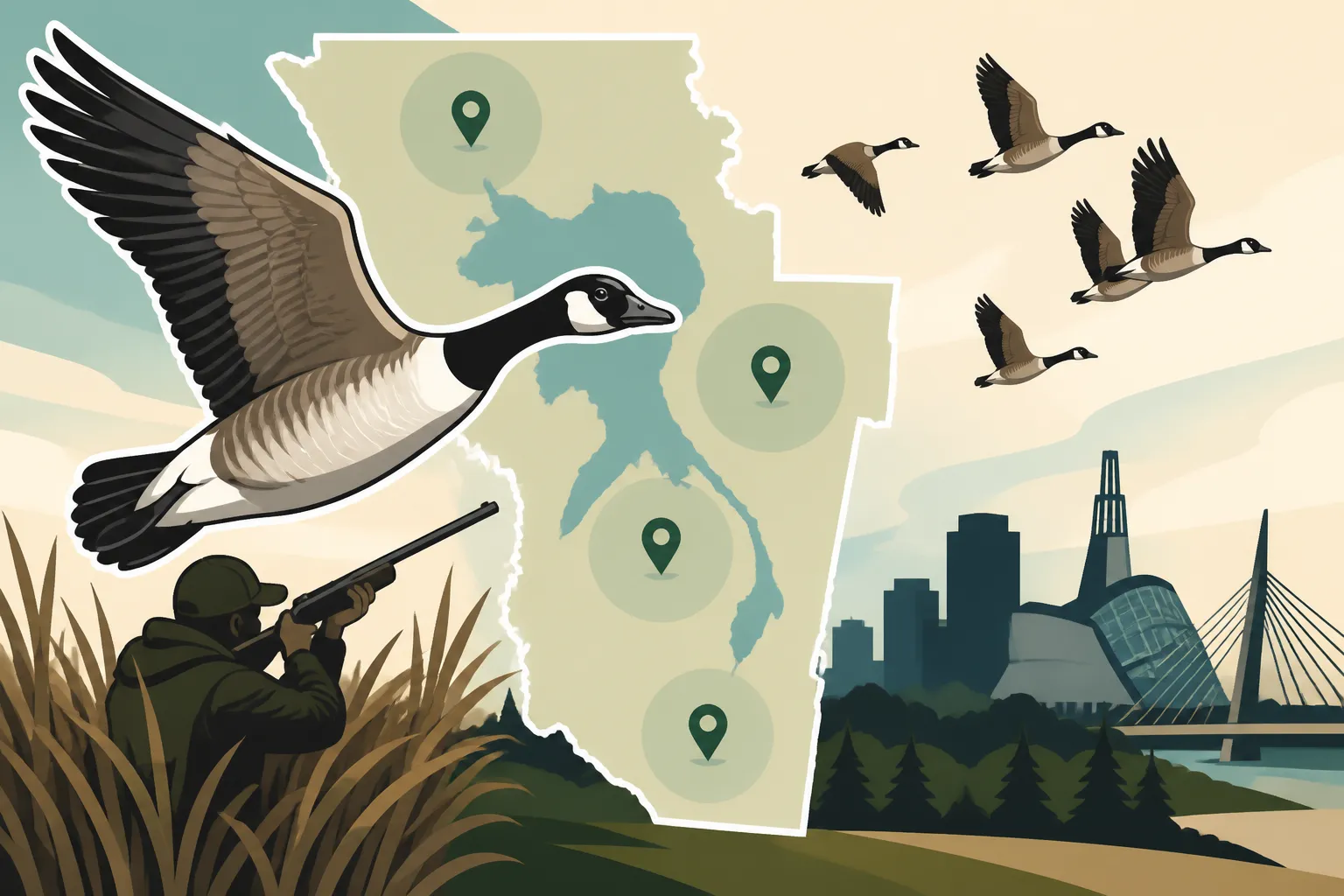
Canada Goose Numbers Around Manitoba Cities
It's no secret that if you live anywhere near Winnipeg, Brandon, Portage la Prairie, or really any of Manitoba's larger towns, you've noticed the Canada goose population seems to be, well, everywhere. You see them grazing in parks, waddling through parking lots, and frankly, making a mess on golf courses. This guide dives deep into why these magnificent birds are so prevalent around our urban centres, what that means for both residents and hunters, and how we can best navigate this unique aspect of Manitoba's wildlife landscape.
Why Geese Love Our Urban Edges
Have you ever wondered why you see so many Canada geese practically setting up permanent residence right next to our bustling cities? It's not just your imagination; there are very good, strategic reasons these birds choose to be where the people are. It creates a fascinating dynamic, and sometimes, a real headache, but understanding their motivations can shed a lot of light on the situation.
The Allure of Green Spaces and Water
Imagine you're a goose. What do you need to thrive? Plenty of green grass to graze, open water for safety and roosting, and minimal disturbance. Our cities, with their meticulously manicured parks, golf courses, suburban lawns, and numerous retention ponds or riverfronts, offer a near-perfect habitat. These areas often mimic the rich, fertile feeding grounds that geese seek out, but without many of the natural drawbacks of truly wild spaces. The grass is usually kept short and tender, ideal for grazing, and the water bodies provide a safe haven from terrestrial predators. It’s like a five-star resort for a goose, complete with an all-you-can-eat buffet. This abundance of prime habitat right on the doorstep of human development creates a magnet for geese, leading to ever-increasing numbers.
Reduced Predation and Human Tolerance
One of the biggest draws for geese in urban areas is the significant reduction in natural predation. In the wild, geese face threats from coyotes, foxes, eagles, and other raptors, especially during nesting and gosling stages. Around cities, these predator populations are often much lower, or the geese are simply more vigilant to the types of predators that exist. Humans, for the most part, also act as a deterrent to wild predators simply by their presence. Furthermore, there's a certain level of human tolerance, and in some cases, even direct feeding, that contributes to the geese's sense of security. While feeding wildlife is generally discouraged and can create problems, the simple fact that humans rarely pose a direct threat makes urban environments feel safer than wide-open wilderness where a coyote might be lurking over every ridge. This perceived safety allows goose populations to flourish with less natural attrition.
Abundant Food Sources Year-Round
Beyond just green grass, urban areas offer a surprising bounty of food. Parks, golf courses, and even residential lawns are often fertilized, leading to lush, nutrient-rich vegetation. During certain times of the year, agricultural fields on the immediate outskirts of cities provide even more. Think about the stubble fields after a harvest—a veritable smorgasbord for geese looking to fuel up. This consistent and often highly nutritious food supply supports larger flocks and healthier birds, contributing to higher reproductive success. Many urban ponds and waterways also have aquatic vegetation that supplements their diet. For geese, it's about finding the most calories with the least amount of effort and risk, and city fringes often fit that bill perfectly. This is one of the reasons you'll see these birds lingering well into the colder months, as long as there's open water and accessible feed. It's a stark contrast to the boom-and-bust cycles they might face in more natural environments.
Understanding Population Dynamics in Urban Settings
The sheer number of Canada geese we see isn't just a random occurrence; it's a result of complex population dynamics influenced by both natural factors and human activity. These birds are incredibly adaptable, and our urban sprawl has, in many ways, created a perfect storm for their proliferation. Understanding how these populations grow and what impacts them is crucial for anyone trying to make sense of the situation, especially for those of us involved in Manitoba hunting.
Local Breeding and Migratory Contributors
When you see large flocks of geese near Winnipeg or Brandon, you're not just looking at birds passing through on their way north or south. A significant portion of these are resident Canada geese. These are birds that have largely abandoned the long migratory journeys of their ancestors, choosing instead to breed and raise their young right here, close to our cities. They often nest in suburban parks, on islands in rivers, or even on rooftops of industrial buildings where they are safe from ground predators. These local breeders contribute significantly to the year-round numbers. However, our cities also lie within major flyways, meaning that during spring and fall, these resident populations are augmented by thousands, sometimes tens of thousands, of migratory geese resting and feeding. These transient birds, often visible in massive spreads in nearby Waterfowl Hunting Manitoba's Grain Fields, can temporarily inflate numbers even further. It's a fascinating blend of permanent residents and seasonal visitors all drawn to the same appealing landscape.
Impact on Urban Ecosystems and Human Activities
While beautiful to observe, large goose populations can have noticeable impacts. Their droppings, for example, can accumulate quickly in parks, on golf courses, and along pathways, making public spaces less appealing and sometimes posing health concerns. The grazing pressure from large flocks can damage turf and agricultural crops bordering urban areas. Farmers often face challenges from geese feeding on newly sprouted crops or gleaning fields post-harvest, leading to significant economic losses. From an ecological perspective, overgrazing can alter plant communities, and excessive nutrient input from droppings can degrade water quality in ponds and small lakes. For hunters, these urban populations represent a unique opportunity but also a challenge, as hunting is generally not permitted within city limits or densely populated areas. This creates a sort of 'refuge effect' where birds are safe within a certain boundary, but contribute to broader population numbers.
How Numbers Are Monitored
Understanding goose numbers is vital for wildlife management. Provincial wildlife agencies and federal partners monitor populations through various methods. This includes aerial surveys, ground counts, and banding programs. Aerial surveys are particularly effective for migratory birds, giving a snapshot of populations in different flyways. Ground counts are often used for resident populations in specific areas, especially in urban or semi-urban settings where birds are more concentrated and visible. Banding studies, where individual geese are tagged with numbered bands, provide crucial data on survival rates, migration patterns, and reproductive success. These monitoring efforts help wildlife managers determine appropriate Goose Season Dates by Zone and bag limits, aiming to balance healthy populations with potential conflicts with human interests. Organizations like GoHunt provide resources for hunters to stay informed about these regulations and population trends, ensuring they can participate responsibly.
Management and Hunting Considerations Near Cities
Given the high number of Canada geese in and around Manitoba cities, effective management is key. This often involves a multi-pronged approach, and for hunters, it presents a very specific set of opportunities and challenges. It’s not simply a matter of heading out into the wilderness; hunting near populated areas requires careful planning, adherence to strict regulations, and a deep understanding of local dynamics.
Specific Hunting Zones and Regulations
Hunting within city limits is almost universally prohibited due to safety concerns and public perception. However, the areas immediately surrounding many Manitoba cities often fall within designated Game Hunting Areas (GHAs) where waterfowl hunting is permitted during specific seasons. It's absolutely crucial for hunters to consult the current provincial hunting guide and GHA maps. These resources clearly outline where hunting is allowed, what weapon types are permitted, and the specific shooting hours. Often, zones directly adjacent to urban centres will have tighter restrictions than more remote areas. For instance, some areas might have specific setback distances from dwellings, roads, or property lines that hunters must strictly observe. The federal government also issues Manitoba Migratory Bird Permits that are essential for hunting waterfowl, and these permits outline additional regulations that hunters must follow. Using tools like GoHunt can help hunters visualize these boundaries and regulations clearly.
Challenges of Hunting Near Populated Areas
Hunting geese on the fringes of urban areas presents unique challenges. First and foremost is safety; ensuring every shot is taken with a safe backdrop and away from people, pets, and property is paramount. This often means carefully selecting hunting locations and ensuring you have a full understanding of the area. Noise can also be a factor, as discharge of firearms can be startling to nearby residents, even if legal. Public perception is another significant consideration. While hunting is a legal and regulated activity, some non-hunters in suburban or rural-residential areas may not understand or appreciate it. This necessitates a high degree of ethical conduct and respect for private property. Furthermore, finding suitable land can be difficult. Many prime feeding areas near cities are privately owned, meaning hunters must secure Getting Permission for a Goose Field from landowners, which can be a time-consuming process. The denser road networks and increased human activity also mean less undisturbed habitat, requiring careful scouting, sometimes for hours, to find optimal hunting spots.
Accessing Land for Hunting Opportunities
Access to huntable land near cities is often the biggest hurdle. As mentioned, most prime agricultural fields are private property. This means knocking on doors, introducing yourself to landowners, and respectfully requesting permission to hunt. Building these relationships takes time and trust, but it’s invaluable. Sometimes, landowners welcome hunters to help mitigate crop damage caused by large goose flocks. Hunters should always be prepared to provide proof of insurance and respect any specific conditions the landowner might impose. Crown land access can be limited near densely populated areas, but it's always worth checking GHA maps for any public parcels. Tools like GoHunt can sometimes overlay property lines, helping hunters identify potential access points or areas where they can approach landowners. Remember, permission is not a given, and trespassing is a serious offense that can lead to Manitoba Penalties for Hunting Violations. Always be polite, grateful, and follow up with a thank you.
Coexisting and Ethical Hunting
Living with a robust Canada goose population around our cities means finding ways to coexist. For hunters, this isn't just about bagging birds; it's about being a responsible conservationist and ambassador for the sport. Ethical hunting practices are even more critical when operating in proximity to non-hunting communities.
The Role of Hunters in Population Management
Hunters play a crucial, often unacknowledged, role in managing wildlife populations, including Canada geese. By participating in regulated hunting seasons, hunters help to control numbers, especially of resident populations that might otherwise grow unchecked due to reduced natural predation and abundant resources. This helps mitigate conflicts with agriculture, reduces disease transmission risks in dense urban flocks, and maintains healthier ecosystems overall. Without hunting pressure, these urban goose populations could balloon to levels that become unsustainable for the environment and unbearable for human communities. It's a fundamental aspect of wildlife conservation, and one that hunters take seriously. Every hunter contributes data through their harvest, which aids in future management decisions.
Responsible Practices for Urban-Adjacent Hunting
When hunting near cities, responsibility is paramount. This includes adhering strictly to all regulations regarding season dates, bag limits, and shooting hours, as outlined in guides for Manitoba's Ducks and Geese by Flyway. It also means using appropriate gear, like ensuring you use Non-Toxic Shot for Manitoba Waterfowl as required for migratory birds, and understanding your effective range to ensure clean, ethical kills. Beyond regulations, it involves being a good neighbor. Parking your vehicle considerately, cleaning up spent shells and any trash, and being mindful of noise are all small but important actions. If you're Scouting Fields for Manitoba Waterfowl, do so discreetly and respectfully. Always prioritize safety above all else, verifying your target and what lies beyond it. Maintaining a positive image for hunters benefits everyone and helps preserve access to these valuable areas.
Community Perception and Hunter-Landowner Relations
The perception of hunting by the general public, especially those who don't hunt, can be quite varied. When hunting close to cities, positive interactions are key. This means being approachable and willing to explain what you're doing, if asked respectfully. It's about demonstrating that hunters are responsible, ethical conservationists. For landowners, building a strong, trusting relationship is the foundation of continued access. Offering to help with chores, sharing some of your harvest, or simply checking in to see if there are any issues can go a long way. Sites like GoHunt often advocate for strong landowner relations and provide advice on how to build and maintain these critical connections. Remember, a hunter's actions reflect on the entire hunting community, and setting a good example can help foster understanding and support for our traditions. By being thoughtful, respectful, and transparent, we can ensure that hunting opportunities for Canada geese around Manitoba cities remain viable for generations to come.
Disclaimer
This article is for general informational purposes only and does not constitute professional advice. Laws, prices and regulations vary by location and change over time. Consult a qualified professional for guidance on your specific situation.