Manitoba’s Duck Species and Where They Nest
For many waterfowlers, the early morning chill in a Manitoba marsh, listening to the wings overhead, is pure magic. But truly connecting with that experience, and becoming a more successful hunter, means understanding the incredible diversity of duck species that call our province home, and especially where they choose to nest. This guide is going to dive deep into the fascinating world of Manitoba's ducks, shedding light on their unique characteristics, preferred nesting grounds, and how this knowledge can make you a more informed and ethical hunter.
The Incredible Diversity of Manitoba's Duck Populations
Manitoba isn't just a place; it's a crossroads for North American waterfowl. Our vast landscapes, ranging from the prairie potholes to the dense boreal forest, create an unparalleled mosaic of habitats that attract an astonishing array of duck species. If you've ever spent time in a blind here, you know the sky can fill with a dizzying mix of birds, each with its own flight pattern, call, and ecological niche.
Why Manitoba is a Waterfowler's Paradise
Our province's geographical location is truly a gift to waterfowlers. Manitoba sits right at the heart of the Central Flyway, one of North America's major migratory routes. This means that year after year, millions of ducks from vast breeding grounds further north funnel through our wetlands, staging for their journey south. But it's not just a stopover; Manitoba itself is a critical breeding ground. The abundance of water, coupled with nutrient-rich soils and diverse vegetation, creates ideal conditions for ducks to pair up, nest, and raise their broods. From the shallow, ephemeral ponds of the prairies to the deep, clear lakes of the Precambrian Shield, almost every type of duck habitat you can imagine is represented here. This incredible confluence of breeding and migratory staging truly makes Manitoba a world-class destination for anyone interested in waterfowl.
Beyond the sheer numbers, the variety is what truly excites many. You're not just seeing "ducks"; you're seeing mallards, pintails, canvasbacks, teal, and so many more, each with their own distinct beauty and behavior. Understanding these differences isn't just academic; it directly impacts how you scout, set up decoys, and ultimately, how successful and rewarding your hunt will be. It also feeds into the ongoing conservation efforts that ensure these magnificent birds continue to grace our skies for generations to come.
Understanding the Main Duck Categories
When we talk about ducks, it's helpful to categorize them into two broad groups: dabbling ducks and diving ducks. These distinctions aren't just biological curiosities; they inform everything from where you'll find them to how they behave and what they eat. Knowing the difference between a dabbler and a diver can tell you a lot about the kind of water you're hunting and the type of spread you might want to put out.
Dabbling ducks, often called "puddle ducks," primarily feed by "tipping up" in shallow water, with their tails pointed skyward and only their head and neck submerged. They rarely dive completely underwater for food. Their legs are typically set more centrally on their bodies, making it easier for them to walk on land, and they can spring directly into the air from the water. You'll often find them in shallower marshes, ponds, and even flooded fields. Diving ducks, on the other hand, propel themselves deep underwater to forage for food, using their strong feet. Their legs are set further back on their bodies, which makes them incredibly efficient underwater swimmers but a bit more awkward on land. They require a running start across the water to become airborne. They tend to prefer larger, deeper bodies of water like big lakes, wide rivers, and expansive reservoirs. This fundamental difference in feeding behavior and body structure dictates their preferred habitats and, consequently, where you, as a hunter, are most likely to encounter them.
Dabbling Ducks: The Puddle Jumpers of the Prairies
Dabbling ducks are the quintessential prairie birds, gracing the shallow wetlands and fields of Manitoba with their vibrant colours and characteristic feeding style. They represent a significant portion of the harvest for many hunters, and understanding their habits is key to success.
Mallards: The Ubiquitous Greenheads
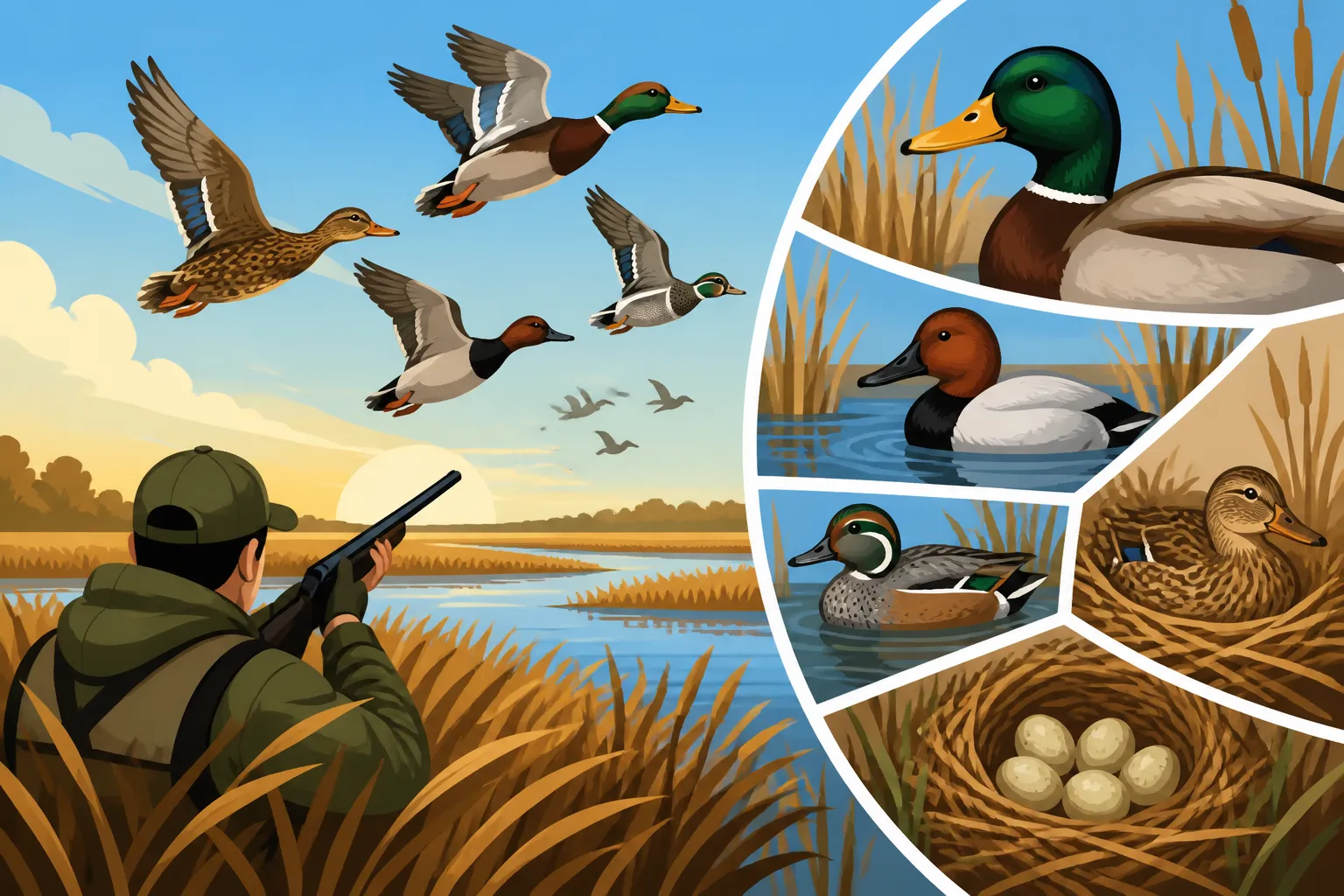
No discussion of dabbling ducks in Manitoba would be complete without revering the mallard. These iconic "greenheads" are perhaps the most recognized duck species, and for good reason—they are abundant, widespread, and provide thrilling hunting opportunities. Mallards are incredibly adaptable, thriving in a variety of habitats, from small prairie potholes to large marshes, river systems, and even urban parks. Their diet is diverse, consisting of seeds, grains, aquatic vegetation, and invertebrates. This adaptability also extends to their nesting habits, which is crucial for hunters to understand.
Mallards typically nest in upland areas, often quite a distance from water, though always within reasonable walking or flying distance. They prefer dense cover, such as tall grasses, sedges, and residual stubble from agricultural fields. A common sight for hunters scouting in spring or early summer is a hen mallard leading her brood from a grassy field edge back to a slough. Their nests are usually scrapes in the ground, lined with grass, leaves, and eventually, down feathers plucked from the hen's breast. This strategic choice of upland nesting helps protect their eggs from rising water levels and some aquatic predators, but it also means they are vulnerable to terrestrial predators and agricultural activities. Knowing that a secure patch of dense upland cover near a water source is likely a nesting hotbed can inform how you think about habitat conservation and local hunting pressure.
Northern Pintails and Gadwalls: Elegant and Elusive
Beyond the mallard, Manitoba hosts other fantastic dabbling species like the northern pintail and the gadwall, each with their own unique charm and challenges for the hunter. The northern pintail, easily identifiable by its elegant, slender neck and, in the drake, a long central tail feather, is a bird of open country. Pintails tend to be earlier migrants than many other ducks, often showing up on Manitoba's landscape before the main rush and heading south sooner. Their nesting habits reflect their preference for open spaces; they typically nest in sparse grassland cover on the open prairie, often further from water than mallards. Their nests are shallow depressions, usually in fields or short grass, and they rely on camouflage rather than dense vegetation for concealment. This makes them particularly vulnerable to habitat loss from cultivation and frequent haying operations.
Gadwalls, while perhaps less flashy than pintails or mallards, are beautiful ducks in their own right, with a subtle gray plumage and a distinctive white speculum on their wings. They are often found in mixed flocks with other dabblers. Unlike pintails, gadwalls prefer to nest in denser cover, often in thick stands of grasses, sedges, or even directly over water in emergent vegetation like bulrushes. They are primarily vegetarians, consuming a wide variety of aquatic plants, which means they thrive in wetlands rich in diverse vegetation. For hunters, recognizing their preference for robust, vegetated wetlands can guide scouting efforts. When you're looking at prime spots for Hunting a Slough Edge for Whitetails, remember that these same edges might be perfect for nesting gadwalls in spring.
Wigeon and Green-Winged Teal: Smaller but Mighty
Rounding out some of our more common dabblers are the American wigeon and the green-winged teal, two species that offer unique hunting experiences in Manitoba. The American wigeon, with its distinctive white crown in the drake and a whistling call, is often found in association with other grazers, as they are primarily vegetarians, frequently "grazing" on emergent vegetation or stealing food from diving ducks that bring it to the surface. Their nesting habits involve choosing well-concealed sites in grassy uplands, often near water, where the hen builds a bowl-shaped nest lined with down. While they may not be as abundant as mallards in every pothole, their unique feeding habits mean they can be found in a wide variety of shallow water environments, particularly those with ample aquatic plant life.
The green-winged teal is the smallest of our dabbling ducks, but what they lack in size, they make up for in speed and agility. They are incredibly quick flyers, making them a challenging and rewarding target for any waterfowler. Green-winged teal are among the earliest waterfowl to migrate south, often providing excellent opportunities during the early parts of Manitoba's waterfowl season. They typically nest in dense cover close to water, often in grassy areas, cattail marshes, or even under bushes. Their nests are well-hidden, usually a depression lined with grass and copious amounts of down. Because they prefer dense vegetation, areas that offer excellent concealment for ducklings are prime nesting grounds. When considering Hunting a Delta Marsh Style Wetland, you're likely looking at ideal habitat for these quick little birds.
Diving Ducks: Deep-Water Specialists and Northern Breeders
While dabblers dominate the shallow prairie ponds, Manitoba's larger, deeper water bodies and northern boreal regions are the domain of the diving ducks. These birds offer a different kind of hunting experience, often requiring different strategies and understanding of their unique habitat preferences.
Canvasbacks and Redheads: Kings of the Wild Rice
For many waterfowl enthusiasts, the canvasback is the pinnacle of diving ducks – a magnificent bird known for its striking profile, powerful flight, and preference for specific, nutrient-rich wetlands. Canvasbacks are true specialists, primarily feeding on the tubers of sago pondweed and wild rice. Their nesting habits are equally specialized: they almost exclusively build overwater nests, creating large, floating platforms of emergent vegetation like bulrushes, cattails, or sedges. These nests are often anchored to the bottom in dense stands of vegetation in large, semi-permanent wetlands. Their reliance on these specific wetland types makes them highly vulnerable to habitat degradation. When you're looking at large, productive marshes with extensive stands of emergent vegetation, you're looking at prime canvasback country.
Redheads, another highly sought-after diving duck, share some habitat preferences with canvasbacks but also exhibit unique behaviors. Like canvasbacks, redheads often nest overwater in dense emergent vegetation. However, they are also known for a fascinating nesting strategy called "nest parasitism," where hens will lay eggs in the nests of other redheads, or even other duck species, like canvasbacks or ruddy ducks. This can lead to very large clutches of eggs in a single nest. Redheads are also more generalist feeders than canvasbacks, consuming a wider variety of aquatic plants and invertebrates. For hunters pursuing Manitoba's duck species, understanding these preferences means focusing on those expansive, vegetated marshes where both these "kings" thrive.
Scaup and Ring-necked Ducks: Boreal and Parkland Residents
Moving north into Manitoba's boreal regions and even within the larger parkland wetlands, we encounter lesser scaup and ring-necked ducks, two abundant diving species. Lesser scaup, often simply called "bluebills," are incredibly numerous, making long migrations from their northern breeding grounds to wintering areas. They typically nest in upland cover, often quite dense, close to the edges of permanent wetlands, including small lakes, ponds, and slow-moving rivers in the boreal forest. Their nests are usually well-hidden scrapes lined with vegetation and down. Scaup feed predominantly on aquatic invertebrates, particularly snails and mussels, which means they are found in wetlands with healthy invertebrate populations. Knowing this can help you, as a hunter using tools like GoHunt, to identify promising areas based on habitat characteristics.
Ring-necked ducks are another common sight across Manitoba, often found in wooded wetlands and boreal lakes. They are distinctive with their upright posture and, in the drake, a subtle ring around the neck (though the ring at the base of the bill is more prominent). Ring-necks are unique among diving ducks in their strong preference for nesting in dense, emergent vegetation directly over water, similar to many dabblers. They build floating nests in cattails, bulrushes, or sedges. Their diet is varied, including aquatic insects, seeds, and the leaves and stems of submerged plants. These ducks thrive in the countless small to medium-sized wooded lakes and beaver ponds that dot the parkland and boreal forest, offering excellent opportunities for those who venture into these areas.
Goldeneyes and Buffleheads: Cold-Hardy Cavity Nesters
Finally, let's talk about the unique diving ducks that utilize tree cavities for nesting: the common goldeneye and the bufflehead. These species are a testament to the diverse ecological strategies ducks employ. Common goldeneyes are striking ducks, with the drakes boasting a glossy green head and a prominent white spot near the bill. They are tough, cold-hardy birds, often remaining in Manitoba until ice-up. Their most distinctive nesting habit is their reliance on tree cavities, typically old flicker holes or natural tree hollows, often near or over water in the boreal forest. They will readily use artificial nest boxes, which has become an important conservation tool. Goldeneyes are opportunistic feeders, consuming aquatic insects, crustaceans, and small fish.
Buffleheads are the smallest of North American diving ducks and are incredibly charismatic. The drakes are a striking black and white, often looking like miniature goldeneyes. Like goldeneyes, buffleheads are obligate cavity nesters, almost exclusively using old flicker holes, though they prefer smaller cavities and often nest closer to smaller ponds and wetlands. They are also incredibly cold-hardy and are among the last ducks to leave Manitoba in the fall. Their diet consists primarily of aquatic insects, crustaceans, and small fish, which they efficiently dive for. When you're considering Hunting a Beaver Dam Crossing in a wooded area, keep an eye out for these cavity nesters, as they often frequent such habitats. The presence of mature trees with suitable cavities near wetlands is a strong indicator of their breeding presence.
Where Manitoba Ducks Nest: Habitat is Key
Understanding where ducks nest isn't just an academic exercise; it's fundamental to hunting success and, more importantly, to the ongoing conservation of these incredible birds. Manitoba's diverse geography offers a variety of crucial nesting habitats.
Prairie Potholes and Wetlands: The Breeding Ground Engine
The prairie pothole region, which extends into southwestern Manitoba, is often called North America's "duck factory," and for good reason. This landscape, characterized by countless shallow, depressional wetlands (potholes) interspersed with grasslands and agricultural fields, provides an incredibly rich breeding ground for millions of ducks, especially dabblers. These potholes, many of which are temporary or semi-permanent, are vital for different stages of the breeding cycle. Early season water provides pairing and loafing areas, while more permanent wetlands offer brooding habitat. The surrounding uplands are critical for nesting, as many dabblers prefer to nest in dense grasses away from the water's edge.
The sheer density and variety of these wetlands create an ideal environment. Hens can move their broods from a dried-up temporary pond to a more permanent slough as the season progresses, finding abundant invertebrate food sources in the protein-rich waters. However, this critical habitat is under constant threat. What Wetland Drainage Did to Manitoba Ducks is a serious issue, as the loss of even small wetlands can fragment habitat and reduce overall duck production. Organizations like Ducks Unlimited work tirelessly to conserve and restore these vital breeding grounds. When you're scouting for Waterfowl Hunting Manitoba's Grain Fields, remember that those surrounding potholes are likely where many of those birds were hatched and raised.
Boreal Forests and Northern Lakes: Diver Strongholds
While the prairies are famous for dabblers, Manitoba's vast boreal forest and northern lake country are critical for many diving duck species and some dabblers. This expansive region is characterized by immense tracts of coniferous and mixed forests, dotted with countless lakes, rivers, and muskeg wetlands. Here, the landscape shifts from agricultural fields to a rugged, wilder environment. Divers like scaup and ring-necked ducks thrive in these larger, deeper bodies of water, which offer abundant aquatic invertebrates and fish. The surrounding forests provide essential seclusion and, for cavity nesters like goldeneyes and buffleheads, the necessary mature trees with natural hollows or old woodpecker holes for nesting.
The nesting strategies in the boreal reflect the environment. While some ducks nest in emergent vegetation in the quiet bays of lakes, others utilize the unique tree cavities. This means that areas with intact, old-growth forests adjacent to productive wetlands are particularly valuable. Unfortunately, challenges like What Wildfire Did to Manitoba Game Range can temporarily alter these habitats, creating new opportunities in burned areas but also destroying traditional nesting sites. Hunters venturing into these northern reaches, perhaps for Moose Hunting Manitoba's Boreal Country, will often find themselves in prime duck breeding territory as well, highlighting the interconnectedness of these ecosystems.
Agricultural Landscapes and River Valleys: Adaptable Nesters
Manitoba's agricultural heartland, while often seen as monoculture, still offers significant nesting opportunities for many duck species, particularly dabblers that have adapted to human-modified landscapes. Fields of standing grain, stubble, and hay can provide surprisingly good nesting cover, especially for mallards and pintails who are less particular about dense vegetation. The trick is timing, as agricultural operations like haying and tilling can destroy nests, but where crops like winter wheat or undisturbed alfalfa are present, they can be a lifeline. River valleys, like the Assiniboine or Pembina, also provide linear stretches of diverse habitat, with forested banks, oxbow lakes, and associated wetlands offering refuge and nesting sites.
These areas, often overlooked by those focusing on pristine wilderness, are vital for sustaining duck populations, especially near human settlements. Ducks learn to adapt to the rhythm of farming, and those untouched strips of grass along a ditch or a shelterbelt can be incredibly important. However, the loss of these crucial features, such as when Shelterbelt Loss Hurts Manitoba Wildlife, directly impacts nesting success and overall duck numbers. Hunters scouting for Hunting a Swathed Grain Field at Dusk for geese will often find ducks using these same fields for feeding, having nested in the adjacent cover earlier in the season. Utilizing tools like GoHunt can assist in identifying these crucial transitional areas where both farming and wildlife coexist.
Conservation and the Future of Manitoba's Ducks
The abundance of ducks in Manitoba is not just a matter of luck; it's the result of concerted conservation efforts, often spearheaded by hunters themselves. Understanding the challenges and contributing to solutions is paramount for the future.
The Role of Hunters in Habitat Preservation
It's a fact often overlooked by those outside the hunting community: hunters are among the most dedicated and significant contributors to wildlife and habitat conservation. In Manitoba, just like across North America, the sale of hunting licenses and migratory bird permits directly funds critical habitat acquisition, restoration, and management programs. Every time you purchase The Federal Migratory Game Bird Permit or The Habitat Conservation Stamp Requirement, a portion of that money goes directly towards projects that benefit ducks and other wetland wildlife. Organizations like Ducks Unlimited Canada, deeply rooted in the hunting community, have conserved and restored millions of acres of wetlands and associated uplands in Manitoba and beyond.
This financial contribution is coupled with a deep, firsthand understanding of ecological needs. Hunters spend countless hours in the field, observing changes in habitat, bird populations, and environmental conditions. This intimate knowledge often makes them the first to identify problems and advocate for solutions. When you're planning your hunt with resources like GoHunt, remember that the availability of public hunting land and healthy duck populations is a direct result of these ongoing conservation commitments. It's a legacy we all share and must continue to uphold, ensuring that future generations can experience the thrill of Marsh Hunting Ducks in the Interlake and witness the spectacular migrations.
Challenges to Duck Populations and Habitat
Despite the dedicated efforts of hunters and conservation organizations, Manitoba's duck populations and their critical habitats face numerous challenges. One of the most significant and persistent threats is wetland drainage, particularly in the prairie pothole region. As agricultural practices intensify, many landowners continue to drain small, seemingly insignificant wetlands to maximize arable land. However, these small wetlands are collectively vital as breeding and brooding grounds, and their loss has a cumulative, devastating effect. What Wetland Drainage Did to Manitoba Ducks is a stark reminder of past impacts, and ongoing vigilance is crucial.
Beyond direct habitat loss, climate change presents a complex web of challenges. Altered precipitation patterns can lead to prolonged periods of drought, severely impacting water levels in prairie potholes, which are crucial for duck breeding success. How Drought Does to Prairie Game directly affects ducks by reducing the availability of nesting and brood-rearing habitat, leading to lower recruitment rates. Increased frequency and intensity of wildfires, particularly in the boreal regions, can also alter nesting habitats, though some burned areas can eventually become productive. Predation from an ever-present suite of terrestrial and avian predators also plays a role, especially when nesting cover is compromised. Navigating these challenges requires ongoing research, adaptive management, and the continued support of the hunting community to ensure the future health of Manitoba's duck populations.
Here's a quick comparison of dabbling and diving ducks to help solidify the differences you'll see in the field:
| Feature | Dabbling Ducks (Puddle Ducks) | Diving Ducks |
|---|---|---|
| Feeding Style | "Tip up" in shallow water, rarely dive fully | Dive completely underwater to forage |
| Take-off | Spring directly into the air from water | Require a running start across the water to take flight |
| Leg Placement | More central on body, better for walking on land | Further back on body, better for swimming underwater |
| Preferred Habitat | Shallow marshes, ponds, flooded fields, river backwaters | Larger, deeper lakes, rivers, bays, reservoirs |
| Common Foods | Seeds, grains, aquatic vegetation, invertebrates (surface) | Aquatic insects, crustaceans, fish, submerged plants |
| Common Nesting | Upland grasses, dense cover near water, some overwater | Overwater nests in emergent vegetation, tree cavities |
| Examples | Mallard, Pintail, Gadwall, Wigeon, Green-Winged Teal | Canvasback, Redhead, Scaup, Ring-necked Duck, Goldeneye |
Disclaimer
This article is for general informational purposes only and does not constitute professional advice. Laws, prices and regulations vary by location and change over time. Consult a qualified professional for guidance on your specific situation.