Why Shelterbelt Loss Hurts Manitoba Wildlife
It's disheartening to drive through the familiar Manitoba landscape and notice something vital slowly disappearing: the old shelterbelts. These lines of trees and shrubs, once a common sight across our farmlands, are vanishing, and for those of us who cherish the outdoors and its creatures, it raises a real alarm. This guide dives deep into exactly why the loss of these crucial natural structures is such a blow to Manitoba's wildlife and what it means for the future of our hunting opportunities.
The Historical Role of Shelterbelts in Manitoba's Ecosystems
For decades, shelterbelts were an undeniable feature of our agricultural landscape, serving multiple purposes that extended far beyond just farming. They were an investment, a testament to land stewardship, and an unwitting gift to the wild inhabitants of our prairies.
More Than Just Windbreaks: A Multifaceted Habitat
When we talk about shelterbelts, it's easy to just think of them as glorified fences made of trees. And yes, their primary role from an agricultural perspective was indeed to break the wind, prevent soil erosion, and help trap snow to conserve moisture. Farmers planted them for very practical reasons, protecting their valuable topsoil from the relentless prairie winds and buffering crops from harsh weather. These were living, breathing walls designed to benefit the land and the yield.
However, over time, these planted rows of trees and shrubs—often a mix of native and non-native species like Manitoba maple, green ash, caragana, and willow—began to serve a much larger, ecological purpose. They created linear oases in what could otherwise be a vast, open, and sometimes unforgiving agricultural expanse. These weren't just single-purpose structures; they became vibrant, albeit narrow, ecosystems in their own right, providing resources that were increasingly scarce in the surrounding fields.
A Lifeline for Prairie Species
Imagine being a white-tailed deer, a sharp-tailed grouse, or even a smaller critter like a rabbit, trying to survive in a mostly treeless prairie environment. The original prairie landscape offered diverse cover, but modern agriculture often prioritizes large, open fields. This is where shelterbelts stepped in, becoming absolute lifelines. They offered refuge and resources for a multitude of species that either adapted to their presence or found them to be essential substitutes for lost natural habitats.
Whitetails, in particular, thrived in areas with good shelterbelt networks. These strips provided cover for bedding during the day, a safe route to move between feeding areas, and critical thermal protection during brutal Manitoba winters. Hunting Whitetails on Manitoba Farmland often means focusing on these linear cover strips, as they are magnets for deer. Similarly, upland birds like Hungarian partridge and pheasants, though less common now, found crucial nesting and brooding cover within the dense shrubbery of shelterbelts. Even songbirds, beneficial insects, and small mammals like voles and mice used them extensively, forming a base for a localized food web. They were, without a doubt, a cornerstone of wildlife habitat in our agricultural zones.
Direct Impacts of Shelterbelt Removal on Wildlife
The removal of shelterbelts isn't just a cosmetic change to the landscape; it's a profound alteration that directly impacts the survival and well-being of countless wildlife species. We're talking about immediate, tangible consequences that can literally be the difference between life and death for an animal.
Loss of Critical Cover and Thermal Regulation
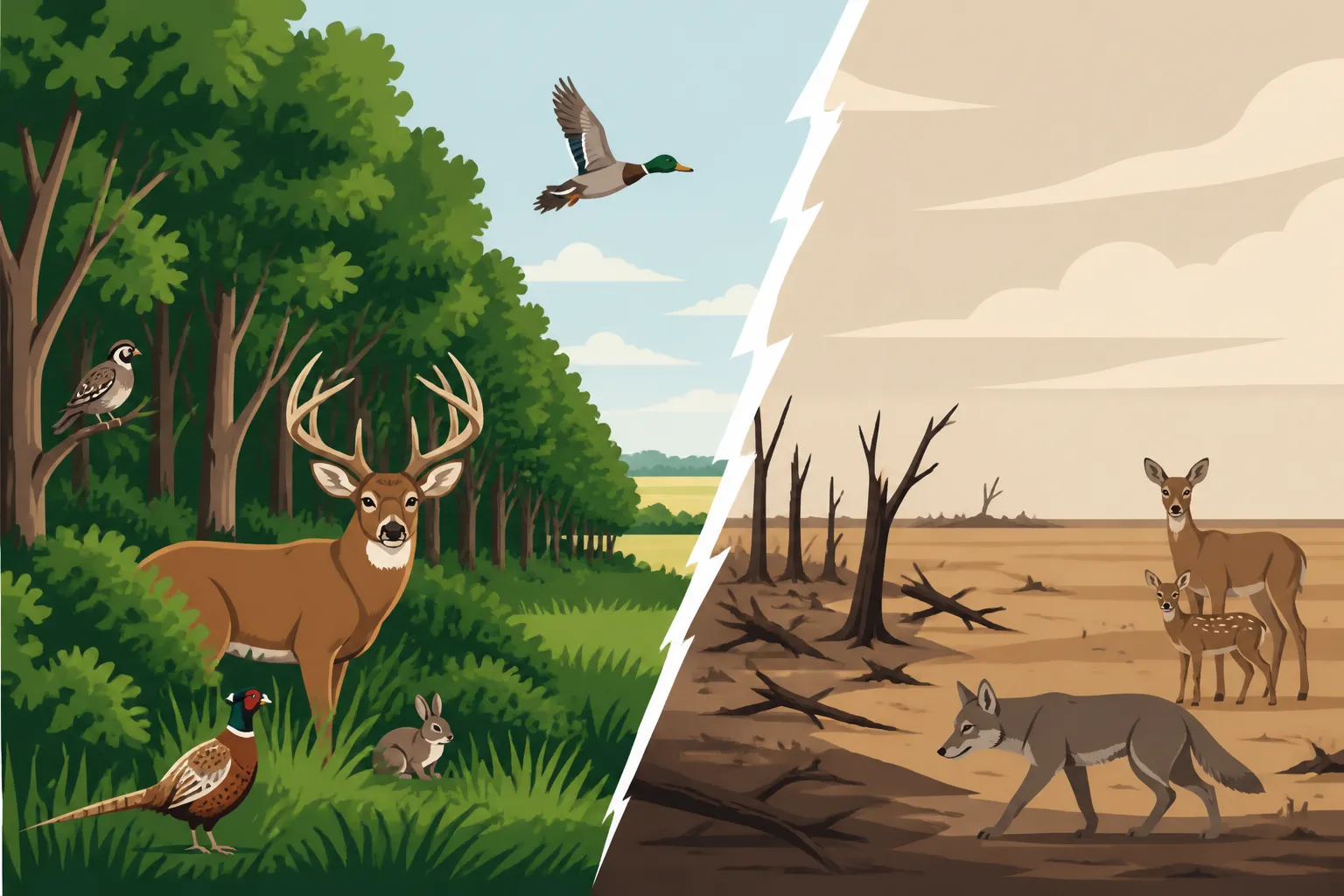
Perhaps the most immediate and devastating impact of shelterbelt removal is the sudden and severe loss of cover. For many species, especially our prized big game like whitetails, these tree lines act as essential escape routes and hiding spots from predators. A deer caught in an open field with nowhere to go against a determined coyote or wolf pack is at a severe disadvantage. The dense undergrowth and tree canopy of a shelterbelt provide the necessary visual and physical obstruction to break a chase or simply remain undetected. Without them, wildlife is exposed and vulnerable.
Beyond predation, shelterbelts are vital for thermal regulation. Think about a Manitoba winter, with its biting winds and temperatures that plunge far below freezing. A dense shelterbelt acts as a windbreak, reducing wind chill by many degrees and providing a pocket of calmer, warmer air where animals can bed down and conserve precious energy. In summer, the shade from the trees offers respite from scorching prairie sun. Without this crucial thermal cover, animals, especially young or weakened ones, are far more susceptible to the extreme weather conditions that are a hallmark of our province. This directly contributes to issues like What a Hard Manitoba Winter Culls and makes survival a much tougher game.
Fragmentation of Travel Corridors and Breeding Grounds
Shelterbelts don't just provide cover in one spot; they often connect larger patches of habitat, acting as vital travel corridors. Imagine these tree lines as highways for wildlife, allowing them to move safely and discreetly between woodlots, river bottoms, or other areas of cover and feeding grounds. A buck might use a series of shelterbelts to travel miles undetected from its bedding area to a prime feeding field, especially during the rut. This interconnectedness is crucial for allowing animals to disperse, find new territories, and, most importantly, locate mates to ensure genetic diversity and healthy populations. Reading Whitetail Sign in Manitoba Aspen often leads you right along these types of connective tissues.
When shelterbelts are removed, these corridors are severed. What was once a continuous pathway becomes a series of isolated islands of habitat. This fragmentation isolates animal populations, making it incredibly difficult for individuals to move between areas. Genetic exchange suffers, leading to potential inbreeding or reduced resilience to disease. Breeding grounds can become cut off from new individuals, reducing reproductive success. This breakdown of connectivity can have long-term, detrimental effects on local wildlife populations, making it harder for species to thrive or recover from environmental stressors. You can use tools like GoHunt to try and identify these fragmented pieces of cover, but it doesn't change the underlying issue.
Indirect Consequences and Ecological Cascades
The ripples of shelterbelt loss extend far beyond the immediate absence of trees and cover. They set off a chain reaction, creating ecological cascades that affect entire food webs and ecosystem health. These indirect consequences might not be as obvious as a deer being exposed in a field, but they are just as, if not more, damaging in the long run.
Reduced Food Sources and Nesting Opportunities
A healthy shelterbelt isn't just wood and leaves; it's a mini-ecosystem teeming with life. The trees and shrubs themselves produce berries, seeds, and nuts that are a crucial food source for various birds and small mammals, particularly through the lean fall and winter months. Beyond the direct plant matter, these environments support a vibrant insect population, which in turn provides a protein-rich diet for many bird species, especially during nesting and chick-rearing seasons. When a shelterbelt disappears, so does this concentrated buffet of natural foods.
Furthermore, these linear habitats offer prime nesting opportunities. Many bird species, from songbirds to some raptors, rely on the structure and protection of shelterbelts to build their nests, raise their young, and escape the attention of ground predators. Without these protected sites, nesting success plummets. Birds are forced to nest in less secure locations, such as open fields, where their nests are far more exposed to predation from coyotes, foxes, and even agricultural machinery. This reduction in both food and safe nesting sites significantly impacts the reproductive success and overall population health of many species, compounding the challenges faced by Manitoba's Upland Birds and Where They Live.
Increased Vulnerability to Predation and Human Disturbance
As alluded to earlier, the loss of cover makes animals more exposed to predators. But it's more than just direct chases. An open landscape allows predators like coyotes to hunt more efficiently, spotting prey from greater distances and having fewer obstacles to contend with. Without the complexity of a shelterbelt, prey animals have fewer places to hide, fewer escape routes, and fewer opportunities to break line of sight, increasing their stress levels and their chances of becoming a meal. Hunters often observe this when Hunting a Shelterbelt Row in Open Prairie, noting how deer cling to even the thinnest cover.
Beyond natural predators, the absence of shelterbelts also increases wildlife's vulnerability to human disturbance. Large, open fields are easier to farm, but they also expose animals to constant activity—tractors, sprayers, harvesters, and general human presence. This can push wildlife out of traditional feeding or bedding areas, forcing them into less ideal habitats or simply making them more nervous and nocturnal. The constant stress of human activity, coupled with the lack of secure refuge, can lead to reduced foraging efficiency, decreased reproductive rates, and overall poorer health for wildlife populations. This is part of the larger picture of How Cropland Change Shifted Prairie Game.
The Future of Wildlife and Conservation Efforts
Understanding the impact of shelterbelt loss is one thing, but looking ahead and thinking about solutions, or at least mitigating the damage, is crucial. It’s a complex issue, tied into both agricultural economics and ecological imperatives.
Understanding the Driving Factors Behind Removal
It's important to acknowledge that the removal of shelterbelts isn't happening out of malice toward wildlife. Farmers face immense economic pressures, and every square foot of arable land counts. Modern agricultural equipment is enormous, designed for efficiency in vast, unobstructed fields. Shelterbelts, while beneficial ecologically, can become impediments to these large machines, requiring extra time, fuel, and effort to navigate around. They can also shade crops, reducing yields in the rows closest to the trees.
Furthermore, maintaining shelterbelts requires time and resources—pruning, disease management, and dealing with potential pest issues. In an industry where margins are often tight, these factors weigh heavily on decision-making. We also see changing attitudes towards land management, sometimes prioritizing maximum immediate yield over long-term ecological benefits. These are real struggles for Manitoba farmers, and understanding them is the first step toward finding common ground.
The Importance of Restoration and Alternative Habitats
Despite the challenges, the story doesn't have to end with a barren landscape. There's growing recognition of the value of these linear habitats, and efforts are underway to encourage the planting of new shelterbelts or the restoration of existing ones. Programs exist to help landowners with the cost and planning of tree planting, focusing on native species that provide excellent wildlife benefits without overly hindering agricultural operations. Even a narrower strip of multi-row shrubs can make a huge difference.
Beyond direct replanting, fostering alternative habitats such as grassed waterways, wetland edges, and Hunting a Bluff Between Two Fields can help fill some of the ecological gaps left by shelterbelt loss. Encouraging diverse crop rotations that leave more cover over winter, or participating in conservation easements, also contributes to a more wildlife-friendly landscape. For hunters, seeking out landowners who still maintain these features, or those actively involved in conservation efforts, becomes more vital than ever. Always remember the importance of Manitoba Landowner Permission Law when seeking access to private lands, and respect their decisions regarding land management. As hunters, using resources like GoHunt to scout and understand the remaining habitat mosaic can help us adapt our strategies.
Here's a quick look at the contrasting impacts:
| Feature | Benefit of Existing Shelterbelt | Consequence of Shelterbelt Loss |
|---|---|---|
| Cover | Provides concealment from predators and human disturbance | Increases exposure, making wildlife vulnerable |
| Thermal | Offers protection from extreme wind, cold, and sun | Exacerbates stress from harsh weather, higher mortality |
| Travel | Forms safe corridors for movement between habitat patches | Fragments populations, hindering dispersal and genetic exchange |
| Food | Produces berries, seeds, and supports insects as food sources | Reduces available food, impacting nutrition and survival |
| Nesting | Offers secure sites for birds to nest and raise young | Forces nesting in less safe areas, reducing reproductive success |
| Soil Health | Prevents wind erosion, traps snow, conserves moisture | Increases soil degradation, dust storms, and moisture loss |
We as outdoor enthusiasts, whether we're Hunting the Parkland Fringe for Big Bucks or just enjoying a quiet hike, have a vested interest in promoting these ecological services. Supporting initiatives that encourage habitat preservation and creation, and engaging in respectful dialogue with landowners, is key to ensuring that Manitoba's wildlife can continue to thrive.
Disclaimer
This article is for general informational purposes only and does not constitute professional advice. Laws, prices and regulations vary by location and change over time. Consult a qualified professional for guidance on your specific situation.