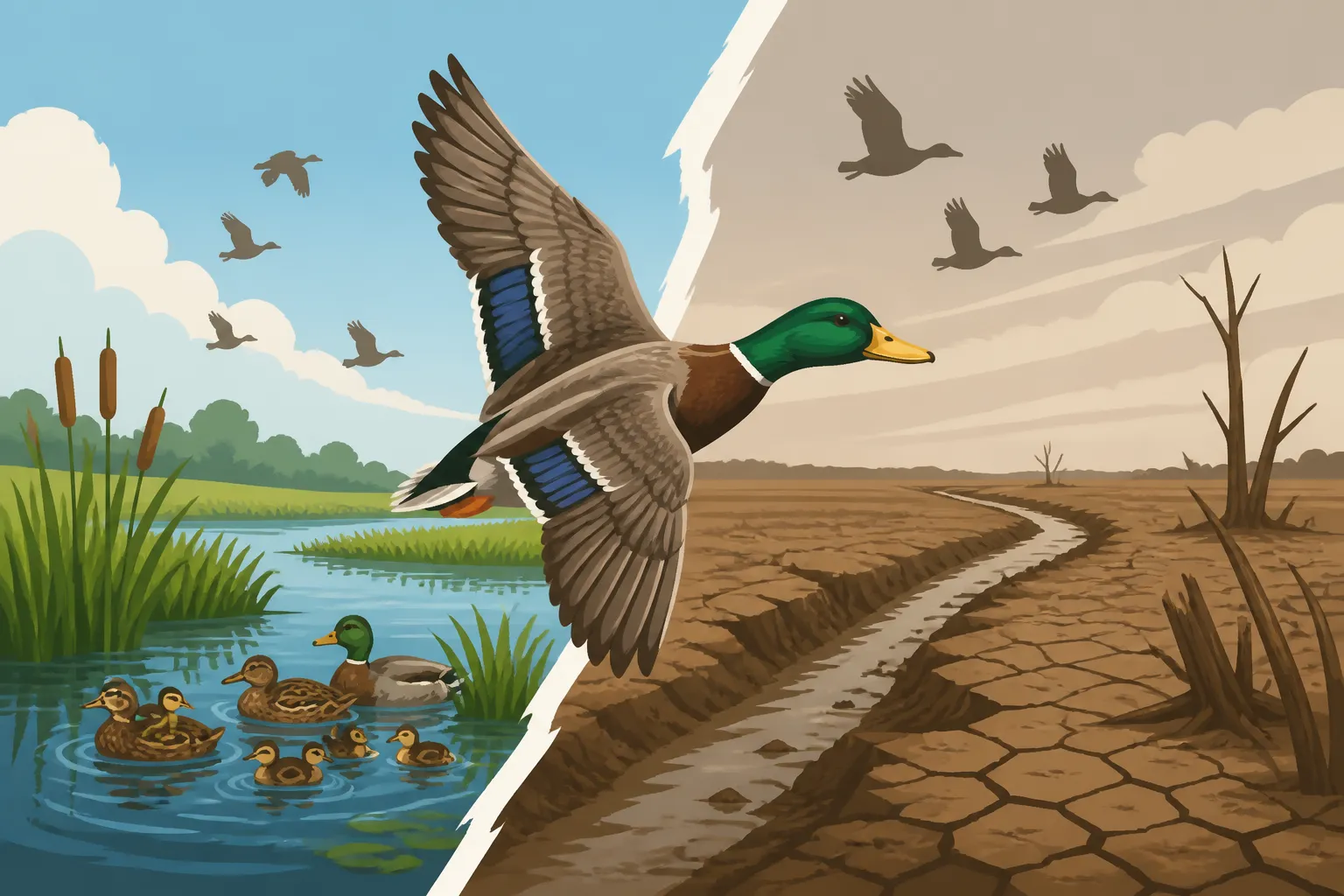
What Wetland Drainage Did to Manitoba Ducks
It's frustrating, isn't it? You head out to your favorite marsh, the one that used to be buzzing with ducks, and now it feels… quieter. Or worse, it's just a dry field where water once shimmered. Many of us have seen it firsthand: the steady disappearance of those vital wetlands that our Manitoba ducks rely on, leaving us wondering where all the birds have gone. This guide delves deep into the unfortunate reality of wetland drainage and its profound, often heartbreaking, impact on Manitoba's duck populations and the hunting heritage we cherish.
The Lifeline: Understanding Manitoba's Wetlands for Ducks
Before we can truly grasp the impact of wetland drainage, we need to appreciate what wetlands are to ducks. They aren't just puddles; they are complex, dynamic ecosystems that serve as the absolute cornerstone of duck survival, reproduction, and migration. Without healthy wetlands, the entire lifecycle of our beloved waterfowl breaks down.
What Makes a Wetland a Duck Haven?
Imagine a vibrant, bustling city for ducks, full of food, shelter, and nurseries. That's a wetland. Manitoba is blessed with a diverse array of wetland types, from shallow potholes and sloughs in the prairie to expansive marshes and fens in the boreal region. Each type plays a specific, critical role. Potholes, for example, are often the first to melt in spring, offering crucial pairing and courtship habitat. They burst with invertebrates – insect larvae, snails, freshwater shrimp – providing protein-rich food essential for hen ducks preparing to lay eggs.
Beyond food, wetlands offer critical concealment. Dense cattails, sedges, and emergent vegetation provide safe nesting sites away from predators, allowing hens to raise their broods in relative security. The structure of these plants also helps break up wave action and offers refuge from wind, creating calm waters where ducklings can feed and grow. These aren't just temporary pools; they are living, breathing nurseries and food banks that support every stage of a duck's early life. Think of them as the grocery store, daycare, and safe house all rolled into one for a duck family.
The Historical Abundance: A Look Back at Manitoba's Duck Factories
Manitoba, particularly its prairie and parkland regions, was once renowned as one of North America's most prolific "duck factories." Stories from our grandparents and old hunting journals speak of skies darkened by migrating birds, of marshes so thick with ducks you could barely walk through them. This wasn't hyperbole; it was a testament to the sheer volume and quality of wetland habitat available. The landscape was a mosaic of grasslands, aspen bluffs, and countless small, temporary, and permanent wetlands.
These diverse habitats supported incredible numbers of ducks, from mallards and pintails to canvasbacks and redheads. The shallow, productive nature of prairie potholes meant an explosion of invertebrate life, which in turn fueled the nesting success of millions of birds. It was a natural bounty, a finely tuned system that had evolved over millennia to produce an abundance of waterfowl. Hunters would plan trips years in advance, knowing that a Manitoba waterfowl hunt was a truly world-class experience. The sheer density of birds was something to behold, a direct result of the untouched, interconnected wetland systems that dominated the landscape.
The Relentless March of Drainage: Why Wetlands Disappear
The transformation from this historical abundance to our current reality didn't happen overnight. It's been a gradual, relentless process driven by a combination of economic pressures, development, and a fundamental misunderstanding of wetlands' value. It's a sad truth that for too long, these vital ecosystems were viewed as obstacles rather than assets.
Agriculture's Demand: Farming the Margins
By far, the most significant driver of wetland drainage in Manitoba has been agricultural expansion. Farmers, facing economic pressures and a desire to maximize arable land, have historically seen wetlands as "wasteland" – unproductive areas that hinder efficient farming practices. Modern heavy equipment makes short work of draining even sizable sloughs, and with larger machinery, those wet spots in the middle of a field become inconvenient and costly to farm around. The temptation to turn every acre into cropland, to straighten out every field edge, is powerful, especially when commodity prices are high.
This often involves extensive ditching, tiling, and piping to move water off fields and into larger drainage systems or nearby rivers, fundamentally altering the natural hydrology of the landscape. While individual acts of drainage might seem minor, the cumulative effect across hundreds of thousands of acres has been catastrophic for waterfowl. Farmers are often just trying to make a living, but the unintended consequence has been a massive reduction in essential duck habitat. It's a complex issue, pitting economic necessity against ecological survival, and it has left many hunters and conservationists heartbroken at the sight of once-thriving marshes now supporting only wheat or canola.
Urban and Infrastructure Development: Concrete and Pavement
Beyond agriculture, the relentless march of human development has also taken its toll. As our towns and cities expand, and as new roads, pipelines, and utility corridors are built, wetlands often lie in the path of progress. It's simply easier and cheaper to fill in a wetland and build on top of it than to navigate around it or mitigate its loss. Housing developments push further out into the countryside, encroaching on natural habitats. Industrial parks expand.
Every new road or highway extension needs a stable base, and often that means draining or filling wetlands. This loss isn't just about the footprint of the development itself; it's about the altered hydrology around it. Ditching along roadsides can inadvertently drain adjacent wetlands, and increased runoff from impervious surfaces can quickly overload remaining natural systems. While these losses are typically smaller in scale than agricultural drainage, they contribute significantly to the overall fragmentation and degradation of wetland habitat, especially around more populated areas.
The "Too Wet" Mentality: Managing Water for Human Needs
For generations, there's been a pervasive cultural mindset that "too much water" is a problem to be solved, particularly in a province prone to spring flooding. This has led to extensive efforts in water management focused primarily on moving water away from people and infrastructure as quickly as possible. Ditches are dug deeper, channels are straightened, and elaborate drainage networks are engineered, all with the goal of preventing floods or making land more accessible.
However, this approach often overlooks the ecological role of wetlands as natural sponges. Wetlands absorb excess water, slowly releasing it over time, which actually reduces flood peaks downstream and recharges groundwater. When these natural systems are bypassed or eliminated, water management becomes a constant battle against nature, often with unintended consequences like accelerated erosion, degraded water quality, and of course, diminished wildlife habitat. This "drain it fast" mentality, though rooted in good intentions for human safety and convenience, has been a major contributor to the decline in wetland areas.
The Devastating Impact on Manitoba's Duck Populations
The collective impact of this widespread drainage is nothing short of devastating for Manitoba's ducks. It's not just about losing a few potholes; it's about dismantling the very foundation of their existence, leading to a cascade of negative effects that we're seeing play out in our hunting seasons and in wildlife surveys.
Loss of Breeding and Nesting Habitat
This is perhaps the most direct and catastrophic consequence. Ducks need water to breed, pair, and nest. When wetlands disappear, so do the opportunities for hens to find suitable mates and lay their eggs. Even if a hen finds a patch of water, if the surrounding upland cover for nesting is gone, she's far more vulnerable to predators. Research repeatedly shows that duck nesting success is directly tied to the availability and quality of secure nesting cover adjacent to productive wetlands.
The loss isn't just about the total acreage, but also the fragmentation of what remains. Smaller, isolated wetlands are less productive and more susceptible to drying out. Hens have to travel further to find suitable nesting cover, exposing them to greater risks. This leads to fewer successful nests, fewer ducklings hatching, and ultimately, a smaller recruitment of young birds into the population. It's a fundamental blow to the duck population's ability to replenish itself year after year. Hunters who remember full sloughs in spring now drive past empty depressions, knowing full well what that means for fall flights.
Disrupted Migration Routes and Staging Areas
Manitoba sits squarely in the Central Flyway, a vital migratory corridor for millions of waterfowl traveling between their northern breeding grounds and southern wintering areas. These migrating birds rely on a network of wetlands to provide critical resting and refueling stops. Imagine flying thousands of miles and suddenly finding half your gas stations are closed. That's essentially what's happening to migrating ducks.
When major staging areas, like portions of the Interlake region that once concentrated immense numbers of birds, are degraded or drained, it forces ducks to expend more energy searching for food and safe harbor. This can lead to increased stress, poorer physical condition, and higher mortality rates during migration. A duck arriving at its breeding grounds in poor shape is less likely to have a successful nesting season. The loss of these strategic pit stops can literally make or break a migratory journey for entire populations, affecting birds that breed far to the north but depend on Manitoba's bounty to get them there and back.
Reduced Brood Rearing Success
Even if ducks successfully hatch a brood, the battle isn't over. Ducklings are incredibly vulnerable and require specific conditions to survive and grow. Productive wetlands teem with the invertebrates and aquatic vegetation that are essential for rapid growth and development. They also provide abundant cover from aerial predators like hawks and terrestrial threats like foxes and mink.
Drained wetlands mean fewer safe havens for broods. Without the rich insect life, ducklings struggle to get the protein they need to grow quickly, making them more susceptible to disease and predation. Furthermore, the loss of dense emergent vegetation reduces critical escape cover, leaving young birds exposed. A healthy wetland provides a complex structure of food and shelter that allows broods to thrive. When that complexity is simplified or removed through drainage, the survival rate of ducklings plummets, further exacerbating the decline in overall duck numbers. It's a sad reality that even with a successful hatch, the odds are stacked against them without good brood habitat.
Water Quality Degradation and Disease
Wetlands aren't just for ducks; they are natural filters for our entire ecosystem. They trap sediments, absorb excess nutrients from agricultural runoff, and help break down pollutants. When wetlands are drained, this natural filtering capacity is lost, leading to poorer water quality in remaining wetlands, streams, and rivers. Increased nutrient loads, especially phosphorus and nitrogen from fertilizers, can cause algal blooms, which deplete oxygen and create unhealthy environments for aquatic life, including the insects ducks rely on.
Furthermore, the concentration of birds into smaller, fewer remaining wetlands can dramatically increase the risk of disease outbreaks. Overcrowding, combined with poor water quality, creates a perfect breeding ground for avian diseases like botulism and avian cholera, which can decimate local duck populations. Manitoba's Winter Kill and Game Numbers can also be worsened when birds are forced into less optimal, crowded wintering or staging grounds due to habitat loss. It's a vicious cycle where habitat loss directly contributes to environmental degradation, which in turn further harms the ducks.
Here's a quick look at how vital different wetland types are:
| Wetland Type | Key Duck Species Benefit From | Primary Role for Ducks | Vulnerability to Drainage |
|---|---|---|---|
| Prairie Potholes (ephemeral/seasonal) | Mallards, Pintails, Blue-winged Teal | Early spring pairing, invertebrate-rich food for hens | Very High |
| Permanent Marshes (e.g., Delta Marsh) | Canvasbacks, Redheads, Diving Ducks, Grebes | Brood rearing, abundant food, staging for divers | High |
| Fens/Bogs (Boreal Forest) | Black Ducks, Ring-necked Ducks | Nesting cover, isolated brood rearing, migration corridors | Moderate |
| Riparian Wetlands (River edges) | Wood Ducks, Green-winged Teal, Buffleheads | Diverse food sources, sheltered nesting, migration corridors | Moderate |
| Shallow Flooded Fields | Snow Geese, Canada Geese, Widgeon, Shovelers | Post-harvest foraging, resting during migration | Variable (often temporary) |
Beyond the Loss: The Ripple Effect on Hunting and Conservation
The impact of wetland drainage extends far beyond just the ducks themselves. It touches hunters, local communities, and the very fabric of conservation efforts in Manitoba. When the natural world suffers, we all feel the repercussions.
Fewer Ducks, Tougher Hunting Seasons
This is perhaps the most tangible frustration for hunters. You spend countless hours scouting fields, setting up spreads, and calling, only to be met with fewer birds. The excitement and anticipation of a big duck migration dwindle when the ducks simply aren't showing up in the numbers they used to. This means smaller bag limits, fewer opportunities to fill your freezer, and a generally less rewarding experience in the blind. Many hunters reminisce about the "good old days" when ducks seemed inexhaustible, and it's heartbreaking to see that reality fade.
The decline in duck populations directly translates to reduced hunting opportunities and, for some, the difficult decision to hunt less or even stop entirely. It impacts not only the individual hunter's passion but also the collective culture and tradition of waterfowl hunting in Manitoba. Guides and outfitters, who rely on healthy duck numbers for their livelihoods, also feel the pinch. Manitoba Waterfowl Hunting Manitoba's Grain Fields becomes less fruitful, and the thrill of Marsh Hunting Ducks in the Interlake diminishes with dwindling bird numbers.
Increased Pressure on Remaining Habitats
As wetlands disappear, the ducks that remain are forced to concentrate into fewer, smaller, and often less optimal habitats. This creates a cascade of problems. First, these remaining areas become magnets for hunters, leading to increased hunting pressure on those specific spots. What was once a scattered, diverse hunting landscape becomes a few crowded hotspots, leading to less enjoyable hunts and potentially over-pressured birds that quickly become wary.
Second, the ecological pressure on these remaining wetlands intensifies. More ducks in a smaller area means faster depletion of food resources, increased competition, and a greater risk of disease transmission. The very places meant to be safe havens become stressed, potentially degrading their quality further. It's a cycle that makes conservation work even more challenging, as efforts must be focused on not only restoring lost habitat but also protecting and improving the quality of what little remains.
The Economic Cost to Communities
Waterfowl hunting is a significant economic driver in many rural Manitoba communities. Hunters spend money on licences, gear, fuel, lodging, food, and often engage the services of guides or outfitters. When duck populations decline and hunting opportunities diminish, this economic injection into local economies dries up. Local businesses, from gas stations to restaurants to sporting goods stores, feel the impact.
Furthermore, the loss of healthy wetlands also affects other forms of outdoor recreation, like birdwatching, kayaking, and general nature appreciation. A healthy ecosystem draws tourists and contributes to the overall quality of life for residents. The long-term economic prosperity of many regions is subtly, but powerfully, tied to the health of their natural resources. When wetlands are drained, we lose more than just ducks; we lose a piece of our provincial economy and the vibrant connection to nature that many cherish. Organizations like GoHunt highlight the importance of healthy ecosystems for the broader outdoor economy.
The Call to Action: How Conservation is Fighting Back
Despite the challenges, there's hope on the horizon, largely thanks to dedicated conservation efforts. Organizations like Ducks Unlimited Canada, Delta Waterfowl, and local conservation groups are actively working to reverse the trend of wetland loss. These efforts include:
- Wetland Restoration and Enhancement: Actively purchasing, protecting, and restoring drained wetlands, returning them to their natural, productive state. This involves breaking drainage tiles, plugging ditches, and re-establishing native vegetation. Programs often partner with landowners to put marginal lands back into wetland production.
- Policy Advocacy: Working with government at all levels to develop stronger policies that protect existing wetlands and discourage further drainage. This includes advocating for incentives for landowners who conserve wetlands and disincentives for those who drain them without proper permits.
- Landowner Programs: Offering financial and technical assistance to farmers and private landowners to encourage wetland retention and restoration on their properties. This helps to integrate conservation into agricultural practices, recognizing that farmers are key stewards of the land.
- Public Education: Raising awareness among the general public about the critical importance of wetlands, not just for ducks, but for water quality, flood control, and biodiversity.
- Hunter Support: A significant portion of conservation funding comes directly from hunters through licence fees and organizations like Ducks Unlimited. Every purchase of a The Federal Migratory Game Bird Permit or a conservation stamp contributes to these vital efforts.
The fight to save Manitoba's wetlands is ongoing, and it's one that requires the sustained effort of hunters, conservationists, landowners, and the broader public. We've seen firsthand what can be lost, but with collective action, we can work towards a future where Manitoba's skies are once again filled with the roar of wings. Which Ducks Nest in Manitoba's Potholes and Why the Interlake Concentrates Birds are questions that conservation aims to answer with more positive outcomes in the future.
Disclaimer
This article is for general informational purposes only and does not constitute professional advice. Laws, prices and regulations vary by location and change over time. Consult a qualified professional for guidance on your specific situation.