Hunting a River Break Above the Valley
There's nothing quite like the challenge and reward of hunting Manitoba's river breaks. These dramatic changes in elevation, often overlooked by those sticking to the open fields, can hold an incredible amount of game, offering vital cover, food, and sanctuary. However, their rugged nature can make them daunting to navigate and hunt effectively. This guide will walk you through understanding these unique landscapes, how to scout them like a pro, and the best strategies to successfully hunt the elusive game that calls them home.
Understanding Manitoba's River Break Geography
River breaks aren't just pretty scenery; they are crucial habitat for a variety of big game animals in Manitoba. These areas, where rivers and their tributaries have carved deep valleys into the landscape, create distinct ecosystems that concentrate wildlife, making them prime hunting grounds for those willing to put in the effort.
What Defines a River Break
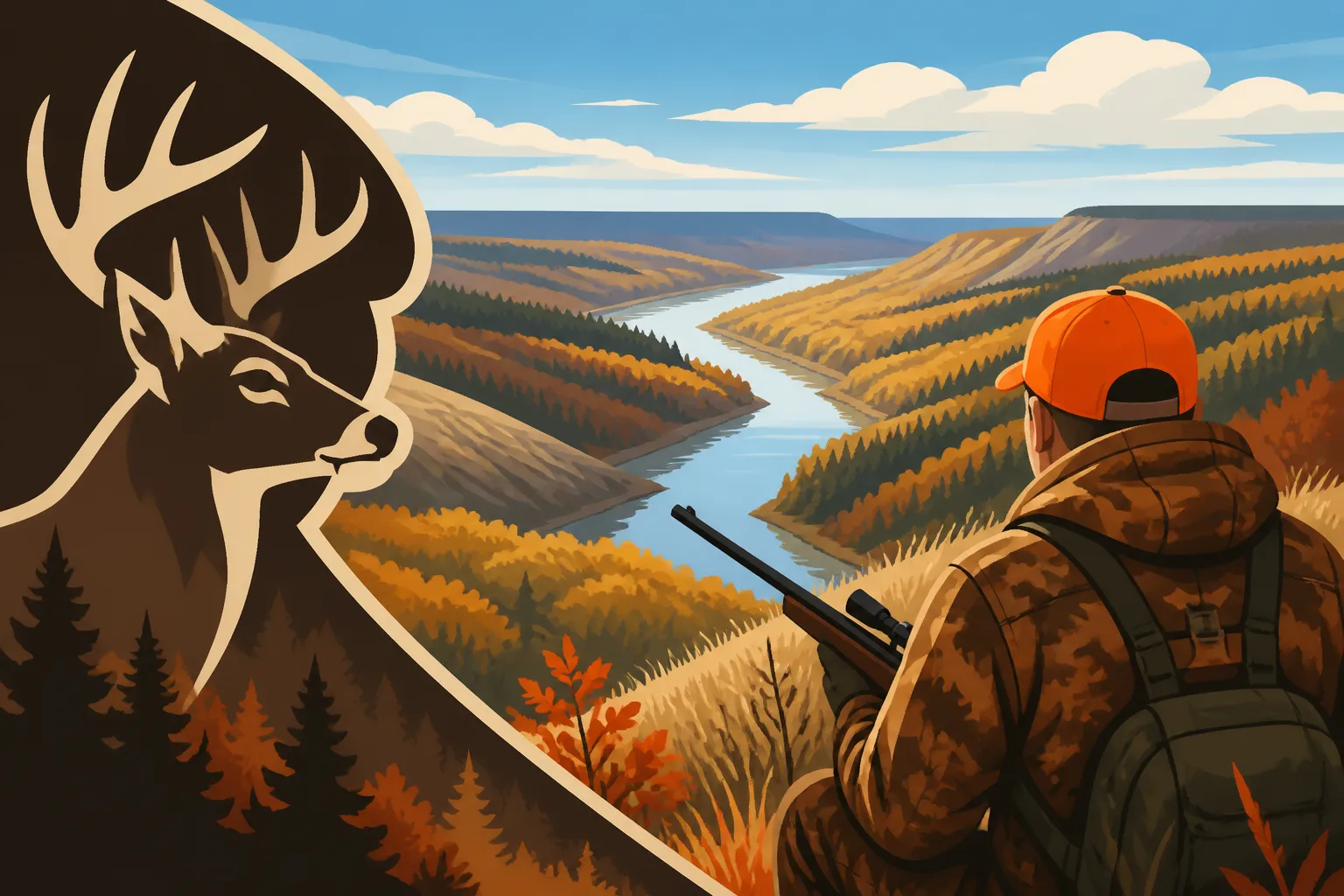
Imagine a vast, relatively flat expanse of prairie or parkland, and then suddenly, the earth drops away into a winding valley carved by a river or creek. These steep, often heavily timbered slopes, cut by ravines, coulees, and small feeder drainages, are what we call river breaks. In Manitoba, you'll find them along major river systems like the Assiniboine, Souris, and Pembina, and even smaller creeks that have etched significant channels into the land. They stand in stark contrast to the surrounding agricultural fields or open bush country, acting as natural highways and sanctuaries for wildlife. The terrain can be incredibly varied, from aspen bluffs to dense willow thickets, thorny scrub, and pockets of spruce or oak. This mix of vegetation, combined with the undulating topography, creates a complex environment that offers everything an animal needs to survive. Hunting a River Valley is a different game entirely than chasing deer in a flat stubble field.
Think of the Pembina Valley, for example. Here, the river has sliced through the land, creating steep, wooded hillsides that can feel almost mountainous compared to the gentle rolls of the prairie nearby. These areas offer extreme changes in elevation over short distances, with sheltered pockets, natural funnels, and diverse flora. This geological feature naturally creates microclimates, where snow might linger longer on north-facing slopes, providing moisture, or melt faster on south-facing slopes, exposing early browse.
Why River Breaks Attract Game
The allure of river breaks for big game is multifaceted. First and foremost, they provide incredible cover. With steep hillsides, dense timber, and countless hidden nooks and crannies, animals can feel secure from predators and human disturbance. This security is often paramount, especially for mature bucks and bulls that prefer to avoid detection. You'll often find Why Bush Country Bucks Live Longer in these types of secure cover.
Beyond cover, river breaks offer a smorgasbord of food sources. The diverse vegetation means a variety of browse is available throughout the seasons. From tender shoots in spring to berries and acorns in fall, these areas can keep animals fed year-round. Water is also readily available, either directly from the river itself or from springs and seeps along the slopes. The varied terrain also creates natural travel corridors. Animals use the benches, ridges, and saddles within the breaks to move efficiently, often traversing between bedding areas high on the slopes and feeding areas in the valley bottom or adjacent agricultural fields. These natural funnels are key to understanding Reading Whitetail Sign in Manitoba Aspen and other game movements. For animals like elk and moose, river breaks can offer critical thermal cover during harsh winters, protecting them from biting winds and heavy snow. The combination of food, water, cover, and travel routes makes river breaks absolute magnets for everything from whitetail deer and elk to black bears and coyotes.
Scouting and Locating Key Areas in River Breaks
Hunting river breaks successfully isn't just about showing up and hoping for the best. It requires meticulous scouting, both from your computer and with boots on the ground, to unravel the secrets these complex landscapes hold.
Leveraging Topographical Maps and Satellite Imagery
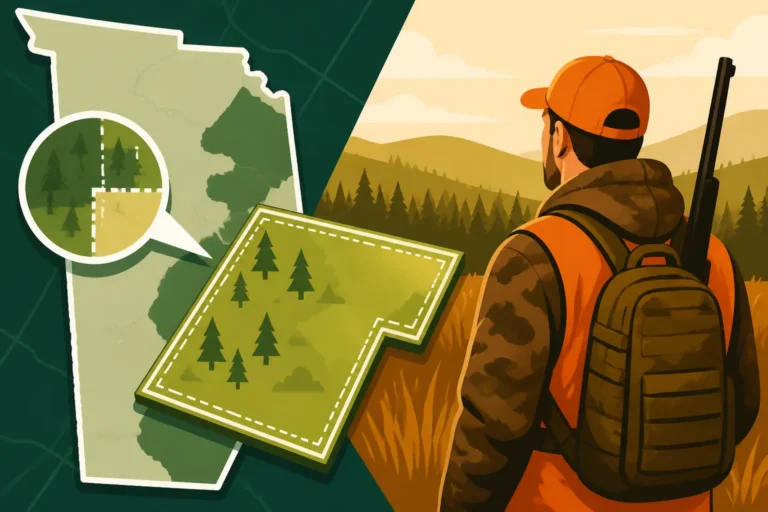
Before you even tie your boots, you need to understand the lay of the land, and that's where modern mapping tools become indispensable. Programs like onX Hunt or GoHunt are game-changers for identifying potential hotspots in river breaks. Start by studying the topographical lines. Look for abrupt changes in elevation, which indicate steepness, and note areas where contour lines widen, suggesting benches or gentler slopes where animals might travel or bed. Identify saddles or narrow ridges that connect higher ground on either side of the valley, as these often serve as natural funnels for game moving through the area.
Satellite imagery, integrated into these apps, allows you to zoom in and distinguish between dense timber, open stands of aspen, willow thickets, and even small clearings or old cutlines. Look for variations in vegetation density, which can indicate different food sources or bedding areas. Pinpoint potential water sources, such as springs or small creeks flowing into the main river. By overlaying property lines (where available, especially with onX Hunt), you can also determine public versus private access, helping you plan your approach without trespassing. Map out potential bedding areas – typically on leeward slopes or dense cover – and feeding areas, like field edges above the breaks or pockets of specific browse within them. Scouting With Satellite Imagery in Manitoba can save you countless hours of unproductive walking.
Reading Sign and Identifying Travel Corridors
Once you've done your digital homework, it's time to hit the field. This is where you confirm your theories and discover the nuances that maps can't show. When you're in a river break, you're looking for fresh sign: tracks, scat, rubs, and scrapes. Pay close attention to trails, especially those that parallel contour lines, climb from the valley floor to the rim, or converge at saddles. These are your animal highways.
Look for bedding areas on sheltered benches or in thick cover, often just below the crest of a ridge where animals can watch their backtrail and the terrain below. Identify rub lines and scrapes, which are clear indicators of buck activity, especially during the rut. In these areas, game often sticks to the path of least resistance. This could be a faint trail along a steep hillside, a flat bench above the river, or a hidden draw that offers both cover and an easier ascent or descent. Reading Sign After a Fresh Snow can be particularly insightful, as fresh tracks will tell you exactly where animals are moving. Also, remember that game will often stage in these breaks before moving out to feed in adjacent fields at dusk or returning to bed at first light. Focus your scouting efforts on these transition zones, looking for fresh droppings and tracks that confirm consistent use.
Hunting Strategies for River Break Terrain
Hunting river breaks demands a different approach than hunting flatland. Understanding how animals use the unique topography and adapting your tactics accordingly will greatly increase your odds of success.
Still-Hunting and Stand Placement
Still-hunting is incredibly effective in river breaks because it allows you to cover ground slowly and methodically, adapting to the terrain as you go. Move at a snail's pace, stopping frequently to glass, listen, and scan for subtle movements or the flick of an ear. Use the natural contours and vegetation to break up your silhouette. Focus on moving along benches, through draws, and across ridges, always keeping the wind in your favor. Pay close attention to transition areas – where dense timber meets more open pockets, or where a steep slope levels out onto a bench. These are prime spots for game to be moving or feeding. When still-hunting, always remember to pause and thoroughly observe your surroundings, as animals here are accustomed to having cover and may be less wary until directly pressured. Hunting a Poplar Bluff at First Light is a classic river break tactic, focusing on where deer might be feeding before heading into dense bedding.
When it comes to stand placement, look for natural funnels and pinch points identified during your scouting. A saddle connecting two ridges, a narrow bench where multiple trails converge, or a crossing point in a small creek within the break are all excellent options. Consider hanging stands overlooking areas with good visibility into dense bedding cover, or along trails leading from bedding to feeding areas. Position your stand so you have multiple shooting lanes but are still well-concealed. Sometimes, a well-placed ground blind can be just as effective, especially if you can tuck it into a thicket or behind a large downed tree. Always consider your entry and exit routes to minimize disturbance, aiming to approach and leave without alerting game.
Utilizing Wind and Thermals
In river break country, understanding wind and thermals isn't just important; it's absolutely critical. The wind, which might be a steady direction above the valley, can swirl and eddy violently down in the breaks due to the irregular topography. On sunny mornings, thermals typically rise, carrying scent uphill. In the evenings, as the air cools, thermals will reverse and fall, carrying scent downhill.
You need to factor this into every move you make. If you're hunting in the morning, approach from below the suspected game area, letting your scent rise above them. In the evening, approach from above, letting your scent fall away from their likely travel paths. The edges of the breaks, where the valley meets the flatter land above, can be particularly tricky, as the surface wind can mix with rising or falling thermals. Always use a wind checker to constantly monitor the air currents. Plan your routes to use the wind and thermals to your advantage, keeping your scent from reaching the animals you're pursuing. This might mean taking a much longer, circuitous route to get to your stand or still-hunting an area from a specific direction. For example, Hunting a Shelterbelt Between Two Fields might seem different, but the principle of wind awareness is universal, especially when deer are transitioning from breaks to open areas.
Gear and Safety Considerations for River Breaks
The rugged and often isolated nature of Manitoba's river breaks demands proper gear and a keen focus on safety. Being prepared can be the difference between a successful hunt and a dangerous situation.
Essential Equipment for Varied Terrain
When heading into river breaks, your footwear is paramount. You'll be navigating steep, uneven ground, often with loose soil, rocks, and downed timber. Sturdy, waterproof boots with excellent ankle support and aggressive tread are non-negotiable. Look for boots designed for mountain hunting or rugged terrain. Layered clothing is also key, as temperatures can fluctuate dramatically between the exposed valley rim and sheltered draws. Start with moisture-wicking base layers, add insulating mid-layers, and top with a waterproof and windproof outer shell. This allows you to adjust your clothing as you exert yourself climbing or sit still in a stand.
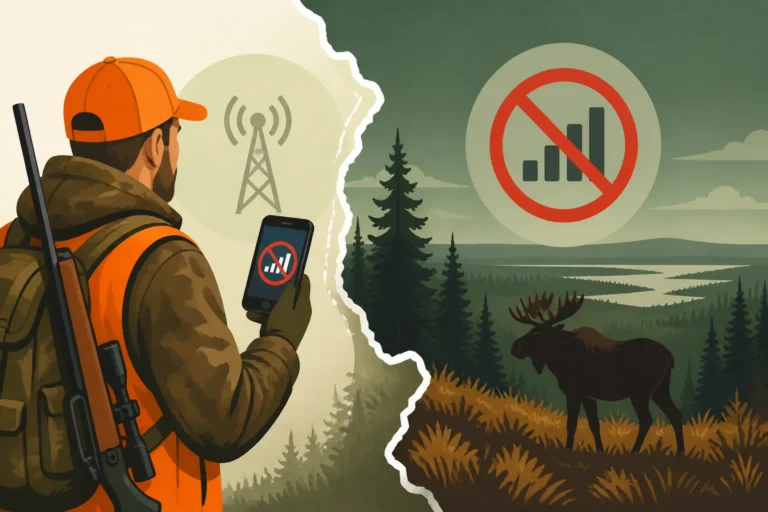
Beyond clothing, a good quality backpack is essential to carry your gear, including extra water, snacks, a first-aid kit, and your harvested game if successful. Navigation tools, like a handheld GPS or a mapping app on your phone (such as onX Hunt with downloaded offline maps), are crucial. Cell service can be spotty or non-existent in many river breaks, so don't rely solely on your phone. A compass and paper map of the area are excellent backups. Remember that Winter Truck Kit for a Manitoba Hunt is crucial if you're out in the colder months, as access roads can quickly become impassable.
Navigating Steep Slopes and Water Crossings
The challenging terrain of river breaks presents unique hazards. Steep slopes can be slippery, especially when wet or covered in frost or loose leaves. Always test your footing and consider using a hiking stick or trekking poles for added stability, particularly when ascending or descending. If you're in an area with small creeks or tributaries, be mindful of water crossings. What looks like a shallow ford might have hidden depths or slick rocks. Always assess the safest crossing point; if unsure, it's better to find another route or turn back.
Safety should always be your top priority. Hunt with a buddy if possible, especially in remote or challenging terrain. Always let someone know your hunting plan, including your intended route and estimated return time. Carry emergency signaling devices, such as a whistle, mirror, or even a satellite communication device like a SPOT or InReach, which can be lifesavers where cell service is absent. In bear country, carry bear spray and know how to use it. Be aware of your surroundings and any potential changes in weather. A sudden downpour can turn a dry creek bed into a raging torrent, or a clear trail into a muddy slide. What to Do If You Get Stuck in the Bush often starts with prevention and preparedness.
| Game Species | Typical River Break Use | Optimal Hunting Times |
|---|---|---|
| White-tailed Deer | Bedding, feeding, travel corridors between fields | Early morning, late evening |
| Elk | Browsing, thermal cover, movement between timber | Early morning, mid-day, evening |
| Black Bear | Foraging, denning, travel routes | Spring (before leaf out), Fall (berry season) |
| Coyote | Hunting small game, travel | Dawn, dusk, calling during day |
| Moose | Browsing, seeking water, dense cover | Early morning, late evening |
Hunting Manitoba's river breaks offers a truly immersive and rewarding experience for those who are prepared for the challenge. By understanding the unique geography, diligent scouting, smart hunting strategies, and prioritizing safety, you can unlock the full potential of these incredible natural areas.
Disclaimer
This article is for general informational purposes only and does not constitute professional advice. Laws, prices and regulations vary by location and change over time. Consult a qualified professional for guidance on your specific situation.