Hunting a Poplar Ridge in Parkland
Navigating Manitoba's vast and varied landscapes for whitetail can feel like a puzzle, especially when you're staring at an aerial map and wondering where to even begin. One particular feature that often gets overlooked, but holds immense potential, is the poplar ridge within the Parkland region. It's easy to dismiss these as just another patch of trees, but for a keen hunter, understanding the nuances of how deer use these elevated strips of cover can unlock some incredible opportunities. This guide is all about peeling back the layers on these hidden gems, showing you exactly why whitetails gravitate to them and how you can effectively hunt them throughout the season.
Understanding Why Poplar Ridges are Whitetail Magnets in Manitoba's Parkland
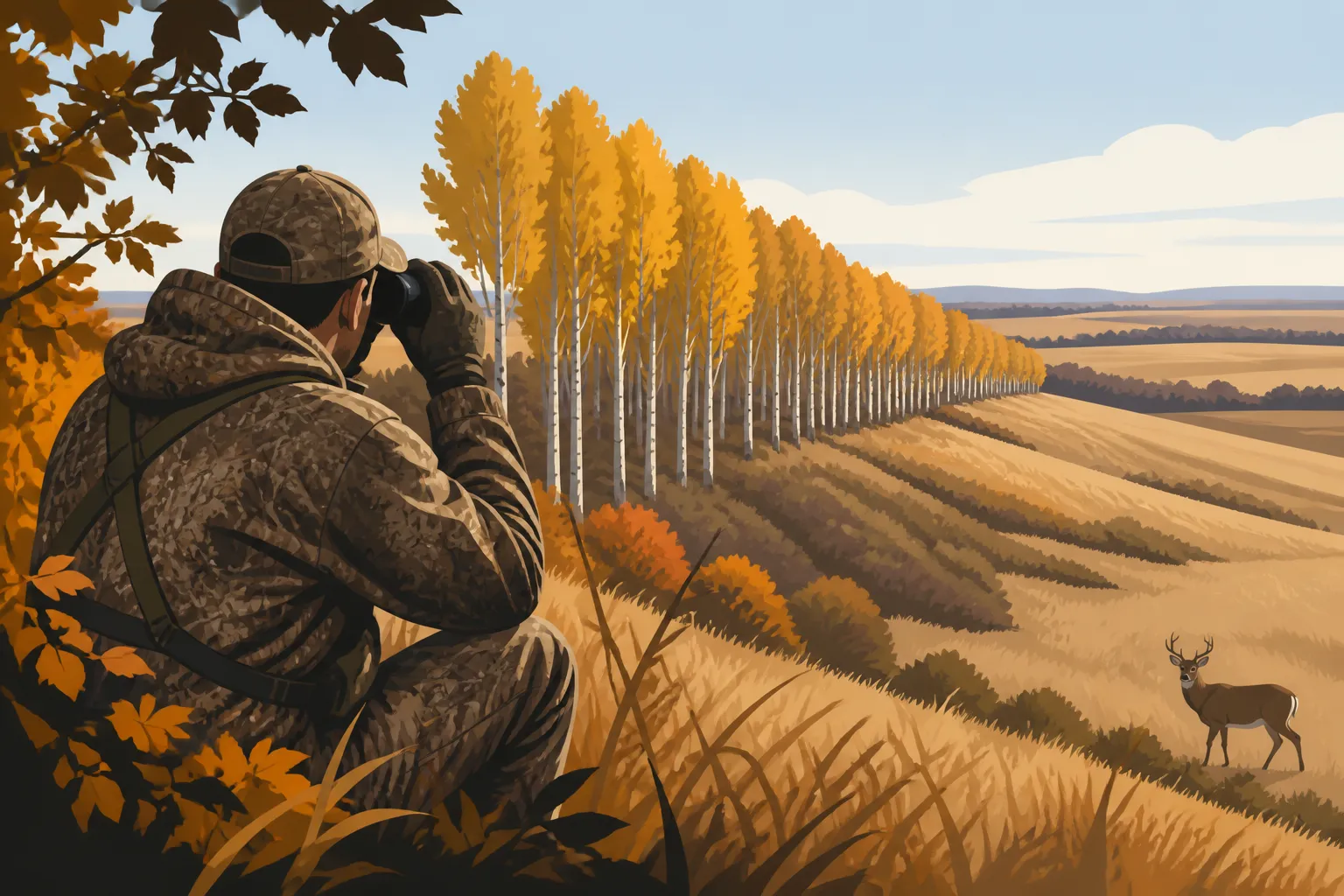
Poplar ridges, often found interspersed within Manitoba's rolling Parkland, are far more than just random stands of trees. They are ecological powerhouses for whitetail deer, offering a critical combination of food, cover, and strategic travel routes that make them irresistible to deer, especially those older, wiser bucks. When you look at an aerial map or even walk through one, you might initially just see trees, but with a hunter's eye, you'll start to recognize the patterns that draw deer in.
The Allure of Habitat: Food, Water, and Cover
Think about what a whitetail needs to survive and thrive: consistent food sources, secure bedding cover, and access to water. Poplar ridges, particularly in the Parkland, often provide all three in close proximity. The poplar trees themselves (often trembling aspen) offer palatable browse, especially the tender new growth or fallen leaves in the late season. Beyond the poplars, these ridges frequently harbor a diverse understory of shrubs, forbs, and grasses that provide additional forage throughout the year. Deer will browse on willow, saskatoon berries, hazelnut, and various ground vegetation, especially during the spring and summer, setting up a pattern of use even before hunting season.
Moreover, these ridges typically rise above the surrounding terrain, offering a slight elevation advantage that deer instinctively seek for security. This elevation allows for better air circulation, which helps keep biting insects at bay during warmer months and provides a bit of a thermal buffer in winter. But the real draw is the thick cover. A dense stand of mature poplars, especially those with good undergrowth, creates an impenetrable visual barrier. Deer can melt into this cover, bed down, and feel safe from predators, including human hunters. If the ridge is long enough, it can serve as a sanctuary, allowing deer to spend entire days within its confines, only venturing out at dawn and dusk.
Ridge Dynamics: Travel Corridors and Bedding Areas
Beyond providing basic necessities, poplar ridges function as superhighways and safe havens for whitetails. Their elevated nature means deer can often move with the wind to their advantage, scenting danger from afar. Deer, being creatures of efficiency, will naturally follow the path of least resistance, and the crests and sides of these ridges often offer just that – a clear travel lane above the surrounding lowlands or open fields. These ridges act as natural funnel points, directing deer movement between disparate food sources, water, and other bedding areas.
Imagine a long, serpentine poplar ridge snaking through a landscape of agricultural fields and smaller bush pockets. Deer bedding in a remote corner of a field might use the ridge as a secure pathway to access a clover field a mile away without exposing themselves in the open. During the rut, these ridges become prime cruising lanes for bucks searching for does. Bucks will travel the length of a ridge, scent-checking for hot does, leaving rubs and scrapes along the way. Reading Whitetail Sign in Manitoba Aspen can tell you a lot about these travel patterns. Does, in turn, often prefer to bed on the leeward side of the ridge, especially on cold, windy days, seeking shelter from the elements while still having an escape route downhill. Understanding these micro-movements within the ridge is crucial for successful stand placement.
Seasonal Significance: How Poplars Change Through the Year
The value of a poplar ridge evolves with the seasons, making it important to adapt your hunting approach. In spring and early summer, the lush growth provides abundant forage and excellent fawning cover. Deer are widely dispersed, but the consistent cover of a ridge still makes it a core area. By late summer, as crops mature and other vegetation dries out, the green browse within a poplar ridge remains a draw. Deer might spend their daylight hours here before moving to fields at night.
Come fall, as the leaves begin to turn golden and eventually drop, the dynamics shift. Early fall offers excellent visibility for still-hunting or spot-and-stalk as the leaves are still mostly on, but provide a bit of noise. However, once the leaves are gone, the cover can thin out considerably, making it harder to stay hidden. This is when the dense understory becomes paramount. The ground beneath the poplars often remains bare or covered in crunchy leaves, making quiet movement a challenge. Yet, the deep timber of the ridge still offers the best security cover when the surrounding agricultural fields are harvested, forcing deer to concentrate in remaining cover. During the rut, as discussed, these ridges become vital highways. Even in deep winter, when snow piles up, the dense canopy of poplars can intercept some snow, providing slightly shallower conditions and easier movement for deer compared to open areas. Where Manitoba Whitetails Bed in Deep Snow is a concept deeply intertwined with these features.
Mastering the Art of Scouting Poplar Ridges
Scouting is the cornerstone of any successful hunt, and poplar ridges demand a specific kind of attention. You can't just walk in blindly and expect to find the sweet spot. It takes pre-season effort, an understanding of deer behavior, and increasingly, leveraging modern technology.
Pre-Season Reconnaissance: Boots on the Ground and Eyes in the Sky
Your scouting journey for a poplar ridge should begin long before you ever set foot on the ground. High-quality satellite imagery is your best friend here. Tools like onX Hunt or GoHunt allow you to zoom in and identify promising ridges, note their size, shape, and connection to other cover and food sources. Look for pinch points, saddles, or areas where the ridge widens into a thicker pocket of timber – these are natural funnels or bedding zones. Pay attention to how the ridge relates to crop fields, water sources, or other pieces of cover. Is there a small slough at one end? Does it border a cornfield? These details inform deer movement. Scouting With Satellite Imagery in Manitoba is an invaluable skill here.
Once you have a few promising ridges identified from above, it's time for boots on the ground. Aim for late summer or early fall, before the hunting pressure starts. Walk the entire length of the ridge, paying close attention to both the top and the sides. Look for major deer trails that crisscross the ridge or run its length. Note where these trails enter and exit, and where they seem most heavily used. Don't just stick to the obvious paths; push through the thickest cover, as this is often where mature bucks will choose to bed. Take mental notes or drop pins on your GPS for every sign you find. I usually carry a small notepad to sketch out patterns, too.
Deciphering Deer Sign: Rubs, Scrapes, and Trails
When you're walking a poplar ridge, you're essentially reading a deer's diary. Every rub, every scrape, every worn trail tells a story. Look for well-defined deer trails that indicate consistent use. A trail that's deeply worn or has multiple tracks pressed into it suggests a primary travel corridor. Pay attention to the size of the tracks – larger, splayed tracks can indicate a heavier deer. On the ridge, you'll often find these trails paralleling the crest, or cutting diagonally up and down the slopes, connecting the top to lower areas.
Rubs are your golden tickets to finding buck activity. Bucks rub their antlers on saplings and small trees, leaving their scent and marking their territory. Fresh rubs, with shiny wood underneath, indicate recent activity. Look for lines of rubs, which can reveal a buck's travel route or indicate a favored staging area. Scrapes, particularly during the pre-rut and rut, are also critical. Bucks paw away leaf litter, urinate in the exposed dirt, and often have an overhanging branch (a "licking branch") they'll rub their forehead and pre-orbital glands on. Finding a fresh scrape line on a poplar ridge means you're in a high-traffic area for bucks looking for does. Reading Whitetail Sign in Manitoba Aspen delves deeper into these nuances. Don't forget to look for bedding areas, too – flattened spots in the dense cover, often with droppings nearby, indicating where deer have rested.
Leveraging Technology for Ridge Analysis
Modern technology has revolutionized how we scout and hunt, and poplar ridges are no exception. Beyond just satellite imagery, apps like onX Hunt allow you to mark waypoints for rubs, scrapes, and trails directly on your phone, building a comprehensive map of deer activity over time. You can even track your own movement, ensuring you're covering every inch of the ridge. This creates a historical record of deer sign, helping you predict future movements.
Another invaluable tool for analyzing ridge dynamics is a mapping application that offers topographical features. This allows you to visualize the subtle elevation changes of the ridge – the small dips and rises, the benches along the sides, and any saddles that might exist. Deer often use these minor terrain features as micro-funnels or preferred bedding spots. Understanding these contours can help you identify perfect ambush points. While GoHunt focuses more on western big game, the principles of using detailed maps to dissect terrain translate perfectly to Manitoba whitetails, especially when looking at the more subtle undulations of a poplar ridge. You can use these tools to identify wind corridors and predict how scent will travel, which is critical for stand placement.
| Scouting Aspect | Description | Why it's Important |
|---|---|---|
| Aerial Recon | Using satellite maps (e.g., onX Hunt) to identify ridge shape, size, and surrounding habitat. | Identifies prime locations, pinch points, and how deer might enter/exit the ridge. |
| Boots on Ground | Physically walking the ridge in pre-season, observing terrain and vegetation. | Confirms aerial observations, reveals hidden trails, and helps understand actual ground conditions. |
| Trail Identification | Locating well-worn paths deer use for travel, often along crests or connecting habitat features. | Indicates primary travel routes and areas of consistent deer movement. |
| Rubs & Scrapes | Finding fresh antler rubs on trees and pawed-out ground scrapes with licking branches. | Direct evidence of buck presence and activity, especially during pre-rut and rut. |
| Bedding Areas | Locating flattened spots in dense cover with droppings, indicating deer resting sites. | Pinpoints where deer spend daylight hours, crucial for understanding daytime movement. |
| Wind & Thermals | Observing how air currents move over and around the ridge at different times of day. | Essential for stand placement, ensuring your scent doesn't blow into deer travel/bedding areas. |
Effective Hunting Strategies for Poplar Ridge Whitetails
Once you've done your homework and understand how deer are using a particular poplar ridge, it's time to put a plan into action. Hunting these areas effectively requires a combination of strategic stand placement, careful still-hunting, and knowing when and how to use calls.
Stand Placement: Maximizing Your Vantage Point and Concealment
When it comes to poplar ridges, your stand placement is everything. First, consider the wind. This is non-negotiable. You want to set up so your scent blows away from known travel routes and bedding areas. Since ridges often create their own micro-thermals, especially in the mornings and evenings, pay close attention to how the wind swirls. I always carry a small bottle of scent checker powder to confirm current wind direction at my stand.
Identify key funnels or pinch points on the ridge. These could be narrow sections of the ridge, saddles where it dips, or areas where dense cover forces deer into a more confined path. Look for intersecting trails. A good stand location might be where a trail running along the ridge crest intersects with a trail coming up from a field edge. Place your stand slightly off the main trail, allowing for a broadside shot at a deer traveling along it. Tree choice is vital; pick a tree that offers good cover from all angles, breaking up your outline. Often, a clump of three or four smaller poplars can offer better concealment than a single large one. Consider both morning and evening setups. Morning stands should be closer to bedding areas, catching deer returning from fields. Evening stands should be closer to food sources, intercepting deer leaving their beds. For detailed advice, check out Hanging a Stand on a Manitoba Bush Edge.
Still Hunting and Stalking the Ridge
Poplar ridges are also fantastic for still hunting or carefully stalking, especially during mid-day when deer might be bedded down. This method is all about slow, deliberate movement, using the terrain and cover to your advantage. The key is to move incredibly slowly, pausing every few steps to scan ahead, behind, and to the sides. Use binoculars to pick apart the shadows and look for horizontal lines or patches of color that don't quite fit the natural environment – an ear flick, a leg, or a patch of hide.
The biggest challenge with still hunting in poplars is the noise. Fallen poplar leaves can be incredibly crunchy. To mitigate this, try to walk on softer ground when possible, perhaps along game trails or in areas with more grass. Hunt into the wind, or with a quartering wind, always thinking about where your scent is going. If the wind is swirling or unpredictable, it's often better to save still-hunting for another day. Pay particular attention to the leeward sides of the ridge on windy days, as deer will often seek shelter there. Move from high ground to low ground, or vice versa, always using the contours of the land for concealment. This active hunting style can be incredibly rewarding, allowing you to cover ground and discover new sign you might have missed from a stationary stand.
Using Calls and Rattling in Poplar Ridge Terrain
During the rut, calls and rattling can be incredibly effective on a poplar ridge, drawing curious bucks right into your shooting lane. The relatively dense cover of a poplar ridge can make these sounds seem more natural and contained, preventing them from traveling too far and spooking deer in distant open areas.
Grunt Calls: A simple grunt call can mimic a buck trailing a doe or a buck looking for companionship. Use short, soft grunts initially. If there's no response, you can gradually increase the volume and aggression. I often like to give a few grunts and then remain silent for 15-20 minutes, intently watching for movement. Grunt Calls Late in Manitoba's Rut can be particularly effective when bucks are already on the move.
Rattling Antlers: Rattling simulates two bucks fighting, a powerful attractant during the pre-rut and rut. The sound carries well through the timber, and a big buck often won't tolerate another challenging his territory. When rattling, consider the density of the cover. In thick poplars, you might not need to rattle as aggressively as you would in open country. Start with a softer sparring session, escalating to a full-blown fight if you feel the situation warrants it. Always have your bow or rifle ready immediately after rattling, as bucks can charge in quickly and silently. Remember, Rattling Volume in Open Parkland will differ from rattling in a dense poplar stand, so adjust your technique. Combine rattling with some grunts or even doe bleats to make the scenario more realistic.
Timing Your Hunt: When to Be on a Poplar Ridge
The success of hunting a poplar ridge, like any other whitetail habitat, hinges significantly on timing. Understanding deer behavior throughout the season, and how it's influenced by the rut, weather, and the daily clock, will dramatically increase your odds.
Rut Activity and Peak Movement
Poplar ridges become absolute hotspots during the whitetail rut. Bucks are on the move, relentlessly searching for does, and these ridges provide ideal travel corridors, security cover, and staging areas. From late October through mid-November, these ridges can be magical. Bucks will cruise the length of a ridge, scent-checking for hot does, often leaving a fresh trail of rubs and scrapes in their wake. Does, too, will seek the relative safety of the ridge to escape persistent bucks or to spend time with a breeding buck.
Focus your rut hunting efforts on days with good weather, especially cooler temperatures following a warm spell. The peak of the rut in Manitoba typically falls in early to mid-November, making this a prime time to be on a poplar ridge. Hunting the Rut in Early to Mid November is a crucial period. Bucks will travel more during daylight hours, making mid-day hunts just as productive, if not more so, than dawn and dusk. Consider setting up a stand overlooking a natural pinch point, or in an area with a high concentration of fresh rubs and scrapes. You're not just waiting for deer to move through the ridge, but also for bucks to actively seek does within it.
Weather's Influence: Cold Fronts and Snow
Weather plays a massive role in deer movement, and understanding its impact on poplar ridge whitetails can give you a significant advantage. Cold fronts, particularly in the fall, often trigger increased deer activity. A sudden drop in temperature, especially after a warm spell, gets deer on their feet to feed and move. The day after a cold front passes, with stable, cooler temperatures and often high pressure, can be one of the best times to hunt.
Snow can also be your ally. A fresh snowfall not only quiets the woods, making silent movement easier for still-hunting, but it also reveals fresh tracks, giving you immediate insight into deer movement patterns. Deep snow, however, can concentrate deer onto higher ground like ridges, as it's easier to navigate. Conversely, during a heavy snowstorm, deer often hunker down in the densest cover, waiting it out. A light, fresh snow early in the season can be ideal, allowing you to track deer moving through the poplars. For guidance on enduring the elements, look into Hunting Safely in Deep Winter Cold.
The Daily Grind: Dawn, Dusk, and Mid-Day Holds
While dawn and dusk are often considered prime hunting times, a poplar ridge can be productive throughout the entire day, especially during the rut.
-
Dawn: As light breaks, deer will be filtering back into the security of the ridge after a night of feeding in nearby fields. Position yourself on the field edge side of the ridge, or along major ingress trails. This is a great time to catch a buck chasing a doe or returning to his bedding area.
-
Mid-Day: Don't overlook mid-day. During the rut, bucks are often on their feet, cruising for does. They might also be moving between different bedding areas or simply getting up for a stretch and a browse. This is an excellent time for still-hunting the ridge, or for sitting a stand deep within the cover, especially if you've found a hot scrape or rub line. Deer feel secure in the middle of a dense poplar ridge during daylight hours, making it a great place to encounter them when other hunters have retreated for lunch. Sitting All Day in a Manitoba Blind is a strategy that pays off in these situations.
-
Dusk: As evening approaches, deer will begin to move out of their beds on the ridge towards nearby food sources. Position yourself on the downwind side of the ridge, overlooking trails leading out to fields or other feeding areas. This is your chance to catch deer transitioning from cover to feed. Pay close attention to subtle shifts in movement as daylight fades.
Remember, flexibility is key. Observe, adapt, and don't be afraid to try different approaches on these often-underestimated poplar ridges. They truly hold incredible potential for consistent whitetail action in Manitoba's Parkland.
Disclaimer
This article is for general informational purposes only and does not constitute professional advice. Laws, prices and regulations vary by location and change over time. Consult a qualified professional for guidance on your specific situation.