Hunting a Burned-Over Boreal Block
Stepping into a landscape transformed by wildfire can feel utterly alien, even for seasoned Manitoba hunters. The familiar cover is gone, the woods laid bare, and it's easy to assume the game has simply vanished. But that couldn't be further from the truth. This guide will help you understand how boreal burn blocks actually create unique opportunities and teach you the strategies to successfully hunt them.
The Ecological Story of a Boreal Burn Block
When a wildfire tears through the boreal forest, it's not just destruction; it's a dramatic reset, a powerful ecological event that kicks off a new cycle of life. For hunters, understanding this cycle is paramount to finding success in these unique environments. It's not about what was there, but what is emerging and how game animals react to these shifts.
The Immediate Aftermath: What Happens Right After a Fire?
In the immediate wake of a wildfire, say within the first year or two, the landscape is often a stark scene of charred trees, exposed ground, and a thick layer of ash. You might think, "Nothing could live here!" and it’s true that many smaller animals and insects might be displaced or perish. But larger game, especially those with nomadic tendencies like moose and caribou, often move through these areas surprisingly quickly, drawn by very specific, albeit temporary, conditions.
First off, the fire consumes the dense underbrush and old, stagnant growth that previously offered little in terms of new forage. This opens up the canopy, allowing sunlight to absolutely drench the forest floor. This exposure, combined with the nutrient-rich ash from the burned vegetation, creates a fertile seedbed. Within months, or even weeks depending on rainfall, pioneer plant species begin to emerge. Think fireweed, various grasses, and early successional shrubs. While not yet a browse smorgasbord, these initial sprouts are highly palatable and packed with nutrients, acting like an early, albeit sparse, salad bar. The immediate openness also means better visibility for predators and prey alike, which changes how animals move and feed. You might find animals moving through faster, or cautiously browsing new growth at the edges.
Recovery Over Time: How the Ecosystem Changes
The true magic of a burn block for hunters often begins a few years post-fire. By years three to five, the recovery is in full swing. The pioneering plants have taken hold, and the nutrient flush from the ash has supercharged their growth. You'll see a dense carpet of new growth: young aspen, willow, birch, and a plethora of forbs and shrubs. This isn't just a few sprouts; it's often a thick, vibrant explosion of food.
This rich, new buffet is incredibly attractive to ungulates. Moose, with their preference for browse like willow and aspen, absolutely thrive in these conditions. Whitetail deer, while perhaps not as abundant in the deep boreal, will also be drawn to the burgeoning forage. Elk, if present in the transition zones of the boreal, also benefit immensely. The cover, while different from mature timber, becomes excellent bedding and security cover as it grows dense, offering both food and refuge in close proximity. The structure also changes; the standing dead timber, or "snags," provide perching and nesting sites for birds, and the open areas create pathways for travel.
For predators like wolves and bears, the increase in prey animals makes these areas highly desirable. Black bears will move into burns to forage on berries, which often fruit profusely in the sunlight-drenched clearings a few years after a fire. This transition from destruction to rejuvenation is crucial to grasp. A five-year-old burn looks vastly different from a five-month-old burn, and your hunting strategy needs to adapt accordingly.
Why Burned Blocks Attract Game: The Ecological Advantage
The bottom line is that fire creates a habitat mosaic that offers unparalleled advantages for certain game animals.
- Abundant Forage: This is the biggest draw. The new growth of aspen, willow, and various shrubs provides a high-quality, easily accessible food source. For species like moose, which require vast amounts of browse, a recovering burn block is a goldmine.
- Improved Visibility (for hunters AND game): While dense new growth eventually limits visibility, in the earlier stages (years 1-3), the openness allows game to see potential threats from a distance, but also allows hunters to glass vast areas. Even with more mature regrowth, the structure is often more open than a dense, mature forest, creating shooting lanes.
- Edge Habitat: The transition zones where the burn meets unburned timber create fantastic edge habitat. Animals will often bed in the unburned timber and move into the burn to feed, or vice-versa. These edges are natural travel corridors and congregation points.
- Shelter and Escape Cover: While initial burns offer little shelter, the rapid regrowth quickly establishes dense cover that provides security from predators and harsh weather, particularly as snow depths increase. The standing snags can also offer small pockets of thermal cover by blocking wind.
Thinking about the long game of habitat, a burn is often better for game animals in the long run than a clear-cut. A clear-cut removes all timber, often compacting soil, and can be slower to regenerate specific browse species compared to a fire that leaves behind nutrient-rich ash.
Scouting and Strategy in a Burned Boreal Block
Hunting a burned-over boreal block isn't like walking through familiar woods; it demands a fresh perspective and tailored strategies. The terrain itself has changed, and so too have the habits of the game animals calling it home. It’s an exciting challenge that, with the right approach, can be incredibly rewarding.
Interpreting Burn Intensity and Pattern
Not all fires are created equal, and understanding the intensity and pattern of a burn is your first step. A wildfire often burns unevenly, creating a patchwork quilt of severely scorched areas, lightly singed zones, and even unburned pockets or islands of timber.
- Hot Burns: Areas that burned intensely, consuming most of the organic matter and leaving behind primarily ash and charred ground, will be slower to regenerate. These might be less productive in the immediate years post-fire but can become great berry patches later on. Moose and deer might shy away from these desolate spots initially but will move through them to access food or cover.
- Cooler Burns: Areas where the fire moved quickly, perhaps only burning the understory or leaving significant portions of the canopy intact, will recover faster. These "cooler" burns, often identifiable by still-standing, although dead, trees that retain some bark, will offer new growth much sooner. Look for these transition zones where the canopy is still somewhat present but the understory is regenerating rapidly.
- Unburned Pockets: These are goldmines. Islands of green timber within a sea of black are critical for game. Animals will use these as immediate shelter, bedding areas, and staging points before moving into the regenerating burn to feed. They are natural funnels and sanctuaries. When you're Scouting a Manitoba Game Hunting Area, always pay close attention to these untouched patches within the burn.
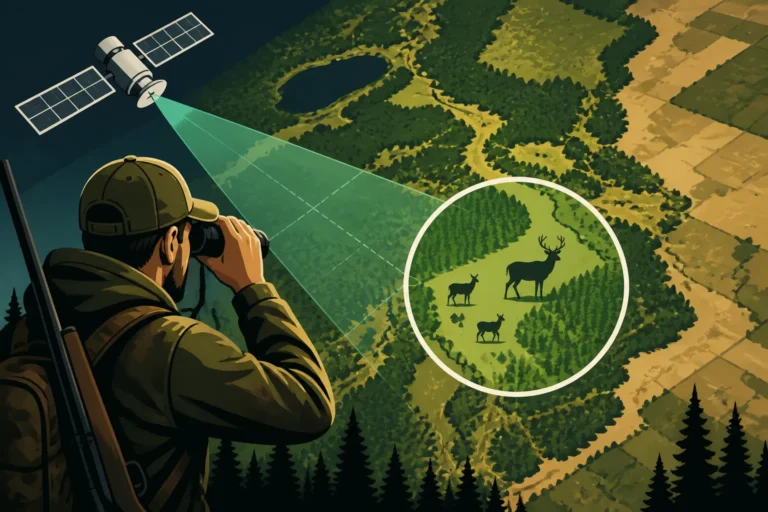
Use satellite imagery and topographical maps, perhaps through a platform like GoHunt, to identify these patterns before you even set foot in the woods. Look for variations in tree cover and burn scar intensity. This virtual reconnaissance will save you countless hours of walking through unproductive areas.
Identifying Key Habitat Features in a Burn
Once you understand the burn pattern, you need to hone in on the specific features that game animals will utilize.
- Drainages and Low-Lying Areas: Even in a burn, water is life. Creek bottoms, low-lying areas, and areas near beaver ponds often retain more moisture and consequently recover faster, leading to lusher vegetation. These are natural travel corridors and feeding hotspots. Animals need water daily, and these areas often have better forage. Don't overlook the potential of Hunting Moose Around Manitoba Beaver Ponds.
- Ridge Lines and Elevated Terrain: These spots can offer better visibility for game, especially during the early stages of regrowth. In mature burns, ridges might be wind-swept in winter, providing less snow and easier travel. They also serve as natural travel routes.
- Edges and Transition Zones: The boundary where the burn meets unburned forest, marshes, or agricultural land is critical. Animals will move along these edges, using the cover of the unburned area for security while dipping into the burn for food. These are high-traffic areas.
- Old Roads and Cutlines: These often survive fires and can become natural trails for animals. They offer easier travel, and often new growth sprouts along their edges. When you're Hunting an Old Logging Road in the North, remember that a burn might have made it even more productive.
- Heavy Browse Concentrations: Look for areas where aspen, willow, and other deciduous species are regenerating vigorously. These are the prime feeding grounds. You'll see evidence of heavy browsing – nipped twigs, scraped bark, and fresh tracks.
Planning Your Approach and Access
Access in a burned block can be tricky. Old logging roads might be choked with downed trees, and familiar trails might be completely obliterated.
- Vehicle Access: Be prepared for difficult travel. Roads might be overgrown or blocked by fallen timber. A sturdy truck, ATV, or side-by-side might be essential, but always check regulations for Quad and Side-by-Side Rules on Crown Land. Sometimes, you might need to park further out and walk in.
- Foot Travel: The ground can be uneven, littered with hidden holes from burned-out root systems, and covered in brittle, charred snags. Good quality, ankle-supporting boots are non-negotiable. Travel will be slower and more physically demanding.
- Navigation: Familiar landmarks are often gone. A reliable GPS (like what you might use with GoHunt) with satellite imagery is crucial. Mark your entry and exit points, and any significant features you find. Don't rely solely on memory. Getting turned around in a featureless burn is easier than you think. This is especially true when you're Hunting Safely in Deep Winter Cold, where snow can further obscure the landscape.
- Wind and Scent: Wind direction is always important in hunting, but in an open burn, your scent can carry further. Plan your approach carefully to keep the wind in your favour.
Hunting Techniques for Burned-Over Boreal Blocks
Hunting a burned-over boreal block in Manitoba requires a blend of traditional skills and an adaptation to this unique environment. The open nature of some burns, combined with dense new growth in others, presents a dynamic challenge.
Still-Hunting and Glassing Tactics
In many areas of a burn, especially in the earlier stages or within less intensely burned zones, the visibility can be surprisingly good. This makes still-hunting and glassing incredibly effective.
- Slow and Steady Still-Hunting: Move agonizingly slowly, taking a few steps then stopping to scan with your binoculars. The charred landscape can make animals look like shadows or stumps, so scrutinize every dark patch, every broken branch. Animals often stand perfectly still, relying on the broken patterns of the burn for camouflage. Focus on areas of dense regrowth where game might be feeding, or along the edges of unburned timber. This isn't a race; it's a patient, methodical search.
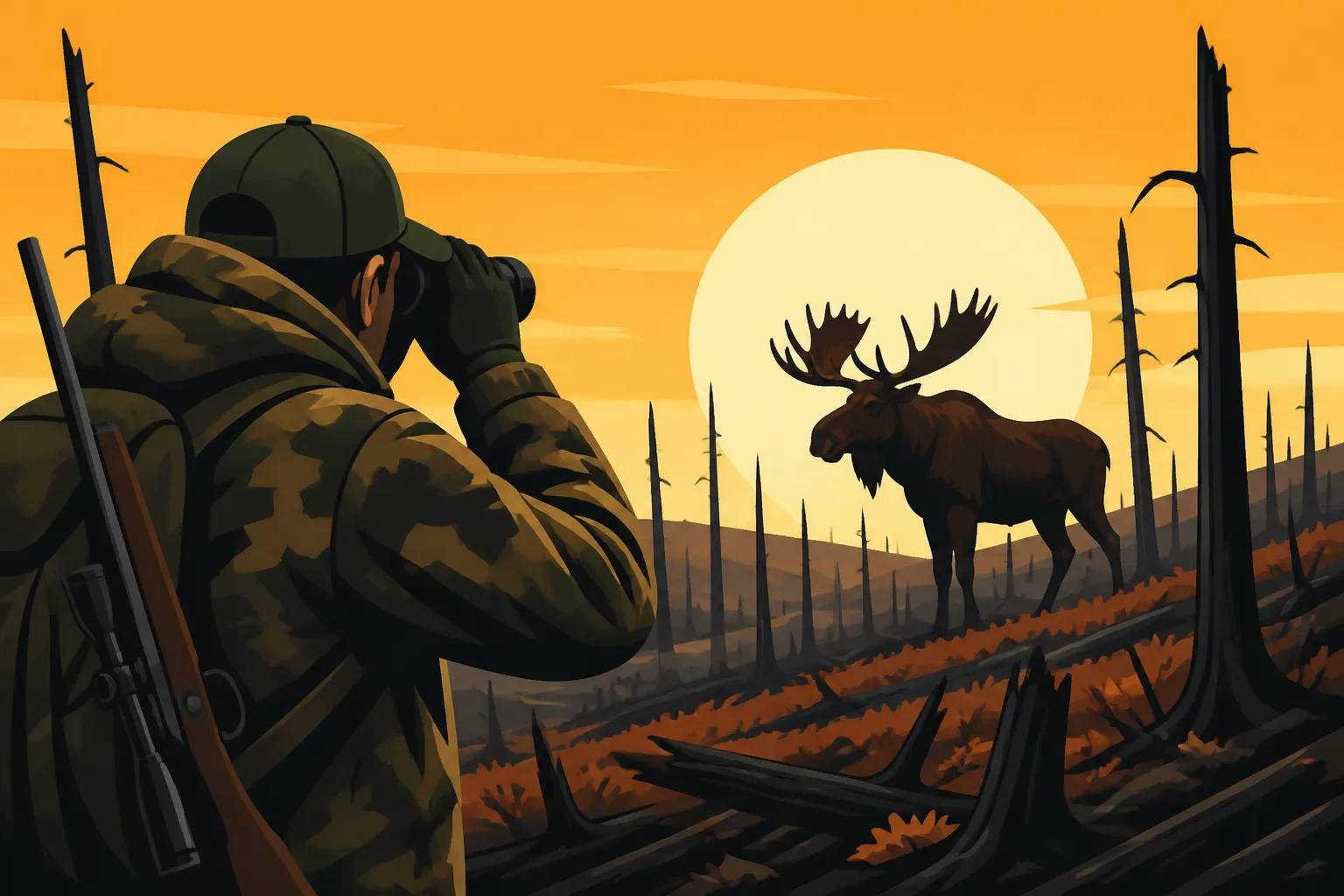
- Elevated Glassing Positions: Seek out any high ground – a small knoll, a rock outcrop, or even the top of a large, stable log pile (if safe). From these vantage points, you can use your binoculars or spotting scope to pick apart vast expanses of the burn. Focus on areas where new growth is lush, or along natural travel corridors. This is a prime tactic for Glassing a Burn for Northern Moose, as their dark bodies can stand out against the grey and black. Spend long periods behind the glass, letting your eyes adjust and pick out subtle movements or shapes.
- Patience is Key: Animals in a burn often move cautiously. They might browse for a bit, then stand still for extended periods, listening and observing. Your patience in scanning will often be rewarded.
- Utilize GoHunt Mapping: Before you even hit the field, use the satellite imagery on GoHunt to identify potential glassing knolls or benches, as well as dense pockets of regeneration where animals might be feeding or bedding. Mark these waypoints on your device so you can navigate directly to them.
Calling and Stand Hunting Strategies
Despite the openness, calling and stand hunting can also be highly effective, especially when targeting rutting animals or if you’ve identified high-traffic areas.
- Calling for Moose and Deer:
- Moose Calling: The vast, open nature of a burn, particularly one with good visibility, can be ideal for calling moose. Their calls carry far, and an old burn can echo with the sounds. Use cow calls, bull grunts, and even rake a tree to simulate another bull. Set up downwind of likely travel corridors or feeding areas. Be prepared for a bull to approach from unexpected angles due to the varied cover. Read up on Calling a Bull Moose in the Rut.
- Deer Calling: For whitetails, especially during the rut (check out Hunting the Rut in Early to Mid November), rattling and grunting can draw them in. The broken cover can allow you to see deer approaching from a distance, giving you time to prepare. Use intermittent calls, then remain silent and observant.
- Stand Hunting in Burned Areas:
- Strategic Placement: Focus on edges where the burn meets unburned timber, active game trails, or near particularly lush pockets of regeneration. Place your stand or ground blind in a way that allows you to cover these key areas.
- Natural Cover: Use standing snags, piles of downed logs, or thick new growth to break up your silhouette. A ground blind can be incredibly effective if carefully brushed in.
- Wind Consideration: Always set up with the wind in your favor. In an open burn, your scent can carry a long way, so pay extra attention to thermals in the mornings and evenings.
- Scouting for Sign: Look for fresh tracks, droppings, rubs (especially for deer and moose during the rut), and heavily browsed vegetation. These signs will tell you where animals are active and where to focus your calling or stand-hunting efforts. You might find more concentrated sign along the edges of a Boreal Muskeg Edge, where the fire may have stopped.
Dealing with Unique Challenges: Ash, Snags, and Visibility
Hunting in a burn isn't without its difficulties, and being prepared for these specific challenges is critical.
- Ash and Soot: Especially in fresh burns, ash can be everywhere. It gets into everything, stains your clothes, and can make tracking difficult. If it's windy, it can obscure visibility. Wearing dark clothing can help conceal soot stains.
- Snags and Falling Timber: Standing dead trees (snags) are inherently unstable. Avoid lingering under them, especially on windy days. Be mindful of falling timber – it’s a constant hazard. Even more challenging, many burned trees will fall over time, creating a maze of obstacles. This makes travel slow and laborious.
- Reduced Visibility (in dense regrowth): Paradoxically, while early burns offer good visibility, after 3-5 years, the rapid and dense regrowth can create an impenetrable thicket. This can make spotting game difficult, turning the hunt into more of a close-quarters affair. Focus on natural openings, old trails, or creek beds where visibility is slightly better.
- Navigation: With familiar landmarks gone, getting lost is a real concern. Always carry a reliable GPS and a compass. Mark your truck, camp, and any crucial waypoints. Tell someone where you are going and when you expect to return.
- Broken Ground: The ground can be treacherous due to burned-out root systems creating hidden holes and uneven footing. Watch every step to avoid falls and ankle injuries.
| Feature Type | Description | Hunting Strategy (Years 1-2 Post-Fire) | Hunting Strategy (Years 3-5+ Post-Fire) | Primary Game Attracted |
|---|---|---|---|---|
| Hot Burn Areas | Severely scorched, minimal initial regrowth, open. | Still-hunt edges, look for travel corridors. | Look for berry patches, new sapling growth. | Moose (travel), Black Bear (late season berries), Whitetail (travel) |
| Cool Burn Areas | Understory burned, some canopy intact, faster regrowth. | Glass for browsing animals, still-hunt. | Prime for feeding & bedding, calling. | Moose, Whitetail Deer, Elk, Black Bear |
| Unburned Pockets | Islands of green timber within the burn, intact cover. | Focus on edges, primary bedding/security cover. | Crucial bedding areas, ambush points. | Moose, Whitetail Deer, Elk, Black Bear, Wolves |
| Drainage/Lowlands | Moist areas, lush early growth, natural travel routes. | High traffic areas, feed and water sources. | Concentrated forage, calling setups. | Moose, Whitetail Deer, Elk |
| Ridge Lines | Elevated, wind-swept, easier travel, good visibility. | Glassing vantage points, travel corridors. | Travel routes, some feeding on new growth. | Moose, Whitetail Deer, Elk |
| Old Roads/Cutlines | Maintained pathways, edge growth, easy travel for animals. | Still-hunt, ambush points, access routes. | Ideal for stand hunting or still-hunting. | Moose, Whitetail Deer, Elk, Black Bear, Wolves |
Gear and Safety Considerations for Burned Terrain
Hunting a burned boreal block is a unique experience, and your gear and safety protocols need to reflect that. It’s not just about staying warm; it’s about navigating a challenging, transformed environment.
Essential Gear for Navigating a Burn
Your gear choices can significantly impact your comfort, safety, and success in a burned landscape. Don’t skimp on these essentials.
- Robust Footwear: This is perhaps the most critical item. You'll be walking over uneven ground, jagged charred wood, and hidden root holes. Invest in high-quality, waterproof hunting boots with excellent ankle support. Think sturdy soles and tough uppers. Regular hiking boots might not cut it.
- Durable Clothing: Your clothes will get dirty, potentially torn, and covered in soot. Opt for durable, dark-coloured outer layers that can withstand snags and abrasions. Avoid bright colours unless mandated for safety (like blaze orange). Layering is still key for temperature regulation, especially in Manitoba’s variable weather. Consider a reliable brand that focuses on durability.
- Navigation Tools: As mentioned, a reliable GPS with topographical maps and satellite imagery is non-negotiable. Many hunters swear by apps like GoHunt for their detailed mapping capabilities, allowing you to mark waypoints, measure distances, and track your movement. Always carry a physical compass and a paper map as a backup, and know how to use them. Cell service is unreliable in the deeper bush; this is especially true in areas like Manitoba's Northern Boreal.
- Optics: Good binoculars (10×42 or 10×50) are essential for glassing vast open sections of the burn and picking out game animals against the often-monochromatic backdrop. A spotting scope can be an advantage if you plan on extensive long-range glassing from elevated positions.
- First-Aid Kit: A comprehensive first-aid kit is crucial. Minor cuts, scrapes, and twisted ankles are more likely in this terrain. Include bandages, antiseptic wipes, pain relievers, blister treatment, and any personal medications.
- Cutting Tools: A good quality knife is always essential, but consider carrying a small folding saw or hatchet. You might need to clear small obstructions on trails or process game in challenging terrain.
- Water and Food: Hydration is key, especially if you're putting in significant mileage. Carry more water than you think you’ll need, and high-energy snacks.
- Headlamp/Flashlight: For early morning starts or late evening finishes, navigating a burn in the dark is extremely hazardous without proper illumination.
Safety First: Snags, Visibility, and Navigation
Safety takes on an even greater importance when hunting in burned-over areas. The environment itself presents unique hazards that demand constant vigilance.
- Awareness of Falling Hazards: The most significant danger in a burn block is standing dead timber. These "snags" can fall without warning, especially on windy days or after significant rainfall. Avoid setting up camp or spending extended periods directly under them. Constantly scan your surroundings, not just for game, but for unstable trees.
- Ground Hazards: The ground is often a minefield of burned-out root systems, creating hidden holes that can easily lead to a twisted ankle or worse. Charred logs can be surprisingly slick or unstable. Step carefully and deliberately.
- Increased Visibility of Hunters: While the burn helps you see game, it also makes you more visible to other hunters. Always adhere to blaze orange requirements, and consider wearing even more than the minimum, especially if other hunters are likely to be in the area.
- Fire Safety: Even after a fire has passed, hot spots or smoldering roots can persist for weeks or months. Be extremely careful with any open flames, smoking materials, or ATVs that can spark. A small shovel and water bottle are good to have if you're venturing deep.
- Navigation is Paramount: We can't stress this enough. Lost hunters are a serious concern in featureless burn blocks. Always know your location, mark your truck or camp, and communicate your plans. Consider a satellite communication device like an InReach or Spot device, particularly if you're in an area with no cell service, which is common in Manitoba’s more remote areas. Knowing how to get out of a tough situation, and having Emergency Plans in Manitoba's Bush, is critical.
- Buddy System: Whenever possible, hunt with a partner or at least let someone know your exact hunting location and expected return time. If something goes wrong, a quick response is vital.
Hunting a burned-over boreal block is an adventure in itself. It’s a testament to nature’s resilience and a unique opportunity for hunters willing to adapt. By understanding the ecosystem, planning meticulously, and prioritizing safety, you can unlock the incredible potential these revitalized landscapes offer.
Disclaimer
The information provided in this guide is for general informational purposes only. Hunting regulations, seasons, and access can change. Always consult the official Manitoba Hunter's Guide and relevant government websites for the most current and accurate information before planning any hunt. Safe hunting practices and adherence to all laws are your responsibility.