Why Deer Move Into Standing Crop
It's a familiar scene across Manitoba's farmland fringes: you're driving along a grid road, scanning the treelines and field edges, and you just know there are deer somewhere. But often, those elusive whitetails seem to vanish into thin air, particularly when the fields are still full of standing crops. It can be incredibly frustrating trying to figure out where they've gone and why they choose those impenetrable walls of vegetation. This guide will peel back the mystery, explaining precisely why deer gravitate towards standing crops and what it means for hunters like us.
The Irresistible Buffet: Nutritional Draw of Standing Crops
Let's be honest, if you walked past a five-star restaurant that was free and offered everything you loved, you'd probably be in there too. Deer are no different, and for them, a field of standing corn, soybeans, or even a late-season sunflower patch is exactly that kind of culinary delight. These agricultural crops provide a massive influx of calories and nutrients that are simply unparalleled in the natural environment, especially as the seasons progress and natural forage begins to dwindle or become less accessible. It’s not just about filling their bellies; it’s about packing on critical fat reserves and maintaining health through the lean months.
Think about standing corn, for instance. Each kernel is a tiny package of dense carbohydrates, absolutely crucial for a whitetail that needs to put on weight for the coming winter. As autumn gives way to colder temperatures and the rut begins to burn through a buck's energy reserves, that easily digestible energy from corn becomes a lifeline. For does, especially those carrying fawns or recovering from lactation, the caloric intake is vital. This isn't just a snack; it's a strategic fueling station. Hunting a Field of Standing Corn can be incredibly challenging precisely because the deer have everything they need right there.
Soybeans, on the other hand, offer a different kind of nutritional powerhouse: protein. While corn is king for energy, soybeans are rich in protein, essential for antler growth in bucks and for fawn development and milk production in does. A deer's diet, much like ours, requires a balance. When you combine the protein from beans with the carbs from corn, it’s a near-perfect diet to support a healthy, robust herd. This is why you'll often see deer hitting bean fields hard in late summer and early fall, building up their body condition. Even after harvest, residual beans can provide a significant food source.
Then there are sunflower fields. While maybe not as prevalent as corn or beans, standing sunflowers offer a unique draw. Their large, oil-rich seeds provide another excellent source of fat and energy, especially as they begin to dry and drop. The stalks and remaining plant material can also offer some browse. This variety ensures that deer have diverse options, meeting all their dietary needs within the relative safety of these agricultural havens. A savvy hunter, using tools like GoHunt's mapping features, can identify these crop types and better predict where deer might be feeding.
| Crop Type | Primary Nutritional Benefit | Seasonal Appeal | Hunter's Consideration |
|---|---|---|---|
| Standing Corn | High Carbohydrates (Energy) | Mid-fall to late winter | Excellent for building fat reserves; very dense cover |
| Standing Soybeans | High Protein | Late summer to mid-fall | Essential for antler growth & fawn development; good cover |
| Standing Sunflowers | High Fat (Energy) | Mid-fall | Rich energy source; cover can be variable but useful |
| Cereal Grains | Carbohydrates (Energy) | Early summer (green) & late fall (waste) | Attracts deer pre-harvest, waste grain post-harvest |
Impenetrable Fortresses: Cover and Security Within the Fields
Beyond the allure of a free meal, standing crops provide an almost unparalleled level of cover and security for whitetail deer. In Manitoba's open farmland and even in parts of the Manitoba's Parkland Region, dense crop fields create a natural sanctuary where deer can feel incredibly safe from predators, including hunters. It's a place where they can bed down, move undetected, and simply exist without constant vigilance.
Imagine being a deer in a wide-open landscape. Every movement, every scent, every sound makes you vulnerable. Now imagine stepping into a vast ocean of corn stalks, often reaching eight to ten feet high, or a dense field of soybeans. Suddenly, you're invisible. This dense vegetation breaks up your outline, muffles sounds, and even helps to disperse your scent, making it incredibly difficult for a predator to pinpoint your location. For a hunter, trying to spot a deer bedded in a standing cornfield is often like looking for a needle in a haystack.
This cover isn't just about visual concealment; it's also about thermal regulation. As autumn turns to winter, standing crops, particularly corn, can offer significant protection from the biting Manitoba winds and even light snowfall. The dense stalks act as a windbreak, creating microclimates within the field that are noticeably warmer than the exposed areas outside. This conserves vital energy for the deer, allowing them to expend less effort staying warm, which translates directly to better survival rates. Where Manitoba Whitetails Bed in Deep Snow will often be within these protected zones or dense bush adjacent to them.
The sheer scale of these fields also plays a role. A hundred-acre cornfield isn't just a food plot; it's an entire ecosystem for a deer herd. They can bed in the middle, browse on the edges, and move within it without ever exposing themselves. This allows them to feel secure enough to relax, chew their cud, and conserve energy, knowing they're largely safe from immediate threats. Hunters often observe deer entering these fields at first light and not emerging until well after dark, frustrating efforts to intercept them.
Furthermore, the noise created by wind rustling through the stalks provides auditory camouflage. A deer moving quietly through a field of rustling corn is nearly impossible to hear from a distance, giving them another layer of protection. This makes still-hunting or stalking within these fields extremely challenging and often unproductive, as the deer will hear or smell you long before you ever get close.
Water Sources and Resource Access: More Than Just Food and Cover
While the immediate benefits of food and cover are often the most obvious reasons deer flock to standing crops, these areas also frequently provide crucial access to water and other essential resources, completing the ideal habitat package. It's not always about a direct water source within the field, but rather the strategic positioning of these crops near other life-sustaining elements.
Consider the dew. On cool mornings, especially in late summer and early fall, dense crop fields can hold a significant amount of dew on their leaves. For deer, particularly in drier conditions or areas where open water might be scarce or less safe to access, this dew can provide a critical source of hydration. It's not uncommon for deer to get a good portion of their daily water intake simply by browsing on dewy vegetation. This is a subtle but important factor, especially in areas of Manitoba that might experience dry spells.
Beyond direct hydration from dew, many crop fields are situated in fertile river valleys or along natural drainages that also contain sloughs, ponds, or creek bottoms. These natural water sources, when combined with the excellent food and cover of a standing crop, create an incredibly attractive "home range" for deer. The deer can feed safely in the crop, then move just a short distance into a treeline or a brushy draw to access fresh water without exposing themselves unnecessarily. Hunting a Frozen Slough Crossing can be a tactic late in the season when deer are forced to move between cover and water.
Standing crops also serve as staging areas. Deer might spend the majority of the day bedded deep within a cornfield, but as dusk approaches, they'll often move to the field edges, using the crop as cover before venturing into more open areas, or even just sticking to the very edge for feeding. These edges provide a transition zone, allowing them to assess their surroundings and feel secure before fully committing to exposed movement. This is where scouting really pays off, looking for trails, rubs, and scrapes along these crucial borders. Understanding these transition points is key when Hunting Whitetails on Manitoba Farmland.
Furthermore, the very nature of agricultural land means that other resources are often nearby. Adjacent woodlots, shelterbelts, or brushy areas provide additional bedding options, escape routes, and alternative food sources. A standing crop field, therefore, isn't an isolated island but often a central hub within a deer's daily and seasonal movements. Using a tool like GoHunt to analyze land features and crop distributions can really help you pinpoint these prime locations.
Habituation and Pressure: Why Deer Choose These Sanctuaries
Deer are creatures of habit, but they are also incredibly adaptable and learn quickly from their environment, especially when it comes to avoiding danger. This combination of habituation and response to hunting pressure plays a massive role in why they move into and persist in standing crops. These fields, in essence, become perceived sanctuaries where they feel safe.
Initially, deer are drawn to crops for the food. As they spend more time in these fields, they discover the incredible security they offer. This positive reinforcement – great food plus great cover equals safety – leads to habituation. They learn that a dense cornfield is a safe place to be, especially during daylight hours when human activity is highest. They establish trails, bedding areas, and movement patterns within the crops, making them truly their own. Reading Whitetail Sign in Manitoba Aspen is a skill, but reading it near or within crop edges is a unique challenge.
Hunting pressure dramatically amplifies this behavior. When hunters are constantly pushing through woodlots, still-hunting bush edges, or sitting in treestands overlooking natural clearings, deer learn to avoid those areas during peak hunting times. The deep, often impenetrable cover of a standing crop field becomes their escape route and their daytime refuge. A deer that has been bumped multiple times from a bush pocket will quickly learn to head straight for the nearest cornfield, knowing it offers protection.
This creates a self-fulfilling prophecy for hunters. Because deer disappear into crops, hunters often avoid those areas due to the difficulty of hunting them effectively. This lack of pressure within the crops further reinforces to the deer that these are safe zones. It becomes a vicious cycle: deer use crops for safety, hunters avoid crops because they're hard to hunt, and so the crops remain safe for the deer. This is particularly evident during the rifle season in Manitoba when hunting pressure is often at its highest.
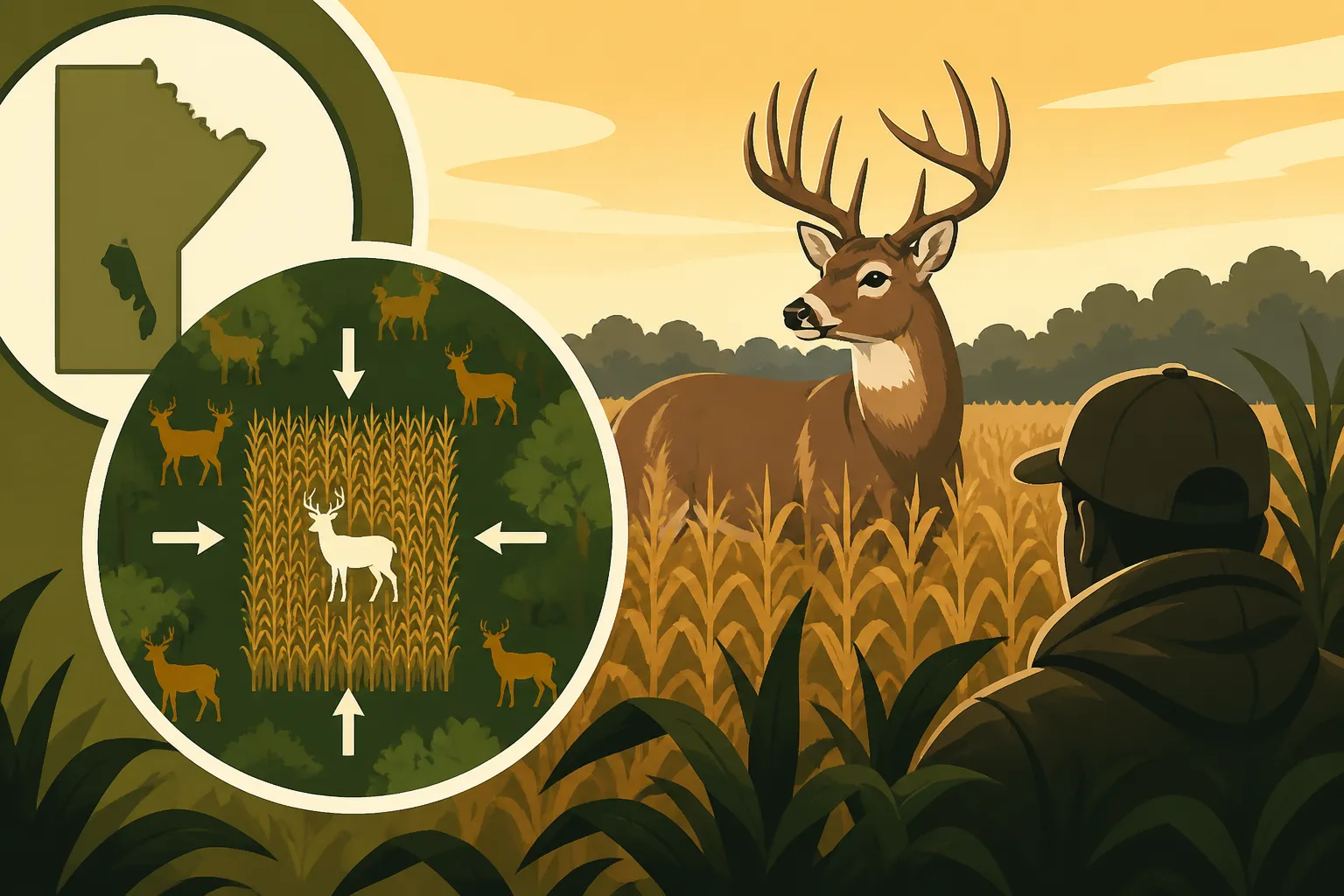
However, understanding this behavior can be an advantage. Knowing that deer are using these crops as sanctuaries means you can focus your scouting and hunting efforts on the entry and exit points, the fringes, and the transition areas. Look for the narrow strips of bush connecting a cornfield to a slough, or the fence line bordering a soybean field and a treeline. These are often the crucial funnels where deer will concentrate their movement, particularly at dawn and dusk. Hunting a Shelterbelt Between Two Fields is a classic example of this, as deer use it to travel unseen from one crop field to another. With satellite imagery from tools like GoHunt, you can identify these strategic points without ever stepping foot in the field, saving you valuable time and minimizing disturbance.
Disclaimer
This article is for general informational purposes only and does not constitute professional advice. Laws, prices and regulations vary by location and change over time. Consult a qualified professional for guidance on your specific situation.