How Cropland Change Shifted Prairie Game
Manitoba's landscape, particularly its vast prairie regions, has undergone profound transformations due to agricultural development over the last century. These shifts in how land is used for crops have dramatically altered the habitats and movement patterns of many of our beloved prairie game species, presenting both challenges and unique opportunities for hunters and conservationists alike. This guide will delve into how these evolving cropland changes have influenced and reshaped where and how game animals live and interact with the environment across our province.
The Evolution of Manitoba's Agricultural Landscape
For generations, the image of Manitoba has been intrinsically linked to its fertile farmland. However, the nature of that farmland, and how it interacts with the wild spaces, has been in a constant state of flux. Understanding this evolution is key to grasping why our game animals behave the way they do today.
From Diverse Prairies to Monoculture Dominance
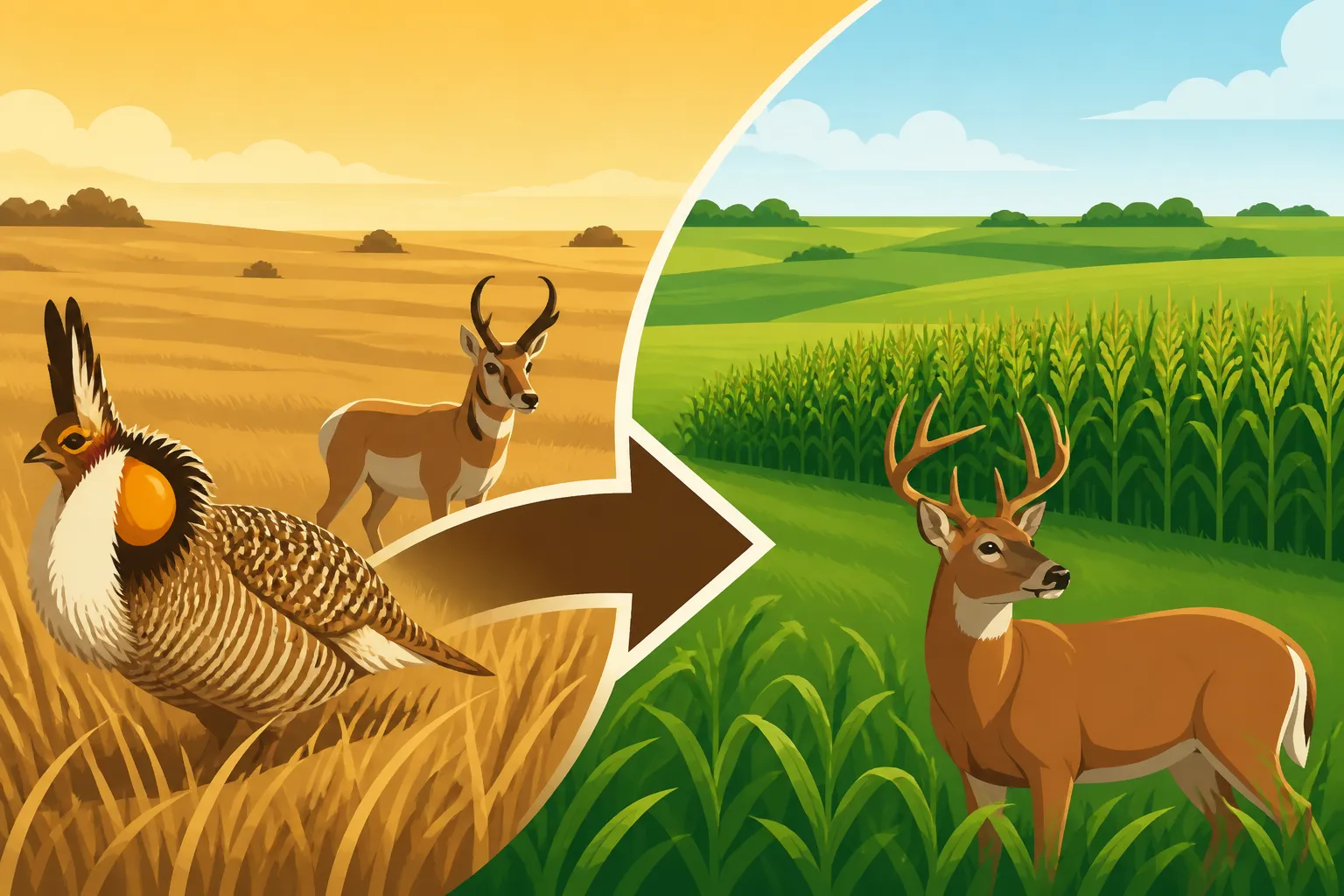
Once upon a time, much of Manitoba's southern and western regions were a tapestry of tallgrass and mixed-grass prairie, dotted with wetlands, aspen bluffs, and riparian zones. Early settlers established smaller, mixed farms, often leaving significant pockets of native habitat intact. Fast forward to today, and the landscape is overwhelmingly dominated by large-scale, specialized cash cropping. Fields stretch for miles, often dedicated to single crops like wheat, canola, corn, or soybeans.
This intensive farming has come at a cost to habitat diversity. Gone are many of the meandering sloughs, small treed bluffs, and expansive native grasslands that once provided crucial food, water, and cover year-round. While efficient for food production, these vast monocultures offer limited ecological complexity, forcing wildlife to adapt or diminish. The intricate mosaic of habitats that supported a wide array of species has been replaced by a more uniform, agricultural carpet.
The Shrinking Role of Shelterbelts and Field Edges
Historically, shelterbelts, those long rows of trees planted between fields, were a common sight across the prairie. They served vital roles, protecting topsoil from wind erosion, capturing snow to replenish soil moisture, and providing shade and shelter for livestock. For wildlife, these linear oases were lifelines – offering critical travel corridors, thermal cover in harsh winters, and nesting sites safe from predators. Hunting a Shelterbelt Between Two Fields remains a tactic for many hunters today.
However, the trend towards larger farm equipment and the desire to maximize every tillable acre has led to the widespread removal of many shelterbelts. Field edges, once transition zones rich in diverse vegetation, are now often tilled right up to the fence line or road. This loss of edge habitat, which is naturally one of the most productive and species-rich areas, has profound implications. Deer, upland birds, and small mammals lose their highways, their hiding spots, and their havens from the elements, making their survival more challenging in an increasingly exposed landscape.
Direct Impacts on Key Prairie Game Species
The transformation of Manitoba's croplands hasn't just changed the scenery; it has fundamentally reshaped the lives of the province's most popular game animals. Each species has reacted in its own unique way to the new reality.
Whitetails: Adapting to New Food Sources and Cover
White-tailed deer are perhaps the most visible beneficiaries and victims of agricultural changes. On one hand, the sheer abundance of high-energy cultivated crops like corn, soybeans, and canola provides an incredible food source, particularly in late fall and winter. It's not uncommon to see deer literally disappearing into standing cornfields for days, finding both ample sustenance and impenetrable cover. This access to rich forage contributes significantly to the impressive body weights often observed in Manitoba bucks. Why Manitoba Bucks Grow Heavy Bodies
On the other hand, this reliance makes them vulnerable. When crops are harvested, that cover vanishes, forcing deer into remaining bush pockets, small bluffs, or river bottoms. Their travel patterns become highly predictable, often following field edges, narrow tree lines, and any remaining willow runs. Hunting deer in these landscapes often means focusing intensely on these limited cover areas. For those interested in Hunting Whitetails on Manitoba Farmland, understanding how deer use these linear features and temporary crop cover is paramount. The shift means that traditional bush country tactics for Reading Whitetail Sign in Manitoba Aspen need adjustment when you’re in agricultural zones.
Waterfowl: Feast or Famine in Modern Fields
Manitoba sits squarely in the heart of the Central Flyway, and migratory waterfowl have always been a cornerstone of our hunting heritage. Cropland changes have had a dual impact on ducks, geese, and sandhill cranes. The expansion of grain farming has created vast staging areas where millions of birds can refuel on spilled grain after harvest. Field Hunting Geese in Manitoba Stubble is a prime example of a hunting method directly linked to this agricultural bounty. Similarly, immense flocks of sandhill cranes are drawn to post-harvest fields, offering unique hunting opportunities. Hunting Manitoba's Sandhill Crane Fields has become increasingly popular.
However, the widespread drainage of small prairie potholes and wetlands to create more arable land has resulted in a significant loss of critical nesting and brood-rearing habitat. While adult birds might find abundant food, the places where they can safely raise their young have diminished. This delicate balance means waterfowl populations are highly susceptible to fluctuations in crop availability and wetland health, making their continued presence a testament to their adaptability, but also a call for targeted conservation efforts to restore lost wetland functions.
Upland Birds: Habitat Fragmentation and Niche Shifts
Upland birds like sharp-tailed grouse and Hungarian partridge have faced considerable challenges due to cropland changes. Sharp-tailed grouse, iconic prairie birds, rely heavily on expansive native grasslands for their lekking (dancing) grounds, nesting, and foraging. The conversion of these grasslands to annual crops has fragmented their habitat, pushing them into smaller, isolated pockets or road allowances. Their numbers can fluctuate dramatically based on the availability of suitable unbroken habitat. Walking Up Sharp-Tailed Grouse in Manitoba often requires covering significant ground to find these remaining strongholds.
Hungarian partridge, or "Huns," have shown remarkable resilience, often finding a niche in the margins of modern agriculture. They thrive in areas with diverse stubble, along fence lines, and near remaining shelterbelts, feeding on weed seeds and insects. However, even Huns are affected by increasingly clean farming practices, which reduce available winter cover and food sources. The widespread use of herbicides can also indirectly impact chick survival by reducing the insect populations that young birds depend on for protein. Hunting Hungarian Partridge on Manitoba Farms often means scouting these very edges and transition zones where cover meets cultivated ground.
Hunter Strategies and Conservation Challenges
Given these drastic landscape changes, both hunters and conservationists have had to rethink their approaches to game management and ethical pursuit. The old ways aren't always applicable, and new tools and partnerships are becoming essential.
Adjusting Hunting Tactics to Cropland Realities
Modern hunting in Manitoba's agricultural belt demands a keen understanding of how game uses the altered landscape. Hunters must increasingly focus their efforts on the remaining pockets of cover—whether it's a small bush bluff, a deep river draw, or even a strategically left standing crop field. Observing how deer use Hunting a Standing Canola Field Edge or Hunting a Swathed Grain Field at Dusk after harvest is a common tactic. The reliance on these specific features means intense scouting, often with the aid of satellite imagery and digital mapping tools like GoHunt, is more important than ever. This kind of technology helps hunters identify potential bedding areas, travel corridors, and feeding zones that might be easily missed from the road.
Moreover, a significant portion of Manitoba's agricultural land is privately owned. This means that securing landowner permission is not just good etiquette; it's a legal requirement and often the only way to access prime hunting ground. Building relationships with farmers and understanding their operations can open up opportunities and ensure hunters are respecting private property. Knocking on Doors in Manitoba Farm Country is a time-honoured tradition that remains crucial for access.
Conservation Efforts in an Agricultural Landscape
The challenges posed by cropland change have spurred various conservation efforts aimed at mitigating negative impacts and promoting wildlife habitat. Many programs focus on encouraging farmers to implement practices that benefit wildlife, such as maintaining riparian buffers along waterways, retaining wetlands, or planting perennial cover in marginal areas. These initiatives recognize that agriculture and wildlife can coexist, though often through careful management and incentives. Organizations are also working to secure and enhance habitat corridors, recognizing the need to connect fragmented patches of cover.
However, balancing agricultural productivity with wildlife needs remains a complex challenge. The economic realities for farmers often dictate land use decisions. Thus, successful conservation often requires collaborative approaches, involving government agencies, conservation groups, landowners, and hunters. Efforts like those supporting Manitoba's Wildlife Management Areas or focused wetland restoration projects are vital in providing secure spaces for game within this changing environment. Hunters play a crucial role, not just through their licence fees, but also by participating in habitat projects and promoting responsible land stewardship.
| Feature | Traditional Prairie Landscape | Modern Cropland-Dominant Landscape | Impact on Game Species |
|---|---|---|---|
| Vegetation | Diverse native grasses, forbs, shrubs | Monoculture crops (canola, corn, wheat) | Reduced food diversity, reliance on specific crops. |
| Wetlands | Numerous small potholes, sloughs | Drained for cultivation, fewer natural wetlands | Loss of nesting/brood habitat for waterfowl. |
| Cover | Extensive native grassland, bush pockets | Limited shelterbelts, standing crops, field edges | Concentrated cover, increased vulnerability to weather/predators. |
| Food Sources | Varied native plant seeds, insects, browse | Abundant spilled grain, cultivated crops | High-energy but less diverse diet, potential for boom/bust cycles. |
| Connectivity | Wide corridors of natural habitat | Fragmented patches, isolated cover | Restricted movement, increased human-wildlife conflict. |
The ongoing evolution of Manitoba's agricultural landscape will continue to shape the lives of its prairie game. Hunters who take the time to understand these changes, embrace modern scouting tools like GoHunt, and engage in respectful landowner relations will be the most successful. Moreover, supporting conservation initiatives that bridge the gap between farming and wildlife will ensure that future generations can also enjoy the rich hunting opportunities Manitoba's prairies still offer.
Disclaimer
This article is for general informational purposes only and does not constitute professional advice. Laws, prices and regulations vary by location and change over time. Consult a qualified professional for guidance on your specific situation.