Winter Road Access in Northern Manitoba
Oh, the thought of heading north in Manitoba during the depths of winter for a hunt, or even just to check on a trapline, can be both exhilarating and utterly daunting. The vast, silent beauty of our northern landscape in winter is something truly special, but getting there and navigating it successfully when the snow flies and the temperatures plummet is a completely different beast than rolling down a paved highway in July. Many hunters and trappers who venture into these remote areas often face unexpected road closures, rapidly changing conditions, and the very real risk of getting stranded miles from any form of assistance. This guide is here to walk you through the realities of winter road access in Northern Manitoba, helping you understand the challenges, prepare properly, and navigate safely so your adventure remains memorable for all the right reasons.
The Unpredictable Nature of Northern Winter Roads
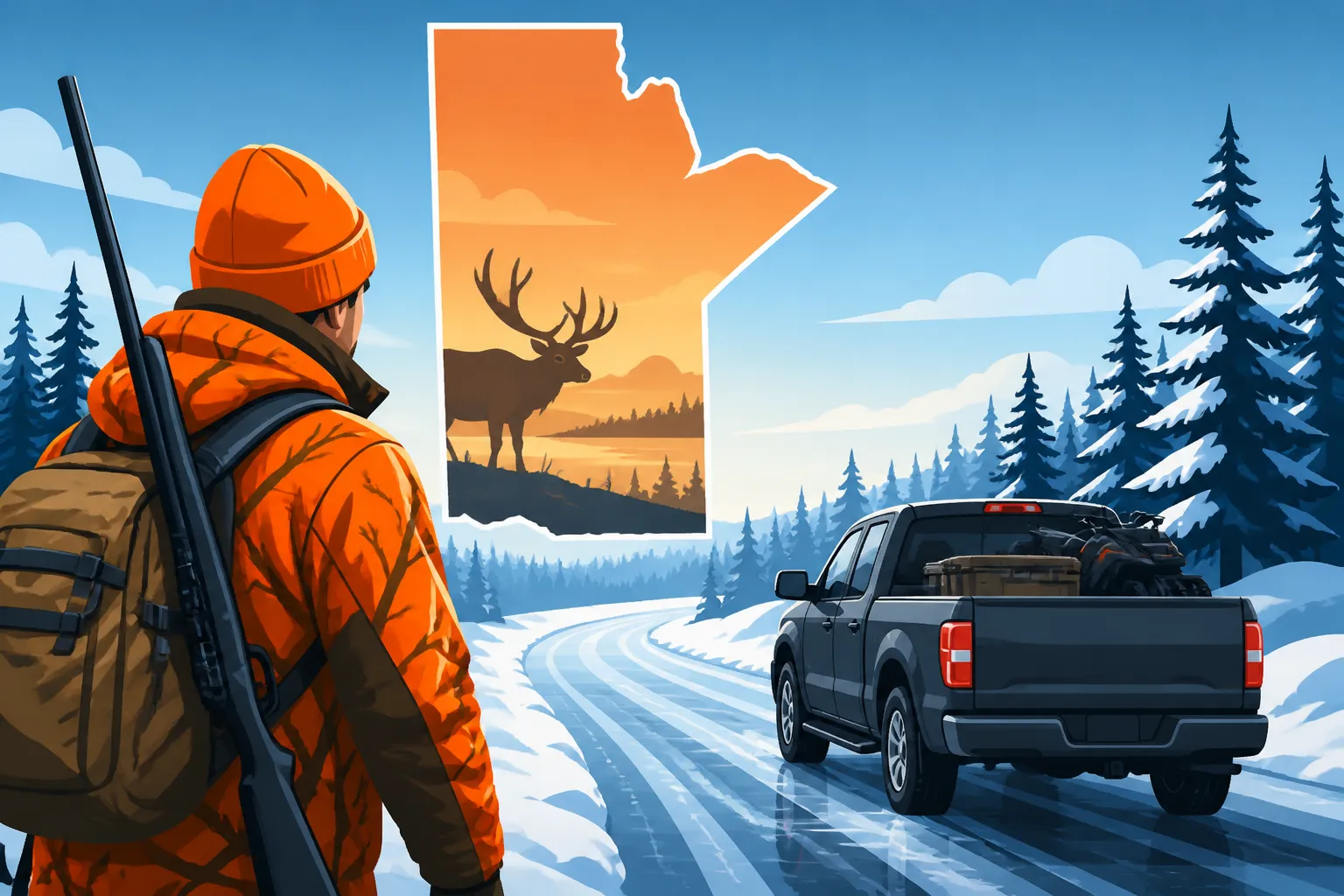
When we talk about "winter roads" in Northern Manitoba, we're not always talking about ploughed, salted, or even gravelled roads like you might find further south. Often, these are temporary routes built over frozen lakes, rivers, and muskeg, or simply snow-covered tracks through dense boreal forest that are only passable once the ground is truly frozen solid. The very nature of these roads makes them incredibly dynamic and, frankly, unpredictable.
Understanding Temporary Winter Roads and Ice Crossings
Imagine a ribbon of white stretching across a vast frozen lake or winding through a seemingly endless bog. That's often what a true northern winter road looks like. These aren't permanent fixtures; they're constructed each year when the ice is thick enough and the ground is frozen deep enough to support heavy vehicles. The challenge is, "thick enough" and "frozen deep enough" aren't static conditions. A sudden warm spell, a heavy snowfall followed by rain, or even persistent strong winds can dramatically change the integrity of these routes overnight. You might encounter sections where the ice crossing is degraded, or where overflow from underneath the ice has created a treacherous slushy mess that can swallow a truck. It's a constant battle against nature, and nature often wins. Knowing that a route is even open is just the first step; understanding its current condition is paramount.
We often hear stories of folks breaking through thin ice or getting stuck in deep snow on a section that was perfectly fine just hours before. These aren't just cautionary tales; they're real experiences that underscore the need for extreme vigilance. You can't just assume because a road was open last week that it's safe today. The folks responsible for maintaining these roads, often local communities or contractors, are doing heroic work, but they can't be everywhere at once. Getting updates from them directly, or from locals who travel the routes regularly, is invaluable. This is far more critical than simply looking at a static map.
Factors Influencing Road Closures and Conditions
So, what makes these roads such a moving target? A few key things stand out. First and foremost, temperature fluctuations. A cold snap locks everything down solid, but a brief thaw can turn an ice road into a dangerous slush pit, or soften the ground underneath a bush road, creating deep ruts or even open water hazards. Heavy snowfall, especially if it's wet and then freezes, can make roads impassable without heavy equipment. Then there's the wind – strong northern winds can create massive snowdrifts in open areas, burying stretches of road faster than any plough can keep up.
Beyond weather, the sheer remoteness and limited resources contribute to the challenge. Many of these roads lead to small communities or logging camps and aren't maintained with the same frequency or infrastructure as major highways. Mechanical breakdowns of ploughs, limited crews, and the vast distances mean that clearing or repairing a section can take time – time you might not have if you're stuck out there. Understanding these factors helps you appreciate the inherent risks and plan accordingly. It's not always about if a road will close or become difficult, but when and where.
Pre-Trip Planning: Knowledge is Your Best Defence
Heading into Northern Manitoba's winter country without meticulous planning is like heading into a bear den unarmed – you're just asking for trouble. This isn't a casual drive; it's an expedition that demands respect for the environment and thorough preparation.
Essential Tools for Mapping and Navigation
In the age of GPS and satellite imagery, you might think getting lost is a thing of the past. Not so fast, my friend, especially up north where cell service vanishes quicker than a rabbit in a blizzard. You absolutely cannot rely solely on your phone. A robust GPS unit with detailed topographic maps is non-negotiable. Better yet, load up your phone or tablet with offline mapping applications like onX Hunt. These apps, when downloaded for offline use, allow you to pinpoint your exact location even without service, mark potential hazards, and track your route. They can show you public lands, private holdings (which is crucial for Manitoba Landowner Permission Law), and give you an idea of the terrain far beyond the main track.
Before you even leave your driveway, spend hours pouring over these maps. Identify potential bypasses, alternative routes, and even emergency landing spots if you're flying in (though we're sticking to roads here, it's the same mindset). Combine digital tools with good old-fashioned paper maps. They don't run out of battery, and in a truly dire situation, they can be your lifeline. Knowing how to read a topographic map is a skill that will serve you well, especially when the digital screen freezes or breaks. Consider printing out key sections of your route as a backup. Reading a Manitoba GHA Map Before You Go becomes an entirely different exercise when you add winter conditions to the equation.
Gathering Local Intelligence and Road Condition Updates
This is perhaps the most crucial part of your pre-trip planning for winter road access. The internet can give you a general idea, but local knowledge is gold. Before you leave, call the relevant provincial government offices responsible for highway maintenance, local Indigenous communities, or even the outfitters and trapping operations in the area you plan to visit. They often have the most up-to-the-minute information on closures, dangerous sections, or alternative routes.
Don't be shy about reaching out to other hunters or outdoor enthusiasts who have recently been in the area. Online forums or local hunting groups can be a great source, but always take internet advice with a grain of salt and cross-reference it with official sources. It's not uncommon for conditions to change multiple times in a single day, so the more current your information, the better. When it comes to something like Hunting Manitoba's Northern Boreal, understanding the ground conditions is paramount.
Table: Winter Road Access Info Sources
| Source Type | Information Provided | Best Use | Considerations |
|---|---|---|---|
| Provincial Hotline | Official closures, major incidents, general updates | Main arteries, safety advisories | May not cover all remote or temporary roads |
| Local Communities | Current conditions of specific winter roads | Hyper-local, temporary road status, ice crossings | Best to call specific band offices or local stores |
| Outfitters/Guides | Practical advice, recent travel conditions | Hunting access, specific route conditions | May be biased towards their area, call well in advance |
| Online Forums/Groups | Anecdotal experiences, general advice | Gauge overall sentiment, find local contacts | Verify information; conditions change quickly |
| Weather Forecasts | Temperature, snowfall, wind advisories | Anticipate future conditions, plan delays | Microclimates can differ from regional forecasts |
| Offline Mapping Apps | Topographic details, satellite imagery, GPS tracking | Navigation, identifying alternate routes | Download maps beforehand; battery life |
Vehicle Preparation for Northern Winter Conditions
Your vehicle isn't just transport; it's your shelter, your lifeline, and your primary tool for getting in and out safely. Preparing it for northern winter is non-negotiable. First, ensure your tires are in excellent condition, preferably dedicated winter tires, and ideally, a robust set of all-terrains with a strong tread for snow and ice. Carrying a full-sized spare, a jack, and a lug wrench is basic, but also consider a tire repair kit for minor punctures.
Beyond tires, a comprehensive maintenance check is vital. This means fresh oil, properly topped-up fluids (especially antifreeze rated for extreme cold), and a battery that is strong enough to handle sub-zero starts. Your lights must be fully functional, and a heavy-duty set of tow straps and shackles are absolute must-haves. Recovery gear, like a winch or traction boards, can be the difference between getting yourself out of a sticky situation and spending an unplanned night in the cold. I know it sounds like overkill, but when you're 100 miles from the nearest town and the sun is setting, you'll thank yourself for every single item in your Winter Truck Kit for a Manitoba Hunt.
On the Road: Navigating with Care
Even with the best planning, the actual act of driving on northern winter roads requires a specific mindset and a whole lot of caution. It's not about speed; it's about making it there and back safely.
Driving Techniques for Ice, Snow, and Slush
Forget everything you know about cruising down a four-lane highway. On northern winter roads, finesse and foresight are your best friends. Slow down, way down. Maintain ample distance from other vehicles, if there are any. On ice, braking distances increase dramatically, so anticipate every turn and every stop. Gentle steering inputs and smooth acceleration are key to maintaining traction. If your vehicle starts to slide, steer into the skid (the direction you want the front of the vehicle to go) and avoid slamming on the brakes.
When you hit deep snow or slush, your momentum is important, but not at the expense of control. If you feel your vehicle bogging down, sometimes a slight reduction in speed, rather than flooring it, can help you find traction. Always be aware of the "crown" of the road; many bush roads are higher in the middle to aid drainage, but this can cause you to slide into the softer shoulders if you're not careful. For ice crossings, try to drive at a consistent, moderate speed without stopping, if safe to do so. A good resource like GoHunt might not focus directly on driving techniques, but the overall emphasis on preparation and understanding your environment aligns perfectly with this cautious approach.
Emergency Preparedness and Survival Gear
Despite all your precautions, things can still go wrong. A breakdown, a slide into a ditch, or an unexpected road closure can leave you stranded in dangerously cold conditions. This is where your emergency kit becomes paramount. Beyond the vehicle recovery gear mentioned earlier, you absolutely need a comprehensive survival kit. This should include enough extra warm clothing for everyone in the vehicle, suitable for -30°C or colder. Think parkas, insulated pants, multiple layers of wool or synthetic base layers, spare hats, mitts, and warm boots.
You'll need high-energy food that won't freeze solid, like energy bars, nuts, and dried fruit. Water, too, but keep it insulated to prevent freezing, or carry a way to melt snow. A reliable source of heat, such as a catalytic heater designed for indoor use (with proper ventilation!), an emergency blanket, or even a small stove for melting snow. A well-stocked first-aid kit, a bright headlamp with extra batteries, a shovel, an axe, and a powerful spotlight are also vital. And for communication, a satellite phone or a two-way satellite messenger (like a Garmin inReach or Zoleo) is non-negotiable where cell service is non-existent. Without it, you're truly on your own if something goes wrong. This isn't just about comfort; it's about survival when facing Hunting Safely in Deep Winter Cold.
What to Do If You Get Stuck or Stranded
So, despite your best efforts, you're stuck. First, stay calm. Panicking is your worst enemy. Assess the situation. Can you dig yourself out? Do you have traction boards or a winch? Try these self-recovery methods first, but be mindful of your energy and exposure to the cold. If you can't get out, or if you're unsure of your location, stay with your vehicle. Your vehicle is your biggest piece of shelter and is far easier for search and rescue to spot than a lone person trying to walk out.
Signal for help. Tie a brightly colored flag or piece of cloth to your antenna or a tall branch. If you have a satellite messenger, send an SOS. Conserve fuel by running your engine sparingly for heat, just enough to warm the cabin periodically, and ensure your exhaust pipe is clear of snow to prevent carbon monoxide poisoning. Keep warm, stay hydrated, and try to maintain a positive mindset. Remember, someone will eventually come looking, especially if you've told people your travel plans and expected return time. This is why a detailed itinerary left with someone responsible at home is crucial. Being prepared for What to Do If You Get Stuck in the Bush is a cornerstone of responsible northern travel.
Getting Off the Beaten Path: Deeper Access
Many of Northern Manitoba's prime hunting grounds or trapping areas aren't directly accessible by even the most rugged winter roads. To truly reach those untouched spots, you'll need to think beyond your truck.
Utilizing Snowmobiles and ATVs for Backcountry Access
Once you've navigated the main winter road system, a snowmobile (or a tracked ATV/side-by-side) often becomes your primary mode of transportation into the deeper bush. These machines can take you down old logging trails, frozen waterways, and across snow-covered muskeg that would be impassable in a truck. However, just like winter roads, using these vehicles requires preparation and respect for the conditions.
Ensure your machine is in top mechanical condition, with a full tank of fuel, and carry extra fuel in proper containers. A repair kit for your snowmobile/ATV (including spark plugs, drive belt, tools) is essential. Ride with at least one other person, never alone, and always tell someone your route and expected return time. Snow depths can vary wildly, and getting stuck far from your truck with a broken-down machine is a serious predicament. Remember the Quad and Side-by-Side Rules on Crown Land before you venture off, as there are often specific regulations about where you can and cannot operate these vehicles. For chasing northern species, getting away from the crowds is key, and often means embracing this secondary mode of transport.
Identifying Remote Hunting and Trapping Opportunities
The effort required to get deep into Northern Manitoba's winter country often pays off with incredible opportunities. The undisturbed nature of these areas means wildlife, from Barren-Ground Caribou in Northern Manitoba to wolves and moose, are less wary. Look for old cut lines, frozen beaver ponds, or a Frozen Slough Crossing that might concentrate game. Satellite imagery on your onX Hunt app can reveal these hidden gems, showing you forest patterns, old trails, or natural funnels that aren't visible from the ground.
These areas are perfect for patient hunters willing to brave the elements for a truly remote experience. You might be able to find untouched country for Hunting an Old Logging Road in the North or set up for Calling a Bull Moose in the Rut in an area that hasn't seen human pressure in weeks. Planning for these deeper excursions means carrying all your hunting gear, survival essentials, and knowing how you'll get your game out. Packing out a moose or caribou from a remote spot in deep snow is a monumental task, often requiring sleds attached to your snowmobile or a well-coordinated team effort.
Planning Logistics for Multi-Day Remote Hunts
A quick day trip to a roadside spot is one thing; a multi-day hunt deep in the northern bush in winter is another entirely. For these longer excursions, your logistics need to be impeccable. Consider how you will set up a temporary camp that offers adequate shelter and warmth. Will you use a tent with a wood stove, or a small cabin if one is available and permitted? You'll need to pack in all your food, water, and fuel, along with your hunting gear and sufficient emergency supplies for the duration of your trip, plus a few extra days in case of unexpected delays.
Communication remains critical. Regular check-ins via satellite messenger with someone reliable back home are a must. Your exit strategy is as important as your entry. Keep an eye on weather forecasts, as a sudden blizzard could strand you for days, or make your return trip treacherous. Often, these remote hunts mean relying on a fly-in service for the initial drop-off, a topic covered more deeply in Manitoba's Northern Fly-In Access, but even then, ground access to hunting spots might still be necessary. The rewards of such an adventure are immense, but only if undertaken with the utmost respect for the challenging environment.
Northern Manitoba's winter roads offer a gateway to some of the most stunning and wild country our province has to offer. They present unique challenges that demand careful preparation, a cautious approach, and a deep respect for the raw power of nature. By understanding these conditions, equipping yourself with the right tools and knowledge, and always prioritizing safety, you can unlock incredible hunting experiences and create memories that will last a lifetime. Just remember, up here, preparation isn't just a recommendation; it's a survival strategy.
Disclaimer
This article is for general informational purposes only and does not constitute professional advice. Laws, prices and regulations vary by location and change over time. Consult a qualified professional for guidance on your specific situation.