Hunting a Bluff on a Crown Quarter
It's a common story, isn't it? You spend countless hours staring at maps, driving backroads, and wondering where those mature whitetails or elusive elk are hiding, especially when hunting public land. Manitoba offers incredible opportunities on its vast Crown land, but finding those truly productive, less-pressured spots can feel like searching for a needle in a haystack. This guide is all about honing in on one such gem: hunting a bluff on a Crown quarter, helping you pinpoint these secret havens and unlock their potential.
Understanding the Allure of Bluffs on Crown Quarters
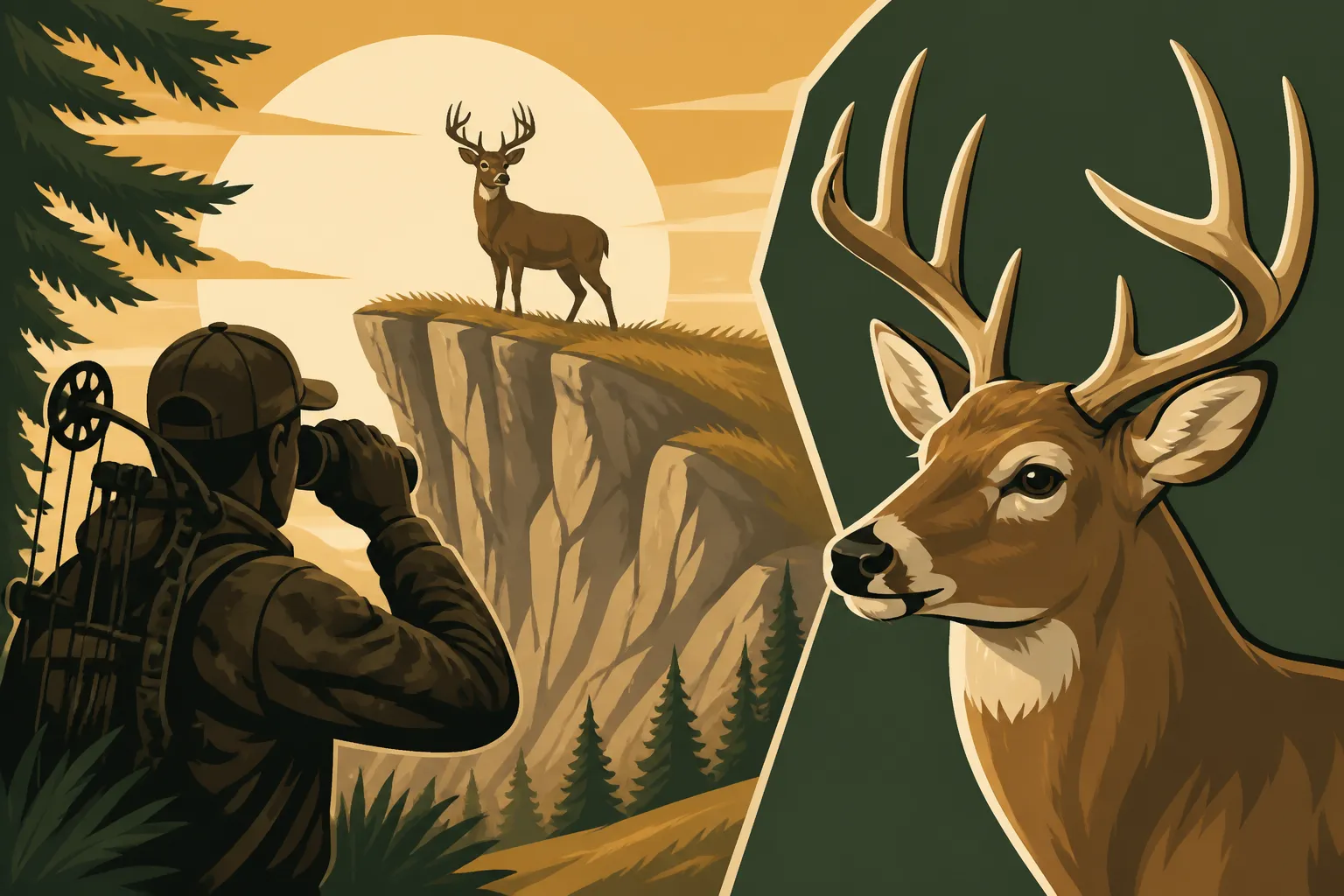
When we talk about hunting a "bluff on a Crown quarter" in Manitoba, we're really talking about finding those elevated pockets of timber or thick brush that offer cover, food, and security on public ground. These aren't always dramatic cliffs, but rather distinct rises in topography, often surrounded by lower, more open terrain, or bordering agricultural fields. They stand out as natural islands of refuge, making them irresistible to deer, elk, and even bears looking for a place to feel safe.
What Makes a Bluff Prime Habitat?
Think about what a wild animal needs: food, water, and cover. A bluff often provides an excellent combination of these elements. Its elevation gives animals a vantage point to observe their surroundings, while the dense vegetation offers concealment from predators and hunters alike. During colder months, the thicker timber on a bluff can provide crucial thermal cover, protecting animals from harsh winds and deep snow. It's like a natural fortress. We often see these bluffs as transition zones – places where animals will stage before moving out into feeding areas, or where they'll retreat to bed down during the day. The varied plant life, from trembling aspen and oak to dense willow thickets and even some mature conifers, offers diverse browse and bedding options throughout the year.
The slight elevation, even just a few feet, can create subtle thermal currents that animals instinctively use to their advantage, helping them detect danger. In flatter terrain, bluffs provide relief and distinct travel corridors. Deer, in particular, love to walk the edges of these elevated areas, using the cover for security while still being able to watch for threats. Imagine a mature buck scent-checking the wind as he works his way along the top of a poplar bluff, knowing he can drop off the backside into heavy cover if he senses trouble. It's this innate sense of security that draws them to these specific features, making them highly predictable travel and bedding areas.
Why Crown Land Matters for These Spots
Hunting on Crown land means you're operating on public ground, accessible to anyone. This also means you're competing with other hunters. However, many hunters stick to easily accessible areas, roadsides, or well-known trails. The beauty of a bluff on a Crown quarter is that it often requires a bit more effort to locate and access, which can naturally reduce hunting pressure. These aren't always advertised spots; they're ones you have to seek out, research, and put boots on the ground to find.
Crown land in Manitoba is incredibly diverse, from the aspen parkland bluffs to the boreal forest ridges. You'll find bluffs throughout various Manitoba's Game Hunting Areas. The challenge and the reward come from identifying these specific elevated sections within a larger block of public land. Unlike private land, where access is granted by a landowner, Crown land is open season, but that doesn't mean it's easy. It requires diligent scouting and often a willingness to walk a little further than the next hunter. When you locate a prime bluff on an unpressured quarter section of Crown land, you've found a genuine hidden gem. It offers that true wilderness feel, even if it's not far from civilization. These spots allow you to truly experience Hunting Whitetails on Manitoba Crown Land in a rewarding way, where strategy and effort often pay off with less competition.
Locating and Scouting Your Manitoba Bluffs
Finding these bluffs isn't always as simple as spotting them from the road. It takes a combination of modern technology and good old-fashioned fieldwork. Often, the best bluffs are those that are just out of sight, a little too far for a quick walk-in, or hidden behind other landscape features.
The Power of Digital Mapping Tools
In today's hunting world, digital mapping applications are indispensable for finding good hunting spots, especially on Crown land. Tools like onX Hunt and GoHunt allow you to scrutinize topography, identify changes in elevation, and differentiate between various types of cover from the comfort of your home. You can often overlay satellite imagery with topographical maps, giving you a comprehensive view of the landscape.
When I'm looking for a bluff, I zoom in on an area of Crown land and start looking for those subtle bumps or ridges that break up the flatness. I'll use the contour lines on a topo map to identify elevation changes. A tight cluster of contour lines indicates a steeper rise, while more spaced-out lines show a gentler slope. Then I switch to satellite view to see what kind of vegetation is on that rise. Is it thick, dark timber? Or is it more open aspen? Sometimes you'll find an isolated pocket of mature poplars or oak surrounded by marshy ground or open fields. Those are often golden tickets. These apps are fantastic for Reading Manitoba Crown Land Layers on onX and getting a clear picture of property boundaries, helping you ensure you're always on public land. They even show access points, which can be crucial for planning your approach.
Old-School Map Reading and In-Person Scouting
While digital maps are powerful, nothing beats getting your hands on a good old-fashioned paper map – or at least spending serious time interpreting what the digital map shows you – and then confirming it with boots on the ground. Paper maps can sometimes reveal nuances that digital images miss, especially if they show older logging roads or forgotten trails that might still offer access. Once you've identified potential bluff locations on your map, the next step is crucial: scouting in person. This is where you verify what you saw digitally. You're looking for game trails, rub lines, scrapes, and bedding areas. Are the trails heavily used? Are there fresh tracks? Is the browse nipped off?
A bluff might look good on a map, but if there's no sign, animals aren't using it. Pay attention to the edges of the bluff, where deer often travel. Look for pinch points or funnels created by the topography where trails converge. Check the downwind side for bedding areas, especially if there's good thermal cover. This physical scouting helps you understand how animals move through and around the bluff. You might find a subtle saddle on top of the bluff that acts as a natural crossing, or a thicket on the leeward side where deer bed on windy days. Remember, hunting a bluff is about understanding its role in the animals' daily lives. Spending the time to physically scout is invaluable for Scouting a Manitoba Game Hunting Area and truly understanding the specific dynamics of the area.
| Scouting Method | Pros | Cons | Best Use |
|---|---|---|---|
| Digital Maps | Fast, covers large areas, shows property lines | Can be outdated, lacks current ground sign, no scent data | Initial area identification, boundary checks |
| Paper Topo Maps | Reliable contours, no battery needed, broader view | Less detail than satellite, no real-time updates | Understanding elevation changes, long-range planning |
| Boots-on-Ground | Confirms sign, finds fresh tracks/rubs, reads wind | Time-consuming, weather-dependent, can spook game | Verifying digital findings, pinpointing stand sites |
| Trail Cameras | Monitors activity 24/7, shows movement patterns | Can be stolen, requires regular checks, ethical concerns | Confirming game presence, timing movement |
Strategic Approaches to Hunting a Bluff
Once you've found a promising bluff, the real work begins. How do you hunt it effectively without alerting every animal in the vicinity? It comes down to planning your approach, choosing the right stand location, and constantly adapting to conditions.
Planning Your Entry and Exit
This is arguably the most critical part of hunting a bluff. Because bluffs are often islands of cover, any disturbance on your approach or departure can blow the spot. Always, and I mean always, plan your entry and exit routes based on the wind. You want to approach and depart in a way that keeps your scent out of the bluff and off any potential game trails leading to or from it. This might mean taking a longer, more circuitous route, perhaps using a drainage ditch, a fenceline, or the edge of a field to conceal your movement and contain your scent.
Consider the time of day, too. If deer are bedding on the bluff in the morning, you don't want to walk directly through their likely bedding area on your way to a stand. Instead, approach from a direction that puts you on the downwind side of their bedding, catching them as they move or staging yourself for an afternoon hunt when they start to stir. For a morning hunt, an approach that leads you directly to your stand before dawn, moving away from likely bedding, is ideal. For an evening hunt, setting up early and waiting for deer to come out from the bluff into feeding areas is a classic strategy. It’s all about minimizing your footprint and staying undetected. This often involves careful planning, which can make all the difference when Hunting a Bluff Between Two Fields or any other strategically important feature.
Stand Placement and Wind Direction
Your stand placement around a bluff is paramount. Given that bluffs are often chosen by game for security and their ability to catch the wind, you need to use that to your advantage. Your goal is to be downwind of where you expect the animals to travel or bed, yet still have a clear shot. Look for natural funnels created by the bluff's shape or by converging cover. A saddle on top of the bluff, a narrow finger of timber extending off it, or a subtle draw at its base could be prime locations.
If you're hunting deer, they will almost always circle downwind of an area before entering it. So, if your stand is on the upwind side of a bluff, you're likely to be busted. Instead, set up on the downwind side of their likely travel corridor, ensuring your scent blows away from them. This might mean having multiple stand locations for different wind directions. For instance, you might have one stand on the east side of the bluff for a west wind, and another on the west side for an east wind. Don't forget to consider how the wind swirls around the bluff itself. Topographical features can create unpredictable thermals and eddy currents, especially in the mornings and evenings. A good understanding of Hanging a Stand on a Manitoba Bush Edge will serve you well here, as bluffs often create those clear edge opportunities.
Reading the Sign and Adapting to Conditions
Scouting for a bluff isn't a one-and-done affair; it's an ongoing process. Animals' movements can shift with changes in food sources, hunting pressure, and weather. If a fresh snow falls, it's an incredible opportunity to revisit your bluff and read the new sign. Are deer trails now leading to a different part of the bluff? Are there fresh rubs indicating a buck is working the area? Reading Sign After a Fresh Snow can tell you volumes about recent activity and where animals are moving.
Adaptability is key. If you've planned to hunt a specific stand on a bluff, but the wind shifts unexpectedly, or you notice new, heavy sign in a different spot, be prepared to adjust. Sometimes, this means moving to an alternate stand or even still-hunting very slowly along a strategic edge. A hot fall might mean deer are more active later in the day, while a cold snap might push them to feed earlier or seek out the thickest thermal cover on the bluff. Always be asking yourself: "What would the animal do given these conditions?" This constant reassessment of conditions and sign will make you a much more successful bluff hunter. Even rattling or calling can be highly effective in these localized features, particularly if you understand Rattling Volume in Open Parkland and how sound carries differently in denser bluff cover.
Navigating the Challenges of Crown Land Bluff Hunting
While bluffs on Crown land offer fantastic opportunities, they also come with their own set of challenges. It's not always smooth sailing, and being prepared for these hurdles will make your hunt far more enjoyable and successful.
Dealing with Hunting Pressure
As I mentioned earlier, Crown land is public land, and while bluffs might be less pressured than roadside spots, they are not entirely immune. You might find evidence of other hunters – old stands, spent shells, or even other hunters in the area. The key is to either get there first and stay later, or find those bluffs that are truly off the beaten path, requiring a longer hike or more difficult access.
Sometimes, the pressure isn't direct competition but merely the presence of others in the general vicinity. Even if another hunter isn't on your exact bluff, their activity nearby can influence animal movement. Learning to Finding Ground Other Hunters Drive Past often means looking at the topo and satellite maps for areas that are difficult to reach. Is there a river crossing, a marshy section, or a dense block of brush that acts as a natural barrier? These are the places where bluffs will hold less-pressured animals. If you encounter other hunters, always be respectful and consider coordinating with them if possible, especially on smaller Crown quarters.
Access Considerations and Legalities
Accessing a bluff on a Crown quarter can be tricky. While the land itself is public, the routes to get there might not be. You might need to cross private land to reach a public quarter, which always requires explicit landowner permission. Always verify your access routes. Using tools like onX Hunt or GoHunt can help you differentiate between private and public easements or roads, preventing accidental trespass. Remember, just because a trail exists doesn't mean it's a legal access point to Crown land.
Furthermore, consider the terrain. Some bluffs are surrounded by swamps, dense underbrush, or require crossing water. This might necessitate different equipment, like hip waders or even a small canoe, to reach them. Vehicle access on Crown land can also be restricted. While quads and side-by-sides are common, there are specific Quad and Side-by-Side Rules on Crown Land you need to follow. Always check the regulations for the specific GHA you are in regarding vehicle use, as some areas may prohibit off-road travel or have seasonal restrictions. Knowing these rules beforehand can save you a lot of grief and ensure you're hunting legally and responsibly.
Weather and Equipment for Remote Bluffs
Manitoba weather is famously unpredictable and can turn on a dime, especially during hunting season. When you're venturing into a remote bluff on a Crown quarter, you need to be prepared for anything. A beautiful sunny morning can quickly give way to freezing rain, heavy snow, or biting winds. This means dressing in layers, having good waterproof outerwear, and wearing insulated, comfortable boots that can handle varied terrain and temperature drops. Hunting Safely in Deep Winter Cold requires specialized gear, and even a mild fall day can become treacherous if you're out for extended periods or if an injury occurs.
Beyond clothing, think about your essential gear: a reliable compass and GPS (and knowing how to use both, even with a mapping app), a headlamp, a first-aid kit, fire-starting materials, extra food and water, and a way to communicate (satellite messenger or fully charged phone, though cell service can be spotty in remote areas). If you're going deep, letting someone know your plans and expected return time is non-negotiable. Breaking down a deer or elk in a remote bluff also requires tools for Field Dressing in Manitoba's Deep Cold and a plan for packing out the meat. The better prepared you are for the elements and the unexpected, the more confidently and safely you can hunt these rewarding bluff locations.
This article is for general informational purposes only and does not constitute professional advice. Laws, prices and regulations vary by location and change over time. Consult a qualified professional for guidance on your specific situation.