What Whitetails Eat Through a Hard Winter
For those of us who spend any time in the Manitoba bush, especially when the snow starts to pile up, you can’t help but wonder how the whitetail deer survive. It’s a real concern, seeing those gaunt winter deer, and it really makes you question what they’re actually finding to eat when the landscape is buried under feet of snow and the temperatures plummet. This guide is all about peeling back the layers to understand the vital, often desperate, dietary habits of Manitoba whitetails when winter really bites.
The Harsh Reality of a Manitoba Winter for Whitetails
Manitoba winters are no joke, and for whitetail deer, they represent a period of extreme nutritional stress. It's not just about finding food; it's about finding enough food, with enough nutritional value, to simply stay alive. We often see deer in the spring looking rough, and that's a direct result of the long, lean months. Understanding this struggle helps us appreciate their resilience and gives us insight into herd health and habitat quality.
The Energy Deficit: Why Every Calorie Counts
Imagine trying to survive for months on end with an almost constant calorie deficit. That's the reality for a whitetail in a hard Manitoba winter. Their metabolism slows down, but they still need a tremendous amount of energy to generate body heat, move through deep snow, and simply maintain bodily functions. The fat reserves they painstakingly built up during the lush spring and summer months are their primary savings account, and once those are depleted, they start drawing on muscle mass. This is why you see deer looking so thin by late winter. Every twig, every bud, every piece of bark they manage to find is a small victory against starvation. It’s a testament to their toughness, but it also highlights the delicate balance of their existence.
The Impact of Snow Depth and Duration
Snow isn't just cold; it's a monumental barrier to food. When the snow really piles up, say two feet or more, it severely restricts a deer's ability to move and access browse. Imagine trying to wade through waist-deep snow all day just to find a few mouthfuls of food. It's exhausting, burns precious calories, and forces them into what we call "deer yards" or sheltered areas where snow might be less deep or easier to navigate. This concentration of deer can quickly deplete available food sources in these smaller areas, leading to further stress. A prolonged winter, even with moderate snow, can be just as devastating as a short one with extreme snow depths because the duration of the lean period wears them down relentlessly. If you're out Hunting Whitetails at Thirty Below, you'll witness this struggle firsthand.
Primary Winter Food Sources: Browsing the Bush
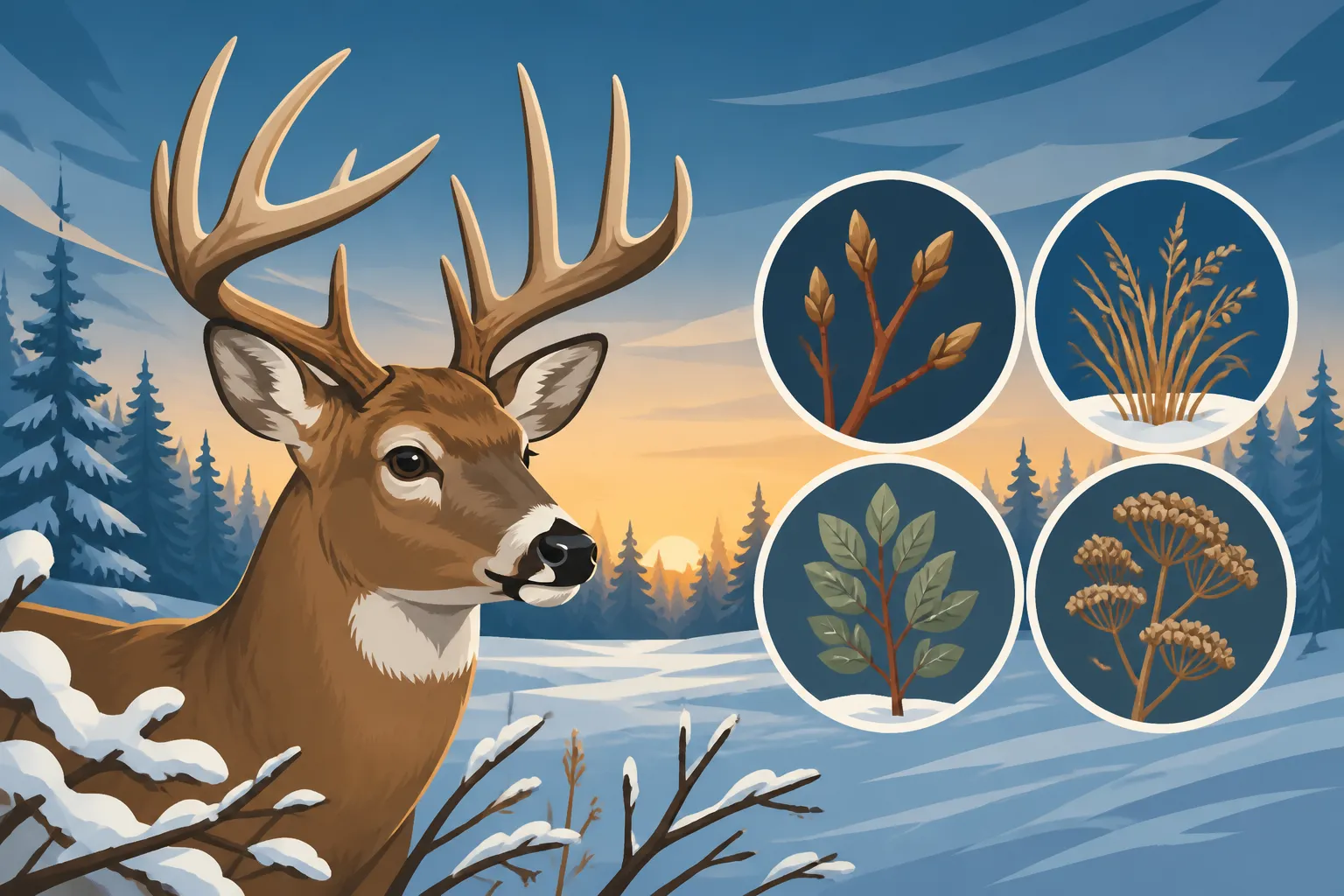
When the ground is frozen and blanketed in snow, whitetails shift almost entirely from foraging on ground vegetation to browsing on woody plants. This is their main survival strategy, and certain species of trees and shrubs become literal lifelines. It’s a tough diet, not always high in nutrition, but it’s what's available.
The Woody Browse Menu
Deer are selective browsers, even in winter. They're not just eating any stick. They have preferences, and those preferences are driven by both palatability and nutritional content. Poplar, often called aspen, is a huge one in Manitoba's parkland and bush country. They'll strip the bark and browse the terminal buds and young shoots. Willow is another critical component, especially along creek bottoms and sloughs, offering tender new growth. Dogwood, hazelnut, and various small shrubs are also vital. These plants offer essential roughage and some concentrated energy, though usually not as much as their summer diet.
Here's a breakdown of common winter browse:
| Plant Type | Preferred Part Eaten (Winter) | Nutritional Value (Winter) | Availability in Manitoba Winter |
|---|---|---|---|
| Aspen/Poplar | Buds, young shoots, bark | Moderate (energy, fiber) | Widespread, especially bush/parkland |
| Willow | Tender shoots, buds | Moderate (moisture, minerals) | Common near water sources |
| Hazelnut | Buds, young twigs | Moderate (fat, protein) | Bush edges, understory |
| Dogwood | Twigs, buds | Low-Moderate (fiber) | Moist areas, forest edges |
| Red-Osier Dogwood | Twigs | Low-Moderate | Wet areas, riparian zones |
| Balsam Fir | Needles, young shoots | Low (digestibility) | Boreal forest, sometimes browsed |
| Juniper | Needles, berries | Low-Moderate (some vitamins) | Rocky/sandy areas, less common |
| Sumac | Twigs, buds | Low | Southern Manitoba, less preferred |
The preference can also depend on which plants are most accessible. When How Deep Snow Moves Deer Into Cover, they'll often be found in dense stands of conifers like spruce or fir. While these aren't their first choice for food due to their low digestibility and resin content, deer will browse them if nothing else is available. Sometimes, you'll see a distinct browse line on conifers where deer have literally eaten everything they can reach. This shows just how desperate things can get.
Foraging for Residuals: The Scavenger Hunt
Beyond woody browse, deer are opportunistic scavengers. They'll spend a lot of time pawing through the snow, hoping to uncover residual crops in agricultural areas or fallen mast in wooded zones. In areas bordering farmland, a standing cornfield, or even a picked sunflower field can be a godsend. They'll seek out any kernels of corn, dropped sunflower seeds, or even leftover pea or bean pods. This is why Hunting a Standing Corn Field Edge can be so effective; deer are drawn to these high-energy sources like magnets.
In the bush, they'll look for acorns, if there are any oak trees, or even old berries like highbush cranberry or saskatoons that might still cling to branches. Any bit of green vegetation that manages to peek through the snow, like sedges or certain grasses in sheltered spots, will also be nibbled. These finds are less consistent than woody browse but provide a much-needed nutritional boost when found. Sometimes, even the dried-up leaves from broad-leaf trees that have fallen to the forest floor can be scratched up and eaten for some trace minerals or fiber.
Habitat's Role in Winter Survival and Dietary Options
The quality of a deer's winter habitat directly correlates with its chances of survival, and thus, its dietary options. A diverse, well-managed habitat offers a wider range of food choices and better shelter, mitigating the harshness of winter. Hunters using tools like GoHunt can often analyze habitat types in specific GHAs to predict wintering success for deer.
The Importance of Deer Yards and Shelter
Deer yards aren't just places where deer gather; they are crucial survival zones. These are typically areas of dense cover, often conifer stands, that provide thermal protection from the brutal cold and deep snow. The canopy intercepts snowfall, creating shallower conditions on the ground, making movement and access to browse easier. Within these yards, a mix of browse species becomes critical. If it's just one type of tree, the deer will quickly strip it bare, leading to starvation in an otherwise sheltered area.
A good deer yard should ideally have a variety of woody browse, like young aspen, willow, and dogwood, interspersed with the sheltering conifers. This allows deer to feed within the safety and reduced energy expenditure of the yard. Without these critical wintering grounds, deer are exposed to the elements, burn more energy trying to stay warm, and expend excessive calories just to move around, making them more vulnerable to predation and starvation. Areas that have experienced What Wildfire Did to Manitoba Game Range can see shifts in these crucial wintering patterns over time, requiring deer to adapt.
How Logging and Land Use Impact Winter Forage
Human activities like logging and agriculture have a huge, often dual, impact on winter food availability. Fresh logging cuts, especially clear-cuts, can initially create a huge flush of new growth – young aspen, willow, and various shrubs that sprout from the stumps. This can be a fantastic, albeit temporary, food source for deer in the years immediately following the cut. It provides accessible, nutritious browse that can significantly boost a local deer population. This is why you might find deer Hunting an Old Logging Road in the North in areas where logging has occurred.
However, older clear-cuts, or areas with poor regeneration, can become biological deserts for deer as the new growth matures out of reach or becomes less palatable. Agricultural practices also play a role; while standing crops can be a lifesaver, intensive farming that leaves fields completely clean offers no residual forage. Loss of shelterbelts, which are dense rows of trees, also means less thermal cover and less diverse browse options for deer on the prairie fringe. Understanding How Logging Cutblocks Change Deer Range is key to grasping the dynamic nature of their winter diet.
Supplemental Feeding: Helping Hand or Hindrance?
Many well-meaning individuals consider supplemental feeding for deer during harsh winters. While the intention is good, it's a complex issue with potential benefits and significant drawbacks that hunters and conservationists need to consider carefully.
The Pros and Cons of Artificial Feed
On the surface, putting out corn or alfalfa for deer seems like a simple solution to winter starvation. And indeed, in dire circumstances, it can provide immediate relief, preventing some deer from succumbing to the cold and hunger. It can help maintain a healthier body weight, especially for fawns and older does, increasing their chances of surviving until spring. However, the drawbacks are considerable.
One major issue is concentration. When you put out feed, deer congregate in unnaturally high numbers. This concentration increases the risk of disease transmission, such as Chronic Wasting Disease (CWD) or Bovine Tuberculosis, which are serious concerns in Manitoba. It also makes deer more vulnerable to predators and can alter their natural movement patterns, potentially delaying dispersal to other ranges in the spring. Furthermore, if deer become reliant on a feed source, and it's suddenly removed or inaccessible, it can lead to even greater hardship. There’s also the risk of digestive issues if deer, accustomed to woody browse, suddenly gorge on high-carbohydrate corn. Their digestive systems need time to adapt. For more on disease, you might read about Manitoba's CWD Sampling Requirements.
Understanding Natural Winter Adaptations
Instead of relying on artificial feed, a more sustainable approach focuses on enhancing natural winter forage and habitat. Deer are incredibly adapted to Manitoba's winters. Their thick winter coat provides excellent insulation, and they have physiological mechanisms to slow their metabolism. They also exhibit behavioural adaptations, such as yarding up in sheltered areas and seeking out sunnier slopes to reduce energy expenditure.
Encouraging the growth of diverse woody browse, preserving and enhancing critical deer yards, and managing forests to provide various successional stages can do far more long-term good than a pile of corn. Consider how a managed forest can create conditions for young aspen and willow to thrive, providing natural food and cover. GoHunt can be a valuable tool for identifying potential wintering areas and understanding how various land features contribute to deer survival. For example, knowing Where Manitoba Whitetails Bed in Deep Snow can guide habitat improvement efforts. By focusing on creating a robust natural environment, we empower the deer to survive and thrive on their own terms, which is ultimately better for the health of the herd and the ecosystem.
Disclaimer
This article is for general informational purposes only and does not constitute professional advice. Laws, prices and regulations vary by location and change over time. Consult a qualified professional for guidance on your specific situation.