Hunting a Burned Block Three Years On
Hunting a vast, charred landscape might seem counterintuitive at first glance. We often picture prime hunting grounds as lush, undisturbed forests, full of mature timber and dense cover. But when a wildfire tears through an area, it doesn't just destroy; it resets, and in that reset, a new ecosystem emerges, often bursting with life and opportunity for the patient hunter. This guide will walk you through the unique dynamics of hunting a burned block three years after a fire, helping you understand how game animals adapt and how you can capitalize on these regenerated zones in Manitoba.
Understanding the Ecological Recovery of a Burned Block
The landscape after a wildfire is a dynamic environment, constantly evolving. Many hunters instinctively avoid burn areas, seeing them as barren and lifeless. While the immediate aftermath can be stark, the recovery process is fascinating and, for the savvy hunter, presents distinct advantages as the years go by. By the third year, a burned block in Manitoba often transforms into an incredibly productive habitat.
Immediate Aftermath: The First Year
In the first year after a major wildfire, the devastation can be profound. Standing timber is often reduced to charcoal-blackened snags, the ground is bare and ash-covered, and the familiar canopy is gone. Most game animals, particularly those seeking dense cover for security or thermal regulation, will have fled the immediate burn zone. It feels like an ecological wasteland. However, even in this initial stage, life begins to stir. Certain pioneer plant species are incredibly quick to colonize the nutrient-rich ash. Small rodents and ground-dwelling birds might return sooner than larger mammals. Deer and moose might tentatively probe the edges, perhaps seeking out specific mineral deposits exposed by the fire or investigating any unburnt pockets of vegetation. The primary challenge for hunters during this phase is the sheer lack of cover for both game and hunter, making it a difficult, though not impossible, place to hunt.
The Second Year: Emergence of New Browse
By the second year, the transformation starts to become undeniable. The ground is no longer just ash; it's a carpet of vibrant green. Sun-loving plants, previously shaded out by the forest canopy, explode onto the scene. Fireweed, various grasses, willow, aspen, and other nutrient-rich browse species proliferate. This sudden abundance of high-quality forage is like an open invitation for herbivores. Whitetail deer, moose, and elk are particularly drawn to these areas, gorging themselves on the easily accessible and highly palatable new growth. You'll start to see more game trails crisscrossing the recovering landscape, especially connecting the new feed to any remaining patches of unburnt timber or riparian zones. While dense cover is still limited, the sheer volume of food acts as a powerful magnet. It's a critical period where the burned block becomes less of a scar and more of a buffet.
The Third Year: Prime Hunting Opportunities
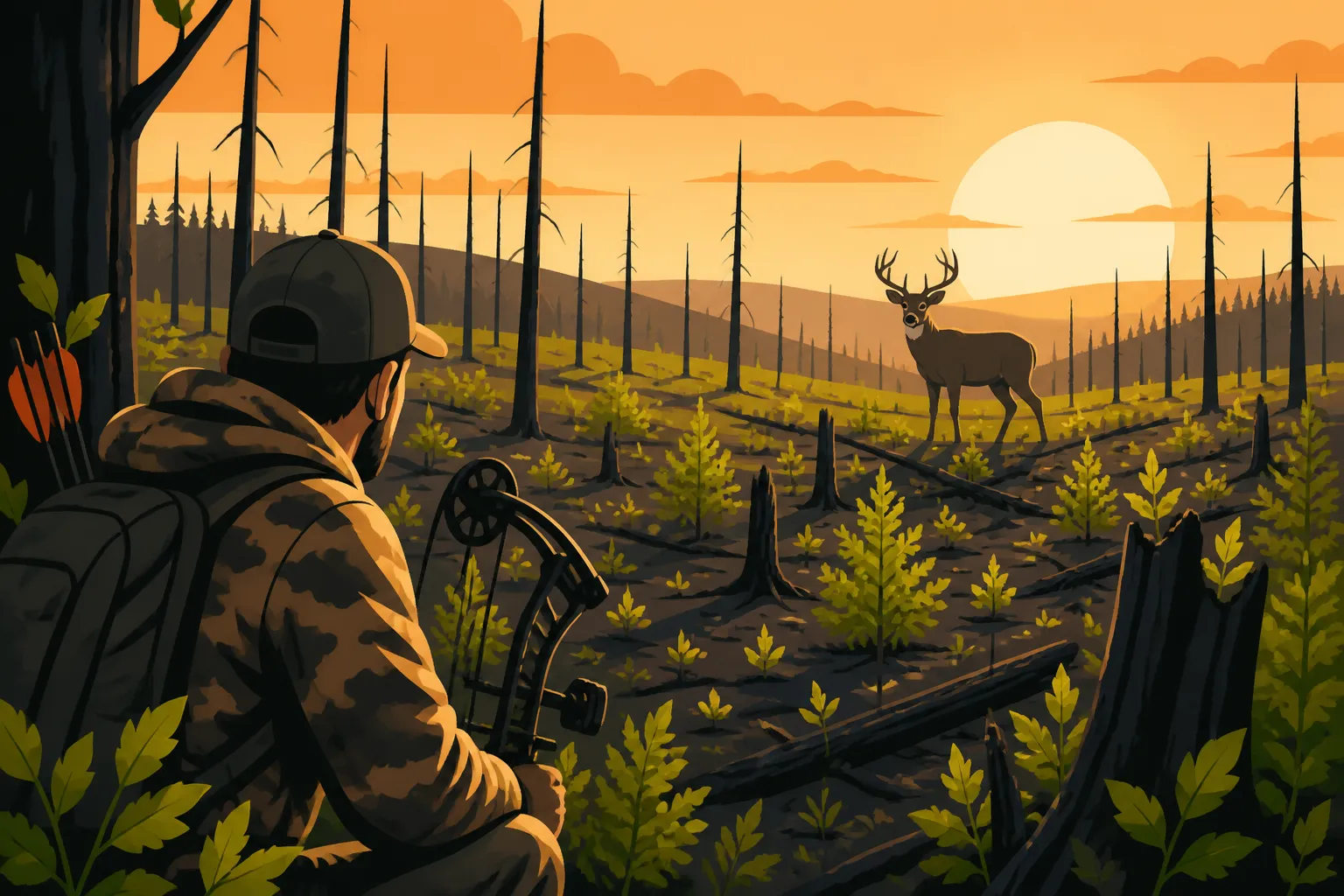
The third year, in many ways, is the sweet spot for hunting a burned block in Manitoba. The initial flush of browse has matured, providing not only abundant food but also the beginnings of substantial new cover. Young aspen and willow saplings might already be chest-high or taller, creating thickets that offer security and bedding areas. The fallen timber, while still present, has begun to integrate into the landscape, creating natural obstacles and hiding spots. Game animals have had ample time to discover and habituate to these regenerating areas. They've established travel patterns, learned where to feed, where to bed, and how to use the changed terrain to their advantage. The balance of plentiful food and developing cover makes these three-year-old burns incredibly attractive to a variety of species. It's a goldmine for those willing to put in the effort to understand its rhythms. This is when the hard work of regeneration truly pays off for the hunter. You're looking at a dynamic ecosystem that's hitting its stride, offering a unique challenge and potentially a huge reward. What Wildfire Did to Manitoba Game Range and How Wildfire Changes Northern Game Range explore this transformation in more detail.
Scouting Strategies for a Three-Year-Old Burn
Effective scouting is always crucial, but it takes on an even greater significance in a landscape dramatically altered by fire. You can't rely on old knowledge or traditional maps alone; the terrain has literally been redrawn. Modern tools, combined with good old-fashioned legwork, are your best friends here.
Leveraging Satellite Imagery and Topo Maps
Before you even step foot in the woods, modern mapping applications can give you an incredible head start. Tools like onX Hunt or GoHunt are invaluable for understanding a burned area. Start by looking at historical satellite imagery to identify the exact boundaries of the burn. Compare this to current imagery to see how much regrowth has occurred. Look for unburnt pockets of timber or islands of green within the burn – these will be crucial sanctuaries and bedding areas for game. Pay close attention to how the burn interacts with existing topography: draws, ridges, and creek bottoms. Often, these features dictate game movement even more strongly after a fire. Game will still follow the path of least resistance or utilize natural funnels. You might spot old logging roads, new trails carved by animals, or even the subtle outlines of a slough that previously would have been obscured by dense canopy. Use the topo lines to predict how animals might move between feeding and bedding areas, especially in undulating terrain. Scouting With Satellite Imagery in Manitoba is a fantastic resource for honing these skills.
Boots-on-the-Ground Reconnaissance
As helpful as digital tools are, nothing replaces putting boots on the ground. Once you've identified promising areas from your maps, it's time to explore. The beauty of a three-year-old burn is that the visibility, while still challenging in places due to new growth, is often better than in mature bush, making it easier to read sign. Walk the edges of the burn where it meets unburnt timber – these transition zones are often high-traffic areas. Look for game trails entering and exiting the burn. Inside, focus on areas with the most vigorous regrowth of preferred browse. Look for fresh tracks, scat, rubs, and scrapes. In a burn, rubs might be on smaller saplings or even fallen logs. Identify potential bedding areas within the thicker new growth or on sheltered slopes. Don't forget to check for water sources, as these are magnets for all wildlife. In areas with significant downed timber, you might find trails woven specifically to navigate these obstacles, creating natural funnels. Take notes, mark waypoints on your GPS, and pay attention to prevailing winds. This physical reconnaissance will confirm your digital hunches and reveal the nuances only visible up close. Reading Sign After a Fresh Snow offers principles that apply to reading any fresh sign, regardless of snow cover.
Identifying Key Funnels and Travel Corridors
Wildfires often simplify the landscape in terms of animal movement, creating clear funnels and corridors that weren't as obvious before. Because large areas of dense cover are gone, game will often stick to the remaining cover or use the most efficient routes between food, water, and security. Look for strips of unburnt bush that extend into or through the burn; these will act like highways. Natural draws, creek beds, and subtle ridges can become major travel routes. Even a slightly elevated piece of ground that offers a better vantage point for a deer or moose can become a key travel lane. Consider how the new growth has started to create its own cover – a particularly dense stand of young poplars or willows might now be a preferred bedding area, with trails radiating out from it. The edges of the burn, especially where it meets agricultural fields or mature forest, are consistently productive. Animals will often stage in the safety of the heavier cover before moving into the more open burn for feeding. These pinch points and funnels are prime locations for setting up an ambush or still-hunting carefully. Hunting a Manitoba Bush Edge directly addresses finding and utilizing these critical transition zones.
Hunting Techniques Tailored for Burned Areas
Hunting in a three-year-old burned block requires a slightly different approach than hunting dense, mature timber. The unique combination of increased visibility and emerging cover demands adaptations to your usual tactics.
Still-Hunting and Spot-and-Stalk
The increased visibility in a burned area, even with three years of regrowth, makes still-hunting and spot-and-stalk tactics incredibly effective. Instead of plowing through dense bush, you can often see much further, allowing you to pick apart the landscape with your binoculars or scope. The key is slow, deliberate movement. Take a few steps, then stop and carefully glass all around you, especially into any remaining pockets of timber, new thickets, or over the tops of regenerating saplings. Animals in these areas tend to be more alert due to the reduced overall cover.
The trick is using the terrain to your advantage. Hunt into the wind, obviously, but also use any rise in elevation or patch of new growth to break up your silhouette. Downed logs can be great for kneeling or resting your rifle. The ground can be crunchy with charcoal and fallen branches, so extremely quiet movement is paramount. If you spot an animal, use the same careful approach as you would in open country. Plan your stalk, using whatever cover the burn provides – a cluster of standing dead trees, a low ridge, or a dense patch of willow – to close the distance undetected. This style of hunting demands patience and keen observation, but the reward can be a closer shot at an animal that might have been impossible to spot in denser forest.
Setting Up Ambush Points
Even with the more open nature of a burn, ambush points are still highly effective, perhaps even more so because animal movement can be more predictable through the changed landscape. Focus your ambush efforts on the clear funnels and travel corridors you identified during scouting. These might be narrow strips of unburnt timber, natural draws, or even trails created by game navigating downed trees. The edges of the burn, where animals move between the regenerating browse and the safety of mature forest, are always excellent spots.
When selecting an ambush site, consider both visibility and cover. A treestand can be challenging to set up if all the good trees are gone or structurally unsound, but look for any healthy, sturdy trees along these travel routes. If suitable trees are scarce, ground blinds become a primary option. You can use natural features like fallen logs, root balls from blown-over trees, or thick new growth to create a natural ground blind. Even a simple pop-up blind can be incredibly effective when placed strategically, especially if set up well in advance to allow animals to get used to its presence. Pay attention to wind direction, ensuring your scent isn't blowing into the travel corridor. Being patient and letting the animals come to you in these predictable locations can be a very successful strategy.
Utilizing Natural and Artificial Cover
In a three-year-old burn, cover often isn't the dense, continuous forest you might be used to. Instead, it's a mosaic of charred snags, fallen timber, and burgeoning new growth. As a hunter, you need to learn to utilize this fragmented cover effectively. When moving, try to stay in the shadows of standing dead trees, or move from one patch of new growth to another. Use the contours of the land – a small dip or swell can hide you surprisingly well.
For static hunting, be creative with your cover. A large pile of fallen logs might offer enough concealment for a ground blind. The dense new growth of young aspens or willows, even if only chest-high, can screen your movements and break up your outline. Remember that while the trees are gone, the bones of the landscape remain. Rock outcrops, small ridges, and even old berms can provide elevation and concealment. If using an artificial blind, ensure it blends in as much as possible, using natural materials from the surrounding area to enhance its camouflage. The key is to think like the animal; where would they feel safe moving through, and where would you feel hidden waiting for them?
Species-Specific Considerations in Burned Blocks
Different game animals respond to burned areas in unique ways, depending on their dietary preferences, cover requirements, and overall adaptability. Understanding these species-specific nuances will help you fine-tune your hunting strategy.
Whitetail Deer in the Regenerating Forest
Whitetail deer, particularly in Manitoba, are masters of adapting to changing landscapes. In a three-year-old burn, they will be drawn to the explosion of new, nutrient-rich browse. Young aspen, willow, fireweed, and various forbs are high on their preferred food list. However, whitetails are also highly reliant on dense cover for security and bedding. This means you'll typically find them feeding within the burn during low-light hours – early morning and late evening – and then retreating to thicker cover during the day.
Your best bet for whitetails is to focus on the edges of the burn where it transitions into unburnt mature forest, or around any surviving pockets of dense timber within the burn itself. These transition zones offer both food and security. Look for trails that lead from the burn into these thicker areas. Inside the burn, identify dense patches of three-year-old regrowth, especially on north-facing slopes or in sheltered draws, as potential bedding areas. Whitetails will often use the downed timber for cover and as travel routes. Rattling and calling can also be effective in these more open areas, as the sounds can carry further, and deer may be more curious about potential intruders in their newly re-established territory. Hunting Whitetails in Manitoba's Bush Country provides more insights into their habits.
Moose and Elk: Benefiting from New Growth
Moose and elk are heavy browsers, and they absolutely thrive on the abundant new growth that emerges after a fire. For moose, the prolific willow and aspen saplings are a feast. They don't need the same level of dense canopy cover as deer, often content to bed in thicker patches of new growth or simply lie down amidst fallen timber as long as there's plenty of food nearby. Elk, too, will gorge on the grasses, forbs, and deciduous browse that sprout up.
Hunting moose and elk in a three-year-old burn often involves covering significant ground, either by still-hunting or spot-and-stalking, and extensive glassing. Because these animals are larger and often more active during daylight hours than deer, you have a better chance of catching them out feeding. Look for areas where the new growth is particularly lush, or where it forms extensive thickets. Water sources are also critical for these large animals, so check any surviving wetlands or creek bottoms within the burn. Calling can be incredibly effective for both moose and elk in these more open landscapes. The sounds carry well, and a bull might be eager to investigate a challenge or a cow's plaintive call. Consider techniques described in Calling a Bull Moose in the Rut or Bugling Elk in Manitoba's Parkland for these scenarios. Why Burned Ground Grows Big Bulls also highlights why these areas are productive.
Black Bears and Predators
Black bears are omnivores and will readily move into burned areas to forage. In the spring and early summer, they'll seek out the first green shoots and roots. As the season progresses into late summer and fall, the profusion of berries that often flourishes after a fire – blueberries, raspberries, saskatoons – becomes a major draw. Bears will also investigate areas for insects and grubs in decaying logs. Look for overturned rocks, shredded logs, and, of course, bear scat full of berry seeds. While they prefer thicker cover for bedding, they will travel through burns, especially along their edges or through remaining pockets of unburnt forest.
Predators like coyotes and wolves will follow their prey. If deer, moose, and elk are abundant in the burn, so too will be the predators. The more open nature of the burn can make spotting wolves or coyotes easier, but it also makes them more aware of your presence. Calling these predators can be effective, as the sound travels further without a dense canopy to absorb it. Look for predator tracks along game trails and on the edges of the burn. A three-year-old burn is a dynamic ecosystem, and understanding the entire food chain will only make your hunt more successful. You might find success with strategies discussed in Hunting Wolves in Manitoba's North in these areas.
Here's a quick comparison of how a burn progresses and what it means for your hunting efforts:
| Feature | Year 1: Immediate Aftermath | Year 2: Emergent Browse | Year 3: Prime Opportunity |
|---|---|---|---|
| Vegetation | Bare ground, charred snags, pioneer plants | Lush, low-lying browse, grasses, saplings | Dense saplings, established browse, some cover |
| Cover | Minimal, mostly fallen timber, snags | Limited, but increasing new growth | Good, regenerating thickets, some mature timber |
| Food Source | Limited, some exposed minerals | Abundant, nutrient-rich new growth | Abundant browse, berries, established food plots |
| Deer Activity | Sparse, fringe feeding, hesitant | Increasing, focused on new browse | High, well-established patterns, bedding in new cover |
| Moose/Elk | Sparse, mostly transient | High, focused on prolific browse | High, frequent feeding, using new thickets for cover |
| Visibility | Excellent, very open | Good, but some low cover emerging | Variable, good long-range but patchy cover |
| Hunter Tactics | Extreme stealth, long shots, observation | Spot-and-stalk, ambush on edges | Still-hunt, spot-and-stalk, ambush in funnels |
| Key Areas | Unburnt pockets, riparian zones | Edges, areas with fastest regrowth | Thickets, transition zones, water sources |
Hunting a burned block three years on is a rewarding experience for those who embrace the dynamic nature of the Manitoba wilderness. It's a testament to the resilience of nature and the adaptability of our game animals.
Disclaimer
This article is for general informational purposes only and does not constitute professional advice. Laws, prices and regulations vary by location and change over time. Consult a qualified professional for guidance on your specific situation.